
Reliable pellet heat for Mercer County's farms and homesteads.
With just over 1,700 residents spread across the farmland of far-northern Missouri, Mercer County runs on self-sufficiency—and pellet stoves fit right in. Find the right unit and connect with a trusted local dealer.
Every Project Starts From One of These Five Situations
Steady heat without the wood-splitting.
Mercer County sits on the Iowa border in Missouri's row-crop and cattle country, with Princeton as its county seat and a population under 2,000 spread across mostly rural township roads. In climate zone 5A, winters bring sustained cold and a long, demanding heating season, and a lot of the county's housing stock is older farmhouses that lose heat fast through single-pane windows and uninsulated additions. Many of those same properties sit on wood lots full of oak, hickory, walnut, and maple—good burning wood, but cutting, splitting, hauling, and stacking cordwood takes time that full-time farmers and retirees don't always have to spare.
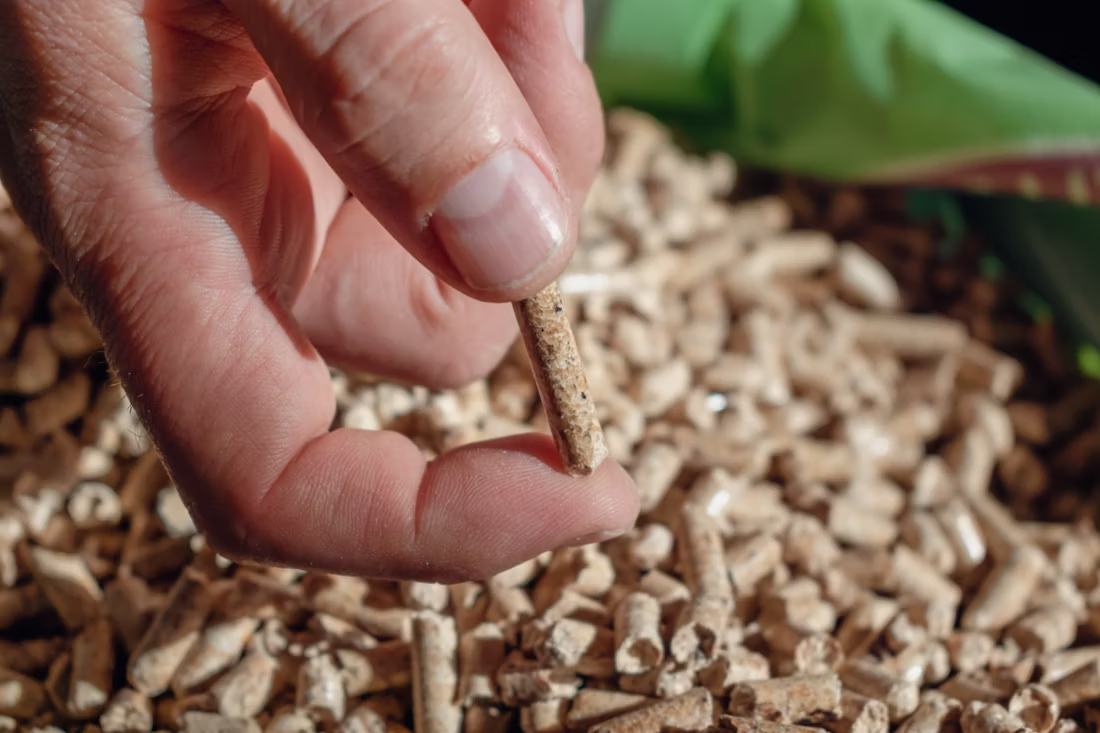
That's where a pellet stove earns its keep. Load the hopper, set the thermostat, and you get consistent, even heat without tending a fire every few hours. Mercer County has no air quality restrictions or burn curtailment periods to work around, so there's no regulatory hurdle to running a pellet appliance daily through the winter. Bagged pellets from regional producers like Lignetics and Indeck Energy Services are the fuel most homeowners in this part of Missouri actually find on shelves at farm supply and co-op stores, rather than having to special-order fuel from out of state.
Three steps. No salesperson until you're ready.
Tell us about your project
Your zip code, your situation, and the fuel you're leaning toward—or let the answers point you to one.
See what's actually available
The brands dealers within 100 miles genuinely carry—real options, never a catalog mirage.
Get your dealer & Project Guide
A trusted local dealer, plus the free Project Guide & Parts List that names every component of the job.
Frequently Asked Questions
How much does a pellet stove installation cost in Mercer County?
Most pellet stove installations run in the $3,000 to $6,000 range once you factor in the unit itself, a dedicated electrical outlet, and the vent kit through an exterior wall—pellet stoves don't need a full masonry chimney, which keeps costs down compared to a wood stove install. Converting an existing fireplace to a pellet insert typically runs a bit higher, since it usually involves a liner kit routed up through the old chimney. Because Mercer County has such a small population, most homeowners end up working with a dealer based out of a larger nearby town rather than someone local, and that can add a modest travel charge to the quote.
What size pellet stove do I need for my home?
It depends on square footage, ceiling height, and how well the house is insulated—and in a climate zone 5A county like Mercer with a lot of older farmhouse construction, that last factor matters more than the brochure BTU rating suggests. A smaller unit (40,000 BTU or less) is fine for a single large room or a well-sealed addition; most full farmhouse living spaces need something in the 50,000-60,000 BTU range to keep up through a January cold spell. Homes with drafty additions, uninsulated crawlspaces, or older single-pane windows common throughout the county should size up rather than down. A local dealer can walk the house and size it properly rather than guessing off a chart.
Where can I find a pellet stove dealer near Mercer County?
With a population under 2,000, Mercer County itself doesn't support a dedicated hearth retailer—most homeowners end up working with a dealer based in a larger town nearby, such as Trenton, Bethany, or Kirksville, or occasionally a retailer just across the Iowa line. That's exactly the kind of gap Find My Fireplace is built to close: we match you with a trusted dealer who actually serves your part of north Missouri, rather than leaving you to guess which retailer will return a call for a rural install.
What's the difference between a pellet stove and a pellet insert?
A pellet stove is a freestanding unit that sits on its own hearth pad and vents through a wall or existing chimney chase—it can go almost anywhere in the house, which makes it a good fit for the additions and mudrooms common on older Mercer County farmhouses. A pellet insert is built to slide into an existing masonry fireplace opening, using a liner run up the old chimney for venting. If your home already has a wood-burning fireplace you don't use much, an insert converts it into an efficient, thermostat-controlled heat source. If you don't have an existing fireplace, a freestanding stove is the simpler install.
Do I need a permit to install a pellet stove in Mercer County?
Most rural counties in this part of Missouri require a building permit for new hearth appliance installations, and Mercer County is no exception—your installer typically pulls this as part of the job rather than leaving it to you. One thing that does work in your favor here: Mercer County has no air quality non-attainment issues or winter curtailment periods, so unlike some parts of the country, there's no burn-ban season to plan around once the stove is in and permitted.
What's the best pellet stove for a Mercer County farmhouse?
For older, leakier farmhouse construction, a mid-to-large hopper capacity matters more than brand name—a bigger hopper means fewer refills during an overnight cold stretch. US Stove Company and Englander units are common, affordable choices stocked by rural Midwest dealers and hold up well as workhorse heaters. Harman is worth a look if you want a higher-efficiency, longer-burning unit and don't mind paying more upfront. Whatever stove you choose, plan on running it with pellets from a regional supplier like Lignetics or Indeck Energy Services, both of which distribute through farm and co-op stores across northern Missouri and southern Iowa.
Will my pellet stove work during a power outage?
Not without a backup plan. Pellet stoves rely on an electric auger to feed fuel and a blower to move heat, so a power outage shuts the stove down even with a full hopper. That matters in a rural county like Mercer, where winter storms can knock out power on rural electric lines for longer stretches than in town. A small battery backup or generator sized to run the stove's electronics is a worthwhile add-on if you're depending on the stove as a primary heat source rather than a supplement to a wood stove or propane furnace.
Where can I buy pellet fuel in or near Mercer County?
Bagged pellets from brands like Lignetics and Indeck Energy Services are typically available at farm supply and co-op stores across northern Missouri, and pricing in this part of the Midwest usually runs somewhere in the $230-$280 per ton range depending on the season and how far the retailer is from a distribution point. Buying a full season's supply (roughly 2-3 tons for an average farmhouse) in late summer or early fall, before demand and prices climb, is standard practice for a lot of rural Missouri pellet burners.
Pellet stove vs. wood stove—which makes more sense for a Mercer County property?
If your property has a wood lot with oak, hickory, walnut, or maple—common across Mercer County farmland—a wood stove lets you heat almost for free with timber you're already managing, and it keeps working with no electricity at all during an outage. A pellet stove trades that free fuel for convenience: no splitting, no stacking, no ash-hauling every few hours, just a hopper you fill every day or two. For full-time farmers or retirees who'd rather not spend fall weekends processing cordwood, pellet often wins. For anyone with existing wood infrastructure and a tractor to haul logs, wood can still be the more economical choice.
What's the difference between an insert and a zero-clearance fireplace?
An insert is a fireplace that slides into a pre-existing wood-burning fireplace—if you don't have one, there's nothing to insert it into. A zero-clearance fireplace is built into a framed wall, which makes it the answer for remodels and new construction. Simple test: existing masonry fireplace means insert; blank or framed wall means zero-clearance.
Why is my open fireplace making my house colder?
Open fireplaces suck—literally. As the fire burns, it consumes air your furnace already paid to heat and pulls it out through the chimney, so the house is actually colder after the fire goes out than before you lit it. An insert fixes this: it seals the chimney, puts fixed glass across the front, and turns that hole in your house into a real heat source.
Can a fireplace actually lower my heating bill?
Yes—by creating a comfort zone. A furnace heats every square foot of the house just to warm the one room you're in; a gas fireplace on low burns roughly a sixth of the gas a typical furnace does. Set the furnace around 55–60 degrees as a baseline, then heat the rooms your family actually uses. Families who heat this way commonly save $20–$60 a month.
What is an in-home preview and do I need one?
It's a visit where a hearth professional measures your space, confirms the model you picked actually works in your home, and walks the specs—framing, gas line, venting, finish work—before anything is ordered. Some details you just can't know until you see the house. Never make a down payment without one; it's the single most-skipped step that burns buyers.
Pellet Brands Stocked Around Mercer County
Manufacturers will point you to the nearest stocking dealer.
Find your pellet stove in Mercer County.
Tell us a bit about your home and we'll put together a free Project Guide & Parts List—the right pellet stove or insert, the vent kit you'll need, and a trusted local dealer to install it.
Find Your Fireplace →