
Steady pellet heat for Madison County's Ozark foothills.
Thermostat-controlled heat for the hardwood hills around Fredericktown—no splitting, stacking, or hauling cordwood required. Find the right pellet stove and connect with a trusted local dealer.
Every Project Starts From One of These Five Situations
Convenience heat for a hardwood county.
Madison County sits in the St. Francois Mountain foothills of southeast Missouri, with Fredericktown as the county seat and roughly 5,500 residents spread across small towns and rural township roads. Winters here run a real heating season—average lows near 21°F and about 4,931 heating degree days a year, placing the county in climate zone 4A. That's colder than the Missouri Bootheel but well short of what a Duluth, MN or Fargo, ND winter throws at a heating system, which is exactly the middle ground where pellet stoves tend to shine: enough sustained cold to justify a dedicated heat source, but not so extreme that a pellet appliance struggles to keep pace.
The county's oak, hickory, walnut, and maple forests have long supported local sawmilling, and that same hardwood byproduct stream feeds regional pellet production—Lignetics and Indeck Energy Services both supply the area, so fuel sourcing isn't the challenge it can be in parts of the country without nearby mills. Madison County has no air quality non-attainment restrictions or wood-burning curtailment periods, so pellet stoves aren't solving a smoke problem here the way they do in places like the Klamath Basin—instead, the draw is the auger-fed convenience: load the hopper, set the thermostat, and get consistent radiant heat without the daily labor of tending a wood fire. For homes without an existing chimney, or homeowners who want zone heat in a workshop, addition, or main living space, a pellet stove is often the simplest install on the table.
Three steps. No salesperson until you're ready.
Tell us about your project
Your zip code, your situation, and the fuel you're leaning toward—or let the answers point you to one.
See what's actually available
The brands dealers within 100 miles genuinely carry—real options, never a catalog mirage.
Get your dealer & Project Guide
A trusted local dealer, plus the free Project Guide & Parts List that names every component of the job.
Frequently Asked Questions
How much does a pellet stove installation cost in Madison County?
Most pellet stove installations in Madison County run in the neighborhood of $3,500 to $6,500, depending on the stove model, whether you need a new through-wall vent kit, and any hearth pad work required for code clearances. Because pellet stoves vent horizontally through a wall rather than requiring a full masonry chimney, installs are often simpler and less expensive than a comparable wood stove or fireplace project—a meaningful factor for a rural county where new chimney construction can add significant cost. Your local dealer will quote a firm number after seeing your home and confirming where the vent can run.
What size pellet stove do I need for my home?
Sizing depends on square footage, ceiling height, and how well-insulated the home is—older farmhouses and homes in the outlying parts of Madison County often leak more heat than newer construction and need to size up accordingly. As a rough guide: small pellet stoves handle up to about 1,000 square feet, mid-size units cover 1,000 to 1,800 square feet, and larger stoves can serve open-concept living areas beyond that. For a county with a real winter (4,931 heating degree days and lows in the low 20s), most homeowners looking for primary or near-primary heat should plan on a mid-to-large hopper capacity so they're not refilling constantly during the coldest stretches. A local dealer will size the unit correctly during an in-home visit—this is one area where guessing off a big-box chart can leave you undersized.
Where can I find a pellet stove dealer near me in Madison County?
Madison County's population is small and spread out, so dedicated hearth retailers are more concentrated in nearby larger towns—Fredericktown itself, along with Farmington and Cape Girardeau, are the most likely places to find a dealer who stocks and installs pellet stoves and can service them afterward. When you're comparing options, ask specifically whether the dealer carries parts and offers warranty service locally rather than shipping you back to a manufacturer for support—that follow-up service matters more with pellet appliances than with simple wood stoves, since the auger, igniter, and blower are mechanical components that eventually need attention.
Where does pellet fuel come from, and how do I store it?
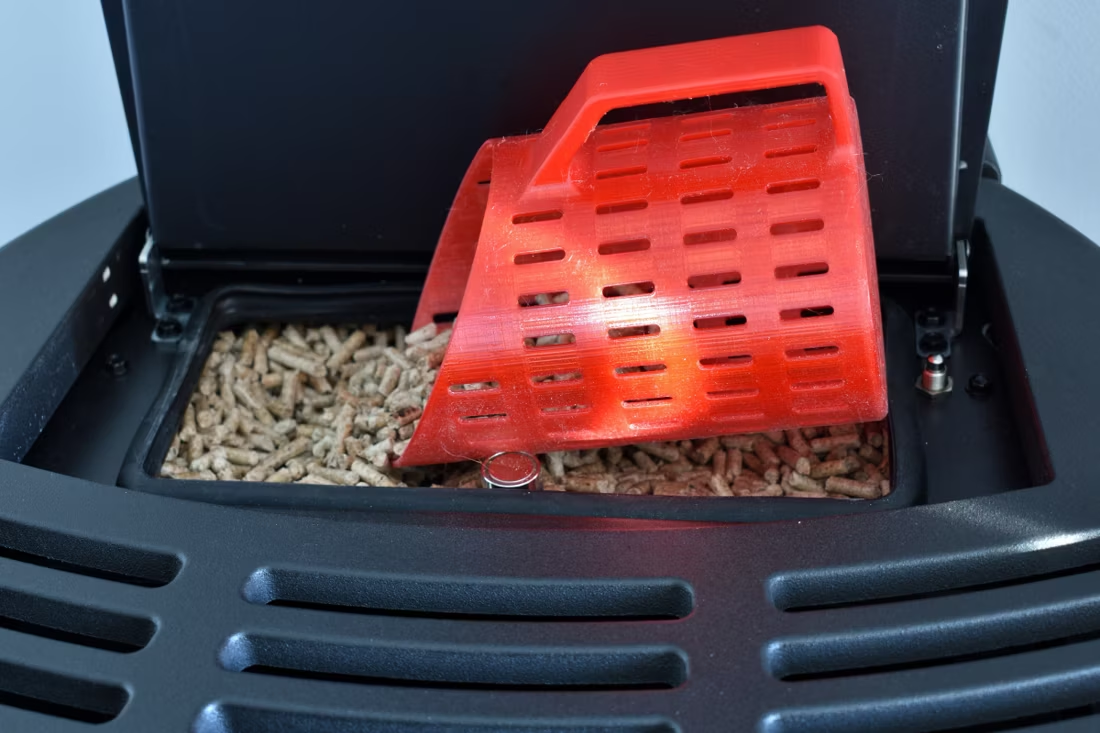
Southeast Missouri's hardwood sawmilling industry feeds regional pellet production, with Lignetics and Indeck Energy Services both supplying pellets to the area—a genuine advantage over parts of the country that truck pellets in from farther away. Pellets are sold in 40-pound bags, typically stacked by the ton (fifty 40-lb bags), and need to stay bone dry—a garage, shed, or basement works, but pellets exposed to moisture swell and turn to sawdust, ruining a bag fast. Most homeowners burning pellets as a primary heat source in this climate go through 2 to 3 tons over a full winter, so plan storage space accordingly and buy early in the fall before demand picks up.
Pellet stove vs. wood stove—which makes more sense in Madison County?
Given the abundance of oak, hickory, walnut, and maple in this part of the Ozarks, plenty of Madison County homeowners already have access to free or cheap firewood, which makes wood stoves an easy call for some households. But pellet stoves win on convenience and consistency—no splitting, seasoning, or stacking, no chimney sweep required (just an annual service visit), and a thermostat that holds a steady temperature instead of a fire that needs tending and reloading every few hours. The tradeoff is electricity: pellet stoves need power to run the auger, igniter, and blower, so during a rural outage a wood stove with no electronic components will keep running while a pellet stove won't unless you have a battery backup or generator. For a county where outages happen with winter storms, that's worth weighing against the day-to-day convenience pellet offers.
Do I need a permit to install a pellet stove in Madison County?
Yes—new pellet stove installations typically require a building permit through the Madison County building department, covering the appliance clearance, wall penetration for the vent kit, and any electrical work for a dedicated outlet. Most established dealers handle the permitting as part of the installation package, so you're not left tracking down paperwork yourself. Because pellet stoves vent through a wall rather than a full chimney, the inspection is generally more straightforward than a masonry wood fireplace install, but it's still a step that shouldn't be skipped—improper vent termination clearances near windows or intake vents are a common code issue on DIY installs.
How often does a pellet stove need maintenance?
Pellet stoves need more routine attention than a simple wood stove, but the tasks are quick: emptying the ash pan every few days during heavy use, wiping down the burn pot weekly to keep the igniter working properly, and vacuuming the hopper and auger area at the end of the season. Plan on a full professional inspection and cleaning once a year—typically late summer, before the county's heating season ramps up in earnest—where a technician checks the blower motor, gaskets, and vent run for blockages. Skipping the annual service is the most common reason pellet stoves start jamming or underperforming by their third or fourth winter.
Will my pellet stove work if the power goes out?
Not on its own—pellet stoves rely on an electric auger to feed fuel, an igniter to light it, and a blower to distribute heat, so a power outage stops all three. For rural stretches of Madison County where storm-related outages can last a while, some homeowners pair a pellet stove with a small battery backup unit or a portable generator sized to run the stove's low electrical draw. If backup power during outages is a top priority and you don't want to add a generator, it's worth discussing a wood stove or a gas unit with battery-backed ignition as an alternative—your local dealer can walk through the tradeoffs based on how often your area loses power.
Are there tax credits or rebates for installing a pellet stove?
Yes—the federal biomass stove tax credit (Section 25C) allows a 30% credit, up to $2,000 annually, on the purchase and installation cost of qualifying pellet stoves rated at 75% efficiency or higher (measured by HHV), which covers the great majority of pellet stoves sold today. Keep your dealer's invoice and the manufacturer's efficiency documentation for tax filing purposes. Missouri doesn't currently layer a state-level rebate on top of the federal credit, so the 25C credit is the primary incentive available to Madison County homeowners installing a qualifying unit.
Why is my open fireplace making my house colder?
Open fireplaces suck—literally. As the fire burns, it consumes air your furnace already paid to heat and pulls it out through the chimney, so the house is actually colder after the fire goes out than before you lit it. An insert fixes this: it seals the chimney, puts fixed glass across the front, and turns that hole in your house into a real heat source.
Why is a fireplace insert so efficient?
An insert does two things: it seals the chimney completely, so you stop losing air you already paid to heat, and it radiates warmth into the room through the firebox and glass. Most add a heat-exchange fan that pulls cool room air underneath, wraps it around the hot firebox, and pushes it back out warm. Your home is more efficient before you've even lit the first fire.
Can I install a fireplace myself?
If you're putting a fire in your house on purpose, it's best to work with an expert. Unless you're genuinely experienced in framing, gas line, vent pipe, and the national code on clearances to combustibles, have a professional do it—and ideally the same company that sells you the fireplace, so warranty, service, and liability all live under one roof.
Can a fireplace actually lower my heating bill?
Yes—by creating a comfort zone. A furnace heats every square foot of the house just to warm the one room you're in; a gas fireplace on low burns roughly a sixth of the gas a typical furnace does. Set the furnace around 55–60 degrees as a baseline, then heat the rooms your family actually uses. Families who heat this way commonly save $20–$60 a month.
Pellet Brands Stocked Around Madison County
Manufacturers will point you to the nearest stocking dealer.
Find your pellet stove in Madison County.
Tell us about your home and heating goals, and we'll match you with a trusted local dealer and send over a free Project Guide & Parts List—the exact parts, vent kit, and recommended installer for your pellet stove project in Madison County.
Find Your Fireplace →