
Add Real Warmth to Any Room in Lone Jack—No Chimney Required.
Plug-in comfort or a built-in linear unit—either way, electric heat works in almost any room of a Lone Jack home. Find the right unit and connect with a trusted local dealer.
Every Project Starts From One of These Five Situations
Simple, flexible heat for a small Jackson County town.
Lone Jack is a town of about 1,300 people on the rural edge of the Kansas City metro, with winters that average lows in the low 20s and a solid five-month heating season—noticeably milder than places like Minneapolis or Fargo, but still cold enough that a supplemental heat source in a bedroom, sunroom, or finished basement gets real use from November through March. Many local homes are older farmhouses or additions that were never plumbed for gas and don't have a wood-ready chimney, which is exactly where electric fireplaces do their best work.
Evergy Missouri West serves electric accounts in and around Lone Jack at a residential rate of about 12.55 cents per kWh, which keeps zone heating with an electric insert or wall unit inexpensive to run compared to heating an entire farmhouse through central propane or electric-resistance HVAC. No venting, no chimney, no permit hassle for most plug-in models—just a unit that plugs into a standard outlet and puts real, adjustable heat into the one room you're actually using.
Three steps. No salesperson until you're ready.
Tell us about your project
Your zip code, your situation, and the fuel you're leaning toward—or let the answers point you to one.
See what's actually available
The brands dealers within 100 miles genuinely carry—real options, never a catalog mirage.
Get your dealer & Project Guide
A trusted local dealer, plus the free Project Guide & Parts List that names every component of the job.
Frequently Asked Questions
How much does an electric fireplace installation cost in Lone Jack?
A plug-in electric insert or freestanding stove that drops into an existing masonry opening or sits against a wall typically runs $300 to $1,200 installed, since most units run on a standard 120V outlet and need no electrical or structural work. A built-in linear electric fireplace set into a wall or new-construction framing—with drywall finishing, a mantel surround, and sometimes a dedicated circuit run by an electrician—usually lands between $1,500 and $4,000 depending on size and finish work. Because there's no venting or chimney involved, electric is consistently the least expensive fireplace option for Lone Jack homeowners to install.
Do I need an electrician to install an electric fireplace?
Most compact electric inserts and stoves (1,500 watts or less) plug into a standard 15- or 20-amp household outlet and don't require any electrical work. Larger built-in linear units, especially wide models over 60 inches or units installed as part of a remodel, sometimes call for a dedicated circuit—worth confirming with a licensed electrician before the unit arrives. Evergy Missouri West doesn't require a separate service upgrade for typical residential electric fireplace loads, but your local dealer can tell you during the in-home consultation whether your specific model needs a dedicated line.
How much does it cost to run an electric fireplace in Lone Jack?
At Evergy Missouri West's residential rate of about 12.55 cents per kWh, a typical 1,500-watt electric fireplace running on high costs roughly 19 cents per hour to operate. Most owners run the heater setting only in the room they're occupying and leave the flame effect on by itself the rest of the time, which draws only a few watts. Compared to running propane or heating an entire drafty farmhouse through central HVAC to keep one room comfortable, zone heating with an electric unit is one of the cheaper ways to take the chill off a bedroom or sunroom during a Jackson County cold snap.
What's the difference between an electric insert, a wall-mounted unit, and a built-in linear fireplace?
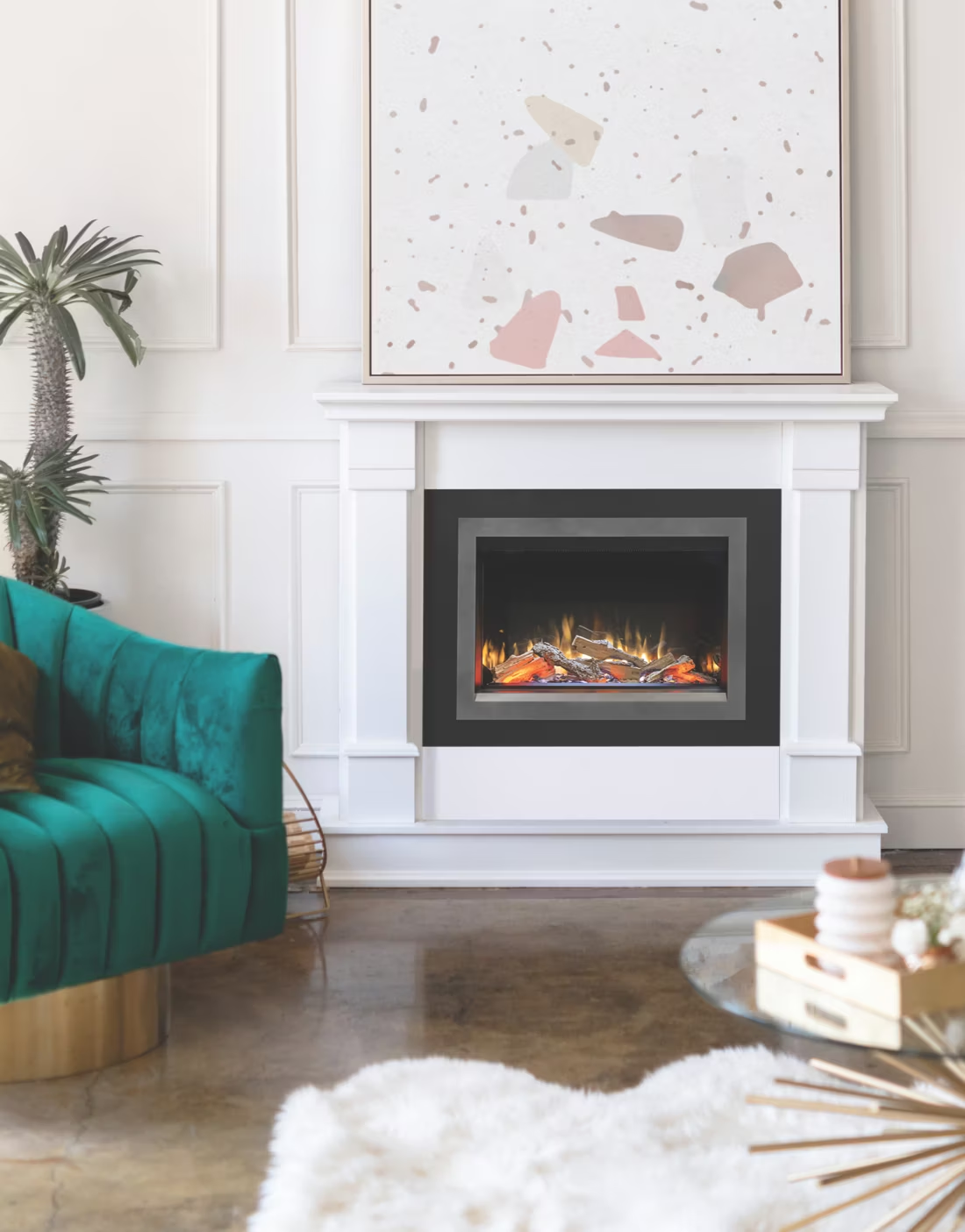
An electric insert is sized to drop into an existing masonry fireplace opening, making it a common upgrade for older Lone Jack homes with an unused wood-burning firebox. A wall-mounted unit hangs on the wall like a flat-screen TV and needs only an outlet behind it. A built-in linear fireplace is installed into new framing or an existing wall cavity, finished flush with drywall and a mantel or tile surround, and looks closest to a traditional gas or wood fireplace. For a rental or a quick supplemental-heat fix, a plug-in insert or wall unit is the fastest path. For a remodel or new build, a built-in linear unit gives the most finished look.
Do I need a permit to install an electric fireplace in Jackson County?
Plug-in electric inserts and freestanding units generally don't require a permit since there's no venting, gas line, or structural change involved. If you're doing a built-in installation that involves framing a new wall opening, running a dedicated electric circuit, or altering an existing masonry fireplace, Jackson County's building department may require an electrical permit for the wiring work specifically. Most local dealers can tell you upfront whether your project crosses that line, and a licensed electrician will pull any required electrical permit as part of the installation.
Will an electric fireplace actually heat a room, or is it just for looks?
A properly sized electric fireplace or insert with a built-in fan heater will genuinely warm a room—most models are rated for 400 to 1,000 square feet on the heater setting, enough for a bedroom, home office, or open living area. They won't replace central heat for a whole Lone Jack farmhouse, especially with the area's solid five-month heating season, but they're effective as zone heat: running the furnace lower and using the electric unit to keep the room you're actually in comfortable. The flame effect itself can also run independently of the heater, so you get ambiance year-round without warming the room in summer.
Are electric fireplaces safe for older homes, kids, and pets?
Electric fireplaces are generally considered the safest fireplace option because there's no real flame, no open combustion, and the glass front on most models stays cool or only mildly warm to the touch. That makes them a common choice for households with small children, pets, or older residents, and for older Lone Jack homes where a wood-burning chimney may be unlined or in poor repair. There's still a standard fire-safety expectation to keep the unit clear of curtains, furniture, and clutter, and larger built-in units should be installed with proper clearances per the manufacturer's spec sheet—but there's no chimney fire risk and no carbon monoxide concern the way there is with wood or gas.
Electric vs. wood—which makes more sense for a Lone Jack home?
Wood remains popular in this part of Jackson County, where oak, hickory, walnut, and maple are all locally available, and a wood stove provides real heat output that keeps working during a power outage—a genuine consideration on the rural edges of Lone Jack where outages can run long after ice storms. Electric offers none of that off-grid resilience, but it wins on simplicity: no chimney, no ash, no cutting or stacking wood, and a fraction of the install cost. For a primary heat source in an older farmhouse, wood or a wood insert often makes more sense. For a bedroom, basement, or rental unit where convenience and low upfront cost matter most, electric is usually the better fit.
Electric vs. propane fireplace—which is right for my home?
Lone Jack sits outside any natural gas utility footprint, so gas-fired fireplaces here run on propane, either from an existing home tank or a new tank installed by a local supplier. Propane units put out more heat per unit and can be sized to warm a larger area, but they require venting, a gas line, and ongoing propane delivery costs. Electric fireplaces skip all of that—plug it in and it works—but the heat output and coverage area are more modest, capped around 1,500 watts on most residential models. If you already have a propane tank and want serious supplemental heat, propane is worth a look. If you want the simplest, lowest-cost path to warming one room, electric is hard to beat.
Do electric fireplaces actually produce heat?
Yes—most put out around 4,800–5,000 BTUs from a standard outlet, which comfortably warms a bedroom, office, or den as a comfort-zone heater. What they won't do is carry a whole house the way wood, gas, or pellet can. Think of electric as ambiance-first with honest supplemental heat: flames on with no heat in July, flames plus warmth in January.
Does an electric fireplace need a vent or chimney?
No—that's its superpower. An electric fireplace needs a wall and an outlet, period. No vent pipe, no gas line, no clearances to design around, which is why it works in bedrooms, offices, apartments, and walls where venting a gas or wood unit would be impractical or impossible. Installation is typically the simplest and least expensive of any fireplace type.
Can a fireplace actually lower my heating bill?
Yes—by creating a comfort zone. A furnace heats every square foot of the house just to warm the one room you're in; a gas fireplace on low burns roughly a sixth of the gas a typical furnace does. Set the furnace around 55–60 degrees as a baseline, then heat the rooms your family actually uses. Families who heat this way commonly save $20–$60 a month.
What is an in-home preview and do I need one?
It's a visit where a hearth professional measures your space, confirms the model you picked actually works in your home, and walks the specs—framing, gas line, venting, finish work—before anything is ordered. Some details you just can't know until you see the house. Never make a down payment without one; it's the single most-skipped step that burns buyers.
Nearby Dealers
Hearth shops serving Lone Jack and the surrounding area. Every listing shows whether it is a WhyFire partner, a dealer we have verified as authorized for the brands we recommend, or a local business carrying hearth products. No manufacturer pays for placement. How we verify dealers →
Dillon Heating & Cooling Solutions
Fox Heating & Cooling
The Hayes Co.
Complete Home Concepts - Riverside
Jay Henges Enterprises
Midwest Fireplace
Electric Service in Lone Jack
An electric fireplace's heater draws about 1,500 watts—pennies per hour at local rates.
Evergy Missouri West
Find your electric fireplace in Lone Jack.
Tell us a bit about your home and we'll match you with the right electric insert, wall unit, or built-in fireplace—plus a free Project Guide & Parts List and a trusted local dealer to install it.
Find Your Fireplace →