
Find the right pellet stove for your Lawrence County home.
Consistent, low-maintenance heat for the Ozark foothills—from Mount Vernon to Aurora and every rural route in between. I'll match you with a trusted local dealer who can size the unit and get it installed right.
Every Project Starts From One of These Five Situations
Steady heat, without the wood pile or the smoke.
Lawrence County sits in southwest Missouri's climate zone 4A, with a winter heating season comparable to places like Springfield, and winter lows that average in the low 20s—cold enough to demand real heat most winters, but nowhere near the brutal stretches you'd see in a place like Fargo or Duluth. That moderate profile is exactly where pellet stoves earn their keep: they run for hours on a hopper of fuel with no splitting, stacking, or hauling cordwood, and no need to babysit a fire through the night to keep coals alive.
The county has no air quality non-attainment issues or inversion concerns to worry about, so pellet stoves here are chosen for convenience and efficiency rather than regulatory necessity. Local supply runs through regional producers like Lignetics and Indeck Energy Services, both of which distribute into southwest Missouri, so homeowners in Mount Vernon, Aurora, and the surrounding rural county aren't stuck hauling pellets in from out of state. For a home that already burns oak, hickory, walnut, or maple in a wood stove, a pellet unit is often the low-maintenance sibling—same radiant comfort, far less labor.
Three steps. No salesperson until you're ready.
Tell us about your project
Your zip code, your situation, and the fuel you're leaning toward—or let the answers point you to one.
See what's actually available
The brands dealers within 100 miles genuinely carry—real options, never a catalog mirage.
Get your dealer & Project Guide
A trusted local dealer, plus the free Project Guide & Parts List that names every component of the job.
Frequently Asked Questions
How much does a pellet stove installation cost in Lawrence County?
Most pellet stove installations in Lawrence County run in a similar range to other appliance-grade hearth installs—typically a few thousand dollars once you factor in the stove, the vent kit (pellet stoves use a simpler side-wall vent than a masonry chimney), and any hearth pad work needed for clearance. Homes without an existing hearth surface or electrical outlet nearby will run toward the higher end since an outlet may need to be added for the auger and blower. A local dealer will give you a firm number after seeing your space, but the vent kit and exact parts list is part of the free planning packet I put together for every match.
What size pellet stove do I need for my home?
With winter lows averaging around 22°F and a moderate winter heating season typical of the region, Lawrence County homes generally fall into the small-to-medium sizing range rather than needing a maxed-out unit built for sub-zero nights. A stove rated for 1,000 to 1,800 square feet handles most single-family homes in Mount Vernon or Aurora as primary or supplemental heat, while larger farmhouses or drafty older homes in the rural county may want to size up. Ceiling height, insulation quality, and whether the stove is heating one room or the whole floor plan all matter—a local dealer will walk your space and size it properly rather than guessing from square footage alone.
Where can I buy pellet fuel in Lawrence County?
Pellet supply in southwest Missouri runs through regional producers including Lignetics and Indeck Energy Services, both of which distribute bagged pellets into the area through farm stores, hardware retailers, and hearth dealers. Buying by the ton ahead of the season (rather than by the bag as you run low) typically saves money and guarantees you have fuel on hand before a cold snap. Your local dealer can usually point you to the closest reliable supplier and give you a sense of typical per-ton pricing for the season.
What's the difference between a pellet stove and a pellet insert?
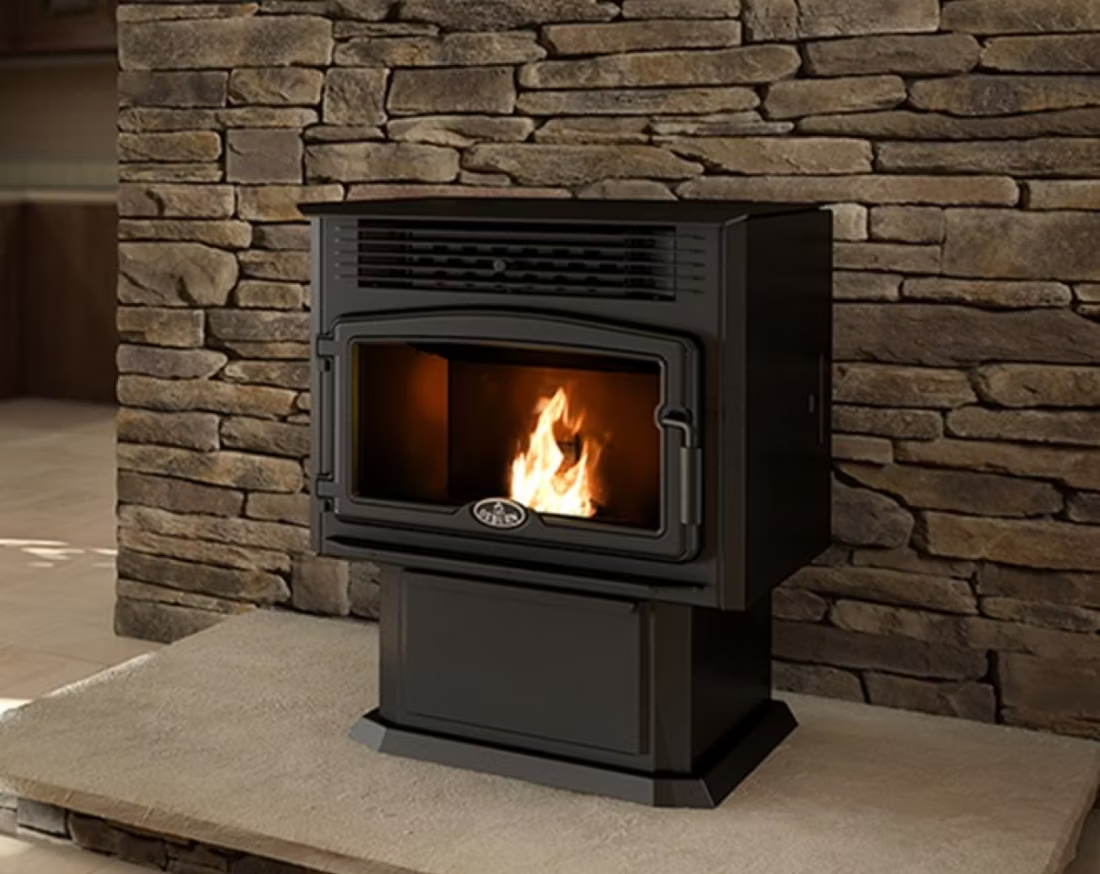
A pellet stove is a freestanding unit that sits on its own hearth pad and vents through an exterior wall or existing chimney—it can go almost anywhere in a room with the right clearances. A pellet insert is built to slide into an existing masonry fireplace opening, turning an old open hearth into a sealed, efficient heat source while reusing the chimney chase. For Lawrence County homes with an existing wood-burning fireplace that doesn't get used much, an insert is often the simpler retrofit; for homes without a fireplace already in place, a freestanding stove is usually the more straightforward install.
Do I need a permit to install a pellet stove in Lawrence County?
Permit requirements for hearth appliances vary by whether you're inside city limits (Mount Vernon, Aurora, Marionville) or in unincorporated Lawrence County, and by whether your installer needs to run new electrical for the stove's auger and blower. Most established local dealers handle the paperwork as part of the install so you're not tracking down the right office yourself. It's worth confirming with your dealer during the initial consultation rather than assuming either way—rules differ enough between municipalities in southwest Missouri that a blanket answer isn't reliable.
What's the best pellet stove for Lawrence County's climate?
Because Lawrence County's winters are moderate compared to the northern tier—22°F average lows rather than the sustained sub-zero stretches of a place like Bismarck or Minneapolis—homeowners here generally don't need a maxed-out, extended-burn unit. Mid-size pellet stoves with a standard hopper (40-60 lb capacity) that get a full night's burn on one fill are usually plenty. If the stove is meant to be a primary heat source for an older farmhouse with less insulation, a dealer may recommend a slightly larger hopper or higher max BTU output, but most in-town homes in Mount Vernon or Aurora do fine with a standard-capacity unit.
How often does a pellet stove need to be cleaned and serviced?
Pellet stoves need more frequent light maintenance than wood stoves but far less deep cleaning than a chimney sweep requires. Plan on emptying the ash pan every few days during regular use, cleaning the burn pot weekly, and scheduling a full professional service—checking the auger, exhaust blower, gaskets, and venting—once a year, typically before the season starts. Because pellet stoves rely on electric components (auger motor, combustion blower, control board), a service visit also catches mechanical wear before it causes a mid-winter breakdown.
Will my pellet stove work during a power outage?
No—this is the one real tradeoff of pellet heat. Pellet stoves rely on an electric auger to feed fuel and a blower to move combustion air, so they shut down when the power goes out, unlike a wood stove that keeps burning on its own. Some homeowners in rural Lawrence County pair a pellet stove with a small battery backup or generator specifically to keep it running through outages, since ice storms and summer thunderstorms both cause outages in this part of Missouri. If backup heat during outages is a priority, that's worth discussing with your dealer alongside the pellet stove itself.
Pellet stove vs. wood stove—which is right for my home?
Wood stoves burn local oak, hickory, walnut, or maple, work with no electricity at all, and offer the lowest ongoing fuel cost if you have access to free or cheap firewood—but they require splitting, stacking, hauling, and hands-on tending. Pellet stoves load from a bag, run on a thermostat, produce far less ash, and burn more consistently, but need electricity and a steady pellet supply from producers like Lignetics or Indeck Energy Services. For Lawrence County homeowners who want set-it-and-forget-it convenience and don't mind depending on grid power, pellet usually wins. For those who value complete independence from the power grid or already have a woodlot, wood remains the better fit.
How often does a pellet stove need cleaning?
A clean pellet stove is a happy pellet stove. Plan on cleaning the burn pot about once a week when you're burning regularly—ash and clinkers gum up the air holes just like a pellet barbecue. Most pellet stove problems trace back to skipped cleaning that nobody explained up front. Some designs make it easy with a trapdoor burn pot: pull a lever and the gunk drops into the ash pan.
Why is my open fireplace making my house colder?
Open fireplaces suck—literally. As the fire burns, it consumes air your furnace already paid to heat and pulls it out through the chimney, so the house is actually colder after the fire goes out than before you lit it. An insert fixes this: it seals the chimney, puts fixed glass across the front, and turns that hole in your house into a real heat source.
Does a fireplace add value to my home?
On average, a fireplace adds back to the home about the same amount you spent installing it. Add the monthly savings from heating the rooms you actually use instead of the whole house—often hundreds of dollars a year—and the value case is strong before you even count what a fire does for how your family uses the room.
How much should I budget for a fireplace?
For an average home—covering the fireplace, the vent pipe, and basic installation—a budget between $3,900 and $5,500 gives you a lot of options across wood, gas, and pellet. By the time you add finish work, gas line, and electrical, the average complete installation lands between $5,000 and $12,000 all-in. In a remodel or new build, a good rule is to put about 2.5% of the total project cost toward the fireplace.
Pellet Brands Stocked Around Lawrence County
Manufacturers will point you to the nearest stocking dealer.
Get matched with a pellet stove dealer in Lawrence County.
Tell me about your home and I'll send you a free Project Guide & Parts List—the right pellet stove or insert, the vent kit you'll need, and a trusted local dealer to install it.
Find Your Fireplace →