
Reliable heat for the cold snaps around Lake Lotawana.
With a long, cold heating season and winter lows that average 17°F, this small lake community east of Kansas City sees real cold. I'll match you with a trusted local dealer who knows the propane setup, the venting, and what's actually available around the lake.
Every Project Starts From One of These Five Situations
Convenient warmth without a woodpile.
Lake Lotawana sits at about 926 feet in Jackson County, a climate zone 4A pocket that runs closer to Madison, WI in winter severity than most people expect from a Kansas City suburb. Winter lows averaging 17°F, occasional ice storms, and a long, cold heating season mean a fireplace here isn't just for ambiance—it earns its keep as backup or zone heat when the furnace is working overtime. Air quality isn't a constraint the way it is in some western cities, so the decision between gas options usually comes down to venting and fuel access rather than any local air-quality ordinance.
This is a small, mostly residential lake community, and unlike the surrounding hardwood country—oak, hickory, walnut, and maple stands are common on the ridges around the lake—most homeowners here aren't set up to cut and season their own firewood at scale, so wood-burning stoves and pellet appliances see little demand. Gas fills that gap well: there's no natural gas utility serving most addresses directly around the lake, so propane tanks are the standard setup, and a properly sized direct-vent unit gives you real, on-demand heat that keeps running through the ice storms that periodically knock out power from Evergy Missouri West.
Three steps. No salesperson until you're ready.
Tell us about your project
Your zip code, your situation, and the fuel you're leaning toward—or let the answers point you to one.
See what's actually available
The brands dealers within 100 miles genuinely carry—real options, never a catalog mirage.
Get your dealer & Project Guide
A trusted local dealer, plus the free Project Guide & Parts List that names every component of the job.
Frequently Asked Questions
How much does a gas fireplace installation cost near Lake Lotawana?
Plan on roughly $3,500 to $9,500, with the spread coming down to propane setup and scope of work. A direct-vent propane insert going into an existing masonry firebox—common in the older homes built when this was mostly a summer-cabin community—sits toward the lower end. A new built-in unit for a remodel or addition, including a fresh propane line run from the tank and venting through an exterior wall, lands higher. Since there's no natural gas main serving most of the lake, tank sizing and placement is usually the first conversation your installer has with you.
Can I convert an existing wood-burning fireplace to gas?
Yes, and it's a common upgrade around the lake, especially in older cabins and cottages originally built around a masonry fireplace meant for local oak or hickory. A propane insert typically drops into that existing firebox using a stainless liner run up the current chimney, which keeps the exterior look intact. Since most properties here run on propane rather than a gas utility, your installer will also confirm tank capacity and line distance as part of the quote—that's usually the deciding factor on final cost.
Do homes around Lake Lotawana use natural gas or propane?
Propane is the default for most addresses in and around Lake Lotawana. There isn't a natural gas utility running mains through most of this community, so homeowners typically either already have a propane tank for their water heater and range, or they set one up specifically for the fireplace install. If you're unsure what serves your address, a local dealer can check before recommending equipment, since some fireplace models are propane-specific and others can be configured for either fuel.
Will a gas fireplace keep working if the power goes out?
Most will, which matters here given how often winter ice storms take down power lines around the lake and interrupt service from Evergy Missouri West. Units with IPI (intermittent pilot ignition) run on AA battery backup that kicks in automatically. Valor fireplaces skip the battery question entirely—their pilot's thermocouple generates its own electricity to run the valve, so the fireplace works even during a multi-day outage. Given how exposed this area is to ice, that detail is worth asking about before you buy.
What's the difference between a gas fireplace, insert, and stove?
A gas fireplace is a built-in unit framed into a wall, typically chosen for new construction or a remodel on newer homes around the lake. A gas insert fits inside an existing masonry firebox, which is the more common route in older lakefront cottages that already have a chimney chase built for wood. A gas stove is freestanding on a hearth pad, similar in footprint to a wood stove but running on propane line instead of cordwood—a good option if you want a stove look without dealing with oak or hickory rounds.
Do I need a permit to install a gas fireplace near Lake Lotawana?
Yes. Depending on your exact address, you'll pull a building permit through the City of Lake Lotawana or through Jackson County if your property falls outside city limits, plus a separate mechanical or gas permit since propane line work requires a licensed gas-fitter. Most established hearth dealers in the Kansas City area coordinate the permit, the propane line hookup, and the final inspection as part of the install, so you're not managing multiple trades on your own.
Vented vs. vent-free gas fireplaces—what should I know?
Vented, direct-vent units draw combustion air from outside and exhaust it back outside through sealed pipe—they're the safer, more flexible choice and work in any room size. Vent-free units burn directly into the living space and are legal under Missouri code, but they come with strict room-volume requirements and aren't a great fit for smaller lake cottages with tighter floor plans. Since air quality isn't a local regulatory concern here the way it is in some western cities, the choice mostly comes down to room size and whether you have a place to run venting—a local dealer will walk the space before recommending either.
How often should a gas fireplace be serviced?
An annual inspection in late summer or early fall, before the coldest stretch hits, is the standard recommendation. A technician checks the burner, pilot assembly, propane connections, and venting, and cleans the glass—a lighter lift than a wood chimney sweep but still important on a unit that might be running daily through a Missouri winter with routine ice events. Expect to pay in the $150-$250 range for a standard visit, and it's a good time to confirm your propane tank level heading into the season.
Why don't more homes around Lake Lotawana burn wood instead of gas?
There's plenty of oak, hickory, walnut, and maple in the hills around the lake, and a handful of homeowners do still run a wood stove or an open masonry fireplace for occasional use. But this is a small, mostly residential lake community without the public land cutting permits or bulk firewood infrastructure you'd find in more rural parts of Missouri, so sourcing and seasoning enough wood for regular heat is more of a hassle than it's worth for most people. Gas—almost always propane here—gives homeowners the same backup-heat value during ice storm outages without needing a woodshed.
Why is my open fireplace making my house colder?
Open fireplaces suck—literally. As the fire burns, it consumes air your furnace already paid to heat and pulls it out through the chimney, so the house is actually colder after the fire goes out than before you lit it. An insert fixes this: it seals the chimney, puts fixed glass across the front, and turns that hole in your house into a real heat source.
Can I put a TV above my fireplace?
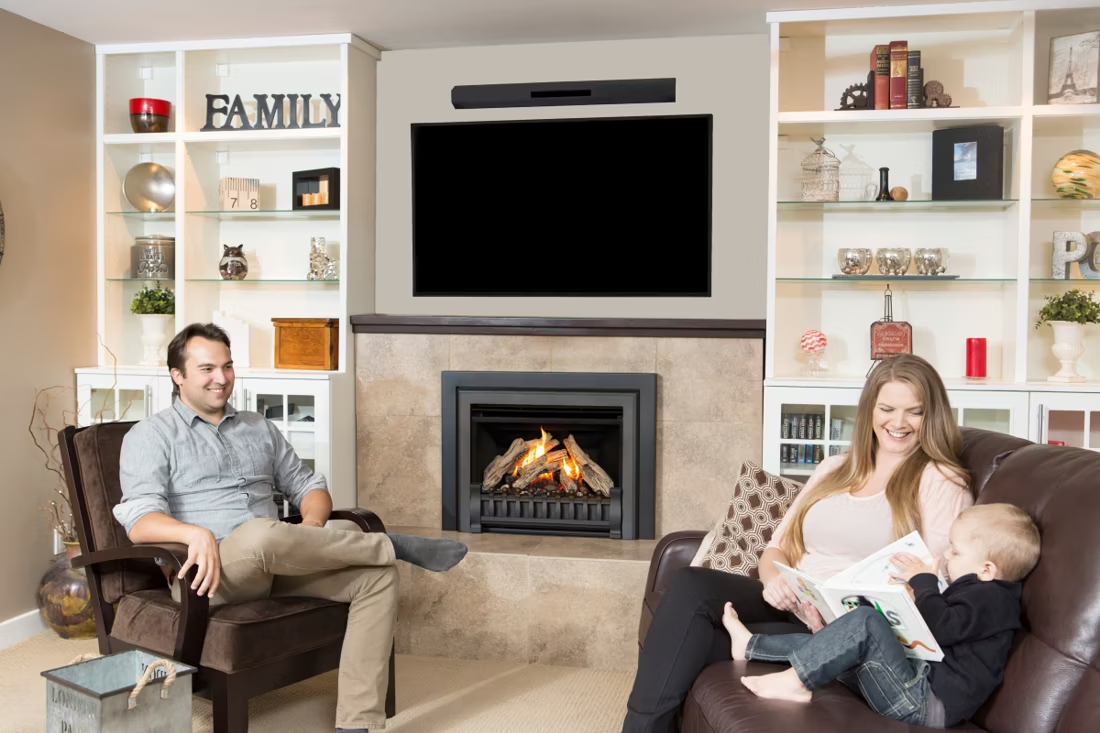
Yes—with an asterisk. Fireplaces are hot and TVs don't like heat. Either put a mantel between them to deflect rising warmth, or choose a fireplace with heat-management technology that creates a cool zone on the wall above—the wall stays around 125 degrees, barely warm, while the room still gets full heat. If you like clean lines and don't want a mantel, heat management is the answer.
Can I install a fireplace myself?
If you're putting a fire in your house on purpose, it's best to work with an expert. Unless you're genuinely experienced in framing, gas line, vent pipe, and the national code on clearances to combustibles, have a professional do it—and ideally the same company that sells you the fireplace, so warranty, service, and liability all live under one roof.
Does a fireplace add value to my home?
On average, a fireplace adds back to the home about the same amount you spent installing it. Add the monthly savings from heating the rooms you actually use instead of the whole house—often hundreds of dollars a year—and the value case is strong before you even count what a fire does for how your family uses the room.
Nearby Dealers
Hearth shops serving Lake Lotawana and the surrounding area. Every listing shows whether it is a WhyFire partner, a dealer we have verified as authorized for the brands we recommend, or a local business carrying hearth products. No manufacturer pays for placement. How we verify dealers →
Dillon Heating & Cooling Solutions
The Hayes Co.
Get your free Project Guide & Parts List for a gas fireplace near Lake Lotawana.
Tell me about your home and your propane setup, and I'll match you with a trusted local dealer and send a free Project Guide & Parts List with the exact vent kit and parts your project needs.
Find Your Fireplace →