
Real fireplace warmth, no chimney required.
From the antebellum brick homes of Lexington to the farmhouses and rentals scattered across Lafayette County, electric fireplaces add real ambiance and zone heat without venting, gas lines, or masonry work. Find the right unit and get matched with a trusted local dealer.
Every Project Starts From One of These Five Situations
The easiest fireplace upgrade in the county.
Lafayette County sits along the Missouri River between Kansas City and Columbia, anchored by Lexington—the county seat and site of the 1861 Battle of Lexington—with Odessa, Higginsville, Concordia, Wellington, Corder, and Waverly spread across the surrounding farmland. With a population of just over 21,000 spread across small towns and rural acreage, the county sits in climate zone 4A with a solid, six-month heating season and an average winter low near 18°F. That's a real, honest cold season—colder than most of the mid-South, though nowhere near what a place like Bismarck, ND deals with—and it means most homes here run a furnace as primary heat and look for something else to warm a specific room or add character to a living space.
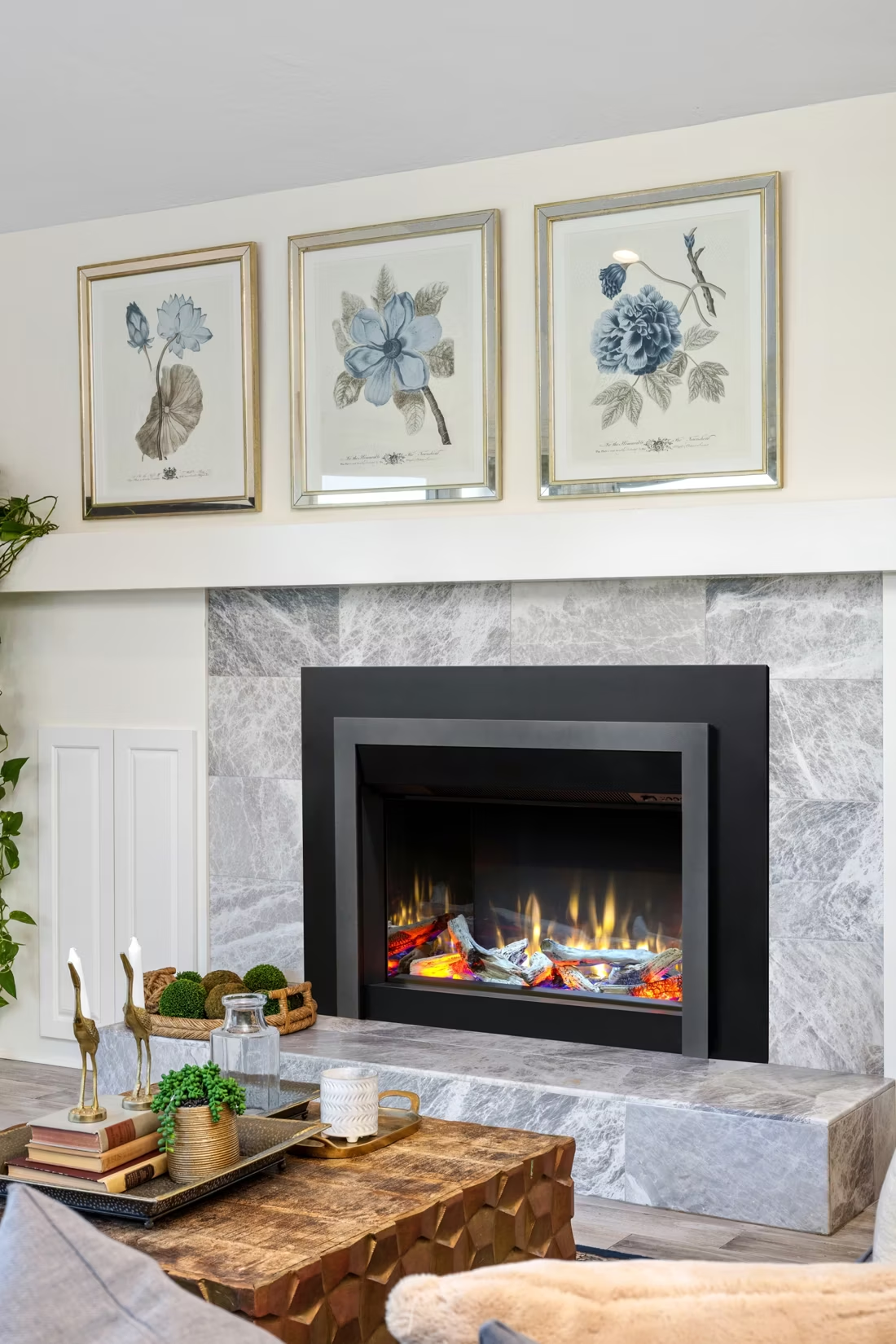
That's where electric fireplaces do their best work. Lexington's historic district is full of antebellum brick homes where owners are understandably reluctant to cut new venting or run gas lines through original masonry—an electric insert drops into an existing fireplace opening and plugs into a standard outlet, no structural changes needed. The same logic applies to rentals and apartments in Odessa and Higginsville, finished basements, and additions where running a chimney or gas line just isn't practical. Whether your home draws power from municipal service in one of the county's towns or a rural electric cooperative out in the farmland, an electric fireplace is one of the few heating upgrades that doesn't touch your utility hookup at all.
Three steps. No salesperson until you're ready.
Tell us about your project
Your zip code, your situation, and the fuel you're leaning toward—or let the answers point you to one.
See what's actually available
The brands dealers within 100 miles genuinely carry—real options, never a catalog mirage.
Get your dealer & Project Guide
A trusted local dealer, plus the free Project Guide & Parts List that names every component of the job.
Frequently Asked Questions
How much does an electric fireplace installation cost in Lafayette County?
Electric fireplace units themselves typically run $300 to $3,500 depending on whether you're looking at a basic wall-mount, a built-in linear unit, or a full insert designed to slide into an existing masonry fireplace. Because there's no venting, no gas line, and no chimney work involved, installation labor is far lower than wood or gas—often $150 to $500 for a straightforward insert or mount, more if you need a dedicated 20-amp circuit run for a higher-wattage unit or custom surround carpentry. Homes in Lexington's historic district sometimes add cabinetry or trim work to match existing woodwork, which adds to the total but doesn't touch the fireplace opening itself.
Can an electric fireplace actually heat a room, or is it just for looks?
Most electric fireplaces include a real heating element—typically 1,500 watts, the standard for a 120-volt household circuit—capable of warming a single room of 400 to 1,000 square feet depending on insulation and ceiling height. That's genuinely useful supplemental heat during Lafayette County's cold stretches, especially in a finished basement, a sunroom, or an add-on that the main furnace struggles to reach evenly. It won't replace a furnace on an 18-degree night, but it can let you turn the thermostat down a few degrees while keeping the room you're actually sitting in comfortable. Some homeowners also run the flame effect alone, without heat, during the milder shoulder-season months.
Do I need a permit to install an electric fireplace in Lafayette County?
In most cases, no. Because electric fireplaces don't involve combustion, venting, or gas lines, they typically fall outside the permitting requirements that apply to wood stoves and gas inserts. The one exception is if the installation requires new electrical wiring—a dedicated circuit for a higher-draw built-in unit, for example—in which case an electrician may need to pull an electrical permit through the appropriate city or county building office, depending on whether you're inside Lexington, Odessa, Higginsville, or unincorporated Lafayette County. Plug-in inserts and wall-mounts that use existing outlets generally require nothing at all.
What's the best option for a historic home in Lexington?
For the brick antebellum homes that make up much of Lexington's historic district, an electric insert built to fit a standard fireplace opening is usually the cleanest answer. It slides into the existing masonry firebox, requires no new venting or flue work, and can be removed later without leaving any permanent alteration—an important consideration in a district where exterior and structural changes often need to respect historic preservation guidelines. Many owners choose a realistic flame model with adjustable heat so the fireplace still functions as a legitimate secondary heat source during Lafayette County's colder months, not just a decorative insert.
How does an electric fireplace compare to burning wood in Lafayette County?
Lafayette County has good hardwood available locally—oak, hickory, walnut, and maple are all common in the area—and there's no air quality restriction here that limits wood burning, so a wood stove or insert remains a completely viable choice, especially for anyone wanting a genuine backup heat source during a power outage. Electric wins on convenience: no cutting, splitting, or stacking, no ash to clean up, no chimney to sweep annually, and no smoke for anyone with allergies or asthma in the house. The tradeoff is that electric fireplaces stop working the moment the power goes out, which matters more in the rural parts of the county than in Lexington or Odessa proper. Many households end up with both—wood for real backup heat, electric for the rooms where convenience matters more.
Electric vs. propane fireplace—which makes more sense out in the rural parts of the county?
Outside of Lexington, Odessa, and Higginsville, natural gas service is limited across much of Lafayette County's farmland, which pushes most gas fireplace installs toward propane—meaning a tank, a delivery contract, and ongoing fuel costs. An electric fireplace sidesteps all of that; there's no tank to site, no delivery schedule to manage, and no risk of running out mid-winter. Propane still delivers higher heat output for whole-room heating during genuinely cold stretches, so for a primary living space in an older farmhouse, propane gas inserts remain popular. For secondary rooms, additions, or anywhere convenience matters more than raw BTUs, electric is usually the simpler call.
Electric vs. pellet stove—which is the better fit?
Pellet stoves burning bagged fuel from regional suppliers like Lignetics or Indeck Energy Services are a legitimate option in Lafayette County and put out real, sustained heat—but they require a hopper to load, an auger and blower that both need electricity to run anyway, and periodic ash cleanout. An electric fireplace skips the fuel entirely: no bags to store, no ash, no annual service visit. If you want serious heat output for a whole room and don't mind the maintenance, pellet is worth a look. If you want a clean, low-maintenance upgrade with adjustable ambiance, electric is the simpler path—and it's the only one of the two that keeps working with just a flip of a switch.
How much does it cost to run an electric fireplace day to day?
A typical 1,500-watt electric fireplace running on the heat setting costs roughly 15 to 25 cents per hour to operate, depending on your electricity rate—running it for a few hours each evening during Lafayette County's coldest months typically adds somewhere in the range of $15 to $40 a month, well below what most propane or full-home electric heating costs for the same square footage. Running the flame effect alone without heat draws a fraction of that, often just a few cents an hour, which is why many homeowners leave the ambiance on year-round and only engage the heater during genuinely cold stretches.
What's the difference between an electric fireplace, insert, and wall-mount unit?
A built-in electric fireplace is designed to be framed into a wall during new construction or a remodel, giving the cleanest, most fireplace-like look. An electric insert is sized to slide into an existing masonry or wood-fireplace opening—the most common choice for Lafayette County's older homes with existing fireboxes, including much of Lexington's historic housing stock. A wall-mount unit hangs directly on a wall like a large flat-screen television, requiring no existing opening at all, which makes it popular in apartments, rentals, and rooms without a fireplace to begin with. All three plug into standard household power in most cases; a local dealer can tell you quickly which fits your specific room and wiring.
Can I put a TV above my fireplace?
Yes—with an asterisk. Fireplaces are hot and TVs don't like heat. Either put a mantel between them to deflect rising warmth, or choose a fireplace with heat-management technology that creates a cool zone on the wall above—the wall stays around 125 degrees, barely warm, while the room still gets full heat. If you like clean lines and don't want a mantel, heat management is the answer.
Do electric fireplaces actually produce heat?
Yes—most put out around 4,800–5,000 BTUs from a standard outlet, which comfortably warms a bedroom, office, or den as a comfort-zone heater. What they won't do is carry a whole house the way wood, gas, or pellet can. Think of electric as ambiance-first with honest supplemental heat: flames on with no heat in July, flames plus warmth in January.
Can a fireplace actually lower my heating bill?
Yes—by creating a comfort zone. A furnace heats every square foot of the house just to warm the one room you're in; a gas fireplace on low burns roughly a sixth of the gas a typical furnace does. Set the furnace around 55–60 degrees as a baseline, then heat the rooms your family actually uses. Families who heat this way commonly save $20–$60 a month.
What is an in-home preview and do I need one?
It's a visit where a hearth professional measures your space, confirms the model you picked actually works in your home, and walks the specs—framing, gas line, venting, finish work—before anything is ordered. Some details you just can't know until you see the house. Never make a down payment without one; it's the single most-skipped step that burns buyers.
Stove and Fireplace Dealers in Lafayette County
Find your electric fireplace in Lafayette County.
Tell us a bit about your home—historic, rental, new build, or farmhouse—and we'll send you a free Project Guide & Parts List: the right electric fireplace or insert for your space, the exact parts you'll need, and a trusted local Lafayette County dealer to install it.
Find Your Fireplace →