
Steady pellet heat for Knox County's long, cold winters.
From Edina to Novelty, Hurdland, and Baring, pellet stoves deliver thermostat-like warmth through Knox County's six-month heating season—without the daily wood-splitting. Find the right unit and connect with a trusted local dealer.
Every Project Starts From One of These Five Situations
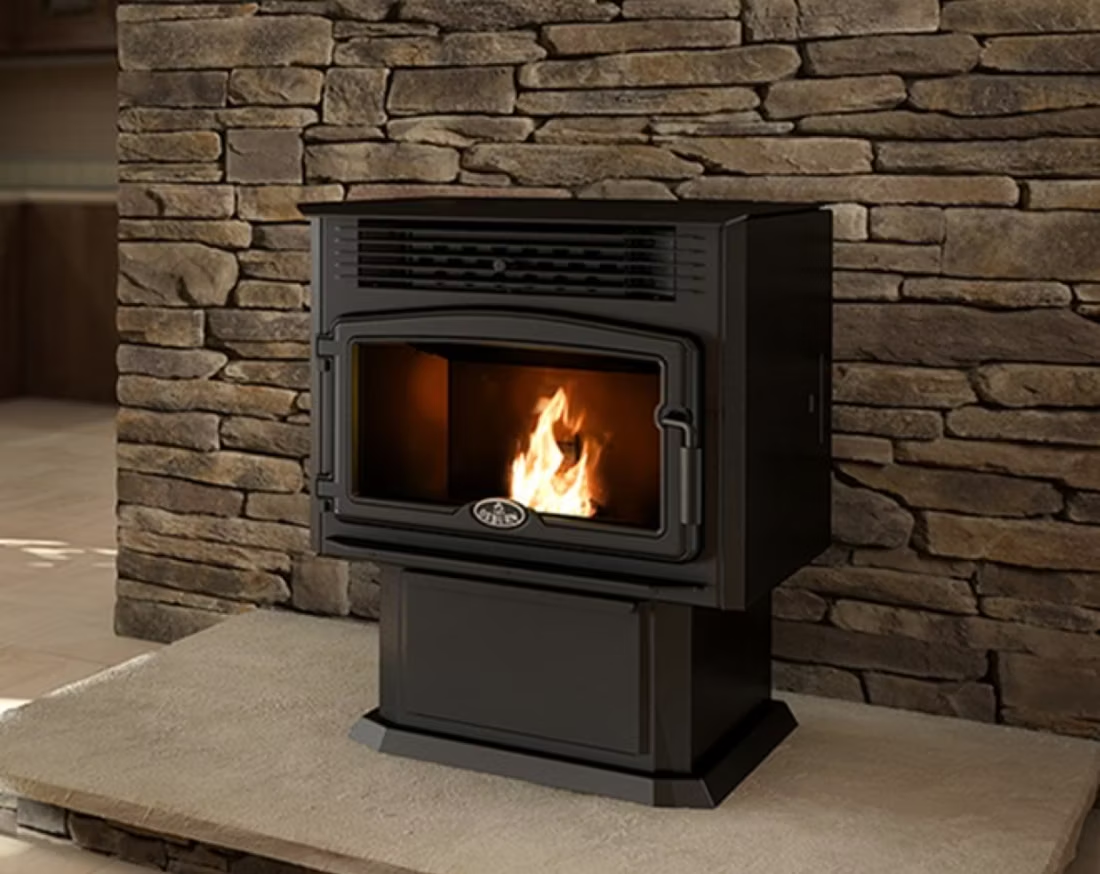
Consistent heat without the woodpile.
Knox County is farm country—about 1,910 people spread across roughly 508 square miles of northeast Missouri cropland and pasture, with Edina serving as the county seat and small communities like Novelty, Hurdland, and Baring scattered along the rural routes. Winters here run long: Climate Zone 5A, 6,149 heating degree days, and average lows around 14°F, cold enough that a hard freeze is normal from November through March—closer to a Madison, Wisconsin winter than what most of Missouri sees. Oak, hickory, walnut, and maple are all common on local timber ground, and cutting your own firewood remains a real tradition here. But for households without the time, equipment, or physical ability to buck, split, and stack cordwood every fall, a pellet stove delivers a comparable amount of heat with a fraction of the labor.
There's no natural gas infrastructure or urban air district to navigate in Knox County, and no air quality non-attainment concerns to work around, so pellet stoves here are chosen for convenience and steady output rather than emissions rules. Regional pellet supply runs through brands like Lignetics and Indeck Energy Services, typically sold by the ton in 40-lb bags through farm stores and hearth dealers in Kirksville or across the river in Quincy, Illinois—both about a 30-to-40-minute drive from Edina. Because pellet stoves vent through a small-diameter wall pipe rather than a full masonry chimney, permitting through the Knox County Commission in Edina is generally simpler than a wood-burning install, though a permit and proper wall clearance are still required.
Three steps. No salesperson until you're ready.
Tell us about your project
Your zip code, your situation, and the fuel you're leaning toward—or let the answers point you to one.
See what's actually available
The brands dealers within 100 miles genuinely carry—real options, never a catalog mirage.
Get your dealer & Project Guide
A trusted local dealer, plus the free Project Guide & Parts List that names every component of the job.
Frequently Asked Questions
How much does a pellet stove installation cost in Knox County?
A pellet stove installation in Knox County typically runs $3,000 to $6,500 all-in, depending on the unit and the venting path. Because pellet stoves exhaust through a small PL-vent pipe run through an exterior wall rather than a full masonry chimney, the venting work itself is usually far less expensive than a wood stove or fireplace install—most of the cost is the stove itself plus the electrical outlet needed to run the auger and blower. Homes without an existing outlet near the install location, or installs that require a longer horizontal vent run, will land toward the higher end. A local dealer serving Edina and the surrounding county can give a firm quote after seeing your space.
What size pellet stove do I need for a Knox County farmhouse?
Sizing depends on square footage, ceiling height, and how drafty the home is—a real consideration in Knox County's older farmhouses, many of which weren't built with modern insulation. Smaller units (around 40,000–50,000 BTU) are enough for a single large room or a well-sealed smaller home; larger units (up to 90,000 BTU) can serve as primary heat for a full farmhouse in a county that regularly sees single-digit lows. Hopper size matters too—a larger hopper means fewer refills during the multi-day cold stretches that come through this part of northeast Missouri each winter. A local dealer can size your specific home rather than relying on a square-footage chart alone.
Where can I buy pellet fuel and find a dealer near Knox County?
Bagged pellets from brands like Lignetics and Indeck Energy Services are the most common regional supply, sold by the ton (roughly fifty 40-lb bags) through farm and hearth retailers in Kirksville, about 30 minutes southwest of Edina, and in Quincy, Illinois, across the Mississippi to the east. Because Knox County itself is thinly populated—under 2,000 residents countywide—there isn't a hearth showroom in Edina proper, so most homeowners either have pellets delivered by the pallet or make a supply run a few times each winter. Buying a full season's supply (roughly 2-3 tons for an average farmhouse) in late summer or early fall, before demand and pricing tighten up, is the common local strategy.
Pellet stove or wood stove—which fits better in Knox County?
Both work well here, and the choice usually comes down to labor versus convenience. Knox County has plenty of oak, hickory, walnut, and maple on local timber ground, and cutting your own firewood is still common practice for landowners with the time and equipment. A wood stove costs nothing to fuel if you're cutting your own, and it keeps working during a power outage—a real consideration on rural electric lines that can go down in an ice storm. A pellet stove trades that self-sufficiency for consistent, thermostat-controlled heat, easier loading, and far less ash and creosote to manage—appealing for smaller households, older homeowners, or anyone without a place to season a woodpile. Many Knox County homes end up with a wood stove or fireplace for backup and ambiance, and a pellet stove for the day-to-day heating load.
Do I need a permit to install a pellet stove in Knox County?
Yes—a building permit is required for a new pellet stove installation, issued through the Knox County Commission's building department in Edina for anything outside city limits, or through the applicable town office for in-town installs like Edina or Hurdland. Compared to a wood stove or masonry fireplace, the permit review for a pellet stove is usually straightforward, since the venting is a small wall-mounted pipe rather than a full chimney system. Most local dealers handle the permit paperwork as part of the installation, so it's rarely something a homeowner has to navigate alone.
Will my pellet stove work if the power goes out?
No—unlike a wood stove, a pellet stove needs electricity to run the auger that feeds pellets into the burn pot and the blower that circulates heat, so it will shut down in an outage. This matters in Knox County, where rural electric cooperative lines can go down for hours or longer during ice storms—a fairly regular winter event in northeast Missouri. Homeowners who want pellet convenience but also need backup heat during outages often pair a pellet stove with a small generator sized to run the stove's electrical load, or keep a wood stove or fireplace as a true off-grid backup. Ask your local dealer about the specific wattage draw of any unit you're considering.
What's the best pellet stove for Knox County's winters?
Look for a stove with a large hopper capacity and a high BTU output rating, since Knox County's 6,149 heating degree days and average winter lows near 14°F mean long, steady heating demand rather than occasional use. A hopper that holds 40-plus pounds of pellets can run through an overnight or a full workday without a refill, which matters during the multi-day cold snaps that move through northeast Missouri each winter. For an older, less-insulated farmhouse, sizing up slightly and prioritizing a stove with a strong convection blower will help push heat into rooms farther from the unit. A local dealer can match hopper size and BTU output to your specific square footage and insulation level.
How often does a pellet stove need to be cleaned and serviced?
Pellet stoves need more frequent light maintenance than a wood stove, but far less than the annual chimney sweep a wood-burner requires. Plan on emptying the ash pan every few days during regular winter use, cleaning the burn pot weekly to keep the stove burning efficiently, and a full professional service—including the exhaust fan, hopper, and venting—once a year, typically before the start of the heating season. Skipping the annual service is the most common cause of pellet stoves running poorly or shutting down mid-winter, so it's worth scheduling with a local dealer or technician before the cold sets in.
Pellet stove vs. gas fireplace—which makes more sense in Knox County?
Gas fireplaces offer instant on-off convenience and don't require any fuel handling, but most Knox County homes outside town rely on propane rather than piped natural gas, which means a tank installation and periodic propane deliveries. Pellet stoves run on bagged fuel that's easy to store in a garage or outbuilding and typically cost less per BTU than propane in this part of Missouri, though they do require electricity to operate and a bit more hands-on loading than a gas unit. For homeowners who want a real flame with hands-off heat and don't mind loading a hopper every day or two, pellet is usually the better value; for those who want zero fuel handling and already have propane service for other appliances, a gas fireplace or insert is the simpler path. A local dealer can walk through both options based on what's already running to your home.
How often does a pellet stove need cleaning?
A clean pellet stove is a happy pellet stove. Plan on cleaning the burn pot about once a week when you're burning regularly—ash and clinkers gum up the air holes just like a pellet barbecue. Most pellet stove problems trace back to skipped cleaning that nobody explained up front. Some designs make it easy with a trapdoor burn pot: pull a lever and the gunk drops into the ash pan.
What's the difference between an insert and a zero-clearance fireplace?
An insert is a fireplace that slides into a pre-existing wood-burning fireplace—if you don't have one, there's nothing to insert it into. A zero-clearance fireplace is built into a framed wall, which makes it the answer for remodels and new construction. Simple test: existing masonry fireplace means insert; blank or framed wall means zero-clearance.
How much should I budget for a fireplace?
For an average home—covering the fireplace, the vent pipe, and basic installation—a budget between $3,900 and $5,500 gives you a lot of options across wood, gas, and pellet. By the time you add finish work, gas line, and electrical, the average complete installation lands between $5,000 and $12,000 all-in. In a remodel or new build, a good rule is to put about 2.5% of the total project cost toward the fireplace.
Can a fireplace actually lower my heating bill?
Yes—by creating a comfort zone. A furnace heats every square foot of the house just to warm the one room you're in; a gas fireplace on low burns roughly a sixth of the gas a typical furnace does. Set the furnace around 55–60 degrees as a baseline, then heat the rooms your family actually uses. Families who heat this way commonly save $20–$60 a month.
Pellet Brands Stocked Around Knox County
Manufacturers will point you to the nearest stocking dealer.
Find your pellet stove in Knox County.
Tell us a bit about your home and we'll match you with the right pellet stove or insert, plus a free Project Guide & Parts List—and connect you with a trusted local dealer serving Knox County.
Find Your Fireplace →