
A Niche Fit for Joplin's Mild Winters.
Pellet appliances aren't the default heat source here, but a handful of Joplin homeowners still choose one for supplemental warmth and easy operation. We'll help you find a dealer who actually stocks and installs them.
Every Project Starts From One of These Five Situations
Pellet stoves aren't the local default—but they still have a place.
Joplin sits in climate zone 4A with about 4,120 heating degree days and a typical winter low around 25°F—a real but moderate heating season, nowhere near the demands of a place like Duluth, MN or Fargo, ND. With affordable natural gas widely available across the city and competitive electric rates from providers like Barton County Electric Cooperative (around 12.6 cents per kWh), most Jasper County homes lean on central gas furnaces or heat pumps rather than a standalone solid-fuel appliance. That's a big part of why pellet stoves show up as a niche choice here rather than a mainstream one—the fuel-cost math and convenience math just favor gas and electric for most households.
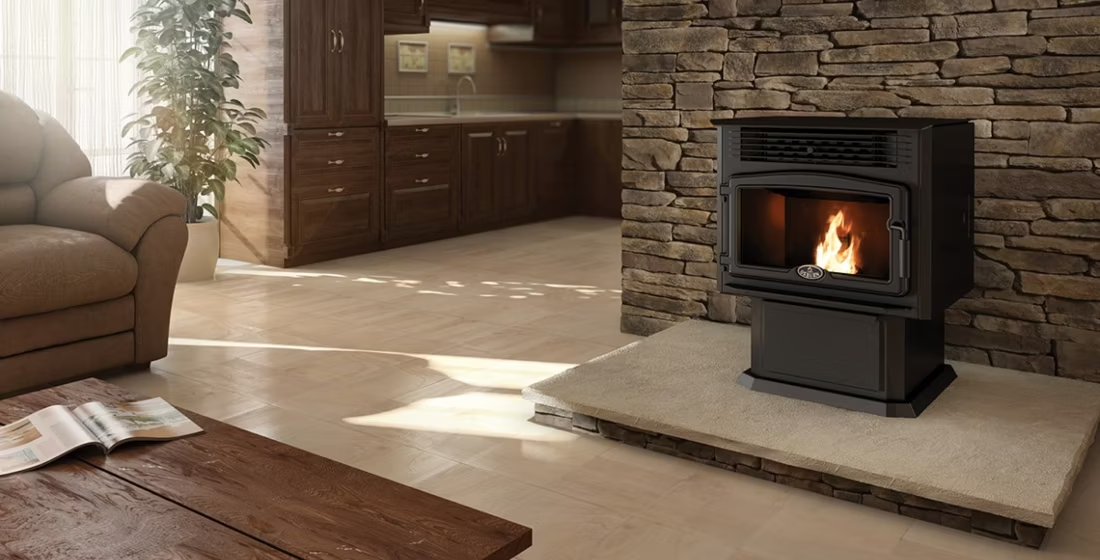
That said, pellet appliances haven't disappeared from the Joplin market. Homeowners who want a self-feeding, low-maintenance zone-heat option for a den, sunroom, or finished basement—without stacking and hauling cordwood despite the abundant local oak, hickory, walnut, and maple—still look at pellet stoves and inserts. Pellet supply isn't as visible here as in colder pellet-heavy states, but bags from national manufacturers like Lignetics show up seasonally at farm and hardware stores, and industrial suppliers like Indeck Energy Services serve the broader regional market. If a pellet stove is genuinely the right tool for your space, a trusted local dealer can tell you honestly whether it's worth the investment versus a gas insert—and can source the unit and pellets for you.
Three steps. No salesperson until you're ready.
Tell us about your project
Your zip code, your situation, and the fuel you're leaning toward—or let the answers point you to one.
See what's actually available
The brands dealers within 100 miles genuinely carry—real options, never a catalog mirage.
Get your dealer & Project Guide
A trusted local dealer, plus the free Project Guide & Parts List that names every component of the job.
Frequently Asked Questions
Are pellet stoves actually common in Joplin homes?
Not really, and it's worth saying plainly: pellet stoves are a minority choice in Joplin. With natural gas broadly available and electric rates from Barton County Electric Cooperative running around 12.6 cents per kWh, most homeowners here heat with a gas furnace, heat pump, or a gas fireplace rather than a pellet appliance. Joplin's winters, averaging around 25°F lows and roughly 4,120 heating degree days, are moderate compared to the pellet-heavy Upper Midwest and Northeast, where pellet stoves are genuinely mainstream. That doesn't mean pellet heat is a bad fit for every home—it just means you'll want a dealer who can speak honestly about whether it beats the alternatives for your specific situation.
How much does a pellet stove installation cost in Joplin?
Because so few Joplin dealers stock and install pellet appliances regularly, pricing here tracks closer to national averages than a hyper-local number: expect roughly $3,000 to $6,000 for a freestanding pellet stove or insert including venting, hearth pad work, and labor. Homes without an existing chimney or hearth will land toward the higher end once you factor in wall or roof penetration for the pellet vent pipe. Get a firm, in-home quote from a local retailer before committing—with limited local competition, prices can vary more than they would in a market where pellet stoves are the norm.
Where can I buy pellets in Joplin?
Pellet supply in Joplin is seasonal and less centralized than in colder states. Bags from national brands like Lignetics typically show up at farm supply stores and some hardware retailers in the fall and winter months, and it's worth calling ahead before driving out, since stock can be inconsistent when demand is low. Indeck Energy Services operates more on the industrial and commercial biomass side regionally, so it's not a direct residential retail source. If you're considering a pellet stove, ask your installer where they recommend sourcing pellets locally—many dealers can point you to a reliable seasonal supplier or arrange a standing order.
Will a pellet stove keep my house warm if the power goes out?
No—this is the single biggest thing to understand before choosing pellet heat in Jasper County, where ice storms and severe spring weather periodically knock out power. Pellet stoves rely on an electric auger to feed fuel and a blower to circulate heat, so they shut down the moment the power does, unlike a wood stove or a battery-backed gas fireplace. Some homeowners pair a pellet stove with a small battery backup or generator specifically to keep it running through outages, but out of the box, a pellet stove is not an off-grid heat source. If storm-proof backup heat is your priority, a wood stove or a gas unit with IPI ignition may be a better match for Joplin's outage risk.
Do I need a permit to install a pellet stove in Joplin?
In most cases, yes—a pellet stove installation involves both a wall or roof vent penetration and, depending on your setup, a hearth pad modification, both of which typically require a building permit from the City of Joplin's building services division or, for homes outside city limits, Jasper County. Since pellet stove permitting is far less routine here than gas or electric work, it's worth confirming directly with the local building department before installation. Most established hearth dealers who work in this market will pull the permit and schedule the inspection as part of the install, which is one more reason to go through a dealer rather than a DIY install.
Pellet stove vs. gas fireplace—which makes more sense for a Joplin home?
For most Joplin homeowners, gas wins on convenience and total cost of ownership. Natural gas is broadly available across the city, gas fireplaces and inserts run on demand with no fuel storage or loading, and service and parts are far easier to find locally than pellet stove support. A pellet stove can still make sense if you want the visual and slightly more radiant feel of a burning fuel bed, don't have gas service to the room in question, or want to reduce fuel-cost exposure during price spikes—pellets are sold by the ton or bag rather than metered like gas. But given how thin the local pellet-stove dealer and service network is compared to gas, most homeowners here end up choosing gas unless they have a specific reason not to.
Pellet stove vs. electric fireplace—which is the better fit here?
It depends on what you're solving for. Electric fireplaces and inserts are simple, need no venting, no fuel storage, and run cleanly off Barton County Electric Cooperative service at a predictable per-kWh cost—a good fit for supplemental ambiance heat in a Joplin home that already leans on electric heat pumps. A pellet stove produces genuine radiant heat with a real flame and can outperform electric resistance heat on raw BTU output for the fuel dollar, but it adds fuel storage, periodic ash cleanout, and a maintenance routine electric units don't require. For most secondary-room heating needs in this climate, electric is the lower-hassle choice; pellet only pulls ahead if you specifically want more heat output than an electric unit delivers.
How much maintenance does a pellet stove need compared to burning wood?
Pellet stoves are lower-maintenance than cordwood in some ways and higher in others. You won't be splitting, stacking, or seasoning oak and hickory like a wood-stove owner would, and ash production is much lower per BTU. But pellet stoves have mechanical components—the auger motor, exhaust blower, and combustion fan—that wood stoves don't, and those need periodic cleaning and occasional replacement. Plan on cleaning the burn pot and ash pan weekly during heavy use, a deeper glass and venting cleaning monthly, and an annual professional service visit to check the motors and gaskets. Given how few technicians in the Joplin area specialize in pellet stove service, ask your dealer up front who handles annual maintenance before you buy.
What size pellet stove do I need for a Joplin home?
Because Joplin's winters are moderate—around 25°F average lows and roughly 4,120 heating degree days—most homes here only need a pellet stove for supplemental zone heat rather than whole-house heating, so a small to mid-size unit (rated for 1,000 to 1,800 square feet) is usually plenty for a den, bonus room, or open living area. A larger unit built for whole-home heating is rarely necessary given how mild the climate is compared to the pellet-heavy Upper Midwest. A local dealer can size the unit to your actual room and insulation rather than your whole square footage, which matters more for a supplemental appliance than a primary heat source.
Why is a fireplace insert so efficient?
An insert does two things: it seals the chimney completely, so you stop losing air you already paid to heat, and it radiates warmth into the room through the firebox and glass. Most add a heat-exchange fan that pulls cool room air underneath, wraps it around the hot firebox, and pushes it back out warm. Your home is more efficient before you've even lit the first fire.
What's the difference between an insert and a zero-clearance fireplace?
An insert is a fireplace that slides into a pre-existing wood-burning fireplace—if you don't have one, there's nothing to insert it into. A zero-clearance fireplace is built into a framed wall, which makes it the answer for remodels and new construction. Simple test: existing masonry fireplace means insert; blank or framed wall means zero-clearance.
Can a fireplace actually lower my heating bill?
Yes—by creating a comfort zone. A furnace heats every square foot of the house just to warm the one room you're in; a gas fireplace on low burns roughly a sixth of the gas a typical furnace does. Set the furnace around 55–60 degrees as a baseline, then heat the rooms your family actually uses. Families who heat this way commonly save $20–$60 a month.
What is an in-home preview and do I need one?
It's a visit where a hearth professional measures your space, confirms the model you picked actually works in your home, and walks the specs—framing, gas line, venting, finish work—before anything is ordered. Some details you just can't know until you see the house. Never make a down payment without one; it's the single most-skipped step that burns buyers.
Nearby Dealers
Hearth shops serving Joplin and the surrounding area.
Pellet Brands Stocked Around Joplin
Manufacturers will point you to the nearest stocking dealer.
Find your pellet fireplace option in Joplin.
Tell us about your home and we'll put together a free Project Guide & Parts List—the right pellet stove or insert for your space, the vent kit it needs, and a trusted local dealer who can actually install it in Joplin.
Find Your Fireplace →