
Steady, Efficient Heat for Mid-Missouri Winters.
Thermostat-controlled warmth for Cole County homes, without splitting or stacking cordwood. Find the right pellet stove or insert and connect with a trusted local dealer.
Every Project Starts From One of These Five Situations
Consistent warmth without the wood-splitting.
Jefferson City sits along the Missouri River at about 641 feet elevation in climate zone 4A, where winter lows average around 21°F and the region logs roughly 4,847 heating degree days a year. That's a milder heating season than places like Fargo, ND or Duluth, MN, but it's still cold enough that a lot of Cole County households run a supplemental heat source from November through March. With no air quality non-attainment issues or winter inversion restrictions in the area, there's nothing here that limits pellet or wood-burning appliances the way there is in some Western cities.
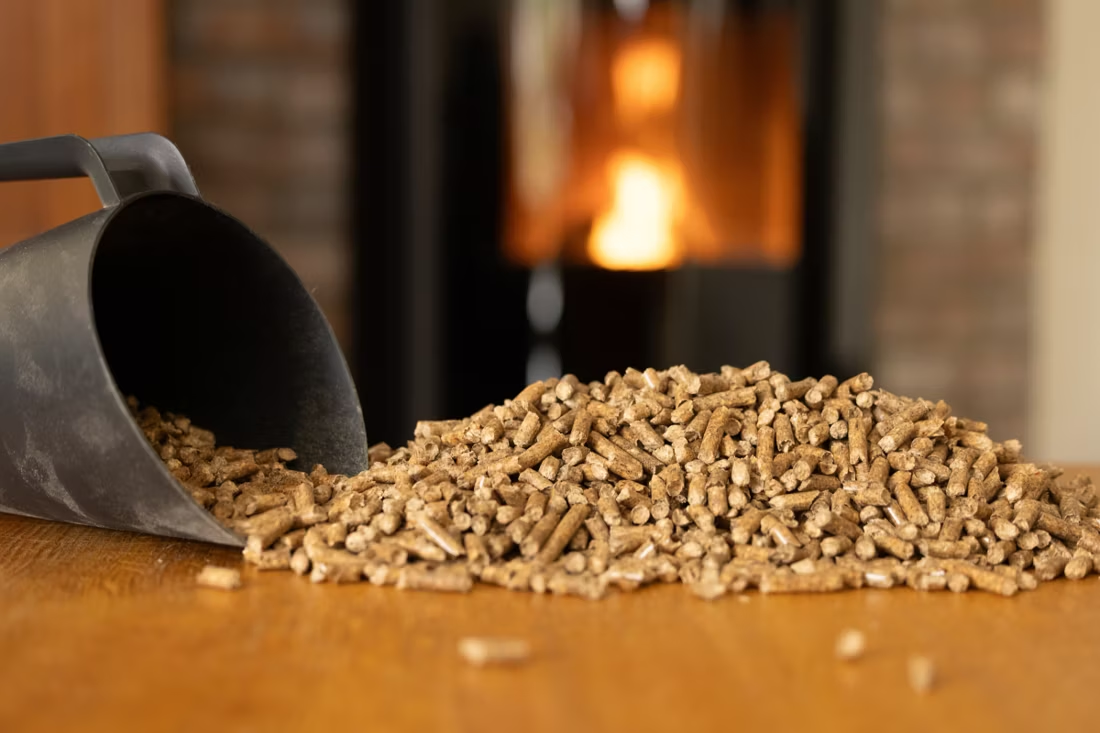
Mid-Missouri has a strong wood-heating tradition built on the oak, hickory, walnut, and maple that grow throughout the Ozark foothills, and a lot of that same hardwood ends up as sawdust feedstock for pellet mills. Regional brands like Lignetics and Indeck Energy Services supply pellets to dealers throughout the Midwest, giving Jefferson City homeowners consistent local access without relying on cross-country shipping. Because pellet stoves run an auger and igniter off standard household current, operating cost is tied to your electric rate rather than firewood supply—Union Electric (Ameren Missouri) and Three Rivers Electric Cooperative both serve the area at roughly 12.5 cents per kWh, which keeps the electrical draw of a pellet stove inexpensive to run night after night.
Three steps. No salesperson until you're ready.
Tell us about your project
Your zip code, your situation, and the fuel you're leaning toward—or let the answers point you to one.
See what's actually available
The brands dealers within 100 miles genuinely carry—real options, never a catalog mirage.
Get your dealer & Project Guide
A trusted local dealer, plus the free Project Guide & Parts List that names every component of the job.
Frequently Asked Questions
How much does a pellet stove installation cost in Jefferson City?
Most pellet stove installations in the Jefferson City area run $3,000 to $6,000, depending on the unit, whether it vents through an exterior wall with PL pipe or up an existing chimney, and whether a dedicated electrical outlet needs to be added for the auger and blower. A pellet insert going into an existing masonry fireplace—common in some of the older homes near downtown and the Capitol—typically runs a bit higher, closer to $3,500 to $7,000, because of the liner and venting work involved. A local dealer can give you a firm number after seeing your fireplace or install location.
What size pellet stove do I need for my home?
With Jefferson City's roughly 4,847 heating degree days and winter lows that hover around 21°F rather than the deep single digits you'd see farther north, most homes here don't need the largest pellet stoves on the market. A small unit rated for 1,000 to 1,200 square feet works well for a single living area or a well-insulated ranch home, while a mid-size stove rated for 1,500 to 2,000 square feet covers most main floors in Cole County's older two-story homes. Homes built before modern insulation codes, which are common in Jefferson City's historic neighborhoods, often run better with a stove sized slightly larger than the square footage alone would suggest. A local dealer can size it properly during a walkthrough.
Do I need a permit to install a pellet stove in Jefferson City?
Yes, a building permit is generally required for a new pellet stove installation, since it involves running venting through an exterior wall or existing chimney and, in most cases, adding a dedicated electrical circuit. Your local dealer or installer typically pulls this permit as part of the job and coordinates the inspection. Unlike wood stoves, there's no cutting permit or forest land involved with pellets—you're buying bagged fuel rather than harvesting it, so that part of the process is simpler.
Will my pellet stove work during a power outage?
Not without a backup power source. Pellet stoves rely on an electric auger to feed fuel, an igniter to start the fire, and a blower to push heat into the room, so a standard unit shuts down when the power goes out. Mid-Missouri sees its share of ice storms and severe weather that can knock out power for hours or days, so if backup heat during outages matters to you, plan on a battery backup unit (many pellet stoves accept one) or a small generator sized to run the stove's electrical load. Ask your local dealer which stove models have the lowest power draw if this is a priority.
Where can I buy pellets in Jefferson City, and how should I store them?
Pellets are widely available through hardware stores, farm supply retailers, and hearth dealers throughout the Jefferson City area, with regional brands like Lignetics and Indeck Energy Services commonly stocked given their Midwest production. Expect to pay somewhere in the $230 to $300 per ton range for standard hardwood or softwood blend bags, usually sold in 40-pound sacks, 40 to the ton. Store pellets somewhere dry—a garage or basement works, but keep bags off a concrete floor and away from any moisture, since pellets swell and break down if they absorb humidity, which can jam the auger.
Pellet stove vs. wood stove—which makes more sense in Jefferson City?
Mid-Missouri has good access to oak, hickory, walnut, and maple firewood, and plenty of Cole County households still heat primarily with cut wood. A wood stove works without electricity, which matters during outages, and self-cut or locally sourced firewood can be cheaper than pellets over a season. A pellet stove trades that self-sufficiency for convenience—load the hopper, set the thermostat, and walk away, with less ash and no splitting or stacking. If your priority is low-maintenance, consistent heat and you have reliable power, pellet is usually the easier day-to-day choice. If backup heat during storms matters more than convenience, wood stays the more resilient option.
How much maintenance does a pellet stove need?
Pellet stoves need more frequent light maintenance than wood stoves but far less heavy cleaning. Plan to empty the ash pan every few days to weekly depending on use, clean the burn pot and glass every week or two during heavy winter burning, and vacuum the hopper and auger area periodically. A full professional service—checking the igniter, gaskets, blower motor, and venting—is recommended once a year, typically before the start of the heating season in the fall. Local dealers who sell pellet stoves generally offer this service directly.
What pellet stove brands are available through local dealers?
Dealers serving the Jefferson City area typically carry established pellet stove manufacturers like Harman, Englander, and Quadra-Fire, all of which are common choices across the Midwest and pair well with regionally available pellet brands such as Lignetics. Higher-efficiency models with larger hoppers are worth asking about if you want fewer refills during long cold stretches. Since fuel availability and stove compatibility both matter, ask your local dealer which models they stock parts and pellets for regularly.
Should I get a freestanding pellet stove or a pellet insert?
A freestanding pellet stove sits on a hearth pad and can go almost anywhere with proper clearances and venting, making it a good fit for homes without an existing fireplace. A pellet insert is built to slide into an existing masonry fireplace opening, which is a common setup in some of Jefferson City's older homes near the historic downtown and Capitol area. An insert reuses the existing chimney chase (with a proper liner) and converts an old open fireplace into a much more efficient, thermostat-controlled heat source. If you already have a masonry fireplace you rarely use, an insert is usually the more cost-effective upgrade.
Why is my open fireplace making my house colder?
Open fireplaces suck—literally. As the fire burns, it consumes air your furnace already paid to heat and pulls it out through the chimney, so the house is actually colder after the fire goes out than before you lit it. An insert fixes this: it seals the chimney, puts fixed glass across the front, and turns that hole in your house into a real heat source.
How often does a pellet stove need cleaning?
A clean pellet stove is a happy pellet stove. Plan on cleaning the burn pot about once a week when you're burning regularly—ash and clinkers gum up the air holes just like a pellet barbecue. Most pellet stove problems trace back to skipped cleaning that nobody explained up front. Some designs make it easy with a trapdoor burn pot: pull a lever and the gunk drops into the ash pan.
Can a fireplace actually lower my heating bill?
Yes—by creating a comfort zone. A furnace heats every square foot of the house just to warm the one room you're in; a gas fireplace on low burns roughly a sixth of the gas a typical furnace does. Set the furnace around 55–60 degrees as a baseline, then heat the rooms your family actually uses. Families who heat this way commonly save $20–$60 a month.
Can I install a fireplace myself?
If you're putting a fire in your house on purpose, it's best to work with an expert. Unless you're genuinely experienced in framing, gas line, vent pipe, and the national code on clearances to combustibles, have a professional do it—and ideally the same company that sells you the fireplace, so warranty, service, and liability all live under one roof.
Nearby Dealers
Hearth shops serving Jefferson City and the surrounding area.
Forshaw Of St Louis - Jefferson City
Pellet Brands Stocked Around Jefferson City
Manufacturers will point you to the nearest stocking dealer.
Find your pellet stove in Jefferson City.
Tell us a bit about your home and we'll match you with the right pellet stove or insert, plus a free Project Guide & Parts List with the vent kit and parts you need and a trusted local dealer to install it.
Find Your Fireplace →