
Steady heat for Ozark winters, without the woodpile.
From Hermitage to the cabins ringing Pomme de Terre Lake, pellet stoves give Hickory County homeowners thermostatic, hopper-fed heat without splitting and stacking cordwood. Find the right unit and get matched with a trusted local dealer.
Every Project Starts From One of These Five Situations
Consistent heat, without cutting or splitting wood.
Hickory County sits in the rolling Ozark hill country of west-central Missouri, with the county seat of Hermitage anchoring a small, spread-out population of roughly 2,177 residents scattered across farmsteads, timber acreage, and lake property along Pomme de Terre. The county falls in climate zone 4A—long, humid summers and winters that regularly bring nights into the teens and 20s, with the occasional ice storm that puts real strain on power lines. The hills here are thick with oak, hickory, walnut, and maple, so firewood is genuinely abundant. But cutting, splitting, hauling, and stacking cordwood is a real commitment, especially for retirees, part-time lake residents, and anyone managing a cabin they only visit on weekends.
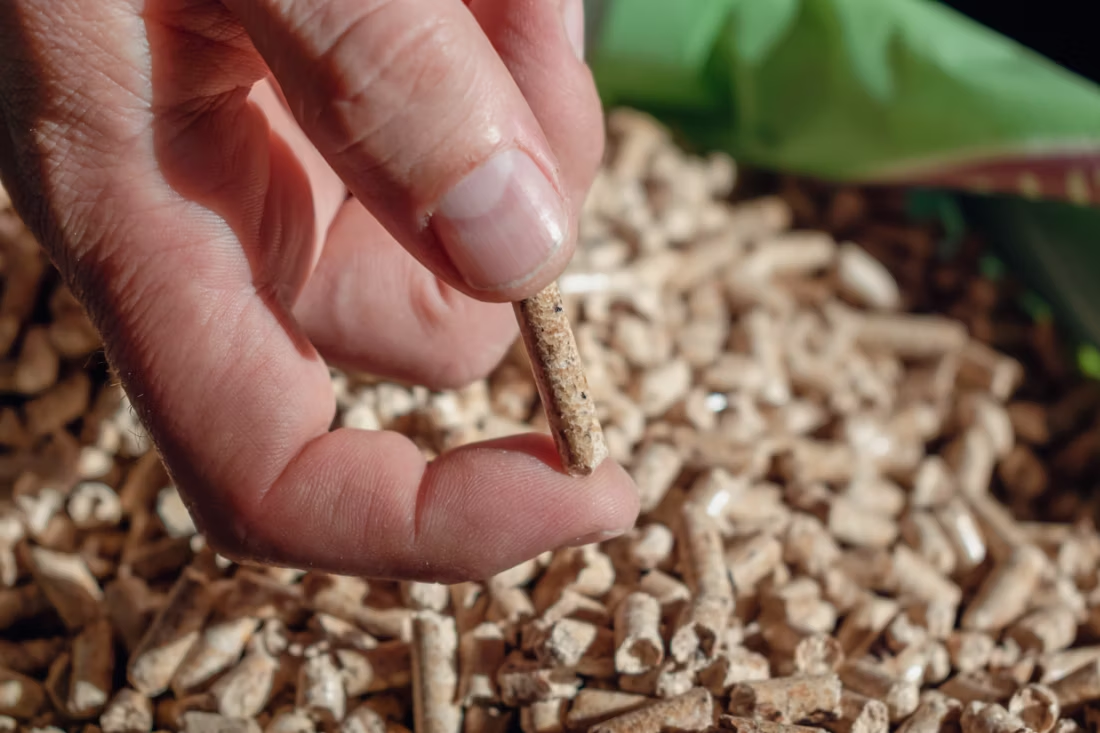
That's where pellet stoves earn their keep. A hopper-fed pellet stove or insert holds a day or more of fuel, runs on a thermostat, and burns far cleaner than an open wood fire—with none of the splitting or ash-heavy fireboxes that come with cordwood. Regional suppliers including Lignetics and Indeck Energy Services keep bagged hardwood pellets reasonably accessible in this part of Missouri, and Hickory County has no wintertime air-quality restrictions or non-attainment concerns, so burning is unrestricted year-round. For lake cabins around Pomme de Terre that sit empty for stretches, or full-time homes where the owner would rather load a hopper than run a chainsaw, pellet heat is a practical middle ground between wood's low fuel cost and gas's push-button convenience.
Three steps. No salesperson until you're ready.
Tell us about your project
Your zip code, your situation, and the fuel you're leaning toward—or let the answers point you to one.
See what's actually available
The brands dealers within 100 miles genuinely carry—real options, never a catalog mirage.
Get your dealer & Project Guide
A trusted local dealer, plus the free Project Guide & Parts List that names every component of the job.
Frequently Asked Questions
How much does a pellet stove installation cost in Hickory County?
A freestanding pellet stove installation in Hickory County typically runs $3,000 to $5,500, depending on the stove model, the venting run, and whether you need a new hearth pad for clearance. Pellet inserts installed into an existing masonry fireplace usually land toward the lower half of that range since they can often reuse existing chimney space with a liner adapted for pellet venting. Lake cabins around Pomme de Terre with limited existing infrastructure—no gas line, older wiring—sometimes run slightly higher once an electrician confirms the outlet needed for the stove's auger and blower motor.
Where do I buy pellets, and how much fuel should I keep on hand?
Bagged hardwood pellets from regional producers like Lignetics are the most common option available to west-central Missouri retailers, with Indeck Energy Services supplying additional tonnage into the region. Expect to pay roughly $250 to $300 per ton, sold in 40-pound bags, with a ton lasting a typical Hickory County home somewhere between six and ten weeks of regular heating season use, depending on how hard you run the stove. Because Hickory County is rural and pellet stock at local stores can run thin during a hard winter, it's worth buying a season's supply—a ton or two—in early fall before demand picks up, and storing bags off the ground in a dry outbuilding or garage.
What size pellet stove do I need for my home or cabin?
Sizing comes down to square footage and how the space is used. A small stove in the 40,000 to 50,000 BTU range comfortably heats a single-story cabin or a 1,000-square-foot lake house around Pomme de Terre, especially if it's used for weekend or seasonal heat rather than around-the-clock. Full-time homes in the 1,500 to 2,500-square-foot range generally need a mid-size unit with a larger hopper so it doesn't need refilling multiple times a day during a cold snap. Older farmhouses with less insulation, common throughout the county's rural acreage, often do better sized up a notch. A local dealer will walk your space and size it based on ceiling height, window count, and insulation rather than square footage alone.
Will my pellet stove still work if the power goes out?
Not without backup power. Pellet stoves rely on an electric auger to feed fuel and a blower to distribute heat, so they shut down when the power does—a real consideration in Hickory County, where ice storms occasionally take down lines served by the local rural electric cooperative for stretches of a day or more. A small battery backup or inverter generator sized for the stove's modest draw (typically under 100 watts) is enough to keep it running through an outage. If backup power isn't in the plan, some homeowners in the county pair a pellet stove for daily convenience with a wood stove or fireplace as true off-grid backup, since cordwood from the county's oak and hickory forests needs no electricity at all.
Do I need a permit to install a pellet stove in Hickory County?
Hickory County does not enforce a county-wide residential building code the way many urban Missouri counties do, so permitting requirements for a pellet stove installation are typically minimal outside city limits. Homes within Hermitage's city limits or in a platted subdivision may fall under local permitting or floodplain rules near Pomme de Terre Lake, so it's worth a quick call to confirm before work starts. Regardless of whether a permit is required, working with an NFI-certified installer matters—proper venting, clearances, and electrical hookup for the auger and blower are the same safety issues whether or not a jurisdiction is inspecting the work.
How much maintenance does a pellet stove need?
Pellet stoves need more routine attention than a wood stove but far less than people expect. The ash pan typically needs emptying every few days to weekly during heavy use, and the burn pot benefits from a quick scrape every couple of days to keep airflow clean. Beyond that, plan on a professional inspection and deep clean of the exhaust venting, hopper, and auger mechanism once a year, ideally before the county's cold season sets in. Skipping the annual service is the most common reason pellet stoves start jamming or losing efficiency partway through a Missouri winter.
Wood stove vs. pellet stove—which makes more sense in Hickory County?
Hickory County's forests are thick with oak, hickory, walnut, and maple, so cordwood is genuinely cheap or free if you're willing to cut and season it—and a wood stove keeps running through a power outage, which matters given the ice-storm risk here. A pellet stove trades that off-grid resilience for convenience: load the hopper, set the thermostat, and walk away, with a cleaner burn and far less ash than an open wood fire. For full-time residents with the time and equipment to process their own wood, a wood stove often wins on cost. For lake cabins visited only on weekends, older homeowners who no longer want to split wood, or households that simply value not tending a fire by hand, pellet is usually the better fit.
Are there rebates or tax credits available for a pellet stove in Missouri?
Pellet stoves rated at 75% efficiency or higher—which covers most modern EPA-certified units sold by local dealers—qualify for the federal residential biomass stove tax credit under Section 25C, worth 30% of the total cost including installation, up to $2,000 per year. Missouri does not currently layer a state-level rebate on top of that, so the federal credit is the main financial incentive available to Hickory County homeowners. Keep your dealer's invoice and the manufacturer's efficiency documentation on hand when you file, since both are typically required to claim the credit.
What pellet stove brands are available through local dealers?
For fuel, Lignetics and Indeck Energy Services are the two regional pellet suppliers most commonly stocked by dealers serving west-central Missouri, both producing hardwood pellets suited to residential stoves. On the appliance side, dealers in this part of the state typically carry a mix of established stove manufacturers rather than a single house brand, so the right choice comes down to hopper capacity, BTU output, and how the stove fits your specific home or cabin. A trusted local dealer will walk you through what's actually available and serviceable in Hickory County, rather than a catalog of models with no local support behind them.
Why is my open fireplace making my house colder?
Open fireplaces suck—literally. As the fire burns, it consumes air your furnace already paid to heat and pulls it out through the chimney, so the house is actually colder after the fire goes out than before you lit it. An insert fixes this: it seals the chimney, puts fixed glass across the front, and turns that hole in your house into a real heat source.
What's the difference between an insert and a zero-clearance fireplace?
An insert is a fireplace that slides into a pre-existing wood-burning fireplace—if you don't have one, there's nothing to insert it into. A zero-clearance fireplace is built into a framed wall, which makes it the answer for remodels and new construction. Simple test: existing masonry fireplace means insert; blank or framed wall means zero-clearance.
Does a fireplace add value to my home?
On average, a fireplace adds back to the home about the same amount you spent installing it. Add the monthly savings from heating the rooms you actually use instead of the whole house—often hundreds of dollars a year—and the value case is strong before you even count what a fire does for how your family uses the room.
Can a fireplace actually lower my heating bill?
Yes—by creating a comfort zone. A furnace heats every square foot of the house just to warm the one room you're in; a gas fireplace on low burns roughly a sixth of the gas a typical furnace does. Set the furnace around 55–60 degrees as a baseline, then heat the rooms your family actually uses. Families who heat this way commonly save $20–$60 a month.
Pellet Brands Stocked Around Hickory County
Manufacturers will point you to the nearest stocking dealer.
Get your Hickory County pellet stove Project Guide & Parts List.
Tell us about your home or cabin and we'll match you with a trusted local dealer and put together a free Project Guide & Parts List—the exact parts, including the vent kit, and the recommended installer for your pellet stove or insert.
Find Your Fireplace →