
Find the right pellet stove for Henry County winters.
Automated, hands-off heat for the long, steady winter Henry County sees each year—from Clinton to Windsor and the farm country in between. Find the right unit and connect with a trusted local dealer.
Every Project Starts From One of These Five Situations
Consistent heat without the wood-splitting.
Henry County sits in west-central Missouri's climate zone 4A, with average winter lows around 19 degrees and a winter heating season comparable to many parts of the lower Midwest—noticeably milder than the Upper Midwest but still cold enough that a heating appliance earns its keep from November through March. Henry County has no listed air quality non-attainment issues, so there's no local burn-ban complication to plan around, unlike counties dealing with winter inversions or wildfire smoke restrictions.
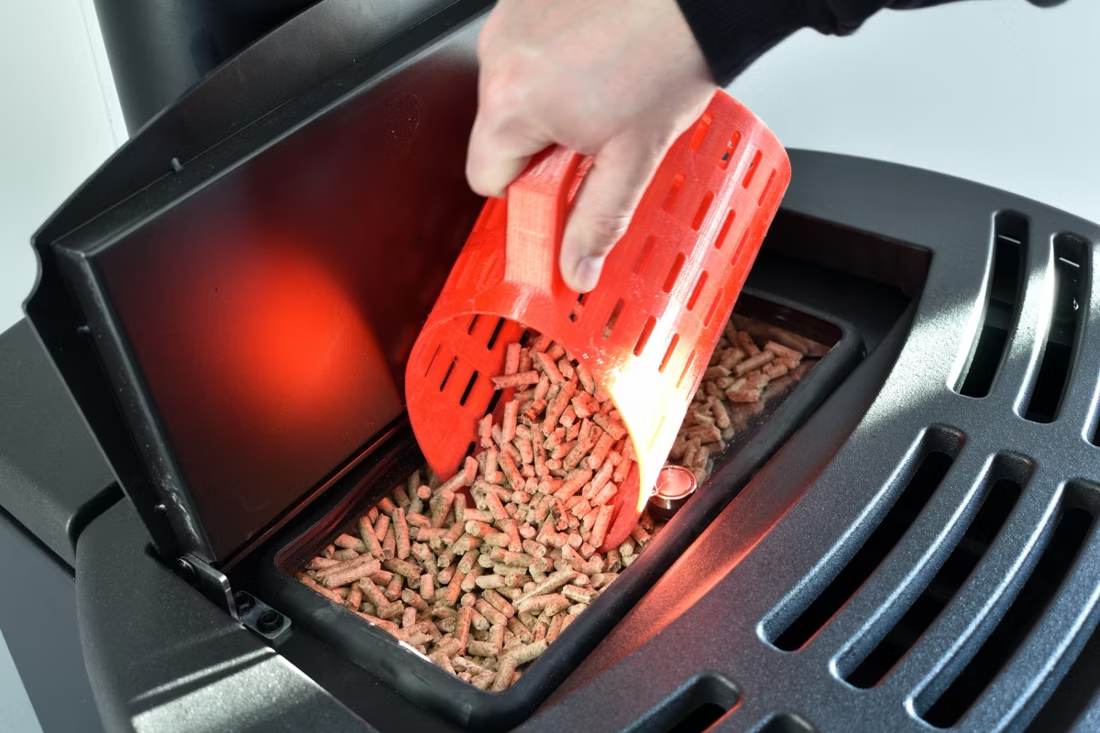
The county's oak, hickory, walnut, and maple woodlots have long supported wood-burning traditions around Clinton and Windsor, but pellet stoves have found a real foothold for homeowners who want consistent heat without stacking, splitting, or feeding a fire by hand. A hopper load lasts 24 to 60 hours depending on the stove and setting, the thermostat keeps the room at a steady temperature overnight, and brands like Lignetics and Indeck Energy Services supply pellets through regional suppliers rather than requiring long-distance shipping. For rural Henry County properties without natural gas service, pellet stoves also offer a cleaner-burning alternative to propane for supplemental heat.
Three steps. No salesperson until you're ready.
Tell us about your project
Your zip code, your situation, and the fuel you're leaning toward—or let the answers point you to one.
See what's actually available
The brands dealers within 100 miles genuinely carry—real options, never a catalog mirage.
Get your dealer & Project Guide
A trusted local dealer, plus the free Project Guide & Parts List that names every component of the job.
Frequently Asked Questions
How much does a pellet stove installation cost in Henry County?
A typical pellet stove or insert installation in Henry County runs in the range most Missouri dealers quote for standard venting through an exterior wall—expect the final number to depend on whether you're installing a freestanding stove, converting an existing wood fireplace to a pellet insert, and whether new electrical work is needed for the hopper motor and blower. Homes around Clinton with an existing masonry fireplace typically see lower costs than new installations in outbuildings or additions that need fresh wall penetration and wiring run. A local dealer will walk your home and give a firm number before any work starts.
What size pellet stove do I need for my home?
For Henry County's climate zone 4A conditions, a small pellet stove (rated for up to around 1,000 square feet) is enough for a single living area or supplemental heat in a larger home, while a medium unit (1,000 to 1,800 square feet) covers most main floors in the older farmhouses and ranch homes common around Clinton and Windsor. Ceiling height, insulation quality, and open floor plans all shift the math—a drafty older home needs more capacity than a tightly built newer one at the same square footage. A local dealer will size the unit correctly during an in-home visit rather than relying on a generic square-footage chart.
Where can I find pellets in Henry County?
Regional pellet brands including Lignetics and Indeck Energy Services supply farm stores, hardware retailers, and hearth shops throughout west-central Missouri, and most Henry County dealers can point you to the closest stocking location or set up seasonal delivery. Buying a season's supply early—typically late summer before demand picks up—helps avoid the price bumps and thin inventory that can hit in December and January during cold snaps.
Do pellet stoves need electricity to run?
Yes—pellet stoves rely on electricity to run the auger that feeds pellets into the burn pot, the igniter, and the combustion blower. This is the main tradeoff against a wood stove: during a power outage, a pellet stove will shut down unless you have a battery backup or generator. For Henry County homes where ice storms occasionally knock out power for a day or more, some homeowners pair a pellet stove with a small battery backup system or keep a wood-burning option as a fallback. Ask your local dealer about backup power compatibility for the specific model you're considering.
Do I need a permit to install a pellet stove in Henry County?
Most pellet stove installations require a building permit in Henry County, particularly when new wall penetration for venting or new electrical circuits are involved. Requirements can vary between the city of Clinton and unincorporated parts of the county, so it's worth confirming with your local building department before work begins. In practice, most local installers handle the permitting as part of the installation, so homeowners rarely have to navigate it themselves.
What's the difference between a pellet stove and a pellet insert?
A pellet stove is a freestanding unit that sits on its own base and vents through an exterior wall or existing chimney—it can go almost anywhere in a room with the right clearances. A pellet insert is built to slide into an existing masonry fireplace opening, turning an old wood-burning fireplace into an automated, thermostat-controlled heat source. For Henry County homes with an existing fireplace—common in older housing stock around Clinton—an insert is often the simpler retrofit since it uses the opening you already have. Homes without an existing fireplace, or those adding heat to a new room, are usually better suited to a freestanding stove.
How often does a pellet stove need cleaning and maintenance?
Pellet stoves need more frequent light maintenance than wood stoves, but each task is quicker. Plan on emptying and cleaning the burn pot every few days to weekly depending on use, a deeper cleaning of the ash traps and heat exchanger tubes every few weeks during heavy winter use, and a full professional service once a year—ideally before the season starts in early fall. Neglecting the burn pot is the most common cause of poor ignition and smoky performance, so staying on top of it matters more with pellet stoves than most other heating appliances.
Pellet stove vs. wood stove—which is right for Henry County?
Wood stoves work without electricity, pair naturally with the oak and hickory available from local woodlots, and offer the lowest fuel cost for homeowners willing to cut and season their own supply. Pellet stoves trade that self-sufficiency for convenience—load the hopper, set the thermostat, and let it run without tending, with less ash and no chimney creosote buildup to manage. For Henry County homeowners who value hands-off, consistent heat and don't mind depending on grid power, pellet is often the better fit. For those who want a heat source that keeps working through an ice storm outage, wood remains the more resilient choice. Some households run both.
How does a pellet stove compare to propane heat in rural Henry County?
Many rural Henry County homes outside Clinton and Windsor rely on propane for primary heat where natural gas isn't available, and a pellet stove makes a solid supplemental or zone-heating option alongside it. Pellets are typically cheaper per BTU than propane and don't carry the price swings that come with propane market volatility in cold months. A pellet stove in the main living area can let you turn down a propane furnace during the day, then rely on the furnace overnight or when the hopper isn't reloaded—a common setup local dealers see across the county.
What's the difference between an insert and a zero-clearance fireplace?
An insert is a fireplace that slides into a pre-existing wood-burning fireplace—if you don't have one, there's nothing to insert it into. A zero-clearance fireplace is built into a framed wall, which makes it the answer for remodels and new construction. Simple test: existing masonry fireplace means insert; blank or framed wall means zero-clearance.
How often does a pellet stove need cleaning?
A clean pellet stove is a happy pellet stove. Plan on cleaning the burn pot about once a week when you're burning regularly—ash and clinkers gum up the air holes just like a pellet barbecue. Most pellet stove problems trace back to skipped cleaning that nobody explained up front. Some designs make it easy with a trapdoor burn pot: pull a lever and the gunk drops into the ash pan.
Can a fireplace actually lower my heating bill?
Yes—by creating a comfort zone. A furnace heats every square foot of the house just to warm the one room you're in; a gas fireplace on low burns roughly a sixth of the gas a typical furnace does. Set the furnace around 55–60 degrees as a baseline, then heat the rooms your family actually uses. Families who heat this way commonly save $20–$60 a month.
How much should I budget for a fireplace?
For an average home—covering the fireplace, the vent pipe, and basic installation—a budget between $3,900 and $5,500 gives you a lot of options across wood, gas, and pellet. By the time you add finish work, gas line, and electrical, the average complete installation lands between $5,000 and $12,000 all-in. In a remodel or new build, a good rule is to put about 2.5% of the total project cost toward the fireplace.
Pellet Brands Stocked Around Henry County
Manufacturers will point you to the nearest stocking dealer.
Find your pellet stove in Henry County.
Tell us a bit about your home and we'll match you with the right pellet stove or insert, plus a free Project Guide & Parts List with the exact parts—including the vent kit—and a recommended local dealer near Clinton or Windsor.
Find Your Fireplace →