
Instant Heat, Zero Venting, Real Style in Greenwood, MO.
Real flame-effect warmth for Greenwood living rooms and bedrooms—no chimney, no gas line, no venting required. Find the right unit and connect with a trusted local dealer.
Every Project Starts From One of These Five Situations
The easiest heat upgrade for a Kansas City-area home.
Greenwood sits about 20 miles southeast of downtown Kansas City in Jackson County, at just under 1,000 feet of elevation. Winters here average lows around 17°F, with a solid winter heating season lasting into spring—real cold, though nothing like the sustained deep freeze of a place like Madison, Wisconsin. Most Greenwood homes rely on standard forced-air furnaces, and an electric fireplace is a way to add zone heat and ambiance to a living room, bedroom, or finished basement without touching the HVAC system.
Wood stoves and pellet inserts are largely absent from Greenwood's housing stock—many of the city's newer subdivisions in Jackson County were built without masonry chimneys, several HOA covenants restrict solid-fuel burning appliances, and there isn't an established regional pellet supply chain the way there is in wood-heavy parts of the country. That leaves electric (alongside gas, where lines already run to the home) as the practical route for homeowners who want real fireplace ambiance without adding venting, a chimney, or fuel storage. With Evergy Missouri West's residential rate around 12.6 cents per kWh, running an electric unit for a few hours each evening costs pocket change next to heating the whole house.
Three steps. No salesperson until you're ready.
Tell us about your project
Your zip code, your situation, and the fuel you're leaning toward—or let the answers point you to one.
See what's actually available
The brands dealers within 100 miles genuinely carry—real options, never a catalog mirage.
Get your dealer & Project Guide
A trusted local dealer, plus the free Project Guide & Parts List that names every component of the job.
Frequently Asked Questions
How much does it cost to install an electric fireplace in Greenwood?
Unit cost varies widely—a basic wall-mounted electric fireplace starts around $200, while a larger built-in unit or a realistic log-set insert can run $1,000 to $2,500. Because there's no chimney or venting to install, labor is minimal: most freestanding and insert units plug into a standard 120V outlet, and a licensed electrician typically charges $150-$400 to add or relocate an outlet if needed. Larger built-in units sometimes call for a dedicated 20-amp circuit, which pushes total project cost to roughly $600-$2,000 all-in. That's a fraction of the $4,500+ a gas fireplace conversion runs in the Kansas City suburbs once a gas line and venting are factored in.
Will an electric fireplace actually lower my heating bill?
It can, if you use it for zone heating rather than running the furnace to warm the whole house. A typical 1,500-watt electric fireplace costs about $0.19 an hour to run at Evergy Missouri West's residential rate of 12.55 cents per kWh. Heating just the room you're in for a few evening hours—and setting the central thermostat back a couple of degrees—is where Greenwood homeowners see real savings during the shoulder-season months when a full furnace cycle is overkill.
Do I need a permit to install an electric fireplace in Greenwood?
In most cases, no. A plug-in freestanding or wall-mounted electric fireplace that uses an existing outlet doesn't require a permit. If your project involves adding a new dedicated circuit or relocating wiring inside a wall for a built-in unit, that electrical work should go through a licensed electrician and may require a permit from the City of Greenwood or Jackson County, depending on your address. There's no combustion, gas line, or venting involved, so the inspection process is far simpler than a wood or gas install.
What's the difference between an electric insert, built-in, and freestanding electric stove?
A freestanding electric stove looks like a traditional wood stove and can sit anywhere near an outlet—popular for renters or homeowners who don't want to modify a wall. An electric insert is sized to slide into an existing masonry or gas fireplace opening, giving an old, unused fireplace a second life without touching the chimney. A built-in electric fireplace is framed into a wall like a TV niche or entertainment center, which is the most common choice in Greenwood's newer construction where there's no existing fireplace opening to work with.
Will my electric fireplace work during a power outage?
No—and this is worth being upfront about. Unlike a gas fireplace with battery-backup ignition or a wood stove that needs no power at all, an electric fireplace goes dark the moment the power does. Jackson County sees occasional ice storms that knock out power for a day or more, so if backup heat during an outage matters to you, many Greenwood homeowners pair an electric fireplace (for everyday ambiance and zone heat) with a separate gas appliance or generator for outage coverage rather than relying on electric alone.
Why don't more homes in Greenwood use wood or pellet stoves?
Two practical reasons. First, a lot of Greenwood's housing stock—especially the subdivisions built over the past two decades—went up without masonry chimneys, and several HOA-governed communities in Jackson County restrict solid-fuel burning appliances outright. Second, there's no strong regional pellet infrastructure here the way there is in the Pacific Northwest or Northeast; the pellet brands that do show up locally, like Lignetics, mostly move through big-box retailers rather than a network of dedicated hearth dealers. Between the two, electric and gas have become the default choices for homeowners who want fireplace heat or ambiance.
Electric vs. gas fireplace—which is right for my Greenwood home?
Gas delivers real flame and meaningfully more heat output, and it can be set up to keep running during a power outage with the right battery-backup ignition—but it requires a gas line, venting, and a bigger installation budget, often $4,500 or more once a line and venting are run. Electric skips all of that: plug it in (or run one new circuit), and you're done, usually for well under $2,000. For homes already on a gas line, gas is worth considering for a primary heat source. For a bedroom, basement, or accent wall where ambiance and simplicity matter more than serious heat output, electric is the lower-cost, lower-hassle answer.
What size or wattage electric fireplace do I need?
Almost every 120V electric fireplace on the market—regardless of physical size—tops out around 1,500 watts (about 5,200 BTU) of actual heat output, because that's the practical limit for a standard household circuit. A bigger unit generally means a bigger, more realistic flame display, not more heat, unless you step up to a 240V model built for whole-room heating. For most Greenwood living rooms or bedrooms, a standard 1,500-watt unit comfortably supplements a space up to about 400-1,000 square feet, depending on insulation.
What brands and features should I look for in an electric fireplace?
Dimplex, Napoleon, and Touchstone are widely available through hearth dealers serving the Kansas City metro and are worth asking about by name—they offer realistic multi-layer flame effects, adjustable color settings, and thermostatic heat control rather than a simple on/off switch. If ambiance matters as much as heat, look for units with LED log or crystal displays and a flame-only mode that runs without the heater engaged, useful for Greenwood's milder shoulder seasons. A local dealer can show you units running in person before you commit, which is worth doing since flame realism varies a lot between models.
Can I put a TV above my fireplace?
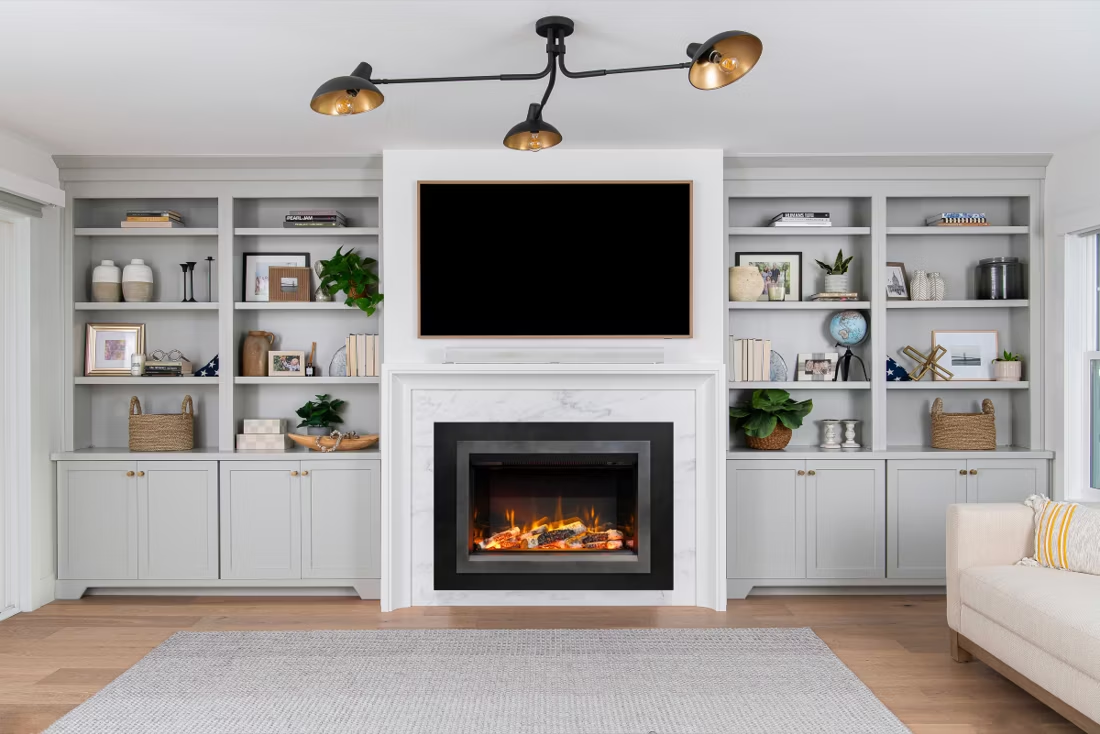
Yes—with an asterisk. Fireplaces are hot and TVs don't like heat. Either put a mantel between them to deflect rising warmth, or choose a fireplace with heat-management technology that creates a cool zone on the wall above—the wall stays around 125 degrees, barely warm, while the room still gets full heat. If you like clean lines and don't want a mantel, heat management is the answer.
Does an electric fireplace need a vent or chimney?
No—that's its superpower. An electric fireplace needs a wall and an outlet, period. No vent pipe, no gas line, no clearances to design around, which is why it works in bedrooms, offices, apartments, and walls where venting a gas or wood unit would be impractical or impossible. Installation is typically the simplest and least expensive of any fireplace type.
Can I install a fireplace myself?
If you're putting a fire in your house on purpose, it's best to work with an expert. Unless you're genuinely experienced in framing, gas line, vent pipe, and the national code on clearances to combustibles, have a professional do it—and ideally the same company that sells you the fireplace, so warranty, service, and liability all live under one roof.
What is an in-home preview and do I need one?
It's a visit where a hearth professional measures your space, confirms the model you picked actually works in your home, and walks the specs—framing, gas line, venting, finish work—before anything is ordered. Some details you just can't know until you see the house. Never make a down payment without one; it's the single most-skipped step that burns buyers.
Nearby Dealers
Hearth shops serving Greenwood and the surrounding area. Every listing shows whether it is a WhyFire partner, a dealer we have verified as authorized for the brands we recommend, or a local business carrying hearth products. No manufacturer pays for placement. How we verify dealers →
The Hayes Co.
Dillon Heating & Cooling Solutions
Electric Service in Greenwood
An electric fireplace's heater draws about 1,500 watts—pennies per hour at local rates.
Evergy Missouri West
Find your electric fireplace in Greenwood.
Tell us about your Greenwood home and we'll match you with a trusted local dealer who will put together a free Project Guide & Parts List—the exact unit, circuit requirements, and installation plan for your space.
Find Your Fireplace →