
Instant Heat, No Chimney Required, for Glasgow Village Homes.
Zone heat and real ambiance for St. Louis County homes without the venting, the wood, or the mess. Find the right unit and get matched with a trusted local dealer.
Every Project Starts From One of These Five Situations
Electric heat that fits without a flue in St. Louis County homes.
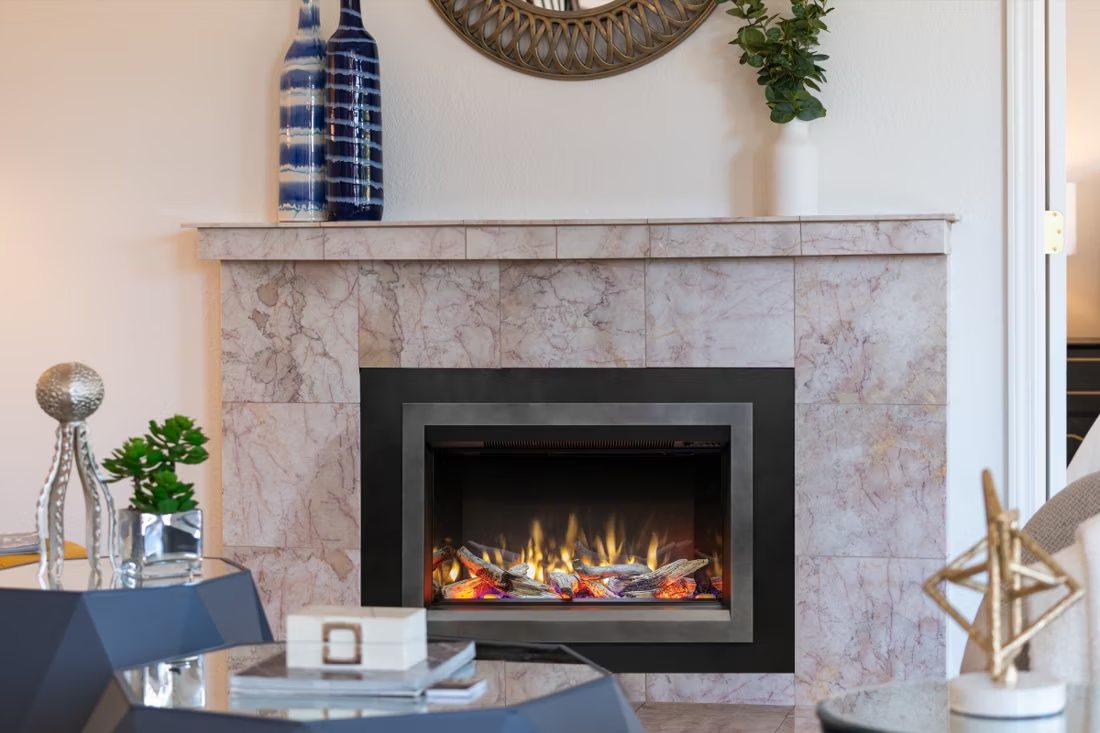
Glasgow Village sits in unincorporated St. Louis County along the Mississippi River, zip 63137, in climate zone 4A, with a winter heating season on the moderate side. That's a real winter—average lows around 22°F—but it's a fraction of what a city like Duluth, MN or Fargo, ND sees in a season. Most homes here run a central heat pump or forced-air furnace as primary heat, which makes an electric fireplace a natural fit: supplemental warmth for the room you're actually sitting in, plus the look of a fire, without adding a second heat source to the whole house.
Electric service here runs through Union Electric Co, doing business as Ameren Missouri, at a residential rate around 12.56 cents per kWh—moderate by regional standards, which keeps day-to-day operating costs predictable. Because electric units plug into a standard outlet or a simple dedicated circuit, there's no chimney, no flue, no combustion byproducts, and no permit hassle for most installs. That matters in this part of St. Louis County, where a lot of the housing stock is ranch and post-war construction that was never built with a masonry chimney in the first place.
Three steps. No salesperson until you're ready.
Tell us about your project
Your zip code, your situation, and the fuel you're leaning toward—or let the answers point you to one.
See what's actually available
The brands dealers within 100 miles genuinely carry—real options, never a catalog mirage.
Get your dealer & Project Guide
A trusted local dealer, plus the free Project Guide & Parts List that names every component of the job.
Frequently Asked Questions
How much does an electric fireplace installation cost in Glasgow Village?
For a plug-in electric insert or mantel package that uses an existing standard 120V outlet, expect $300 to $1,200 including the unit and basic setup. Built-in wall units or larger linear models that need a dedicated 240V circuit typically run $1,500 to $3,500 once electrical work is included. Because St. Louis County homes rarely have an existing masonry fireplace opening sized for a retrofit, most installs here are new wall-mount or built-in units rather than insert conversions—a local dealer can confirm which category your project falls into during a walkthrough.
What's the difference between an electric insert, a built-in unit, and a freestanding electric stove?
An electric insert is sized to drop into an existing fireplace opening—not common in Glasgow Village's mostly newer housing stock, but useful for the handful of older homes with masonry fireplaces. A built-in unit is framed into a wall like a TV, giving a clean, modern look with no visible cabinet. A freestanding electric stove sits on the floor and can be moved between rooms—no installation beyond plugging it in. For most homes in this area without an existing hearth, a built-in wall unit or a freestanding stove is the simpler path.
How much does it cost to run an electric fireplace in Glasgow Village?
Most electric fireplaces draw around 1,500 watts on the heat setting. At Union Electric's residential rate of about 12.56 cents per kWh, that works out to roughly 19 cents an hour, or about $1.50 for an 8-hour evening of use. Run daily through a Missouri winter, that's typically $30 to $50 a month in supplemental heating cost—far less than most homeowners expect, since the flame effect alone (heat off) draws only a few watts.
Do I need a permit to install an electric fireplace in Glasgow Village?
A plug-in unit that uses an existing outlet generally doesn't require a permit. If your installation needs a new dedicated 240V circuit—common for larger built-in units—that electrical work falls under St. Louis County's Department of Public Works building and electrical permitting, and should be pulled by a licensed electrician. Most hearth dealers in the St. Louis metro either handle this coordination directly or work with an electrician who does, so you're not left tracking down the permit yourself.
Will an electric fireplace actually heat my room, or is it just for looks?
Most electric fireplaces put out around 4,600 to 5,000 BTUs on the 1,500-watt heat setting, enough to noticeably warm a 300 to 600 square foot room—a living room or bedroom, not a whole house. Given Glasgow Village's moderate 4A climate and relatively short, mild winter heating season, that's usually plenty for zone heating in the room you're using most, letting you turn down the central heat pump elsewhere. For anything larger than an open-concept main floor, plan on it as supplemental heat alongside your existing HVAC rather than a replacement.
What's the best type of electric fireplace for a St. Louis County home?
For supplemental heat in a living room or bedroom, mid-size linear models from brands like Napoleon, Dimplex, or Touchstone strike a good balance of realistic flame effect and real heat output. In older Glasgow Village homes with lower amp electrical panels, a plug-in model avoids the cost of panel upgrades. In newer construction or during a remodel, a built-in unit with a dedicated circuit gives the cleanest look and the most heat output. A local dealer can match the unit to your panel capacity and room size rather than guessing from a box-store spec sheet.
Electric vs. wood—which makes more sense for my home here?
Wood is genuinely viable in this part of St. Louis County—oak, hickory, walnut, and maple are all common locally and burn well—but it requires an existing masonry chimney or new venting, plus regular chimney maintenance. Electric requires neither: no flue, no ash, no wood storage, and it works in condos, townhomes, or any room without an existing hearth. For Glasgow Village's mix of housing, where many homes were never built with a chimney, electric is usually the lower-friction option unless you specifically want a wood-burning fire and already have the masonry in place.
How much maintenance does an electric fireplace need?
Very little compared to wood or gas. There's no chimney to sweep and no annual combustion safety inspection required. Maintenance is mostly dusting the unit, occasionally replacing an LED light strip (most last 20,000+ hours), and keeping the heater vents free of dust for proper airflow. Most units carry a manufacturer warranty of 2 to 5 years, and there's no ongoing fuel cost beyond the electricity itself.
Electric vs. pellet stove—which fits better in Glasgow Village?
Pellet stoves burn compressed wood pellets—regional brands like Lignetics and Indeck Energy Services supply the Midwest market—and produce real, substantial heat output, but they require venting, a hopper to reload, and periodic ash cleanup. Electric fireplaces need none of that: no venting, no fuel bags to store, no combustion byproducts, just a plug or a simple circuit. For a primary heat source in a drafty older home, pellet can out-perform electric on raw BTUs. For supplemental zone heat, ambiance, or installs in homes without space for a vented appliance, electric is the simpler and more flexible choice.
Can I put a TV above my fireplace?
Yes—with an asterisk. Fireplaces are hot and TVs don't like heat. Either put a mantel between them to deflect rising warmth, or choose a fireplace with heat-management technology that creates a cool zone on the wall above—the wall stays around 125 degrees, barely warm, while the room still gets full heat. If you like clean lines and don't want a mantel, heat management is the answer.
Do electric fireplaces actually produce heat?
Yes—most put out around 4,800–5,000 BTUs from a standard outlet, which comfortably warms a bedroom, office, or den as a comfort-zone heater. What they won't do is carry a whole house the way wood, gas, or pellet can. Think of electric as ambiance-first with honest supplemental heat: flames on with no heat in July, flames plus warmth in January.
Can a fireplace actually lower my heating bill?
Yes—by creating a comfort zone. A furnace heats every square foot of the house just to warm the one room you're in; a gas fireplace on low burns roughly a sixth of the gas a typical furnace does. Set the furnace around 55–60 degrees as a baseline, then heat the rooms your family actually uses. Families who heat this way commonly save $20–$60 a month.
What is an in-home preview and do I need one?
It's a visit where a hearth professional measures your space, confirms the model you picked actually works in your home, and walks the specs—framing, gas line, venting, finish work—before anything is ordered. Some details you just can't know until you see the house. Never make a down payment without one; it's the single most-skipped step that burns buyers.
Nearby Dealers
Hearth shops serving Glasgow Village and the surrounding area. Every listing shows whether it is a WhyFire partner, a dealer we have verified as authorized for the brands we recommend, or a local business carrying hearth products. No manufacturer pays for placement. How we verify dealers →
Villa Lighting Supply
Savvy Surroundings
Gas Appliance Service LLC
Forshaws
Bel-O Fireplaces & More
Fireside Hearth & Grill Center
Fireplace And Grill Center
English Sweep
Suhre'S Gas Co.
Hearthside Grill & Fireplace
Summer Classics By Forshaw
Arnold Stove & Fireplace Center
Brighthouse Living
Electric Service in Glasgow Village
An electric fireplace's heater draws about 1,500 watts—pennies per hour at local rates.
Union Electric Co - (Mo)
Find your electric fireplace in Glasgow Village.
Tell us a bit about your home and we'll put together a free Project Guide & Parts List for your electric fireplace project—the right unit, the wiring it needs, and a trusted local St. Louis County dealer to install it.
Find Your Fireplace →