
Ambiance and Extra Heat, Installed in an Afternoon.
No chimney, no gas line, no masonry work—just real warmth for Gladstone's older ranch homes and newer builds alike. We'll match you with a trusted local dealer who can size and install it right.
Every Project Starts From One of These Five Situations
No masonry, no gas line, no chimney to maintain.
Gladstone sits in Clay County just north of the Missouri River, at about 1,016 feet elevation with a Climate Zone 4A profile—a winter low average around 22°F and roughly 4,613 heating degree days a year. That's a real Midwest winter, but a moderate one: less than half the heating degree days of a place like Fargo, ND, and far short of what homes in Minneapolis or Duluth deal with. Most Gladstone houses don't need a whole-home wood-burning setup to get through the season; they need a way to take the edge off in specific rooms without opening up a wall.
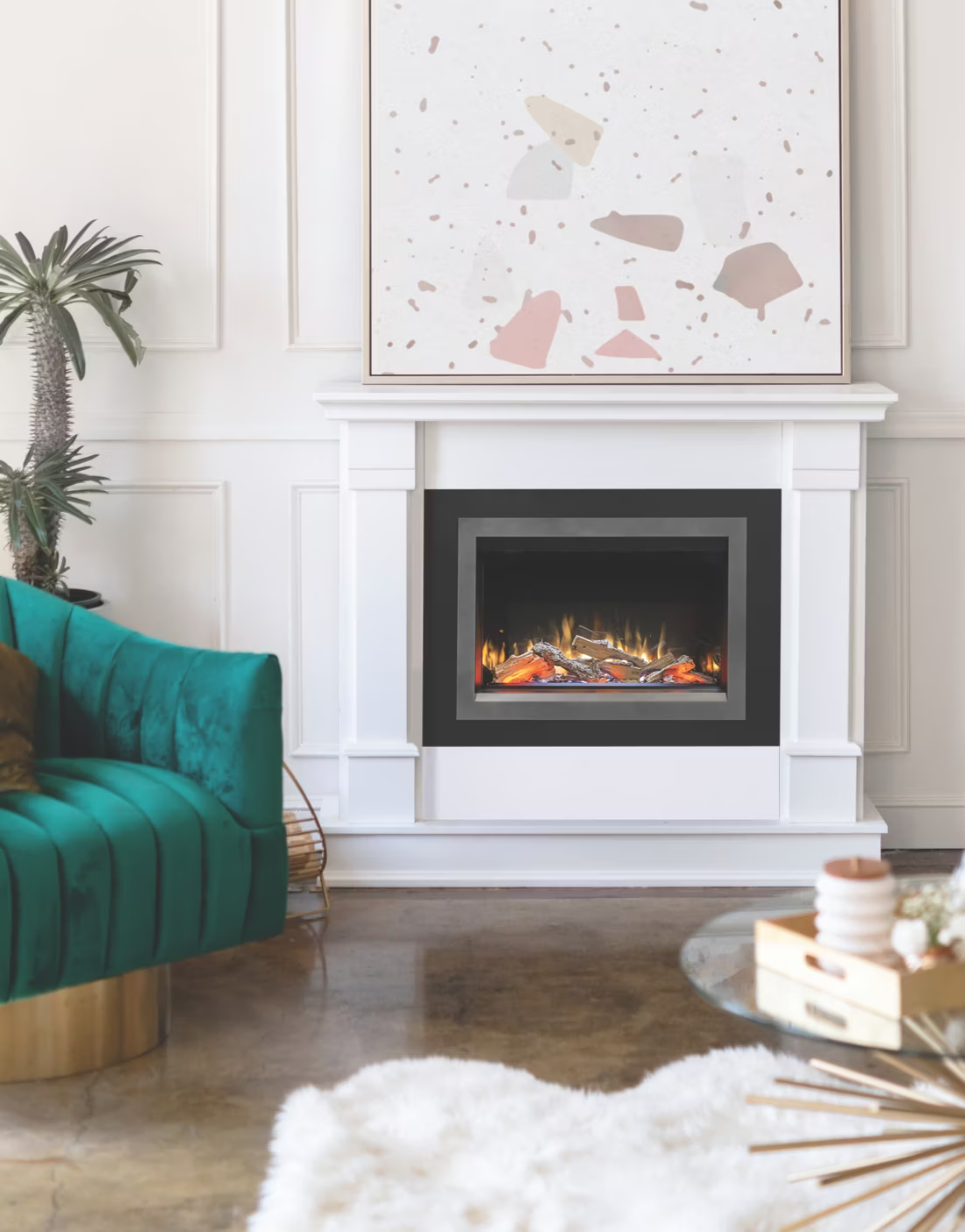
That's where electric fireplaces do their best work. Gladstone's housing stock is a mix of postwar ranch homes with existing masonry fireplace openings and newer construction with none at all—and electric inserts and built-ins work in both. There's no venting to run, no gas line to plumb, and in most cases nothing beyond a standard outlet or a single dedicated 20-amp circuit an electrician can add in an afternoon. Power comes from Evergy Missouri West across most of Gladstone (residential rate around 12.6 cents per kWh) or the City of Kansas City utility system in a smaller service pocket (around 15.4 cents per kWh)—either way, an electric fireplace runs efficiently enough that the fuel cost stays modest even during a cold snap.
Three steps. No salesperson until you're ready.
Tell us about your project
Your zip code, your situation, and the fuel you're leaning toward—or let the answers point you to one.
See what's actually available
The brands dealers within 100 miles genuinely carry—real options, never a catalog mirage.
Get your dealer & Project Guide
A trusted local dealer, plus the free Project Guide & Parts List that names every component of the job.
Frequently Asked Questions
How much does it cost to install an electric fireplace in Gladstone?
Most electric fireplace projects in the Gladstone area run $400 to $1,500 installed. A plug-in insert dropped into an existing masonry fireplace opening sits at the low end—sometimes it's just the unit cost plus a trim kit, no electrician required. A built-in wall unit or a mantel package that needs a new dedicated 120V or 240V circuit runs higher once an electrician is involved, especially in older Gladstone ranch homes where the panel may need a spare breaker slot. There's no chimney, liner, or gas line to budget for, which is the main reason electric stays on the low end of the fireplace cost spectrum compared to wood or gas.
Do I need a permit to install an electric fireplace in Gladstone?
A plug-in electric fireplace or insert that runs off an existing outlet typically doesn't require a permit—it's treated like any other major appliance. If your installer adds a new dedicated circuit or does any panel work, that electrical work does require a permit through the City of Gladstone Building Department (or Clay County if you're outside city limits), and it needs to be pulled by a licensed electrician. Most local dealers who sell built-in units coordinate this as part of the installation, so it's rarely something homeowners have to manage on their own.
Is electric heat actually enough to notice, or is it just for looks?
Modern electric fireplaces put out real, usable heat—typically 4,600 to 9,000 BTUs, roughly comparable to a space heater, with a built-in thermostat and blower. That's plenty to warm a bedroom, den, or basement rec room in Gladstone's climate, where winter lows average around 22°F rather than the sub-zero stretches you'd see farther north. It's not designed to replace your furnace on the coldest January night, but as a zone heater for a room you actually live in—while your central system covers the rest of the house—it does real work, not just ambiance.
What does it cost to run an electric fireplace each month in Gladstone?
A typical 1,500-watt electric fireplace running about 5 hours a day uses roughly 225 kWh a month. At Evergy Missouri West's residential rate of about 12.6 cents per kWh, that's around $28 a month; at the City of Kansas City utility's rate of about 15.4 cents per kWh, closer to $35. Most owners don't run the heater element constantly—many use the flame effect on its own for ambiance and only switch on the heat when they want it, which cuts the real-world cost well below that estimate.
Electric vs. gas fireplace—which makes more sense for my Gladstone home?
Gas is a strong option in Gladstone too, especially for homes already on natural gas service, and it delivers higher heat output for larger, open living spaces. Electric wins on installation simplicity and flexibility—no gas line, no venting, and it can go in almost any room, including interior walls, bedrooms, or basements where running gas or venting would be impractical or expensive. For a primary living room where you want serious heat output, gas is often the better fit. For a bedroom, home office, or a secondary room where you want ambiance plus some warmth without construction, electric is usually the more practical answer—and it's also the far cheaper unit cost of the two.
Why isn't wood-burning a common option in Gladstone?
Wood heat isn't part of the fuel mix in most Gladstone homes. This is a fully built-out Kansas City-area suburb with typical residential lot sizes, and the practical need for wood as a heat source just isn't there the way it is in more rural parts of Missouri. That said, oak, hickory, walnut, and maple are the region's dominant native hardwoods, and homeowners who do keep a wood-burning fireplace or stove—often in an older home with an existing masonry chimney—burn locally sourced cordwood of those species. For most Gladstone homeowners looking to add or upgrade a fireplace today, electric or gas is the far more common and practical route.
Can I put an electric insert into my existing fireplace?
Yes, and it's one of the most common projects in Gladstone's older ranch-style homes that were built with a wood-burning masonry fireplace decades ago and haven't had a fire lit in years. An electric insert slides into that existing opening, uses the outlet or a nearby circuit, and instantly turns a cold, unused firebox into a working heat source with a realistic flame display—no chimney sweep, no liner, no combustion byproducts to vent. It's usually the fastest, least invasive upgrade for a house with a fireplace nobody uses anymore.
What's the difference between an electric insert, a built-in, and a freestanding electric stove?
An electric insert is sized to slide into an existing masonry or prefab fireplace opening—the most common choice for Gladstone homes with an old wood-burning firebox. A built-in electric fireplace is meant for new construction or a remodel, framed into a wall with a mantel or surround built around it. A freestanding electric stove looks like a cast-iron wood stove but plugs into an outlet and can go virtually anywhere—no existing fireplace required, which makes it a good option for basements, sunrooms, or additions where there's never been a hearth at all.
What about pellet stoves—are those an option in Gladstone?
Pellet stoves are essentially a non-factor in the Gladstone market. Regional pellet brands like Lignetics and Indeck Energy Services do supply pellets to this part of Missouri, but pellet appliances require venting, a hopper to refill, and electricity to run the auger—with none of the installation simplicity that makes electric fireplaces the practical choice here. Homeowners occasionally consider pellet for a rural property elsewhere, but for a typical Gladstone house, electric delivers similar convenience without the fuel deliveries or venting work.
Can I put a TV above my fireplace?
Yes—with an asterisk. Fireplaces are hot and TVs don't like heat. Either put a mantel between them to deflect rising warmth, or choose a fireplace with heat-management technology that creates a cool zone on the wall above—the wall stays around 125 degrees, barely warm, while the room still gets full heat. If you like clean lines and don't want a mantel, heat management is the answer.
Do electric fireplaces actually produce heat?
Yes—most put out around 4,800–5,000 BTUs from a standard outlet, which comfortably warms a bedroom, office, or den as a comfort-zone heater. What they won't do is carry a whole house the way wood, gas, or pellet can. Think of electric as ambiance-first with honest supplemental heat: flames on with no heat in July, flames plus warmth in January.
Can I install a fireplace myself?
If you're putting a fire in your house on purpose, it's best to work with an expert. Unless you're genuinely experienced in framing, gas line, vent pipe, and the national code on clearances to combustibles, have a professional do it—and ideally the same company that sells you the fireplace, so warranty, service, and liability all live under one roof.
Does a fireplace add value to my home?
On average, a fireplace adds back to the home about the same amount you spent installing it. Add the monthly savings from heating the rooms you actually use instead of the whole house—often hundreds of dollars a year—and the value case is strong before you even count what a fire does for how your family uses the room.
Nearby Dealers
Hearth shops serving Gladstone and the surrounding area.
Electric Service in Gladstone
An electric fireplace's heater draws about 1,500 watts—pennies per hour at local rates.
Evergy Missouri West
City Of Kansas City - (Ks)
Find your electric fireplace in Gladstone.
Tell us about your home and we'll put together a free Project Guide & Parts List—the right electric fireplace or insert for your space, the exact parts you'll need, and a trusted local Gladstone-area dealer to install it.
Find Your Fireplace →