
Steady, efficient heat for DeKalb County winters.
From Maysville to Stewartsville, Osborn, and Amity, DeKalb County's farmland winters call for heat you can dial in and walk away from. Find the right pellet stove or insert, and connect with a trusted local dealer.
Every Project Starts From One of These Five Situations
Consistent heat without the wood pile.
DeKalb County sits in the old Platte Purchase country of northwest Missouri, a rural stretch of corn and soybean ground with a population just over 3,000 spread across Maysville, Stewartsville, Osborn, and Amity. The county falls in IECC climate zone 5A, which brings the kind of raw, damp cold that settles into a farmhouse and stays through January and February. Plenty of homes here already burn oak, hickory, walnut, and maple in wood stoves cut from local timber, but a growing number of DeKalb County households are switching to pellet appliances for the thermostat control and the fact that a 40-pound bag replaces the chainsaw, the splitting maul, and the woodshed.
DeKalb County has no non-attainment air quality concerns to work around, so pellet burning here is straightforward—no winter curtailment periods, no smoke advisories to check before lighting up. Pellets themselves come through regional suppliers carrying brands like Lignetics and Indeck Energy Services, typically sold by the ton at farm and hearth stores within driving distance of St. Joseph and Cameron. The tradeoff worth planning for: pellet stoves run on an electric auger and blower, and rural DeKalb County is no stranger to ice storms that take the power out for a day or two. A battery backup or small generator is worth budgeting alongside the stove itself.
Three steps. No salesperson until you're ready.
Tell us about your project
Your zip code, your situation, and the fuel you're leaning toward—or let the answers point you to one.
See what's actually available
The brands dealers within 100 miles genuinely carry—real options, never a catalog mirage.
Get your dealer & Project Guide
A trusted local dealer, plus the free Project Guide & Parts List that names every component of the job.
Frequently Asked Questions
How much does a pellet stove installation cost in DeKalb County?
A typical pellet stove installation in DeKalb County runs roughly $3,000 to $6,000, depending on the unit and whether you're venting through an exterior wall or tying into an existing chimney. Because DeKalb County is thinly populated, most installers travel out from St. Joseph or Cameron, so it's worth asking whether a trip charge applies for rural addresses around Amity or Osborn. Installing a pellet insert into an existing masonry fireplace tends to land on the lower end since the chimney cavity is already there; a freestanding stove in a room with no prior venting runs higher once wall penetration and exterior cap work are added in.
Where can I buy pellets in DeKalb County?
Pellets aren't milled in DeKalb County itself, but regional brands like Lignetics and Indeck Energy Services are carried by farm supply and hearth stores in St. Joseph and other nearby towns, with prices typically running $230 to $300 per ton depending on the season and whether you buy by the pallet. Buying a season's supply in late summer, before the cold sets in and demand picks up, is the usual move for homeowners who don't want to make repeat trips into town once winter hits.
What size pellet stove do I need for my DeKalb County home?
Sizing depends on square footage, ceiling height, and how tight the home is. As a rough guide for zone 5A conditions: a small pellet stove (under 1,000 sq ft) suits a single room or a smaller farmhouse addition, a medium stove (1,000–2,000 sq ft) covers most of the older two-story homes common around Maysville and Stewartsville, and a large stove (2,000+ sq ft) can serve as primary heat for a well-insulated whole house. Older farmhouses with less insulation and higher ceilings often need to size up a step from what the square footage alone would suggest. A local dealer can size your specific home during an in-home visit—that's a step worth not skipping.
Pellet stove vs. wood stove—which makes more sense in DeKalb County?
Wood is abundant and cheap in DeKalb County—oak, hickory, walnut, and maple are all common on local timbered ground, and plenty of families here already cut their own. A wood stove works without electricity, which matters when an ice storm knocks the power out. A pellet stove trades that self-sufficiency for convenience: load the hopper, set the thermostat, and walk away, with far less ash and no splitting or stacking. For households with the time and access to cut or buy firewood, wood often wins on cost. For those who want consistent, low-maintenance heat and don't mind buying fuel by the ton, pellet is usually the better fit—as long as you've got a backup plan for outages.
Do I need a permit to install a pellet stove in DeKalb County?
Most new pellet stove installations require a building permit, since the work involves running venting through a wall or existing chimney. In DeKalb County, that typically means a call to the county courthouse in Maysville, the county seat, to confirm the current permitting process for your township. Unlike wood-burning appliances in some western states, there's no separate emissions certification hurdle here—DeKalb County has no air quality non-attainment issues, so the permit process is mostly about venting and clearance, not emissions compliance.
Will my pellet stove work during a power outage?
Not without backup power. Pellet stoves rely on an electric auger to feed fuel and a blower to circulate heat, so when the power goes out, the stove stops. That's a real consideration in DeKalb County, where ice storms and summer thunderstorms both cause multi-hour or multi-day outages in rural areas around Osborn and Amity. Many pellet stove owners here pair the unit with a small generator or a battery backup system sized to the stove's draw—ask your local dealer what wattage your specific model needs so you can size backup power correctly.
How often does a pellet stove need to be cleaned and serviced?
Plan on cleaning the burn pot and ash pan every few days during regular winter use, a deeper glass and hopper cleaning weekly, and a full professional service once a year—typically before the season starts in early fall. A DeKalb County household running a pellet stove as a primary heat source through a full winter will go through this cycle more often than one using it just for supplemental warmth in a single room. Skipping the annual service is the most common reason pellet stoves start feeding unevenly or throwing error codes mid-winter.
What's the difference between a pellet stove and a pellet insert?
A pellet stove is a freestanding unit that sits on its own hearth pad and vents through a wall or existing chimney—it can go almost anywhere in a room with the right clearances. A pellet insert is built to slide into an existing masonry fireplace opening, turning an old wood-burning fireplace into a pellet-fed heat source while using the same chimney cavity for venting. For DeKalb County farmhouses with an existing fireplace that's rarely used, an insert is often the simpler retrofit. For homes without a fireplace already in place, a freestanding stove is the more practical option.
What's the best pellet stove for DeKalb County's climate?
For a zone 5A climate with genuinely cold winter stretches, look for a stove with a solid BTU output rating and a hopper large enough to run overnight without refilling—40-pound hoppers that hold 24+ hours of burn on a low setting are common in this range. National brands like Harman and Lopi are widely serviced by dealers in the St. Joseph and Cameron area, and pairing the stove with regionally available pellets from Lignetics or Indeck Energy Services keeps fuel logistics simple. A local dealer can match hopper size and BTU output to your specific square footage and insulation level.
How often does a pellet stove need cleaning?
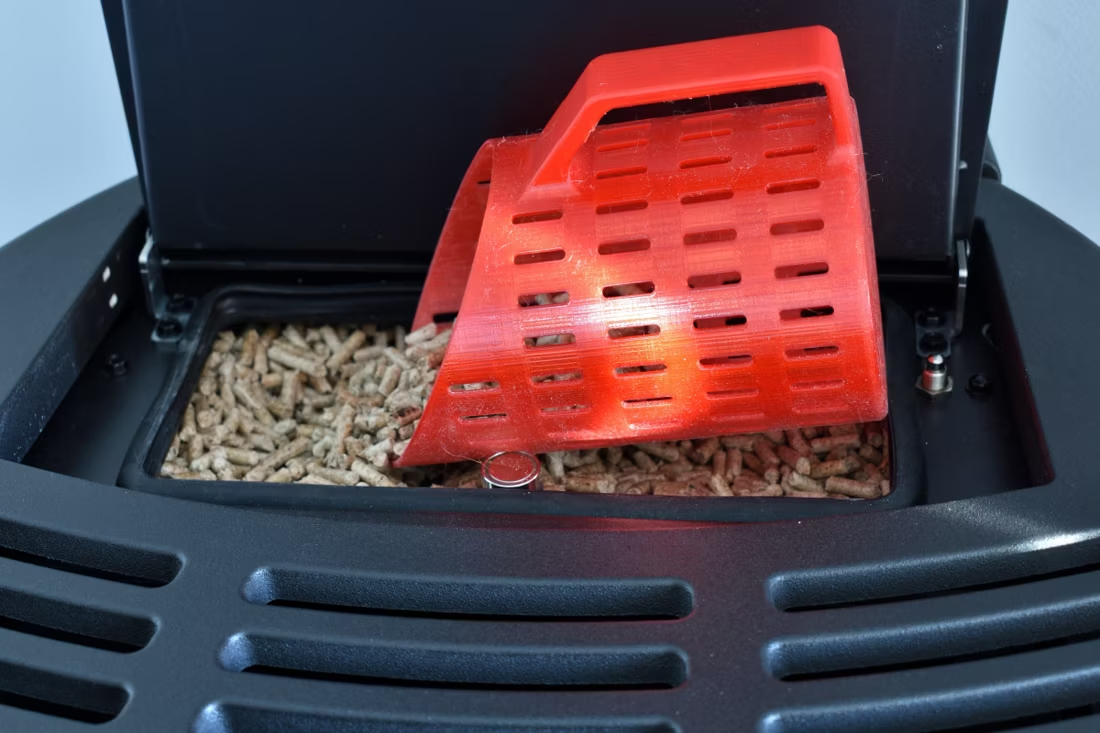
A clean pellet stove is a happy pellet stove. Plan on cleaning the burn pot about once a week when you're burning regularly—ash and clinkers gum up the air holes just like a pellet barbecue. Most pellet stove problems trace back to skipped cleaning that nobody explained up front. Some designs make it easy with a trapdoor burn pot: pull a lever and the gunk drops into the ash pan.
What's the difference between an insert and a zero-clearance fireplace?
An insert is a fireplace that slides into a pre-existing wood-burning fireplace—if you don't have one, there's nothing to insert it into. A zero-clearance fireplace is built into a framed wall, which makes it the answer for remodels and new construction. Simple test: existing masonry fireplace means insert; blank or framed wall means zero-clearance.
What is an in-home preview and do I need one?
It's a visit where a hearth professional measures your space, confirms the model you picked actually works in your home, and walks the specs—framing, gas line, venting, finish work—before anything is ordered. Some details you just can't know until you see the house. Never make a down payment without one; it's the single most-skipped step that burns buyers.
Does a fireplace add value to my home?
On average, a fireplace adds back to the home about the same amount you spent installing it. Add the monthly savings from heating the rooms you actually use instead of the whole house—often hundreds of dollars a year—and the value case is strong before you even count what a fire does for how your family uses the room.
Pellet Brands Stocked Around DeKalb County
Manufacturers will point you to the nearest stocking dealer.
Find your pellet stove in DeKalb County.
Tell us a bit about your home and we'll put together a free Project Guide & Parts List for your DeKalb County pellet project—the right stove or insert, the vent kit you'll need, and a trusted local dealer to install it.
Find Your Fireplace →