
Push-button heat for Crawford County's Ozark winters.
With a solid four-month heating season and winter lows averaging 19°F, Crawford County's heating season runs a solid four months, and most of it comes from propane rather than a gas main. I'll match you with a trusted local dealer who knows which fireplace or insert actually works on a rural tank setup, not a big-box guess.
Every Project Starts From One of These Five Situations
Consistent warmth without the woodpile.
Crawford County sits in the Ozark foothills along the Meramec River, bordered by Mark Twain National Forest, with a population under 8,200 spread across Steelville, Cuba, Bourbon, and Leasburg and a lot of unincorporated land between them. Climate Zone 4A and a genuine four-month heating season mean winters here are real but not extreme—milder than the deep cold of places like Duluth, MN or Fargo, ND, but plenty cold enough that a fireplace needs to actually perform, not just decorate a room. Oak, hickory, walnut, and maple grow throughout the county, and plenty of households still heat with wood cut from their own land, but a growing number are adding a gas fireplace or insert for the parts of the house—or the parts of winter—where hauling and tending a fire isn't practical.
Crawford County has no countywide natural gas main serving most of its footprint, so propane delivery from a local bulk supplier is the standard fuel for gas appliances outside a handful of in-town connections around Cuba and Steelville. That makes tank placement, line sizing, and regulator setup part of every install conversation here, not an afterthought. There's no air quality non-attainment status or burn restriction in the county, so the decision between gas and wood comes down to convenience and reliability rather than regulation—and a direct-vent gas unit still has a real edge during the ice storms that periodically knock out power across the Ozarks, since it doesn't depend on a chimney draft or a dry woodpile to put out heat.
Three steps. No salesperson until you're ready.
Tell us about your project
Your zip code, your situation, and the fuel you're leaning toward—or let the answers point you to one.
See what's actually available
The brands dealers within 100 miles genuinely carry—real options, never a catalog mirage.
Get your dealer & Project Guide
A trusted local dealer, plus the free Project Guide & Parts List that names every component of the job.
Frequently Asked Questions
How much does a gas fireplace installation cost in Crawford County?
Most gas fireplace and insert installations here fall somewhere between roughly $3,000 and $9,000, with the low end covering a direct-vent insert dropped into an existing masonry firebox that already has propane run nearby, and the higher end covering new construction or a remodel that needs framing, venting, and a fresh line from the tank. Rural properties outside Steelville, Cuba, or Bourbon that need a new propane tank set or a longer buried line will land toward the top of that range, and some installers based out of Rolla or St. James may add a modest travel charge for the more remote parts of the county. A local dealer can give you a firm number after seeing your firebox and tank situation.
Can I convert my existing wood fireplace to gas?
Yes, and it's a common project in Crawford County's older farmhouses, many of which have a masonry fireplace originally built to burn oak or hickory cut off the property. A gas insert fits into that existing firebox and vents through a stainless liner run up the current chimney, so you keep the mantel and hearth look while gaining an appliance you can run with a switch or remote. Because there's no natural gas main to tie into on most rural lots, the job usually involves running a line from an existing propane tank rather than a utility connection—worth flagging to your dealer up front so the quote reflects it.
Is natural gas available in Crawford County, or is it all propane?
For most of the county, it's propane. There's no countywide natural gas utility serving Crawford County the way there is in larger Missouri metro areas, so homes in Bourbon, Leasburg, and the unincorporated stretches along the Meramec run on propane delivered and stored in an above-ground tank. A limited number of properties closer to town centers like Cuba or Steelville may have access to piped service—check with your local supplier before assuming either way. Propane-fueled fireplaces perform identically to natural gas units once the orifice and regulator are set correctly for the fuel, so the choice mainly affects your ongoing fuel contract, not the fireplace itself.
Will a gas fireplace still work if the power goes out?
Most will, which matters in a county where ice storms periodically take down rural power lines for a day or more. Units with intermittent pilot ignition carry a battery backup that kicks in automatically when the power drops, so the fireplace still lights and puts out heat on demand. Valor fireplaces go further, generating their own electricity off the pilot's thermocouple so there's no battery at all to maintain. If storm-related outages are a real concern for your property—common in the more wooded, tree-lined parts of the county—ask your dealer specifically about the ignition system before you buy.
What's the difference between a gas fireplace, insert, and stove?
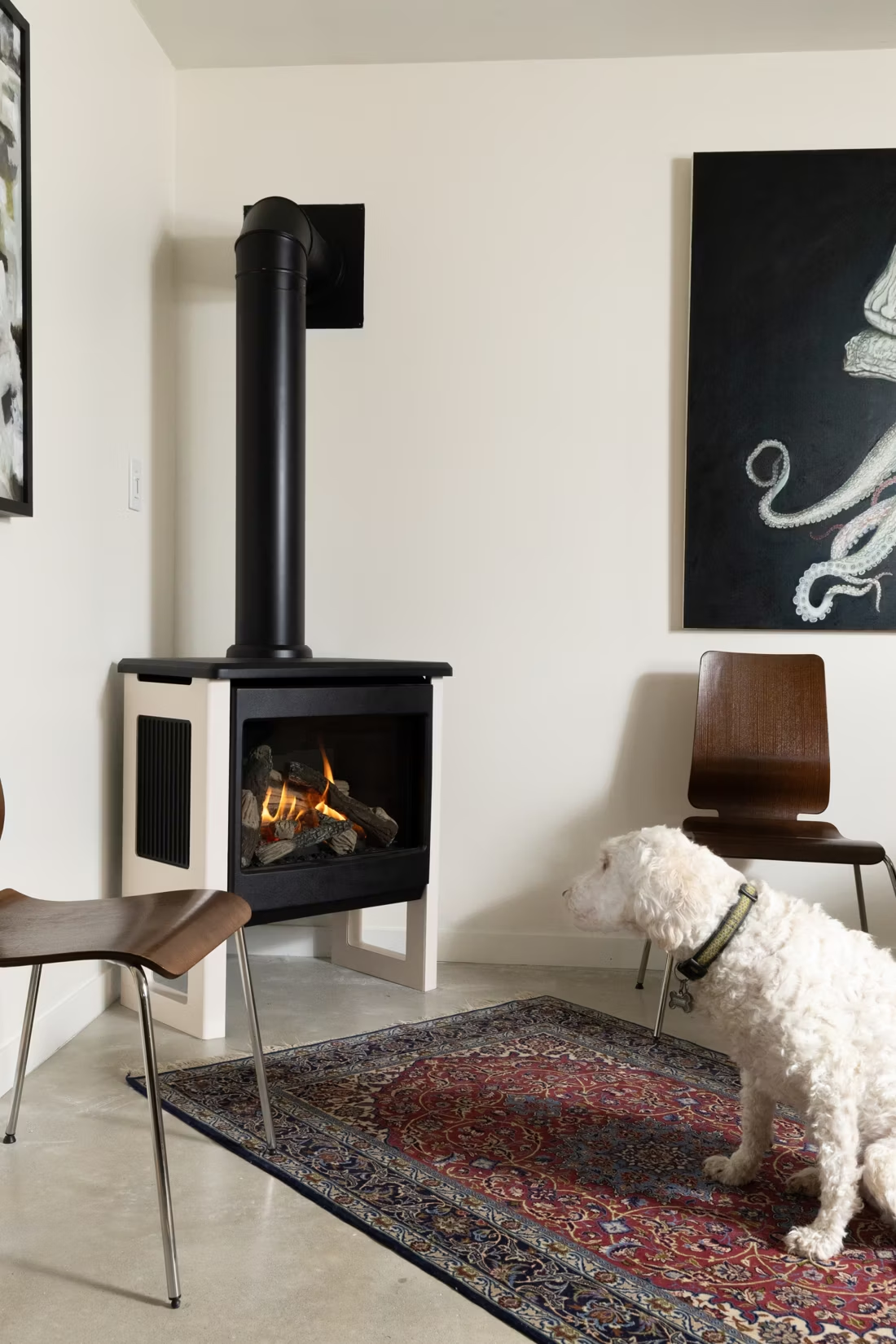
A gas fireplace is a fully built-in unit framed into a wall, the right call for new construction or a full remodel. A gas insert slides into an existing masonry firebox and uses your current chimney as the vent chase—the more common upgrade in Crawford County's older homes with an original wood-burning fireplace. A gas stove is a freestanding cabinet unit that sits on the floor like a wood stove but runs on propane, a good option for a room, cabin, or manufactured home with no existing chimney to work with. A local dealer can tell you which one actually fits your space and your propane setup.
Do I need a permit to install a gas fireplace in Crawford County?
It depends on where in the county you're building. Incorporated cities like Steelville, Cuba, and Bourbon generally require a building permit for new gas appliance installations through their own city offices, but much of unincorporated Crawford County has no countywide building code, so permitting requirements can vary property to property. Regardless of jurisdiction, the propane line itself should be run or connected by a licensed propane technician—that's the piece most homeowners shouldn't try to shortcut, and a full-service hearth dealer will typically coordinate that work as part of the install.
Should I get a vented or vent-free gas fireplace?
Direct-vent units pull combustion air from outside and exhaust it back outside through sealed pipe, keeping all combustion byproducts out of the living space. Vent-free units burn directly into the room and are legal in Missouri with proper room sizing and an oxygen depletion sensor, and since Crawford County has no air quality restrictions to navigate, either option is technically on the table here. That said, most local dealers still steer homeowners toward direct-vent for daily-use rooms, since it heats just as well without adding humidity or combustion byproducts to the air—a bigger consideration in a tightly sealed newer home than an older farmhouse with more natural draft.
How often does a gas fireplace need to be serviced?
Plan on an annual inspection, ideally in late summer or early fall before the heating season starts in earnest. A technician checks the burner, pilot assembly, and gas connections, tests the regulator if you're on propane, and cleans the glass and interior. It's a quicker visit than a wood chimney sweep, but still worth scheduling every year for a unit that's running daily through a solid four-month winter—expect a standard service call to run somewhere in the $150–$250 range from a local propane appliance technician.
Gas vs. wood vs. pellet—what actually makes sense in Crawford County?
Wood remains a strong, low-cost option here given how much oak, hickory, walnut, and maple grows across the county—many households already have a supply on hand and no air quality restrictions limit when they can burn it. Pellet stoves, stocked locally through regional suppliers like Lignetics and Indeck Energy Services, offer a middle ground: cleaner and more automated than wood, but still dependent on electricity to run the auger. Gas wins on pure convenience—instant, thermostat-controlled heat with no ash, no stacking, and no dependence on a dry woodpile—which is why it's increasingly common as a second appliance in main living areas even in homes that keep a wood stove for backup heat during outages.
Can I put a TV above my fireplace?
Yes—with an asterisk. Fireplaces are hot and TVs don't like heat. Either put a mantel between them to deflect rising warmth, or choose a fireplace with heat-management technology that creates a cool zone on the wall above—the wall stays around 125 degrees, barely warm, while the room still gets full heat. If you like clean lines and don't want a mantel, heat management is the answer.
Why is my open fireplace making my house colder?
Open fireplaces suck—literally. As the fire burns, it consumes air your furnace already paid to heat and pulls it out through the chimney, so the house is actually colder after the fire goes out than before you lit it. An insert fixes this: it seals the chimney, puts fixed glass across the front, and turns that hole in your house into a real heat source.
What is an in-home preview and do I need one?
It's a visit where a hearth professional measures your space, confirms the model you picked actually works in your home, and walks the specs—framing, gas line, venting, finish work—before anything is ordered. Some details you just can't know until you see the house. Never make a down payment without one; it's the single most-skipped step that burns buyers.
Does a fireplace add value to my home?
On average, a fireplace adds back to the home about the same amount you spent installing it. Add the monthly savings from heating the rooms you actually use instead of the whole house—often hundreds of dollars a year—and the value case is strong before you even count what a fire does for how your family uses the room.
Get your free Project Guide & Parts List for a gas fireplace in Crawford County.
Tell me about your home and your current propane or gas setup, and I'll match you with a trusted local Crawford County dealer and send over a free Project Guide & Parts List—the exact equipment, vent kit, and recommended installer for your project, no big-box guesswork.
Find Your Fireplace →