
Electric fireplace heat for Crawford County, without the chimney work.
No masonry, no gas line, no venting—just real heat and ambiance for Ozark hill country homes from Cuba to Steelville to Bourbon. Find the right unit and connect with a trusted local dealer.
Every Project Starts From One of These Five Situations
Fast heat and real ambiance, no venting required.
Crawford County sits in the Ozark hill country along the I-44 corridor between St. Louis and Springfield—a mix of older farmhouses tucked into hollows near Huzzah and Courtois Creek, and newer construction around Cuba, Steelville, Bourbon, and Leasburg. At climate zone 4A with about 5,193 heating degree days and winter lows averaging 19°F, this is real heating-season territory, but it's not extreme cold—the kind of climate where an electric fireplace makes sense as targeted, zone-level heat rather than a whole-home furnace replacement.
Most of rural Crawford County gets its power from Crawford Electric Cooperative, headquartered in Bourbon—a detail that matters more than it might seem, because electric fireplaces run entirely on grid power and Ozark ice storms do occasionally take co-op lines down for a day or more. That makes electric a great fit for finished basements, sunrooms, home offices, and older homes without an existing chimney, where a plug-in or built-in unit adds heat and glow with zero venting hassle. It's a poor fit as your only heat source if you're worried about winter outages—which is exactly why so many county homes with electric fireplaces also keep a wood stove or fireplace on hand, burning the oak and hickory that's abundant across the surrounding Mark Twain National Forest.
Three steps. No salesperson until you're ready.
Tell us about your project
Your zip code, your situation, and the fuel you're leaning toward—or let the answers point you to one.
See what's actually available
The brands dealers within 100 miles genuinely carry—real options, never a catalog mirage.
Get your dealer & Project Guide
A trusted local dealer, plus the free Project Guide & Parts List that names every component of the job.
Frequently Asked Questions
How much does an electric fireplace installation cost in Crawford County?
Plug-in electric fireplaces and stoves are the cheapest option—many run on a standard 120V outlet with no electrical work needed, and the unit itself typically costs $200 to $1,200 depending on size and features. Built-in electric fireplaces or wall-mounted linear units usually need a dedicated 120V or 240V circuit, which means bringing in a licensed electrician; once you add framing, trim, and a mantel surround, total project costs commonly land between $1,500 and $4,500. Because there's no chimney, flue, or gas line involved, electric is consistently the lowest-cost fireplace option in the county—local retailers can quote a firm number after seeing your room and outlet situation.
What size electric fireplace do I need for my room?
Electric fireplaces are almost always supplemental heat rather than a home's primary heat source, so sizing is about the room, not the whole house. A typical unit puts out 4,000 to 5,000 BTU, which comfortably heats a room in the 300 to 500 square foot range—enough for a living room, den, or finished basement in a Crawford County home. For larger open floor plans common in newer Bourbon and Steelville-area builds, you may want two zone units rather than one oversized fireplace, since electric heat doesn't push far past the room it's installed in. A local dealer can walk your space and recommend wattage based on ceiling height and insulation.
Who installs electric fireplaces near me, and do I need a certified installer?
Plug-in units don't require a professional installer at all—you can place and plug one in yourself. Built-in and wall-mounted units that need a new circuit should be wired by a licensed electrician, and hearth retailers serving Crawford County typically coordinate that electrical work as part of the install so you're not managing two separate trades. Unlike wood or gas installs, there's no CSIA chimney certification or gas-fitter license involved, which is part of why electric projects tend to move faster and cost less than a comparable wood or gas installation.
What's the difference between an electric fireplace, insert, and stove?
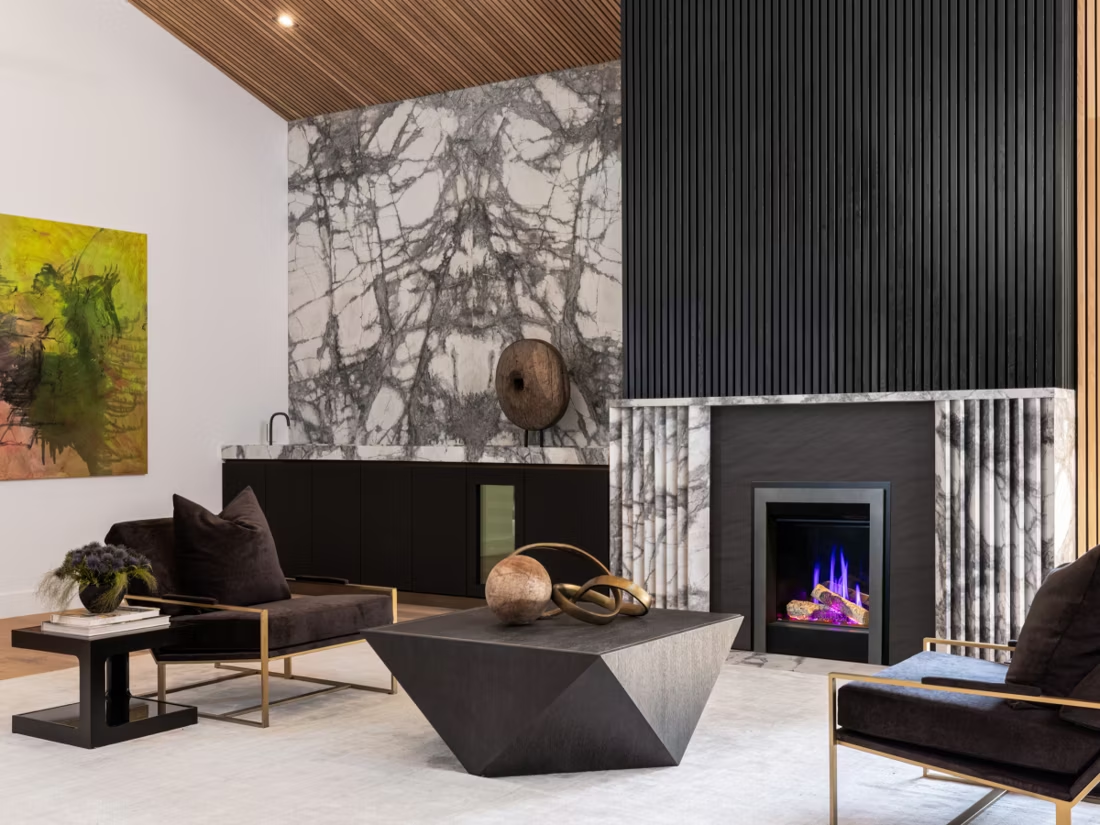
An electric fireplace is typically a built-in unit set into a wall or mantel surround, often with a linear, modern look. An electric insert is sized to slide into an existing masonry fireplace opening, giving an old wood-burning fireplace real heat output and flame effect without touching the chimney. An electric stove is a freestanding cabinet-style unit that sits on the floor like a traditional wood stove but plugs into an outlet. For Crawford County homes with an existing but rarely-used masonry fireplace, an insert is often the simplest upgrade; for new construction or a finished basement with no fireplace opening, a built-in unit or freestanding stove works better.
Do I need a permit to install an electric fireplace in Crawford County?
Plug-in electric fireplaces that use an existing outlet generally don't require a permit—there's no gas line, no venting, and no structural change. Built-in units that require a new dedicated circuit typically do need an electrical permit, handled through the local jurisdiction (Cuba, Steelville, or Bourbon city hall for in-town addresses, Crawford County for unincorporated areas). Most retailers who sell built-in units either pull the permit themselves or point you to the right office, so it's rarely something you have to sort out alone.
Is an electric fireplace enough heat for Crawford County winters?
On its own, generally no—with winter lows averaging 19°F and roughly 5,193 heating degree days a year, Crawford County sees real cold, and electric fireplaces are built for zone heating, not whole-home output. They're excellent for warming a single room efficiently, adding ambiance, and taking the edge off a chilly morning without firing up the furnace. For homes relying on wood heritage or wanting true backup heat during a winter power outage—not uncommon when ice coats Crawford Electric Cooperative lines—a wood stove burning local oak or hickory remains the better standalone option. Many homeowners run both: electric for daily convenience, wood for backup and ambiance.
How much maintenance does an electric fireplace need?
Very little, which is one of the main draws. There's no chimney to sweep, no gas lines to inspect, and no combustion byproducts to worry about. Maintenance is mostly dusting the unit, occasionally cleaning the glass front, and checking that the fan and heating element are running smoothly—most manufacturers recommend a quick check once a year. Compared to the annual CSIA chimney inspection a wood-burning setup needs, or the yearly gas technician visit a propane fireplace requires, electric is the lowest-upkeep option available to Crawford County homeowners.
Will my electric fireplace work during a power outage?
No—electric fireplaces run entirely on grid power, so when the power goes out, so does the fireplace. This matters in Crawford County specifically because rural sections served by Crawford Electric Cooperative can lose power for extended stretches during Ozark ice storms. If backup heat during outages is a priority, electric shouldn't be your only fireplace; pairing an electric unit for everyday convenience with a wood stove for genuine emergency heat is a common and sensible setup in this county, where oak and hickory firewood are both traditional and locally abundant.
Electric vs. wood—which is right for my home?
Wood offers real backup heat during power outages, lower ongoing fuel cost if you have access to your own timber or a local supplier, and the kind of radiant heat that Crawford County's oak-hickory-walnut forests have supported for generations. Electric offers instant on-off convenience, zero venting or chimney maintenance, the lowest install cost of any fireplace fuel, and safe operation in rooms where running a flue or gas line isn't practical—a finished basement or a room addition, for example. For a primary living space or a backup heat plan, wood still makes sense for many county homes; for ambiance, supplemental warmth, or a low-hassle upgrade to a rarely-used room, electric is hard to beat.
Does an electric fireplace need a vent or chimney?
No—that's its superpower. An electric fireplace needs a wall and an outlet, period. No vent pipe, no gas line, no clearances to design around, which is why it works in bedrooms, offices, apartments, and walls where venting a gas or wood unit would be impractical or impossible. Installation is typically the simplest and least expensive of any fireplace type.
Can I put a TV above my fireplace?
Yes—with an asterisk. Fireplaces are hot and TVs don't like heat. Either put a mantel between them to deflect rising warmth, or choose a fireplace with heat-management technology that creates a cool zone on the wall above—the wall stays around 125 degrees, barely warm, while the room still gets full heat. If you like clean lines and don't want a mantel, heat management is the answer.
Does a fireplace add value to my home?
On average, a fireplace adds back to the home about the same amount you spent installing it. Add the monthly savings from heating the rooms you actually use instead of the whole house—often hundreds of dollars a year—and the value case is strong before you even count what a fire does for how your family uses the room.
How much should I budget for a fireplace?
For an average home—covering the fireplace, the vent pipe, and basic installation—a budget between $3,900 and $5,500 gives you a lot of options across wood, gas, and pellet. By the time you add finish work, gas line, and electrical, the average complete installation lands between $5,000 and $12,000 all-in. In a remodel or new build, a good rule is to put about 2.5% of the total project cost toward the fireplace.
Find your electric fireplace in Crawford County.
Tell us a bit about your home and we'll match you with the right electric fireplace, insert, or stove—plus a free Project Guide & Parts List and a trusted local dealer to install it.
Find Your Fireplace →