
Pellet Heat in Columbia: A Niche Option, Done Right.
Natural gas and electric heat cover most Columbia homes, but for the right project—a workshop, a sunroom, a backup heat source—a pellet stove can still make sense. We'll match you with a trusted local dealer who installs it correctly.
Every Project Starts From One of These Five Situations
Mid-Missouri's climate rarely calls for it.
Columbia sits in climate zone 4A at 753 feet elevation, with an average winter low around 22°F and a moderate winter heating season a year—noticeably milder than the wood- and pellet-heavy climates of the Upper Midwest or Rocky Mountain West. Natural gas is widely available across the city through Ameren Missouri (Union Electric Co.) and City of Columbia utility service, and electric heat pumps handle the mild winters efficiently. That combination means most Columbia homeowners never have a practical reason to add a solid-fuel appliance, even though Boone County's oak, hickory, walnut, and maple forests would supply plenty of biomass if they wanted to.
That said, pellet stoves haven't disappeared from mid-Missouri entirely. A small number of homeowners—particularly out in unincorporated Boone County on Boone Electric Cooperative lines, where storm-related outages happen more often than inside city limits—install a pellet stove as backup heat for a workshop, garage, or add-on room. Regional pellet brands like Lignetics and Indeck Energy Services are stocked at farm and home stores throughout the area, so fuel supply isn't the obstacle; it's simply that pellet heat plays a supporting role here rather than a primary one. If that's your situation, we'll still connect you with a dealer who knows how to size and vent the unit correctly.
Three steps. No salesperson until you're ready.
Tell us about your project
Your zip code, your situation, and the fuel you're leaning toward—or let the answers point you to one.
See what's actually available
The brands dealers within 100 miles genuinely carry—real options, never a catalog mirage.
Get your dealer & Project Guide
A trusted local dealer, plus the free Project Guide & Parts List that names every component of the job.
Frequently Asked Questions
How much does a pellet stove installation cost in Columbia?
Most pellet stove installations run in the $3,000 to $6,000 range nationally, and Columbia installers fall in that same band—the variables are whether you need a fresh through-wall vent kit, a hearth pad for code clearance, and a dedicated electrical outlet for the hopper and blower. Because pellet installs are less common here than gas or electric jobs, expect your local dealer to walk the site in person before quoting a firm number rather than pricing it sight unseen.
Why aren't pellet stoves more common in Columbia?
Columbia's climate zone (4A) and a moderate winter heating season put it well outside the range where solid-fuel heat becomes a household default. With natural gas service available through much of the city and reliable electric service from Union Electric (Ameren Missouri), Boone Electric Cooperative, and City of Columbia utilities, most homes simply don't need a supplemental biomass appliance to get through the winter. Pellet stoves in this market tend to be a deliberate choice—for a detached workshop, a sunroom without gas or duct access, or a rural property that wants a non-electric-dependent backup—rather than a mainstream heating decision.
Do I need a permit to install a pellet stove in Columbia?
Yes. Inside city limits, permitting runs through the City of Columbia Building and Site Development Division; in unincorporated Boone County, it's handled through Boone County Resource Management. Either way, the stove needs to be a listed, EPA-certified unit installed to its manufacturer's clearance specs, and most dealers who actually do pellet work in this area will pull the permit as part of the install rather than leaving it to the homeowner.
Where do I buy pellets in Columbia?
Regional brands like Lignetics and Indeck Energy Services show up at farm-and-home retailers and hardware stores around Boone County, typically running in the $230 to $300 per ton range depending on the season and how far in advance you buy. Because pellet stoves are a smaller market here than in colder states, it's worth confirming a store keeps pellets in stock year-round rather than assuming—some carry them seasonally.
What's the difference between a pellet stove and a pellet insert?
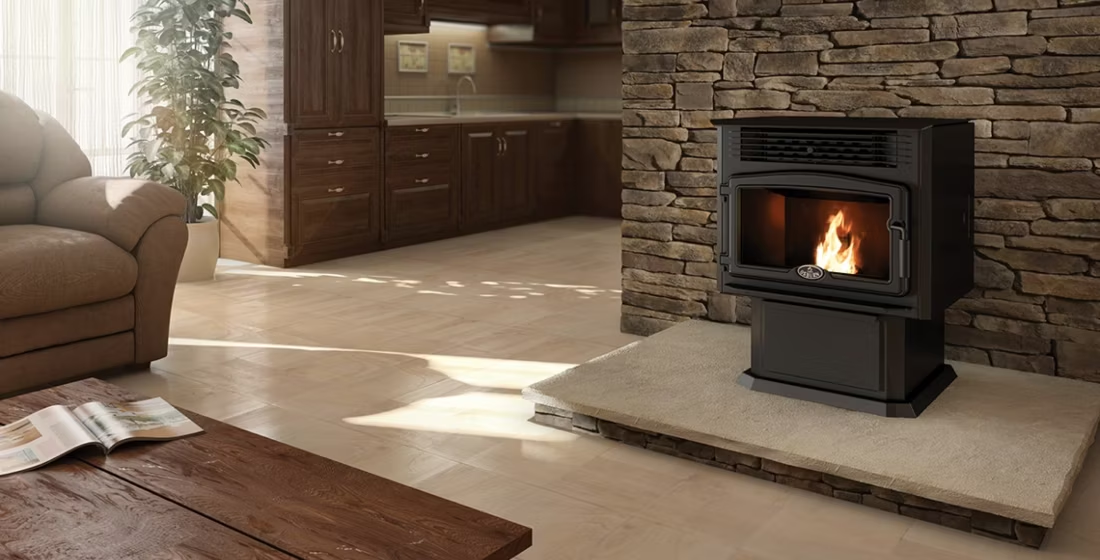
A pellet stove is a freestanding unit that vents through a wall or existing chimney chase and can go almost anywhere with power and clearance. A pellet insert fits into an existing masonry fireplace, similar to a gas or wood insert. Given how few Columbia homes have existing masonry fireplaces built specifically for solid-fuel inserts, freestanding pellet stoves are the more common installation here—usually placed in a workshop, garage, or bonus room rather than retrofitted into a formal fireplace opening.
Will a pellet stove work during a power outage?
Not without a backup power source. Pellet stoves rely on an electric auger to feed fuel and a blower to circulate heat, so they shut down when the power does—worth knowing if your reason for considering one is storm-related outage coverage on Boone Electric Cooperative or rural lines. Homeowners who want outage-proof heat in Columbia typically pair a pellet stove with a small battery backup or generator, or they look at a wood-burning or propane alternative instead, since those can run without grid power.
What size pellet stove makes sense for a Columbia home?
Because pellet stoves here are usually supplemental rather than whole-home heat, smaller and mid-size units are the norm—enough to comfortably heat a single room, workshop, or addition rather than a multi-thousand-square-foot house already served by gas or a heat pump. A local dealer will look at the specific space (insulation, ceiling height, how it's used) before recommending hopper size and BTU output, which matters more for a room-by-room pellet install than a formula based on total home square footage.
Should I consider gas or wood instead of pellet in Columbia?
For most Columbia homes, gas is the more natural fit—it's widely available through the city's natural gas network, requires no fuel storage, and starts instantly. Wood-burning options exist too, especially given the abundance of local oak and hickory, but like pellet, wood heat plays a niche role here rather than a primary one since the region's milder winters and gas access don't create the same demand seen in colder climates. Pellet stoves land in between: cleaner and more automated than wood, but still needing a fuel supply and electricity that gas doesn't require. If your project is a specific space that gas can't easily reach, pellet is often the more practical of the two solid-fuel options.
If pellet stoves are uncommon here, how does Find My Fireplace help me find one?
Because pellet installs are a smaller share of the Columbia market, finding a dealer who does them well—and stocks the right venting components—matters even more than in a market where every hearth shop sells them by default. We match you with a trusted local dealer who actually installs pellet appliances in mid-Missouri, not just whoever's closest on a map, and we send you a free Project Guide & Parts List with the exact parts your project needs, including the vent kit, so you walk into that conversation already informed.
Why is my open fireplace making my house colder?
Open fireplaces suck—literally. As the fire burns, it consumes air your furnace already paid to heat and pulls it out through the chimney, so the house is actually colder after the fire goes out than before you lit it. An insert fixes this: it seals the chimney, puts fixed glass across the front, and turns that hole in your house into a real heat source.
What's the difference between an insert and a zero-clearance fireplace?
An insert is a fireplace that slides into a pre-existing wood-burning fireplace—if you don't have one, there's nothing to insert it into. A zero-clearance fireplace is built into a framed wall, which makes it the answer for remodels and new construction. Simple test: existing masonry fireplace means insert; blank or framed wall means zero-clearance.
Can a fireplace actually lower my heating bill?
Yes—by creating a comfort zone. A furnace heats every square foot of the house just to warm the one room you're in; a gas fireplace on low burns roughly a sixth of the gas a typical furnace does. Set the furnace around 55–60 degrees as a baseline, then heat the rooms your family actually uses. Families who heat this way commonly save $20–$60 a month.
What is an in-home preview and do I need one?
It's a visit where a hearth professional measures your space, confirms the model you picked actually works in your home, and walks the specs—framing, gas line, venting, finish work—before anything is ordered. Some details you just can't know until you see the house. Never make a down payment without one; it's the single most-skipped step that burns buyers.
Preferred Dealer in Columbia
Marked Preferred because they run on WhyFire's software—so they can show you real pricing and book your appointment right here. No manufacturer pays for placement. How we verify dealers →
Pellet Brands Stocked Around Columbia
Manufacturers will point you to the nearest stocking dealer.
Find your pellet stove in Columbia.
Tell us about your project and we'll match you with a trusted local Columbia dealer who actually installs pellet stoves, plus a free Project Guide & Parts List covering the exact parts—including the vent kit—you'll need.
Find Your Fireplace →