
Consistent pellet heat for Clark County winters.
From Kahoka to Wayland and the farmland along the Des Moines and Mississippi rivers, Clark County winters call for heat you can count on without a woodpile to tend. Find the right pellet stove or insert, and connect with a trusted local dealer.
Every Project Starts From One of These Five Situations
Reliable heat without the woodpile.
Clark County sits in the far northeast corner of Missouri, in the tri-state pocket where the Des Moines River meets the Mississippi near Alexandria, and where Iowa and Illinois are just across the water. With roughly 3,446 residents spread across a mostly agricultural county—Kahoka as the seat, with Wayland, Revere, and Luray nearby—homes here run the gamut from farmhouses on wooded acreage to smaller in-town properties with no woodlot at all. Winters bring an average low of 17°F and a heating season on par with places like Columbia, Missouri, a cold season that's noticeably milder than places like Duluth, Minnesota or Fargo, North Dakota, but still cold enough that heating isn't optional from November through March.
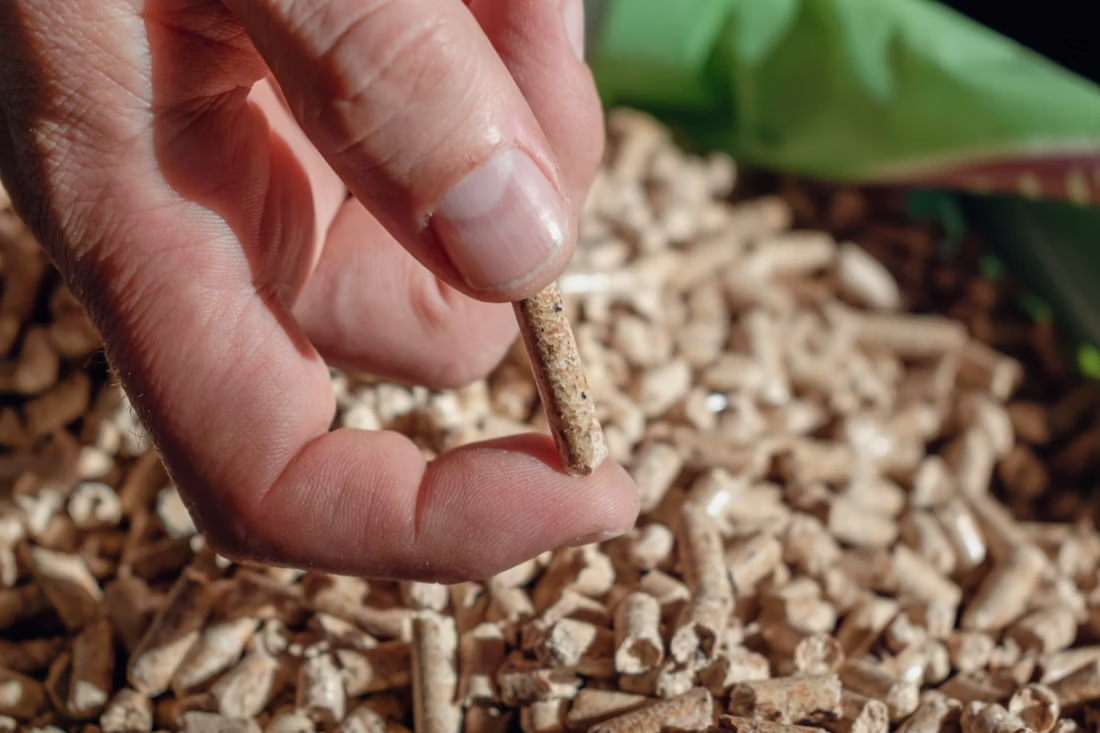
Clark County's hardwood timber—oak, hickory, walnut, maple—has fueled wood stoves here for generations, and plenty of households still cut and split their own. Pellet heat has grown as an option for the households that want that same steady radiant warmth without the chainsaw, splitting maul, and seasoning shed a woodlot demands—retirees, farm families stretched thin during planting and harvest, or in-town homes without acreage. Regional pellet brands including Lignetics and Indeck Energy Services keep hardwood pellet supply reasonably close by, so residents aren't relying on truckloads shipped in from the coasts.
Three steps. No salesperson until you're ready.
Tell us about your project
Your zip code, your situation, and the fuel you're leaning toward—or let the answers point you to one.
See what's actually available
The brands dealers within 100 miles genuinely carry—real options, never a catalog mirage.
Get your dealer & Project Guide
A trusted local dealer, plus the free Project Guide & Parts List that names every component of the job.
Frequently Asked Questions
How much does a pellet stove installation cost in Clark County?
A freestanding pellet stove installation in Clark County typically runs $3,000 to $6,000, depending on the unit, whether you need a new hearth pad, and the length of the vent run through an exterior wall. A pellet insert going into an existing masonry fireplace, with a liner run up the chimney, usually lands closer to $4,000 to $7,500. Because much of the county is unincorporated farmland, installers here often factor in a bit of extra time for older farmhouse wiring or non-standard wall thicknesses—worth mentioning when you get a quote.
What size pellet stove do I need for a Clark County home?
With a winter heating load on par with places like Columbia, Missouri and average winter lows around 17°F, most Clark County homes do well with a mid-size pellet stove rated for 1,200 to 2,000 square feet as a primary heat source, or a smaller unit if it's supplementing a furnace. Older farmhouses with less insulation and higher ceilings—common throughout the county—often need to size up a step from what the square footage alone would suggest. A local dealer can walk your home and account for insulation, room layout, and how hard you want the stove working during the coldest stretches.
Where can I buy pellet fuel near Clark County?
Pellet fuel is generally available through farm and hardware stores in and around Kahoka, and many residents also pick up or have pellets delivered from suppliers across the river in Iowa or over in Illinois, given how close Clark County sits to both state lines. Brands like Lignetics and Indeck Energy Services are commonly stocked regionally and produce hardwood pellets suited to the oak-and-hickory mix that's typical of Missouri timber. Buying a season's supply early—before the first cold snap—is standard practice here, since demand tightens up once temperatures drop.
Wood vs. pellet—which makes more sense for my Clark County home?
If you've got wooded acreage and the time to cut, split, and season oak, hickory, walnut, or maple, a wood stove will heat for less money and keep working with zero electricity—a real advantage on a rural electric line during a winter storm. A pellet stove trades that labor and that off-grid resilience for convenience: load a hopper, set a thermostat, and get consistent heat with far less mess and no chimney creosote to manage. For in-town Clark County homes without a woodlot, or for households where nobody has time to process cordwood between farm chores, pellet is often the more realistic long-term fit.
Do I need a permit to install a pellet stove in Clark County?
It depends on where in the county you are. Clark County doesn't run a countywide building permit office the way larger counties do, so a lot of installations on rural or unincorporated property proceed based on manufacturer installation specs and your insurance carrier's requirements rather than a formal county permit. Inside town limits—Kahoka, Wayland, and similar—check with the town clerk, since some incorporated communities do require a permit for new venting through an exterior wall. Either way, a reputable local installer will follow manufacturer clearance and venting specs regardless of whether a permit is pulled, which is what actually keeps the installation safe.
What's the best pellet stove for Clark County's climate?
For a cold season that regularly dips into the teens, look for a pellet stove with a hopper large enough to get through an overnight burn without a refill—40 to 60 pounds is typical for mid-size units—and a thermostat control that can ramp output up during the coldest stretches without babysitting. Premium hardwood pellets, like those from Lignetics, run lower ash and burn hotter and cleaner than blended softwood pellets, which matters if you're running the stove daily through a full Missouri winter rather than just for occasional warmth. A local dealer can match hopper size and BTU output to your square footage and how many days you're likely to go between fillings.
Will my pellet stove work during a power outage?
Not without backup power—pellet stoves rely on an electric auger to feed fuel and a blower to move heat, so they shut down when the power goes out. That's a real consideration in rural Clark County, where winter storms can knock out a rural electric line for a stretch. Some households pair a pellet stove with a small battery backup or a portable generator sized to run the auger and blower, which is usually a modest load. If losing heat during an outage is a dealbreaker for your household, a wood stove as a second, non-electric heat source is worth discussing with your local dealer.
How often does a pellet stove need to be cleaned and serviced?
Pellet stoves need less upkeep than a wood-burning chimney, but they're not maintenance-free. Plan on emptying the ash pan every few days during regular use, a deeper cleaning of the burn pot and exhaust passages every one to two weeks depending on how much the stove runs, and a full professional service—checking the auger, gaskets, and venting—once a year, typically before the season starts. For a Clark County home running the stove daily through a full winter, staying on top of the burn pot specifically prevents the clinker buildup that causes uneven burns.
Pellet vs. propane—which is the better fit for a rural Clark County home?
Propane is common in Clark County's rural farmhouses because it heats the whole house through a furnace or boiler without anyone tending a fire, but tank refills are subject to propane price swings and delivery scheduling, which can be a headache during a hard winter. A pellet stove won't heat an entire house the way a propane furnace can, but as a zone-heating solution for a living room or main living area, it offers more control over fuel cost—pellet pricing tends to be steadier season to season—and gives you a backup heat source if you're ever waiting on a propane delivery. Many households here run both: propane for the whole-house baseline, pellet for the room where everyone actually spends their evenings.
How often does a pellet stove need cleaning?
A clean pellet stove is a happy pellet stove. Plan on cleaning the burn pot about once a week when you're burning regularly—ash and clinkers gum up the air holes just like a pellet barbecue. Most pellet stove problems trace back to skipped cleaning that nobody explained up front. Some designs make it easy with a trapdoor burn pot: pull a lever and the gunk drops into the ash pan.
Why is a fireplace insert so efficient?
An insert does two things: it seals the chimney completely, so you stop losing air you already paid to heat, and it radiates warmth into the room through the firebox and glass. Most add a heat-exchange fan that pulls cool room air underneath, wraps it around the hot firebox, and pushes it back out warm. Your home is more efficient before you've even lit the first fire.
How much should I budget for a fireplace?
For an average home—covering the fireplace, the vent pipe, and basic installation—a budget between $3,900 and $5,500 gives you a lot of options across wood, gas, and pellet. By the time you add finish work, gas line, and electrical, the average complete installation lands between $5,000 and $12,000 all-in. In a remodel or new build, a good rule is to put about 2.5% of the total project cost toward the fireplace.
What is an in-home preview and do I need one?
It's a visit where a hearth professional measures your space, confirms the model you picked actually works in your home, and walks the specs—framing, gas line, venting, finish work—before anything is ordered. Some details you just can't know until you see the house. Never make a down payment without one; it's the single most-skipped step that burns buyers.
Pellet Brands Stocked Around Clark County
Manufacturers will point you to the nearest stocking dealer.
Find your pellet stove in Clark County.
Tell us about your home and heating goals, and we'll match you with a trusted local dealer plus a free Project Guide & Parts List—sized venting, the right hopper capacity, and a plan built for Clark County winters.
Find Your Fireplace →