Keep Your Family Warm and Safe—No Matter What
With winter lows dipping into the teens and plenty of oak and hickory in reach, wood heat has always made sense around Centralia. Find the right stove or insert, and get matched with a trusted local dealer.
Every Project Starts From One of These Five Situations
A mid-Missouri town with hardwood in its backyard.
Centralia sits in north-central Missouri at just under 900 feet elevation, with a solid winter heating season and average winter lows around 19°F. That's a genuinely cold season by mid-Missouri standards—not Fargo ND or Duluth MN territory, but enough hard freezes that a well-sized wood stove earns its keep from December through February. Unlike the West Coast, there are no winter inversion or non-attainment concerns here, so wood burning is straightforwardly common rather than something to navigate carefully.
Boone County's countryside is thick with oak, hickory, walnut, and maple—the same species that split and season well and put out serious BTUs per cord. Plenty of Centralia households already burn wood as supplemental heat for a farmhouse living room or a shop, and a properly installed stove or insert can carry a home through an ice storm when the local electric co-op lines go down. The right unit turns cordwood you can cut or buy locally into dependable, non-electric heat.
Three steps. No salesperson until you're ready.
Tell us about your project
Your zip code, your situation, and the fuel you're leaning toward—or let the answers point you to one.
See what's actually available
The brands dealers within 100 miles genuinely carry—real options, never a catalog mirage.
Get your dealer & Project Guide
A trusted local dealer, plus the free Project Guide & Parts List that names every component of the job.
Frequently Asked Questions
How much does a wood stove installation cost in Centralia?
A typical wood stove installation in the Centralia area runs roughly $4,000 to $8,500, depending on the stove itself, whether you're venting through an existing masonry chimney or need new Class A pipe run through a wall or roof, and any hearth pad work required for clearance. Homes with an existing fireplace and chimney in decent shape tend toward the lower end; new construction or a stove going into a room with no existing chimney runs higher once venting materials and roof penetration are factored in. A local dealer will give you a firm number after seeing your space.
What size wood stove do I need for a Boone County farmhouse or ranch home?
Sizing comes down to square footage, ceiling height, and how drafty the house runs—a lot of Centralia's older farmhouses lose heat faster than newer construction, which matters more than the raw square footage number. As a rough guide: small stoves suit a single room or a 1,000 sq ft cabin or shop, mid-size stoves handle 1,000–2,000 sq ft main living areas, and larger stoves can carry a whole well-insulated home past 2,000 sq ft. Undersize it and you'll be feeding the fire constantly on a 19°F night; oversize it and you'll smolder the fire and build creosote. A local dealer can size this correctly with a quick look at your floor plan.
Where can I find a certified wood stove installer near Centralia?
Look for NFI (National Fireplace Institute) or CSIA (Chimney Safety Institute of America) certification—these indicate real training in wood-burning clearances, venting, and code compliance, not just general contracting experience. In a smaller market like Centralia, the retailer who sells you the stove is often the same outfit that installs it, which keeps warranty coverage and code sign-off simple. Skip a general handyman install for a wood-burning unit; improper chimney clearance and venting is the top cause of house fires tied to wood stoves.
What's the difference between a wood stove and a wood insert for my home?
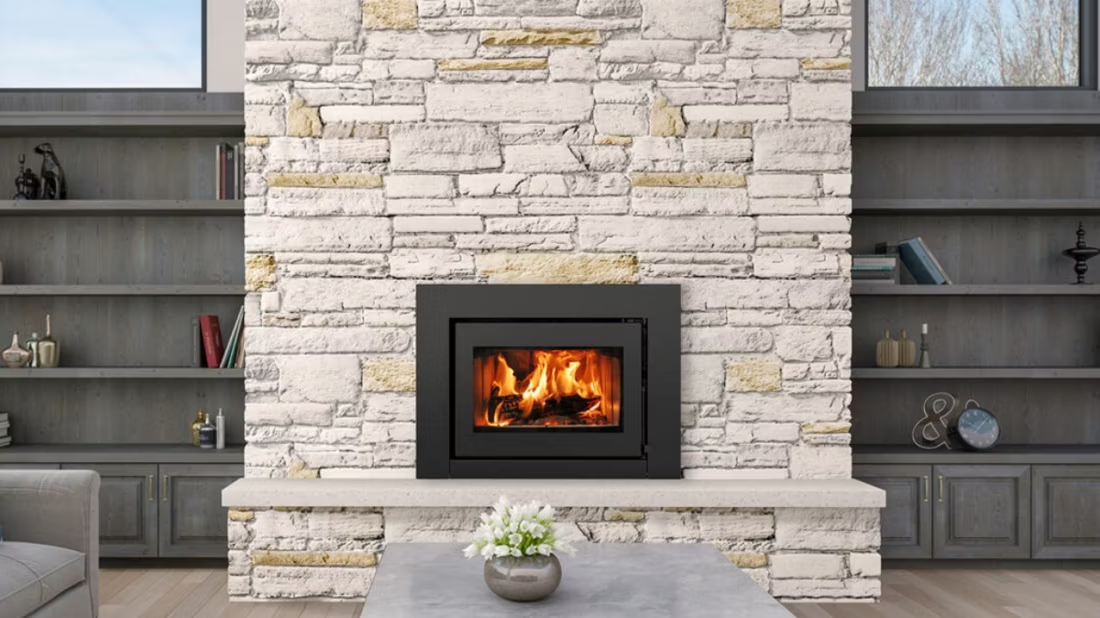
A wood stove is freestanding, sits on its own hearth pad, and can go almost anywhere in a room with proper clearances to combustibles. A wood insert slides into an existing masonry fireplace opening and uses that chimney (usually with a stainless liner) to vent—turning a drafty, inefficient old fireplace into a real heat source. If your Centralia home already has a working masonry fireplace, an insert is usually the more cost-effective upgrade. If you're heating a shop, addition, or a room with no existing chimney, a freestanding stove is the more practical route.
Do I need a permit to install a wood stove in Centralia or Boone County?
Most wood stove installations require a building permit, and the unit itself needs to meet current EPA emissions standards for new stoves. Within Centralia city limits, check with the city building office before installing; for homes in unincorporated Boone County, the county's building and permit process applies instead. Most local hearth dealers handle the permit paperwork as part of the installation, so this usually isn't something you have to sort out on your own. There's no local air quality advisory system to worry about here—Centralia has no winter inversion or non-attainment issues, unlike parts of the West.
What's the best wood stove for Centralia's climate?
With winter lows regularly in the high teens and oak or hickory as the go-to fuel, a mid-size non-catalytic stove from a brand like Pacific Energy or Lopi handles most Centralia homes well, offering solid overnight burn times without the extra cost of a catalytic system. If you're heating a larger farmhouse or want the longest possible burn on the coldest nights, a catalytic stove from Blaze King can hold a fire well past 12 hours on a load of dense hardwood. A local retailer can match the stove to your square footage and how you plan to burn it—daily primary heat versus occasional supplemental heat changes the recommendation.
How often should my chimney be inspected and cleaned in Centralia?
The CSIA recommends an annual inspection for any wood-burning appliance, and that holds true here—plan on a sweep and inspection each late summer or early fall before the first cold snap. Oak and hickory burn hot and relatively clean when properly seasoned, but green or unseasoned hardwood (common if you're cutting your own) builds creosote fast, so homes burning wood as a primary heat source may need a mid-winter check as well. Skipping this is the leading cause of chimney fires, so it's worth budgeting for every year.
Where can I get firewood in the Centralia area?
Boone County's countryside supplies plenty of oak, hickory, walnut, and maple, and several regional firewood sellers deliver by the cord (a stacked 4×4×8 foot pile) to Centralia and surrounding towns, generally in the $200–$300 per cord range depending on species and how well-seasoned it is. Oak and hickory are the preferred choices for heat output and burn time; walnut and maple work well too but burn a bit faster. If you have access to your own land or know a farmer clearing timber, seasoning your own wood a full year before burning will get you noticeably better performance than burning it green.
Wood stove vs. pellet stove—which makes more sense for my home?
Wood stoves burn cordwood, work with zero electricity (a real advantage during an ice storm outage from Union Electric or Consolidated Electric Coop lines), and pair naturally with the oak and hickory that's plentiful around Boone County. Pellet stoves burn compressed wood pellets from brands like Lignetics, are easier to load and run on a thermostat, and produce less mess—but they need electricity for the auger and blower, so they won't help you during a power outage. For Centralia homes where winter storm outages are a real possibility and firewood access is easy, wood usually wins. For homes prioritizing convenience with reliable power, pellet is a solid alternative. A local dealer can walk you through both.
Why is a fireplace insert so efficient?
An insert does two things: it seals the chimney completely, so you stop losing air you already paid to heat, and it radiates warmth into the room through the firebox and glass. Most add a heat-exchange fan that pulls cool room air underneath, wraps it around the hot firebox, and pushes it back out warm. Your home is more efficient before you've even lit the first fire.
Why is my open fireplace making my house colder?
Open fireplaces suck—literally. As the fire burns, it consumes air your furnace already paid to heat and pulls it out through the chimney, so the house is actually colder after the fire goes out than before you lit it. An insert fixes this: it seals the chimney, puts fixed glass across the front, and turns that hole in your house into a real heat source.
Does a fireplace add value to my home?
On average, a fireplace adds back to the home about the same amount you spent installing it. Add the monthly savings from heating the rooms you actually use instead of the whole house—often hundreds of dollars a year—and the value case is strong before you even count what a fire does for how your family uses the room.
How much should I budget for a fireplace?
For an average home—covering the fireplace, the vent pipe, and basic installation—a budget between $3,900 and $5,500 gives you a lot of options across wood, gas, and pellet. By the time you add finish work, gas line, and electrical, the average complete installation lands between $5,000 and $12,000 all-in. In a remodel or new build, a good rule is to put about 2.5% of the total project cost toward the fireplace.
Nearby Dealers
Hearth shops serving Centralia and the surrounding area. Every listing shows whether it is a WhyFire partner, a dealer we have verified as authorized for the brands we recommend, or a local business carrying hearth products. No manufacturer pays for placement. How we verify dealers →
Controlled Aire
Chimney Safe
Get your Centralia wood heat plan.
Tell us about your home and we'll match you with a trusted local dealer and send over a free Project Guide & Parts List—the exact equipment, vent kit, and recommended installer for your wood stove or insert project in Centralia.
Find Your Fireplace →