
Find your pellet stove in Camden County.
Steady, thermostat-controlled heat for the Lake of the Ozarks region—from Camdenton to Osage Beach to Lake Ozark. We match you with a trusted local dealer who can size the unit and get it installed right.
Every Project Starts From One of These Five Situations
Consistent heat without the wood-splitting.
Camden County sits in climate zone 4A with a moderate cold-climate winter and an average winter low around 25°F—nowhere near the deep-freeze demands of a place like Duluth or Fargo, but enough that lake-area homes around Camdenton, Osage Beach, and Lake Ozark need a real supplemental or zone heat source through December, January, and February. Oak, hickory, walnut, and maple grow throughout the county, which is why wood heat has deep roots here—but a lot of homeowners around the lake, especially those managing second homes, rental properties, or condos where hauling and stacking cordwood isn't practical, are choosing pellet stoves instead.
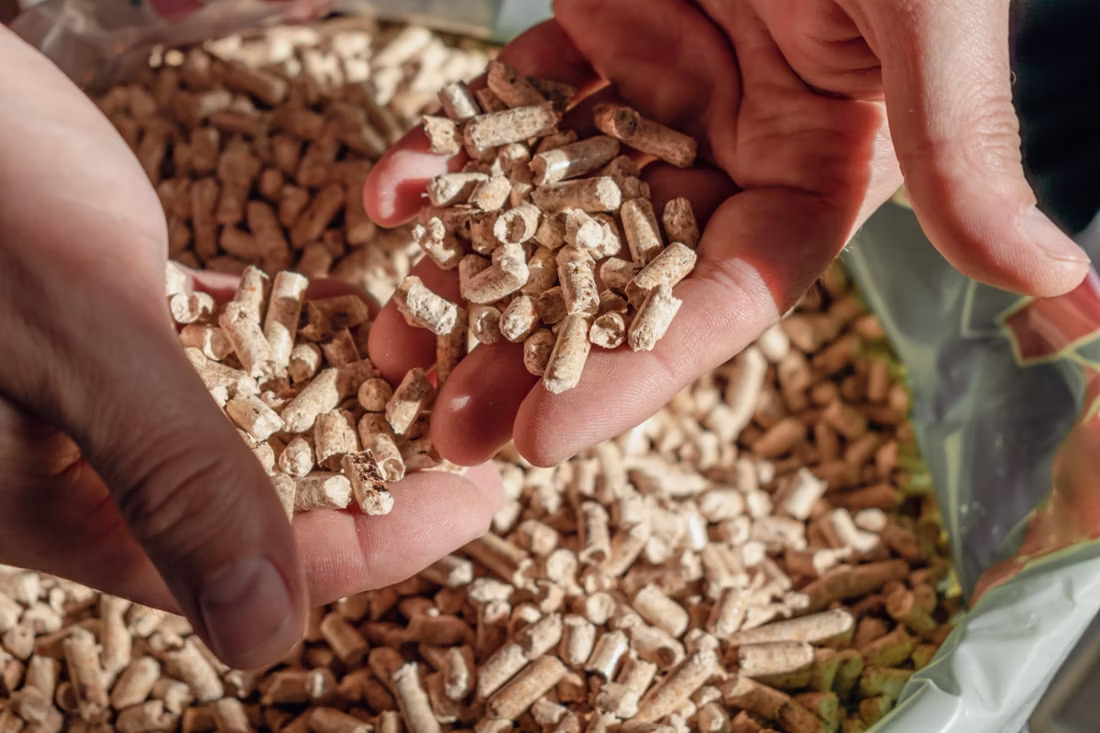
A pellet stove gives you thermostat-set, consistent heat without splitting or stacking wood, and without babysitting a fire overnight. Bags of pellets from regional suppliers like Lignetics stack and store far more compactly than cordwood, which matters in the smaller garages and storage sheds common at lake properties. Camden County has no air quality non-attainment concerns, so there's no curtailment or burn-ban complexity to navigate—pellet stoves here are simply a cleaner-burning, lower-maintenance alternative to a wood stove, not a workaround for local air rules.
Three steps. No salesperson until you're ready.
Tell us about your project
Your zip code, your situation, and the fuel you're leaning toward—or let the answers point you to one.
See what's actually available
The brands dealers within 100 miles genuinely carry—real options, never a catalog mirage.
Get your dealer & Project Guide
A trusted local dealer, plus the free Project Guide & Parts List that names every component of the job.
Frequently Asked Questions
How much does a pellet stove installation cost in Camden County?
A typical pellet stove or insert installation in Camden County runs in the $4,000 to $7,500 range, depending on the unit and whether you need new venting run through an exterior wall or existing masonry chimney. A pellet insert going into an existing fireplace at a lake home is usually on the lower end since the chimney or hearth opening is already in place. New freestanding installations in a home without an existing hearth—common in some of the newer construction around Osage Beach—run a bit higher once wall penetration and venting are factored in. A local dealer will give you a firm number after seeing the space.
What size pellet stove do I need for my home?
Sizing depends on square footage, ceiling height, and whether the stove is your primary heat or supplemental. For most Camden County homes—including the many lake-area properties with open great rooms and vaulted ceilings—a mid-size pellet stove rated for 1,500 to 2,000 square feet handles the main living area comfortably given the region's moderate 4A winters. Smaller units work fine for condos or cabins where the stove is just taking the edge off. A local dealer can size the unit correctly during an in-home look, which matters more than most people expect—an oversized stove cycles on and off inefficiently, while an undersized one runs constantly on the coldest nights.
Where can I find pellets and who carries them locally?
Regional suppliers including Lignetics and Indeck Energy Services distribute pellets throughout this part of Missouri, and local hearth dealers typically stock bags or can direct you to nearby retailers who carry them. Because Camden County doesn't have the wildfire-driven pellet shortages that hit some western states, availability here tends to be steady through the winter. It's still smart to buy your season's supply early in fall rather than waiting until the first cold snap, since demand around the lake spikes once temperatures drop.
What's the difference between a pellet stove and a pellet insert?
A pellet stove is a freestanding unit that sits on its own hearth pad and vents through an exterior wall or existing chimney—it can go almost anywhere with the right clearances. A pellet insert is built to slide into an existing masonry fireplace opening, turning an old wood-burning fireplace into an efficient, thermostat-controlled heat source. For Camden County homes with an existing fireplace—common in older lake cottages—an insert is usually the simpler and more cost-effective route since it reuses the chimney. Homes without an existing hearth, including many newer builds near Osage Beach, are better suited to a freestanding stove instead.
Do I need a permit to install a pellet stove in Camden County?
Most jurisdictions require a building permit for a new pellet stove installation, particularly when it involves new venting through a wall or roof, and permit requirements can vary depending on whether the property sits within Camdonton, Osage Beach, Lake Ozark city limits or unincorporated Camden County. A reputable local dealer will know which local building office to file with and typically handles the permitting as part of the installation, so you're not stuck figuring out jurisdiction on your own.
How much electricity does a pellet stove use, and what happens during a power outage?
Pellet stoves rely on an electric auger to feed fuel and a blower to circulate heat, typically drawing around 100-500 watts depending on the model and settings—modest, but not zero. That means a standard pellet stove will not run during a power outage unless it's paired with a battery backup or small generator. This is worth thinking through carefully for Camden County, where ice storms and severe weather can knock out power at the same time temperatures drop. If backup heat during outages is a priority, some homeowners pair a pellet stove with a battery backup unit, or consider a wood stove for a portion of their heating needs instead. Ask a local dealer about backup power options if this matters to you.
How often does a pellet stove need to be cleaned and serviced?
Pellet stoves need more frequent attention than gas units but less than wood stoves. Plan on emptying the ash pan every few days to weekly depending on use, cleaning the burn pot and glass regularly through the season, and scheduling a full professional cleaning and inspection once a year, typically before the season starts in early fall. Lake-area homes that run their stove heavily through winter—especially second homes where nobody's watching it daily—benefit from a slightly more disciplined cleaning schedule since a clogged burn pot can shut the unit down or cause poor combustion.
Pellet stove vs. wood stove—which is right for my Camden County home?
Wood stoves burn cordwood cut from local oak, hickory, walnut, or maple, work without electricity—a real advantage during winter power outages—and offer the classic look and feel of a live fire. Pellet stoves are easier to operate day to day, load-and-set with a thermostat, produce far less ash, and store fuel more compactly, which matters for lake condos and smaller properties without room to stack cordwood. For full-time residents comfortable with splitting and stacking wood who want reliable heat regardless of grid status, wood often wins. For second-home owners, renters, or anyone who wants consistent, low-maintenance heat without the labor, pellet is usually the better fit. A local dealer can walk you through both.
Can a pellet stove serve as my home's primary heat source?
Yes, for many Camden County homes a properly sized pellet stove can serve as the primary heat source, particularly in open-concept lake homes where the stove is centrally located and the county's moderate winter climate doesn't demand the sustained output that colder northern climates require. That said, most homeowners here use a pellet stove as strong supplemental heat alongside an existing furnace or heat pump, reserving it for the coldest stretches of the season or as the primary heat for a specific zone like a great room or lower-level living space. A local dealer can help you decide based on your home's layout and insulation.
Why is a fireplace insert so efficient?
An insert does two things: it seals the chimney completely, so you stop losing air you already paid to heat, and it radiates warmth into the room through the firebox and glass. Most add a heat-exchange fan that pulls cool room air underneath, wraps it around the hot firebox, and pushes it back out warm. Your home is more efficient before you've even lit the first fire.
What's the difference between an insert and a zero-clearance fireplace?
An insert is a fireplace that slides into a pre-existing wood-burning fireplace—if you don't have one, there's nothing to insert it into. A zero-clearance fireplace is built into a framed wall, which makes it the answer for remodels and new construction. Simple test: existing masonry fireplace means insert; blank or framed wall means zero-clearance.
Can I install a fireplace myself?
If you're putting a fire in your house on purpose, it's best to work with an expert. Unless you're genuinely experienced in framing, gas line, vent pipe, and the national code on clearances to combustibles, have a professional do it—and ideally the same company that sells you the fireplace, so warranty, service, and liability all live under one roof.
How much should I budget for a fireplace?
For an average home—covering the fireplace, the vent pipe, and basic installation—a budget between $3,900 and $5,500 gives you a lot of options across wood, gas, and pellet. By the time you add finish work, gas line, and electrical, the average complete installation lands between $5,000 and $12,000 all-in. In a remodel or new build, a good rule is to put about 2.5% of the total project cost toward the fireplace.
Stove and Fireplace Dealers in Camden County
Pellet Brands Stocked Around Camden County
Manufacturers will point you to the nearest stocking dealer.
Get matched with a pellet stove dealer in Camden County.
Tell us a bit about your home and we'll put together a free Project Guide & Parts List—the exact parts, vent kit, and a recommended local Camden County dealer for your pellet stove or insert project.
Find Your Fireplace →