
Real Warmth for Buckner Homes, No Chimney Needed.
From Missouri River bottom farmhouses to newer builds off Route 24, electric heat drops into almost any Buckner home. Find the right unit and connect with a trusted local dealer.
Every Project Starts From One of These Five Situations
A practical fit for Buckner's mix of old farmhouses and newer homes.
Buckner sits in Jackson County's Missouri River bottoms, a small town of under 3,000 people surrounded by a mix of older farmhouses without existing chimneys and newer subdivisions built without any masonry fireplace at all. With winter lows averaging 19°F, Buckner sees a real, sustained heating season—colder than the Deep South, though meaningfully milder than places like Madison, WI, where the winter heating load runs nearly half again as much. It's the kind of climate where a supplemental heat source in the living room or a finished basement actually gets used most winters, not just for looks.
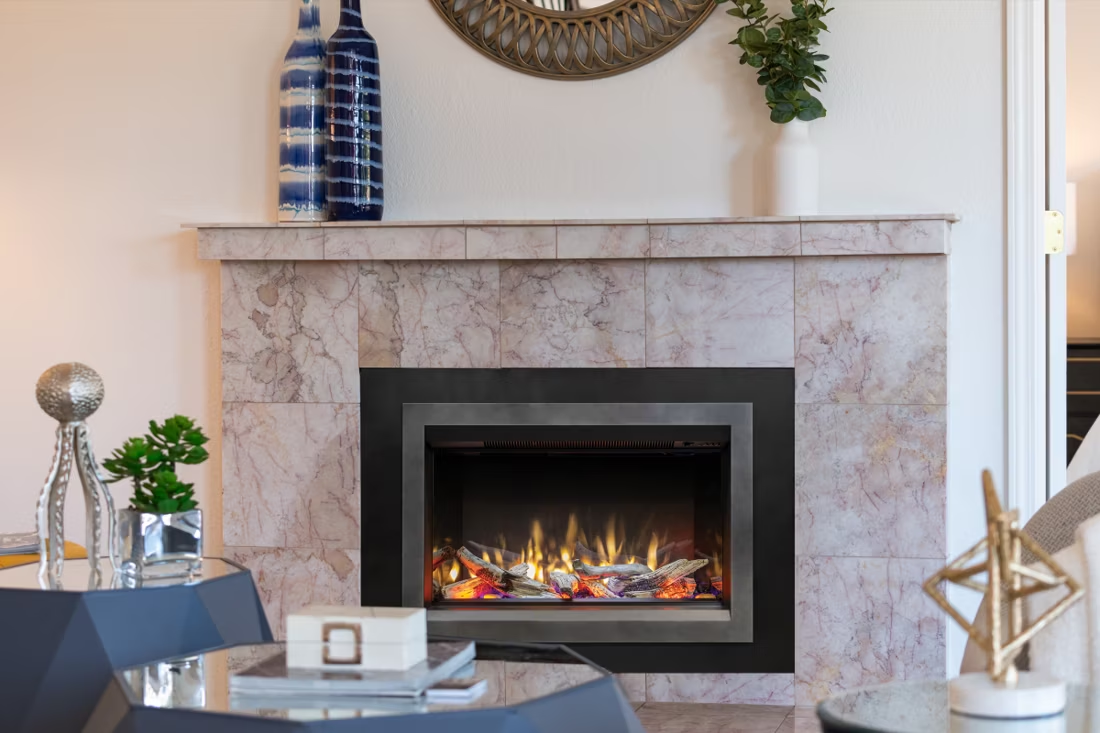
Electric fireplaces solve a specific problem for a lot of Buckner households: no gas line to that room, no interest in a wood-burning install, or a rental property where venting isn't an option. Since Evergy Missouri West serves electric accounts here at a residential rate around 12.55 cents per kWh, running a supplemental electric unit for a few hours a night is inexpensive relative to running a whole-house furnace harder. No chimney, no venting, no combustion byproducts to manage—just plug in or wire in and go.
Three steps. No salesperson until you're ready.
Tell us about your project
Your zip code, your situation, and the fuel you're leaning toward—or let the answers point you to one.
See what's actually available
The brands dealers within 100 miles genuinely carry—real options, never a catalog mirage.
Get your dealer & Project Guide
A trusted local dealer, plus the free Project Guide & Parts List that names every component of the job.
Frequently Asked Questions
How much does it cost to install an electric fireplace in Buckner?
Most electric fireplace projects in Buckner run $300 to $2,500. A plug-in insert dropped into an existing fireplace opening or a freestanding cabinet-style unit sits at the low end and usually needs no electrical work beyond an existing outlet. A built-in wall unit or a linear model wired into its own 120V or 240V circuit—common in newer Buckner builds without a fireplace opening at all—runs higher once an electrician is involved. There's no chimney, flue, or venting to install, which is the main reason electric costs less than gas or wood options in almost every case.
What does an electric fireplace actually cost to run in Buckner?
With Evergy Missouri West's residential rate around $0.1255 per kWh, a typical electric fireplace drawing 1,500 watts on its heat setting costs roughly 19 cents an hour to run. Used for supplemental evening heat—say five hours a night through a cold stretch—that works out to about $28 a month. Most owners run theirs on flame-only mode (a few watts) far more often than on full heat, which drops the cost close to nothing. It's a fraction of what it costs to push a furnace harder across a whole house.
Do I need a permit or an electrician to install one in Buckner?
A plug-in insert or freestanding electric fireplace that runs off an existing standard outlet typically doesn't require a permit—it's treated like any other appliance. A built-in or wall-mounted unit wired directly into a dedicated circuit is different: that work needs a licensed electrician, and larger 240V installs may require an electrical permit coordinated through Jackson County's building and codes office, since Buckner is a small incorporated city without its own full-time building department. A local dealer handling the install will typically know exactly what triggers a permit and pull it for you.
Will my electric fireplace still work if the power goes out?
No—and this is the honest trade-off worth knowing before you buy. Jackson County sees occasional winter ice events that knock out Evergy Missouri West service for hours or, in bad years, longer, and an electric fireplace goes dark right along with everything else. If backup heat during an outage matters to you, a battery or whole-home generator setup solves it, or you may want to weigh a vented gas unit for at least one room. For day-to-day supplemental warmth and ambiance, though, electric is hard to beat on cost and simplicity.
What's the best electric fireplace option for an older Buckner farmhouse without a chimney?
Many of the older farmhouses along the river bottoms and county roads around Buckner were never built with a masonry chimney, which rules out a traditional wood or gas fireplace without significant new venting work. An electric insert set into a mantel surround, or a freestanding electric stove placed against an interior wall, solves this cleanly—no venting, no gas line, no structural changes. It's the most common route local dealers recommend for exactly this housing stock.
Can an electric fireplace heat my whole room, or just the area right around it?
Most electric fireplaces are rated for 400 to 1,500 watts of heat output, which translates to roughly 5,000 BTU—enough to comfortably warm a single room of 300 to 400 square feet, not a whole house. In Buckner's climate, with real winter lows in the high teens, that makes electric fireplaces a supplemental heat source that takes the edge off a living room or finished basement and lets you turn the furnace down, rather than a primary replacement for central heat.
Electric vs. gas fireplace—which makes more sense for my Buckner home?
Gas fireplaces put out more heat, can be sized to actually offset furnace use in a room, and—with the right ignition system—keep working during a power outage, which matters given occasional ice storms in this part of Jackson County. But gas requires either a natural gas line or a propane tank, plus venting work, which raises the install cost and complexity. Electric skips all of that: lower upfront cost, install almost anywhere with an outlet or a simple circuit, and none of the combustion byproducts to manage. For a home already on natural gas with a room that can be vented, gas is worth considering. For a rental, a finished basement, or a room where running gas line isn't practical, electric is usually the simpler answer.
What about a wood or pellet stove instead—does that work in Buckner?
It's less common here than you might expect given that oak, hickory, walnut, and maple are all native to this part of Jackson County. The issue isn't the wood supply—it's that most hearth dealers serving small towns like Buckner concentrate their certified install crews on gas and electric work, so finding a local installer for a wood or pellet stove install often means going through a Kansas City-area retailer willing to travel. If you're committed to wood heat specifically, it's still possible, but electric and gas are the far more straightforward paths to a completed install in Buckner right now.
How do I know which electric fireplace model actually fits my space?
Sizing an electric fireplace comes down to the opening or wall space you have, whether you want a plug-in unit or a hardwired build-in, and how much heat output you actually want versus pure ambiance. This is exactly the kind of decision that goes sideways with a big-box guess—a unit that's the wrong dimension for an existing mantel opening, or a hardwired model in a spot without adequate circuit capacity. A local dealer who's actually seen your room can spec this correctly in one visit, which is the whole reason to work with a trusted installer rather than ordering blind online.
Can I put a TV above my fireplace?
Yes—with an asterisk. Fireplaces are hot and TVs don't like heat. Either put a mantel between them to deflect rising warmth, or choose a fireplace with heat-management technology that creates a cool zone on the wall above—the wall stays around 125 degrees, barely warm, while the room still gets full heat. If you like clean lines and don't want a mantel, heat management is the answer.
Does an electric fireplace need a vent or chimney?
No—that's its superpower. An electric fireplace needs a wall and an outlet, period. No vent pipe, no gas line, no clearances to design around, which is why it works in bedrooms, offices, apartments, and walls where venting a gas or wood unit would be impractical or impossible. Installation is typically the simplest and least expensive of any fireplace type.
Can a fireplace actually lower my heating bill?
Yes—by creating a comfort zone. A furnace heats every square foot of the house just to warm the one room you're in; a gas fireplace on low burns roughly a sixth of the gas a typical furnace does. Set the furnace around 55–60 degrees as a baseline, then heat the rooms your family actually uses. Families who heat this way commonly save $20–$60 a month.
Can I install a fireplace myself?
If you're putting a fire in your house on purpose, it's best to work with an expert. Unless you're genuinely experienced in framing, gas line, vent pipe, and the national code on clearances to combustibles, have a professional do it—and ideally the same company that sells you the fireplace, so warranty, service, and liability all live under one roof.
Nearby Dealers
Hearth shops serving Buckner and the surrounding area. Every listing shows whether it is a WhyFire partner, a dealer we have verified as authorized for the brands we recommend, or a local business carrying hearth products. No manufacturer pays for placement. How we verify dealers →
Dillon Heating & Cooling Solutions
The Hayes Co.
Complete Home Concepts - Riverside
Electric Service in Buckner
An electric fireplace's heater draws about 1,500 watts—pennies per hour at local rates.
Evergy Missouri West
Find your electric fireplace in Buckner.
Tell us a bit about your Buckner home and we'll put together a free Project Guide & Parts List—the right electric fireplace or insert, the exact parts needed, and a match with a trusted local dealer who can install it.
Find Your Fireplace →