
The Simplest Upgrade for Breckenridge Hills Homes.
No chimney, no gas line, no venting—just clean supplemental heat that drops into almost any room in your St. Louis County home. Find the right unit and connect with a trusted local dealer.
Every Project Starts From One of These Five Situations
Moderate winters, maximum flexibility.
Breckenridge Hills is a compact, densely built residential city of about 4,450 people packed into just over a square mile of St. Louis County. Winters here are real but not extreme—average lows sit around 24°F and the area has a moderate winter heating load, well short of what you'd see in a place like Minneapolis or Madison, WI. That milder climate zone 4A profile means most homes don't need a wood-burning primary heat source; they need something that takes the edge off a cold evening without turning into a second full-time heating system.
It's also a city of tight lot lines and mid-century ranch and bungalow homes, many without existing masonry chimneys—which is exactly why wood and pellet appliances are rarely a practical fit here, while electric fireplaces are common and growing more so. A plug-in insert or built-in unit needs no venting, no gas line, and no roof penetration, which matters in a city where lots and setbacks leave little room for chimney work. Union Electric Co. (Ameren Missouri) serves the area at a residential rate around $0.1256/kWh, among the more affordable rates in the country, so running an electric unit for zone heating in a bedroom, den, or basement family room is inexpensive relative to firing up central heat for the whole house.
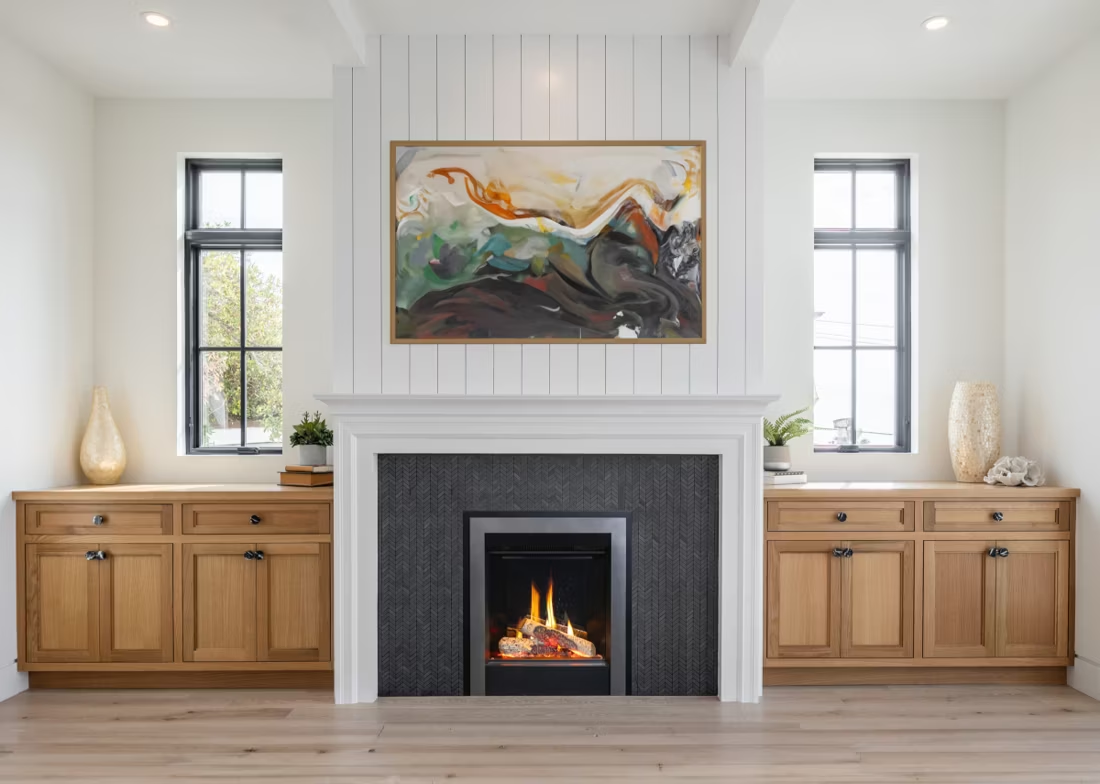
Three steps. No salesperson until you're ready.
Tell us about your project
Your zip code, your situation, and the fuel you're leaning toward—or let the answers point you to one.
See what's actually available
The brands dealers within 100 miles genuinely carry—real options, never a catalog mirage.
Get your dealer & Project Guide
A trusted local dealer, plus the free Project Guide & Parts List that names every component of the job.
Frequently Asked Questions
How much does an electric fireplace installation cost in Breckenridge Hills?
Plug-in electric inserts and freestanding units are the cheapest path—often $300 to $900 installed, since they run on a standard 120V outlet and typically just need a mounting bracket or hearth placement, no electrician required. Built-in wall units and larger linear fireplaces that need a dedicated 240V circuit or in-wall wiring run higher, generally $1,200 to $2,500, once you factor in an electrician to run a new circuit through older Breckenridge Hills homes with dated panels. Converting an existing wood-burning fireplace opening to an electric insert is usually on the lower end since the framing already exists.
Do electric fireplaces actually produce usable heat, or are they just for looks?
Most electric fireplaces sold today include a real heating element, typically rated between 1,200 and 1,500 watts, enough to comfortably warm a single room in the 300 to 600 square foot range—a den, bedroom, or finished basement space common in Breckenridge Hills' ranch-style homes. They won't replace a furnace on a January cold snap, but as supplemental zone heat during shoulder-season mornings and evenings, they're genuinely effective and let you turn the thermostat down elsewhere in the house.
Do I need a permit to install an electric fireplace in Breckenridge Hills?
A plug-in unit that uses an existing outlet typically doesn't require a permit. If your installation involves a new dedicated circuit, a hardwired connection, or altering an existing fireplace opening's framing, you'll want an electrical permit, which in Breckenridge Hills runs through the city's building department in coordination with St. Louis County code requirements. Any licensed electrician doing the circuit work should pull this automatically as part of the job.
Electric vs. gas fireplace—which makes more sense for my home?
Gas fireplaces put out more heat and give you a real flame, but they require a gas line and venting work, which adds cost and complexity in a city with tight lot lines like Breckenridge Hills. Electric fireplaces skip all of that—no venting, no gas line, and often a same-day install—in exchange for lower total heat output. For a primary living room where you want a substantial fire and real BTUs, gas is usually the better fit. For a bedroom, basement, or rental unit where convenience and low install cost matter more, electric tends to win.
Why don't more homes in Breckenridge Hills use wood or pellet stoves?
Missouri has plenty of oak, hickory, walnut, and maple available regionally, and wood heat is common in the rural parts of the state. But Breckenridge Hills is a dense, fully built-out suburb with small lots and few homes that have an existing masonry chimney suited for a wood insert conversion. Adding a new chimney system from scratch on a tight urban lot is expensive and often impractical, which is why wood and pellet appliances see very little demand here compared to gas and electric options.
What will an electric fireplace actually cost me to run?
At Union Electric Co.'s residential rate of roughly $0.1256 per kWh, a 1,500-watt electric fireplace costs about 19 cents an hour to run on full heat. Used for a few hours each evening through a typical Breckenridge Hills cold snap, that's usually $1 to $2 a day—considerably cheaper than running central heat harder to cover the whole house for the same comfort in one room.
What's the best electric fireplace style for an older Breckenridge Hills home?
For the ranch and bungalow homes common throughout the city, an electric insert sized to fit an existing wood-burning fireplace opening is often the cleanest option—it reuses the opening you already have and requires minimal carpentry. For homes without an existing fireplace, a wall-mounted linear electric unit or a freestanding stove-style model gives you flexibility to place the heat source wherever the room actually needs it, without any structural changes.
How long does an electric fireplace installation take compared to gas or wood?
This is where electric has a real edge. A plug-in insert or freestanding unit can often be installed same-day, since there's no venting, gas line, or chimney work involved. Even a built-in unit requiring a new 240V circuit is usually a one-day job for an electrician. Compare that to a gas conversion, which often takes coordinating gas line work and inspections, and electric is by far the fastest path to a working fireplace in Breckenridge Hills.
Should I use an electric fireplace as my main heat source or just supplemental heat?
For nearly all Breckenridge Hills homes, electric fireplaces work best as supplemental zone heat rather than a primary system. With a moderate winter heating load and winter lows typically in the low-to-mid 20s, most houses already rely on a central furnace or heat pump for whole-home heating. An electric fireplace lets you heat the room you're actually using—the family room in the evening, a bedroom at night—so you can turn the central thermostat down a few degrees and cut overall heating costs during the shoulder seasons especially.
Can I put a TV above my fireplace?
Yes—with an asterisk. Fireplaces are hot and TVs don't like heat. Either put a mantel between them to deflect rising warmth, or choose a fireplace with heat-management technology that creates a cool zone on the wall above—the wall stays around 125 degrees, barely warm, while the room still gets full heat. If you like clean lines and don't want a mantel, heat management is the answer.
Does an electric fireplace need a vent or chimney?
No—that's its superpower. An electric fireplace needs a wall and an outlet, period. No vent pipe, no gas line, no clearances to design around, which is why it works in bedrooms, offices, apartments, and walls where venting a gas or wood unit would be impractical or impossible. Installation is typically the simplest and least expensive of any fireplace type.
Does a fireplace add value to my home?
On average, a fireplace adds back to the home about the same amount you spent installing it. Add the monthly savings from heating the rooms you actually use instead of the whole house—often hundreds of dollars a year—and the value case is strong before you even count what a fire does for how your family uses the room.
How much should I budget for a fireplace?
For an average home—covering the fireplace, the vent pipe, and basic installation—a budget between $3,900 and $5,500 gives you a lot of options across wood, gas, and pellet. By the time you add finish work, gas line, and electrical, the average complete installation lands between $5,000 and $12,000 all-in. In a remodel or new build, a good rule is to put about 2.5% of the total project cost toward the fireplace.
Nearby Dealers
Hearth shops serving Breckenridge Hills and the surrounding area. Every listing shows whether it is a WhyFire partner, a dealer we have verified as authorized for the brands we recommend, or a local business carrying hearth products. No manufacturer pays for placement. How we verify dealers →
Gas Appliance Service LLC
Forshaws
Savvy Surroundings
Villa Lighting Supply
Fireside Hearth & Grill Center
Fireplace And Grill Center
English Sweep
Summer Classics By Forshaw
Brighthouse Living
Arnold Stove & Fireplace Center
C Bennett Building Supply
Electric Service in Breckenridge Hills
An electric fireplace's heater draws about 1,500 watts—pennies per hour at local rates.
Union Electric Co - (Mo)
Find your electric fireplace in Breckenridge Hills.
Tell us a bit about your home and we'll put together a free Project Guide & Parts List—the right unit, the exact parts, and a trusted local dealer near Breckenridge Hills to install it.
Find Your Fireplace →