
Find the right electric fireplace for your Bates County home.
No chimney, no gas line, no venting—just plug-in warmth and ambiance for homes across Butler, Adrian, Rich Hill, and the rest of Bates County. Get matched with a trusted local dealer.
Every Project Starts From One of These Five Situations
Simple heat and ambiance, no construction required.
Bates County sits in west-central Missouri's zone 4A climate, with a winter heating load comparable to places like Kansas City and winter lows averaging around 20 degrees—cold enough to want supplemental heat in a bedroom or living room, but nowhere near the extremes of a place like Fargo or Bismarck. That moderate cold is exactly the profile where electric fireplaces shine: they don't need to carry the full heating load of the house, they just need to take the edge off a chilly evening in Butler or Rich Hill without the cost or hassle of running a gas line or building a chimney.
Bates County has no air quality restrictions to navigate and no wood-burning curtailment periods to plan around, which simplifies the electric decision considerably—you're choosing electric for convenience and flexibility, not because of any local burn ban. An electric insert can go into an existing masonry fireplace opening in an older farmhouse near Adrian, or a wall-mount unit can go into a new-construction great room, all without a permit process or a contractor pulling wire beyond what's already at the outlet.
Three steps. No salesperson until you're ready.
Tell us about your project
Your zip code, your situation, and the fuel you're leaning toward—or let the answers point you to one.
See what's actually available
The brands dealers within 100 miles genuinely carry—real options, never a catalog mirage.
Get your dealer & Project Guide
A trusted local dealer, plus the free Project Guide & Parts List that names every component of the job.
Frequently Asked Questions
How much does an electric fireplace installation cost in Bates County?
Most electric fireplace projects in Bates County run $400 to $1,200 installed. A plug-in insert that drops into an existing fireplace opening or a freestanding unit is on the low end—often a DIY job with no electrician needed. Wall-mount units that require a new dedicated circuit, or built-in units set into new framing during a remodel, land toward the higher end once an electrician is brought in to run a 120V or 240V circuit. Rural properties around Rockville or Amoret may see a modest travel charge if an electrician has to come out from Butler or Harrisonville.
Do electric fireplaces actually produce real heat, or just the flame effect?
Both, depending on the model and settings. Most electric fireplaces sold today include a built-in fan heater rated around 1,500 watts, enough to comfortably heat a single room of 300-400 square feet—plenty for a bedroom or den in a Butler or Adrian home. You can also run the flame visual with the heater off, which is common in Bates County during shoulder-season months when you want ambiance without added warmth. For whole-room heating on a genuinely cold night, it performs closer to a space heater than a wood stove or gas insert—it's supplemental heat, not a primary heat source for the whole house.
Do I need a permit to install an electric fireplace in Bates County?
In most cases, no. A plug-in electric insert or freestanding unit doesn't require a permit since there's no venting, gas line, or structural change involved. If your project involves adding a new dedicated electrical circuit—common for a built-in wall unit—your electrician will typically pull an electrical permit as part of that work, which is standard practice rather than anything specific to Bates County. There's no county building department review process to navigate for a straightforward electric fireplace install, which is one of the reasons homeowners in Rich Hill and Adrian lean toward electric for a fast timeline.
What's the difference between an electric insert and a built-in electric fireplace?
An electric insert is sized to slide into an existing fireplace opening—a common choice for older homes around Butler or Rockville that have a masonry fireplace they no longer want to burn wood in but still want to use for warmth and ambiance. A built-in electric fireplace is designed to be framed into a wall during new construction or a remodel, with no existing opening required. Both plug into a standard outlet in most cases; built-ins sometimes call for a dedicated circuit depending on wattage. For a home without any existing fireplace, a built-in or a freestanding mantel-style unit is the practical choice.
Will an electric fireplace work during a power outage?
No—this is the one real tradeoff with electric heat. Unlike a wood stove that keeps working when the grid goes down, or a battery-backed gas fireplace with IPI ignition, an electric fireplace is entirely dependent on utility power. For most Bates County homes this is a minor consideration since outages tend to be short, but if backup heat during winter storms is a priority—particularly for rural properties out toward Amoret or Merwin where restoration can take longer—it's worth pairing an electric fireplace with a wood stove or a generator rather than relying on electric as your only heat source.
What's the best electric fireplace for a Bates County home?
For most homes in Butler, Adrian, or Rich Hill, a mid-size insert or wall-mount unit with a 1,500-watt heater and a thermostat (rather than a simple high/low switch) gives you the most usable heat control for zone heating a bedroom or living area. If you're prioritizing ambiance over heat—for example, in a room that already has central heat and you just want the fireplace look—a smaller unit without a heavy-duty heater is fine and costs less upfront. A local dealer can walk you through the wattage and room-size math for your specific space rather than guessing from a box-store display model.
Do electric fireplaces need any maintenance?
Very little compared to wood or gas. There's no chimney to sweep and no annual gas line inspection. Maintenance is mostly dusting the unit, occasionally cleaning the glass front, and replacing LED lights on the rare occasion one fails—most are rated for tens of thousands of hours. Some older resistance-style units have a heater fan that can accumulate dust and should be cleaned periodically to keep airflow clear. There's no local chimney sweep or gas technician you need to schedule for an electric unit, which is part of the appeal for Bates County homeowners who want something low-maintenance.
Is wood or gas a better fit than electric for my Bates County home?
It depends on what you need the fireplace to do. Bates County has plenty of oak, hickory, walnut, and maple available regionally, and wood stoves remain a solid choice for homeowners who want real heat output and backup capability during outages. Gas fireplaces offer instant, higher-BTU heat with less hands-on maintenance than wood, though they require either a gas line or propane tank. Electric is the right call when your priority is ease of installation, low upfront cost, and flexible placement—a spare bedroom, a rental property, or a room where running gas or wood venting isn't practical. Many Bates County homeowners end up with wood or gas as their primary heat source and add an electric unit in a secondary room.
Can I install an electric fireplace myself, or do I need a professional?
A plug-in insert or freestanding electric fireplace is genuinely DIY-friendly—most Bates County homeowners can unbox and place one themselves with no electrician or contractor involved. Where it makes sense to bring in a pro is a built-in wall unit that requires framing, a dedicated circuit, or running new wire—at that point, a local electrician handles the circuit work while a hearth dealer or handyman handles the surround and framing. A local dealer can tell you upfront whether your specific unit and location need an electrician or not, before you commit to a purchase.
Can I put a TV above my fireplace?
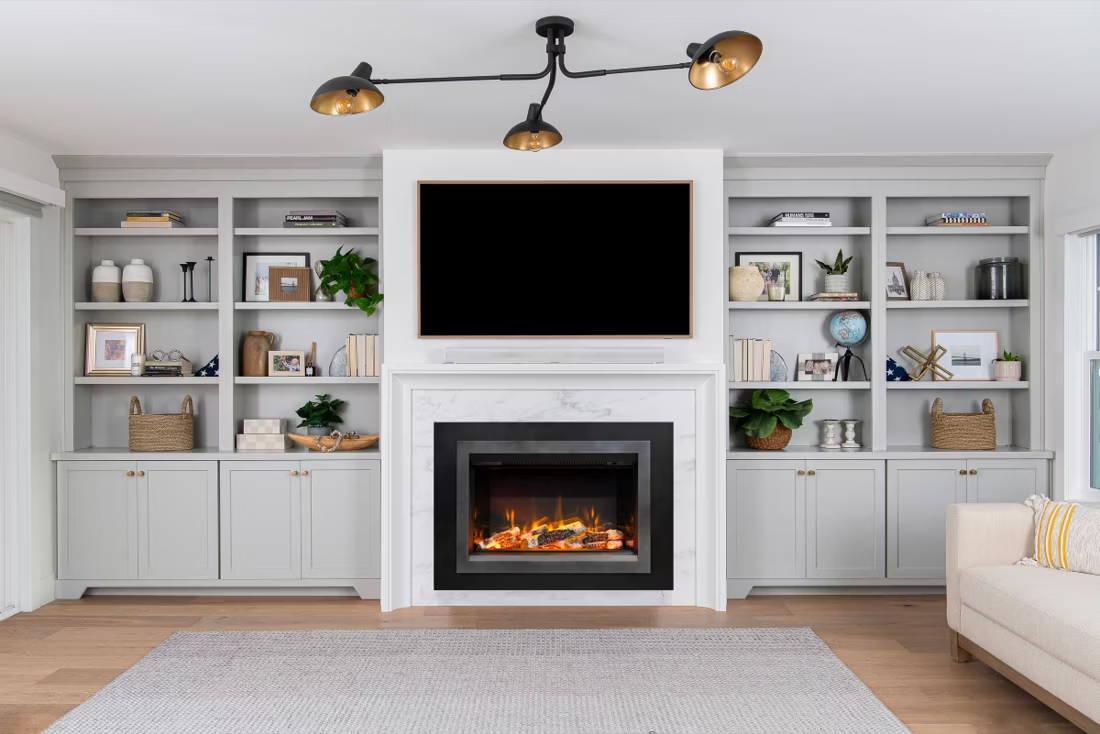
Yes—with an asterisk. Fireplaces are hot and TVs don't like heat. Either put a mantel between them to deflect rising warmth, or choose a fireplace with heat-management technology that creates a cool zone on the wall above—the wall stays around 125 degrees, barely warm, while the room still gets full heat. If you like clean lines and don't want a mantel, heat management is the answer.
Do electric fireplaces actually produce heat?
Yes—most put out around 4,800–5,000 BTUs from a standard outlet, which comfortably warms a bedroom, office, or den as a comfort-zone heater. What they won't do is carry a whole house the way wood, gas, or pellet can. Think of electric as ambiance-first with honest supplemental heat: flames on with no heat in July, flames plus warmth in January.
Can a fireplace actually lower my heating bill?
Yes—by creating a comfort zone. A furnace heats every square foot of the house just to warm the one room you're in; a gas fireplace on low burns roughly a sixth of the gas a typical furnace does. Set the furnace around 55–60 degrees as a baseline, then heat the rooms your family actually uses. Families who heat this way commonly save $20–$60 a month.
Does a fireplace add value to my home?
On average, a fireplace adds back to the home about the same amount you spent installing it. Add the monthly savings from heating the rooms you actually use instead of the whole house—often hundreds of dollars a year—and the value case is strong before you even count what a fire does for how your family uses the room.
Get your free Project Guide & Parts List for Bates County.
Tell us about your home and we'll match you with a trusted local dealer and send over a free Project Guide & Parts List—the exact parts for your electric fireplace project in Bates County, plus who to call to get it installed right.
Find Your Fireplace →