
Heating Solutions for Every Home in Bates County.
Wood, gas, pellet, and electric fireplace resources for the farms, small towns, and county-road homes of Bates County—from Butler to Rich Hill to Adrian. Find the right unit and connect with a trusted local hearth retailer.
Every Project Starts From One of These Five Situations
Hardwood country in west-central Missouri.
Bates County sits in the rolling farmland of west-central Missouri, just east of the Kansas line, with a population of under 9,000 spread across small towns and open country. Winters land in Climate Zone 4A with average lows around 20°F and roughly 4,874 heating degree days a year—a real heating season, but nowhere near the extremes of places like Fargo, ND, which sees nearly double the HDD. The county's timber is dominated by oak, hickory, walnut, and maple, all dense hardwoods that split well and burn hot, which is a big reason wood heat has stayed practical here for generations of farmhouses and rural properties.
What you'll find on this hub: hearth retailers, service technicians, and fuel suppliers covering the whole county—Butler, Rich Hill, Adrian, Hume, Amsterdam, and the unincorporated stretches between them. Pick your fuel below to see local dealers, typical installation costs, and the units that make sense for a Bates County home, whether that's a farmhouse with a woodlot out back or a in-town house looking at a propane or pellet upgrade.
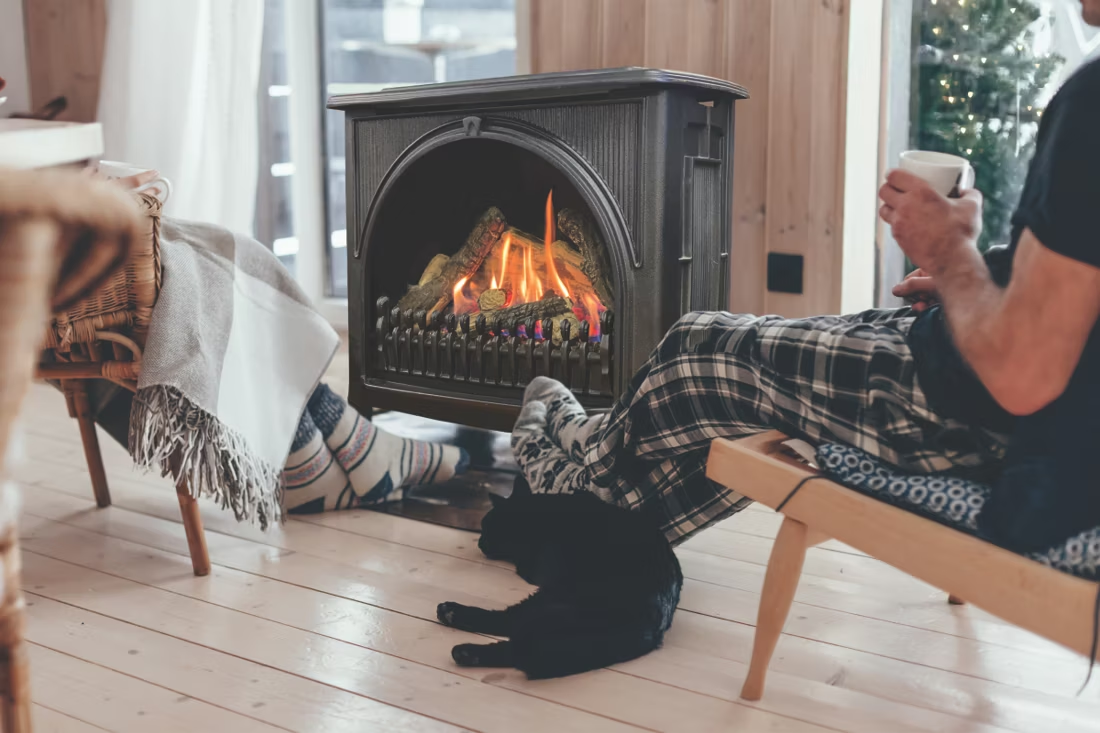
Four fuels. One honest answer for Bates County.
Three steps. No salesperson until you're ready.
Tell us about your project
Your zip code, your situation, and the fuel you're leaning toward—or let the answers point you to one.
See what's actually available
The brands dealers within 100 miles genuinely carry—real options, never a catalog mirage.
Get your dealer & Project Guide
A trusted local dealer, plus the free Project Guide & Parts List that names every component of the job.
Frequently Asked Questions
Which fuel works best in Bates County?
All four fuels see real use here, and the right one depends on the property. Wood is a natural fit given the abundant oak, hickory, walnut, and maple in local woodlots—dense hardwoods that hold a coal bed well through a 20°F night. Gas, mostly propane in this rural stretch of Missouri rather than piped natural gas, is the low-labor choice for in-town homes and farmhouses that don't want to manage a woodpile. Pellet stoves are a solid middle ground—Lignetics and Indeck Energy Services both supply pellets into this part of the state, so fuel availability isn't a constraint. Electric fireplaces work well as supplemental heat in bedrooms or additions, but with 4,874 heating degree days a year, they're not typically anyone's sole heat source here. Plenty of Bates County homes run two fuels—wood or propane for primary heat, pellet or electric for a secondary room.
Do I need a permit to install a fireplace in Bates County?
It depends on where in the county you're located. Inside city limits—Butler, Rich Hill, Adrian, and the other incorporated towns—a building permit is typically required for wood stoves, inserts, and gas appliances, and gas work usually needs a licensed installer for the line connection. Out in unincorporated Bates County, requirements are generally lighter, but it's still worth a call to confirm before you start, especially for any gas line or electrical work tied to a built-in unit. Electric fireplaces that plug into an existing outlet usually don't need a permit at all. Most hearth retailers serving the county handle the paperwork as part of installation, so this typically isn't something you have to sort out on your own.
Are there air quality restrictions on wood burning in Bates County?
No—Bates County has no wood-burning restrictions, curtailment days, or nonattainment designations. Unlike counties in geographic bowls prone to winter inversions, this part of west-central Missouri doesn't see the smoke-trapping conditions that trigger burn advisories elsewhere. New wood stove installations should still meet current EPA emissions standards, which most retailers only sell anyway, but there's no local ordinance limiting when or how often you can run a wood stove or insert.
Can one local hearth retailer handle all four fuel types?
In a county with under 9,000 residents, most hearth retailers serving Bates County carry two or three fuel types rather than a full lineup of all four—it's a small enough market that specialization is common. Some dealers lean heavily into wood and pellet given the local hardwood supply and the presence of regional pellet producers like Lignetics; others focus on propane-fed gas units for in-town customers who want low-maintenance heat. If you're cross-shopping fuels, it's worth calling ahead to confirm a dealer's specific lineup before you drive out—the county + fuel pages above list which retailers carry which fuel.
How does service work in rural areas of Bates County?
Bates County is mostly farmland and small towns, so service technicians often travel a fair distance between calls—from Butler out to Rich Hill, Adrian, Hume, or the county roads in between, and sometimes in from the Kansas City or Nevada, MO areas for specialized gas or pellet work. Expect to schedule a bit further ahead than you would in a denser market, and budget for a possible trip fee on rural calls. Pre-season scheduling in late summer or early fall is easier than trying to book a mid-winter emergency visit once the cold sets in.
What's the typical cost range for fireplace installation across all fuel types in Bates County?
Costs run a bit below national averages given regional labor rates. Wood stove or insert installation: roughly $3,500–$7,500 for a typical install, more for new chimney construction. Gas fireplace, insert, or stove: roughly $4,000–$9,000, with propane line work factored in for homes without existing gas service. Pellet stove or insert: roughly $4,000–$6,500 for most installs. Electric fireplace: $200–$2,500 for the unit itself, plus $300–$1,000 in labor for anything beyond a plug-and-play placement. The county + fuel pages above break these numbers down further by fuel type.
Does a fireplace add value to my home?
On average, a fireplace adds back to the home about the same amount you spent installing it. Add the monthly savings from heating the rooms you actually use instead of the whole house—often hundreds of dollars a year—and the value case is strong before you even count what a fire does for how your family uses the room.
Can a fireplace actually lower my heating bill?
Yes—by creating a comfort zone. A furnace heats every square foot of the house just to warm the one room you're in; a gas fireplace on low burns roughly a sixth of the gas a typical furnace does. Set the furnace around 55–60 degrees as a baseline, then heat the rooms your family actually uses. Families who heat this way commonly save $20–$60 a month.
Can I install a fireplace myself?
If you're putting a fire in your house on purpose, it's best to work with an expert. Unless you're genuinely experienced in framing, gas line, vent pipe, and the national code on clearances to combustibles, have a professional do it—and ideally the same company that sells you the fireplace, so warranty, service, and liability all live under one roof.
Wood, gas, pellet, or electric—how do I choose?
Match the fuel to your life, not the other way around. Wood: lowest fuel cost and total power-outage independence, but you're hauling and stacking. Gas: press a button, set a thermostat, no maintenance to speak of. Pellet: wood economics with automatic feeding, in exchange for weekly cleaning and a need for electricity. Electric: plugs in anywhere with honest supplemental heat. Nobody regrets the fuel that fits how they actually live.
Stove and Fireplace Dealers in Bates County
Listings include WhyFire partner dealers, dealers we have verified as authorized for the brands we recommend, and established local businesses that carry hearth products. Every listing shows which one it is. The ones marked Preferred run on WhyFire's software, so they can show you real pricing and book your appointment right here. No manufacturer pays for placement. How we verify dealers →
Jay Henges Enterprises
Fox Heating & Cooling
Midwest Fireplace
Dillon Heating & Cooling Solutions
Get matched with a Bates County hearth dealer.
Pick your fuel below and I'll put together a free Project Guide & Parts List—the exact parts for your project, including the vent kit, plus my recommended local dealer in Bates County.
Find Your Fireplace →