
Steady Heat for Atchison County's Long Winters.
Low-maintenance heat for farmsteads and homes from Rock Port to Tarkio, Fairfax, and Westboro—built for a county where winter lows average 15°F and the heating season runs long. Find the right pellet stove or insert and connect with a trusted local dealer.
Every Project Starts From One of These Five Situations
Convenience heat for a working farm county.
Atchison County sits in the far northwest corner of Missouri, where the state line meets Iowa, Nebraska, and Kansas along the Missouri River bottoms. With just 3,595 residents spread across Rock Port, Tarkio, Fairfax, Westboro, and the surrounding farmland, this is corn-and-soybean country with old farmhouses, working outbuildings, and a heating season that runs long—from October well into April, with winter lows averaging around 15°F from November through March. Cold snaps well below zero aren't unusual, and rural properties often deal with power interruptions during ice storms and spring flooding along the Missouri River bottoms.
Wood heat has deep roots here—oak, hickory, walnut, and maple are the common hardwoods on local farm woodlots—but pellet appliances have earned a place in a lot of Atchison County homes because they fit the rhythm of farm life. Load the hopper, set the thermostat, and walk away—no splitting, stacking, or hauling cordwood during planting or harvest. Fuel supply comes through regional producers like Lignetics and Indeck Energy Services, both of which distribute hardwood pellets into this part of the Midwest through farm and hearth suppliers. There are no local air quality restrictions on wood or pellet burning in this county, which keeps the process simple. The one thing to plan around: pellet stoves need electricity to run the auger and blower, so a battery backup or small generator is worth considering given the county's exposure to ice storms and river flooding.
Three steps. No salesperson until you're ready.
Tell us about your project
Your zip code, your situation, and the fuel you're leaning toward—or let the answers point you to one.
See what's actually available
The brands dealers within 100 miles genuinely carry—real options, never a catalog mirage.
Get your dealer & Project Guide
A trusted local dealer, plus the free Project Guide & Parts List that names every component of the job.
Frequently Asked Questions
How much does a pellet stove installation cost in Atchison County?
A typical pellet stove or insert installation in this part of Missouri runs roughly $3,000 to $6,500, depending on the unit, whether you're venting through an existing masonry chimney or running new wall venting, and any electrical work needed for the outlet. Because Atchison County is sparsely populated, most hearth dealers who service the area are based out of St. Joseph or Maryville, or across the river in Nebraska City, Nebraska or Shenandoah, Iowa—expect a modest travel charge factored into rural quotes, especially for homes well outside Rock Port or Tarkio.
What size pellet stove do I need for my home?
Sizing depends on square footage, ceiling height, and how drafty the house is—a real consideration in a county full of older farmhouses. As a rough guide for Atchison County's cold, long winters, a small pellet stove works for a single room or a well-insulated addition, while a mid-size unit with a 40 to 60 pound hopper is more typical for heating a main living area or an older farmhouse that leaks heat through uninsulated walls. If you're aiming for whole-home heat on a larger farmhouse, a local dealer can walk through your floor plan and insulation before recommending a hopper capacity—oversizing wastes pellets, undersizing leaves you cold on the 15°F nights that are routine here from December through February.
Where can I find pellet stove dealers near me in Atchison County?
With a population under 4,000 spread across Rock Port, Tarkio, Fairfax, and Westboro, Atchison County doesn't have a large concentration of hearth retailers of its own. Most homeowners here work with dealers based in St. Joseph or Maryville, Missouri, or with suppliers across the river in Nebraska City or Shenandoah, Iowa, who regularly service the tri-state corner. Ask any dealer whether they carry Lignetics or Indeck Energy Services pellets locally, since fuel availability matters as much as the stove itself once winter sets in.
What's the difference between a pellet stove and a pellet insert?
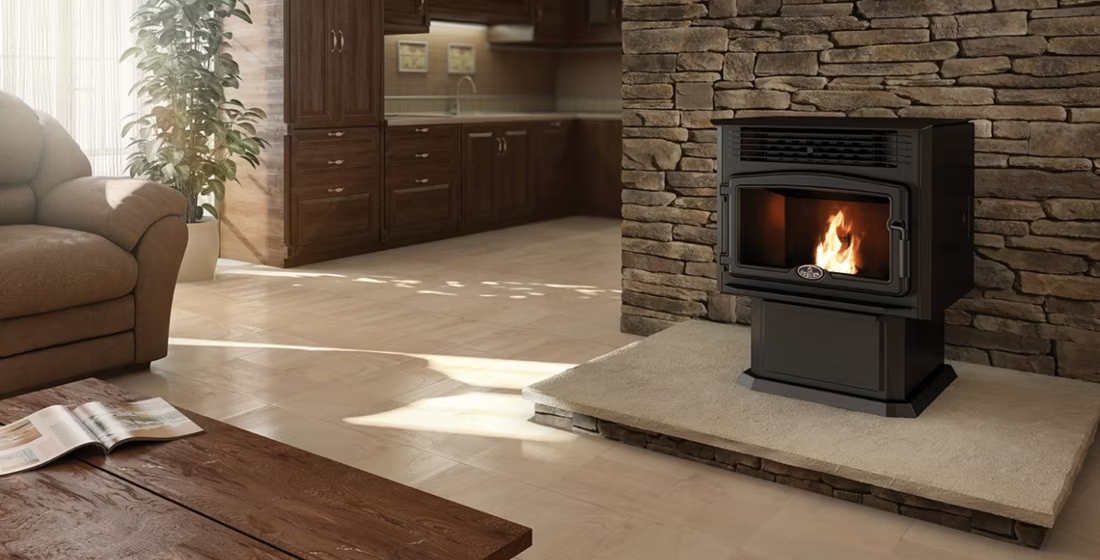
A pellet stove is a freestanding unit that sits on its own hearth pad and vents through a wall or existing chimney—it can go almost anywhere with the right clearances, which makes it a common choice for farmhouses without an existing fireplace. A pellet insert is built to slide into an existing masonry fireplace opening, turning an old wood-burning fireplace into an automated, thermostat-controlled heat source while reusing the chimney you already have. For the older brick fireplaces common in Atchison County's farmhouses, an insert is often the simpler retrofit; homes without an existing fireplace usually do better with a freestanding stove.
Do I need a permit to install a pellet stove in Atchison County?
Atchison County itself doesn't maintain a countywide building permit office for rural, unincorporated properties, so requirements are minimal outside city limits. If your home is within Rock Port, Tarkio, Fairfax, or Westboro, check with the city hall first—some of these small municipalities require a basic permit for new venting or electrical work tied to a pellet appliance. Regardless of permit requirements, an EPA-certified pellet stove and proper wall or chimney venting matter for safety and for satisfying your homeowners insurance carrier, so most local dealers will handle documentation even where a formal permit isn't required.
What's the best pellet stove for Atchison County's climate?
With winter lows averaging 15°F and a heating season that stretches from November into March, look for a pellet stove with a larger hopper—40 pounds or more—so you're not refilling constantly during the coldest stretches or overnight. Automatic ignition is worth paying for on a working farm, where mornings during calving or planting season don't leave much time to babysit a fire by hand. Ask your dealer whether the unit is rated to run efficiently on the hardwood pellets supplied regionally by Lignetics and Indeck Energy Services, since burn quality and ash output can vary by pellet source.
How often does a pellet stove need to be cleaned and serviced?
Pellet stoves need more frequent attention than people expect—the burn pot and ash pan should be cleaned every few days to weekly during regular use, and the exhaust venting and hopper mechanism should get a full professional inspection once a year, ideally before the heating season starts. For Atchison County homes running a pellet stove as a primary heat source through a long winter, staying on top of ash buildup keeps the auger and igniter from fouling on the coldest nights when you need the stove most.
Where can I buy pellet fuel in Atchison County?
Hardwood pellets from regional producers like Lignetics and Indeck Energy Services are distributed through farm supply stores and hearth dealers serving the tri-state area around Rock Port, Tarkio, and Fairfax. Given the county's small population, it's worth buying a season's supply—typically 3 to 5 tons for a primary-heat home through a long, cold winter that stretches from October well into April—in one delivery rather than making repeated trips into St. Joseph or across the river for individual bags.
Pellet stove vs. wood stove—which is right for my Atchison County home?
Wood stoves burn the oak, hickory, walnut, and maple common on local farm woodlots, work without electricity, and keep a home warm through the ice storms and spring flooding that occasionally knock out power along the Missouri River bottoms. Pellet stoves are far less labor—no cutting, splitting, or stacking—and burn cleaner with more consistent heat output, but they depend on electricity for the auger and blower, so they're not a reliable backup during an outage unless paired with a generator or battery system. For Atchison County households that want convenience for daily use but still want a wood-burning backup for storm season, many farms end up with both.
How often does a pellet stove need cleaning?
A clean pellet stove is a happy pellet stove. Plan on cleaning the burn pot about once a week when you're burning regularly—ash and clinkers gum up the air holes just like a pellet barbecue. Most pellet stove problems trace back to skipped cleaning that nobody explained up front. Some designs make it easy with a trapdoor burn pot: pull a lever and the gunk drops into the ash pan.
What's the difference between an insert and a zero-clearance fireplace?
An insert is a fireplace that slides into a pre-existing wood-burning fireplace—if you don't have one, there's nothing to insert it into. A zero-clearance fireplace is built into a framed wall, which makes it the answer for remodels and new construction. Simple test: existing masonry fireplace means insert; blank or framed wall means zero-clearance.
What is an in-home preview and do I need one?
It's a visit where a hearth professional measures your space, confirms the model you picked actually works in your home, and walks the specs—framing, gas line, venting, finish work—before anything is ordered. Some details you just can't know until you see the house. Never make a down payment without one; it's the single most-skipped step that burns buyers.
Does a fireplace add value to my home?
On average, a fireplace adds back to the home about the same amount you spent installing it. Add the monthly savings from heating the rooms you actually use instead of the whole house—often hundreds of dollars a year—and the value case is strong before you even count what a fire does for how your family uses the room.
Pellet Brands Stocked Around Atchison County
Manufacturers will point you to the nearest stocking dealer.
Find your pellet stove in Atchison County.
Tell us a bit about your home and heating goals, and we'll match you with a trusted local dealer and send over a free Project Guide & Parts List—sized for your house and ready to hand to your installer.
Find Your Fireplace →