
Electric heat that fits any Adair County home—no chimney required.
From Kirksville rentals near Truman State University to farmhouses out toward Novinger and Brashear, electric fireplaces add real warmth and ambiance without venting, gas lines, or firewood. Find the right unit and connect with a trusted local dealer.
Every Project Starts From One of These Five Situations
Simple, flexible heat for northeast Missouri winters.
Adair County sits in climate zone 5A, with a long, cold winter season and average winter lows around 15°F—cold enough that supplemental heat matters, but not so extreme that a household needs a wood-burning setup to get through the season. Kirksville, the county seat and home to Truman State University, has a large share of rental housing, older homes near campus, and apartment buildings where the landlord isn't approving a masonry chimney or a gas line anytime soon. That's exactly where electric fireplaces earn their place.
Because there's no combustion, no venting, and no air quality restriction to work around—Adair County has none of the wood-smoke or non-attainment issues you'd see elsewhere—an electric fireplace install is mostly an electrical question, not a building-code project. A plug-in unit needs nothing more than a standard outlet. A built-in linear fireplace or a full mantel package usually needs a dedicated 120V or 240V circuit, which is where a local electrician or hearth dealer earns their fee: getting the amperage right, running the circuit to code, and making sure the unit is sized for the actual room rather than guessed at from a big-box display floor.
Three steps. No salesperson until you're ready.
Tell us about your project
Your zip code, your situation, and the fuel you're leaning toward—or let the answers point you to one.
See what's actually available
The brands dealers within 100 miles genuinely carry—real options, never a catalog mirage.
Get your dealer & Project Guide
A trusted local dealer, plus the free Project Guide & Parts List that names every component of the job.
Frequently Asked Questions
How much does an electric fireplace installation cost in Adair County?
Plug-in electric fireplaces and freestanding stoves are the cheapest entry point—often $400 to $800 including delivery and setup, since they just need a standard outlet. Built-in linear units or mantel-surround packages that require a dedicated circuit typically run $1,200 to $2,500 once you factor in the electrical work, framing, and any wall finishing around the unit. Costs run a bit higher for older homes in central Kirksville with dated wiring, since panel capacity sometimes needs to be checked before adding a new circuit. A local dealer can quote a firm number after seeing the room and your existing electrical setup.
Can an electric fireplace actually heat a room in Adair County's winters?
Most electric fireplaces are rated for zone heating—comfortably taking the edge off a bedroom, den, or living room in the 300-400 square foot range, which works well as supplemental heat on the milder days of a northeast Missouri winter. With average lows around 15°F and a long, cold winter season, an electric fireplace isn't meant to replace your furnace or heat pump on the coldest nights—it's meant to let you turn the thermostat down in the room you're actually using and let the fireplace carry that space. Think of it as a supplement to central heat, not a substitute for it, especially in older farmhouses out toward Novinger or Brashear where heat loss is higher.
What's the difference between an electric fireplace, insert, and stove?
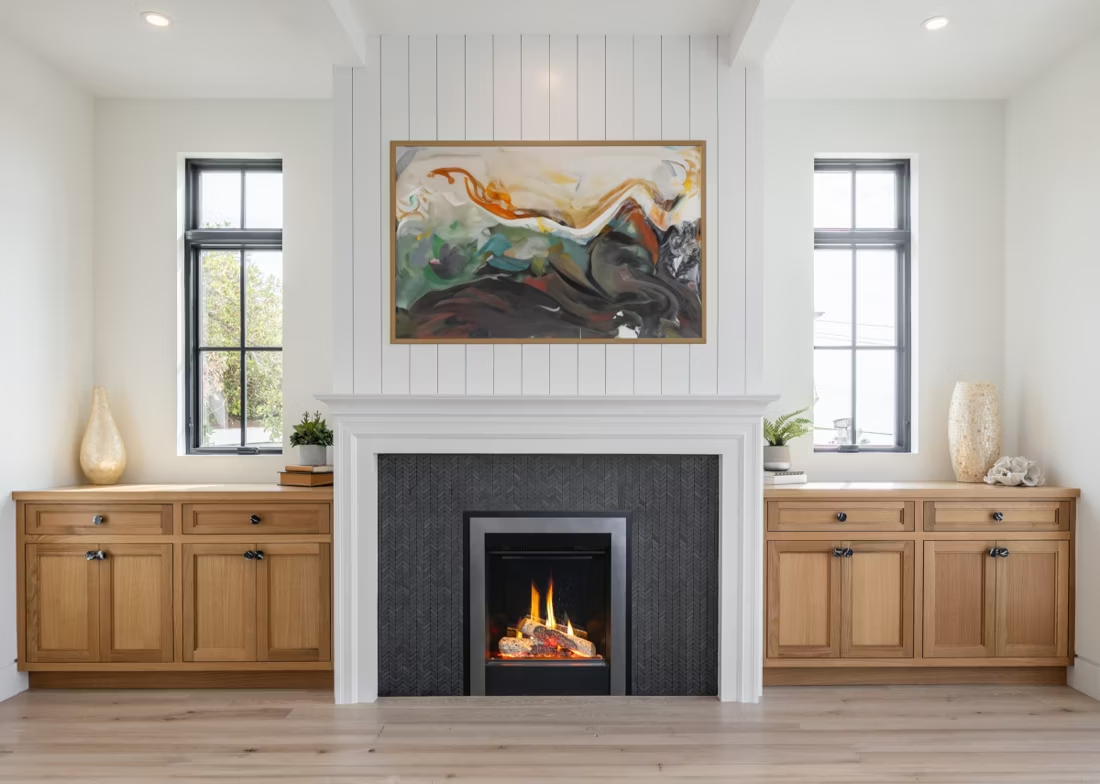
An electric fireplace is typically a built-in unit, mounted into a wall or a mantel surround, styled to look like a linear modern fireplace or a traditional firebox. An electric insert is sized to slide into an existing masonry fireplace opening—a common choice for older Adair County homes with a fireplace that's been closed off or barely used, since it restores the look of a working fire without touching the chimney. An electric stove is a freestanding cabinet-style unit that sits on the floor like a wood stove but plugs into an outlet—a popular option for renters or homeowners who want the look of a stove without any venting requirement at all.
Do I need a permit to install an electric fireplace in Adair County?
For a plug-in unit, no—it's no different than plugging in a space heater. For a built-in unit that requires a new dedicated circuit, the electrical work itself typically needs to meet code and should be done by a licensed electrician, though this is a far lighter lift than the building and venting permits required for wood or gas installations. There's no chimney inspection, no gas-line permit, and no combustion air requirement to satisfy. Most local dealers either handle the electrical work directly or coordinate with an electrician as part of the installation.
Are electric fireplaces a good fit for rental housing near Truman State University?
Yes—this is one of the strongest use cases in Adair County. A plug-in electric fireplace or a freestanding electric stove can be moved in and out with a tenant, requires no landlord approval for chimney or gas-line work, and adds real ambiance to a rental unit or older apartment near campus. For landlords who want something more permanent and higher-output, a built-in unit with its own circuit is still far simpler to install and remove than a wood or gas system, since there's no venting to cap off or patch when the property changes use.
I have an old masonry fireplace that's been unused for years. Can I convert it to electric?
Often, yes. Many older homes in and around Kirksville have a masonry fireplace that hasn't seen a fire in decades—sometimes because the chimney needs expensive repair, sometimes because the owner just wants easier heat. An electric insert sized to the existing opening restores the visual of a working fireplace with glowing logs or a flame-effect ember bed, without requiring any chimney repair, liner, or sweep. It's usually the fastest, cheapest way to bring a dead fireplace back into use, and a local dealer can measure the opening to make sure the insert fits properly.
How much does it cost to run an electric fireplace day to day?
Most electric fireplaces draw around 1,500 watts on the heater setting, which works out to roughly 10-20 cents per hour depending on your electric rate—whether you're served by Kirksville's municipal electric utility in town or a rural electric cooperative out in the county. Running the flame effect alone, without the heater on, costs only a fraction of that. For a household using the fireplace a few hours an evening through the winter, that's a modest add to the monthly bill compared to running a furnace or heat pump longer to cover the same room.
Will my electric fireplace work if the power goes out?
No—and this is worth planning around in Adair County, where winter ice storms occasionally take down power lines for a day or more. An electric fireplace goes dark the moment the power does, unlike a wood stove or a battery-backed gas unit. If backup heat during outages matters to your household—especially for rural properties out toward Novinger where restoration times can run longer than in Kirksville—it's worth pairing an electric fireplace for everyday ambiance and zone heat with a wood stove or generator-ready system as the actual outage plan.
Electric vs. wood—which makes more sense for my Adair County home?
Wood has deep roots here—Adair County's oak, hickory, walnut, and maple woodlots have heated farmhouses for generations, and a wood stove keeps working through a power outage, which matters when an ice storm knocks out lines for days. Electric can't do that, but it wins on almost everything else: no chimney, no ash, no wood to split and stack, no permit process, and it's the only realistic option for most Kirksville rentals and apartments. Plenty of Adair County households end up with both—wood or a wood insert for backup heat and cold-weather resilience, electric for the rooms where convenience and clean operation matter more than raw BTUs.
Does an electric fireplace need a vent or chimney?
No—that's its superpower. An electric fireplace needs a wall and an outlet, period. No vent pipe, no gas line, no clearances to design around, which is why it works in bedrooms, offices, apartments, and walls where venting a gas or wood unit would be impractical or impossible. Installation is typically the simplest and least expensive of any fireplace type.
Can I put a TV above my fireplace?
Yes—with an asterisk. Fireplaces are hot and TVs don't like heat. Either put a mantel between them to deflect rising warmth, or choose a fireplace with heat-management technology that creates a cool zone on the wall above—the wall stays around 125 degrees, barely warm, while the room still gets full heat. If you like clean lines and don't want a mantel, heat management is the answer.
How much should I budget for a fireplace?
For an average home—covering the fireplace, the vent pipe, and basic installation—a budget between $3,900 and $5,500 gives you a lot of options across wood, gas, and pellet. By the time you add finish work, gas line, and electrical, the average complete installation lands between $5,000 and $12,000 all-in. In a remodel or new build, a good rule is to put about 2.5% of the total project cost toward the fireplace.
What is an in-home preview and do I need one?
It's a visit where a hearth professional measures your space, confirms the model you picked actually works in your home, and walks the specs—framing, gas line, venting, finish work—before anything is ordered. Some details you just can't know until you see the house. Never make a down payment without one; it's the single most-skipped step that burns buyers.
Stove and Fireplace Dealers in Adair County
Find your electric fireplace in Adair County.
Tell us a bit about your home and we'll match you with the right electric fireplace, insert, or stove—plus a free Project Guide & Parts List and a trusted local dealer to install it.__PLACEHOLDER__
Find Your Fireplace →