
Match Your Home to the Right Hearth in Adair County.
Wood, gas, pellet, and electric fireplace resources for Kirksville and every surrounding community in Adair County—Novinger, Brashear, Gibbs, and Greentop included. Find the right unit for your home and get matched with a trusted local hearth retailer.
Every Project Starts From One of These Five Situations
Oak-and-hickory country heating for Adair County, Missouri.
Adair County sits in the rolling hardwood hills of northeast Missouri, home to about 18,400 residents spread across Kirksville and the smaller towns and farms that surround it. Winters average a low near 15°F, milder than Buffalo, NY but still enough for a genuine five-month heating season running from late October into March. The county's oak, hickory, walnut, and maple woodlots are some of the densest, longest-burning firewood available anywhere in the Midwest, and generations of Adair County households have relied on them. Unlike counties with wintertime inversion problems, Adair County has no air quality nonattainment designation, so wood burning here isn't subject to the curtailment days or advisory periods you'll find in basin or valley climates out West.
What you'll find on this hub: hearth retailers, service technicians, and fuel suppliers serving every community in the county—from Kirksville, home to Truman State University and the county's largest concentration of dealers, out to Novinger, Brashear, Gibbs, and Greentop. Pick your fuel below to drill into local dealer listings, installation costs, and recommended units for your specific project. Whether you're heating a farmhouse with a woodlot out past Novinger or a rental property near campus in Kirksville, this is the starting point.
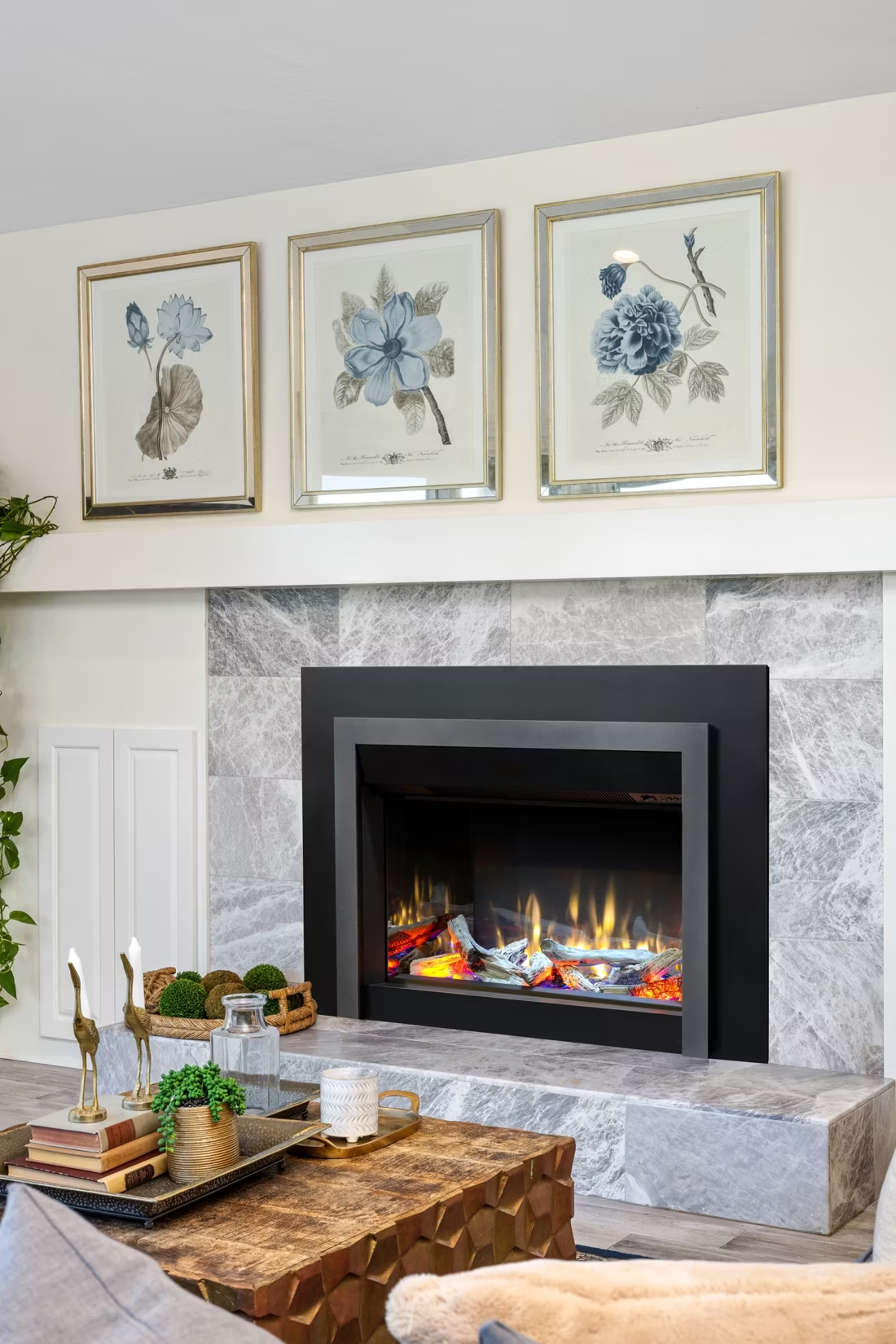
Four fuels. One honest answer for Adair County.
Three steps. No salesperson until you're ready.
Tell us about your project
Your zip code, your situation, and the fuel you're leaning toward—or let the answers point you to one.
See what's actually available
The brands dealers within 100 miles genuinely carry—real options, never a catalog mirage.
Get your dealer & Project Guide
A trusted local dealer, plus the free Project Guide & Parts List that names every component of the job.
Frequently Asked Questions
Which fuel works best in Adair County?
It depends on your home and how you use it. Wood remains a strong choice in Adair County—oak and hickory from local woodlots burn hot and long, and a lot of rural households here have always heated at least partly with wood. Gas is the convenience choice: many Kirksville homes have natural gas service, while outlying areas like Novinger and Brashear more commonly run on propane delivery, and either works well with a modern gas insert or stove. Pellet is the middle ground—Lignetics and Indeck Energy Services both supply pellets to this region, so fuel access isn't a problem, and pellet stoves give you wood-style heat without cutting and stacking cordwood. Electric fireplaces are supplemental here—a good fit for apartments and rental units near Truman State University, or for adding ambiance to a room that already has central heat, but not a primary heat source through a Missouri winter. Most Adair County homes end up running wood or pellet as a primary or backup heater alongside a gas or electric furnace.
Do I need a permit to install a fireplace in Adair County?
In most cases, yes. New wood stoves, wood inserts, gas fireplaces, gas inserts, gas stoves, and pellet stoves typically require a building permit, and gas installations need a licensed gas-fitter for the line work. Within Kirksville, permits are handled through the City of Kirksville's building codes office; in unincorporated Adair County—including Novinger, Brashear, Gibbs, and Greentop—permits go through the Adair County Building Department. Electric fireplaces generally don't require a permit unless the installation involves new wiring or a hardwired built-in unit. Most local hearth retailers handle the permitting paperwork as part of the installation, so it's rarely something the homeowner has to manage alone.
Are there air quality restrictions on wood burning in Adair County?
No—Adair County doesn't carry an air quality nonattainment designation, so there are no mandatory or voluntary wood-burning curtailment days like you'd find in a basin community prone to winter inversions. That said, if you live within Kirksville city limits, local ordinances around open burning of yard debris still apply and are worth checking with the city before burning outdoors. For indoor wood stoves and inserts, new installations still need to meet current EPA emissions standards, but there's no seasonal advisory system to track here—Adair County's air quality has never triggered that kind of regulatory response.
Can one local hearth retailer handle all four fuel types?
Some can, and it's worth asking directly since coverage varies by dealer. A Kirksville-area retailer carrying wood, gas, and pellet is common, since those three fuels see steady demand from both in-town and rural customers. Electric fireplace lines are less consistently stocked—some hearth shops carry a small electric selection alongside their wood and gas showroom units, while others focus electric sales through furniture or appliance channels instead. If you're trying to compare fuels side by side, ask a local retailer which lines they carry in-store versus which they can special-order, since floor space in a smaller county market like this often limits what's on display at any given time.
How does service work in the smaller towns around Adair County?
Most chimney sweeps and gas/pellet technicians serving Adair County are based in or near Kirksville and drive out to Novinger, Brashear, Gibbs, and Greentop for appointments. Expect a modest travel charge for calls outside Kirksville proper, and expect scheduling to tighten up once cold weather actually arrives—booking your annual sweep or gas inspection in September or early October, before the first hard freeze, is easier than trying to get someone out during a January cold spell. If you're on a rural property with a woodlot, having a backup plan for extreme cold—extra dry-seasoned oak or hickory on hand, or a propane tank topped off—is common practice among longtime Adair County households.
What's the typical cost range for fireplace installation across all fuel types in Adair County?
Costs run in line with typical Midwest rural-county pricing. Wood stove or insert installation: roughly $3,800–$8,000 for most jobs, higher if new construction requires a full masonry chimney or complex venting run. Gas fireplace, insert, or stove: roughly $4,000–$9,500, with cost depending heavily on whether a new gas line needs to be run from an existing natural gas or propane service. Pellet stove or insert: roughly $4,000–$7,000 for a typical install, including venting. Electric fireplace: $200–$2,500 for the unit itself, plus $300–$1,000 in labor for anything beyond a simple plug-in placement, such as a built-in wall unit requiring new wiring. For details specific to your fuel, check the county + fuel pages above—each ties into local retailer pricing.
Wood, gas, pellet, or electric—how do I choose?
Match the fuel to your life, not the other way around. Wood: lowest fuel cost and total power-outage independence, but you're hauling and stacking. Gas: press a button, set a thermostat, no maintenance to speak of. Pellet: wood economics with automatic feeding, in exchange for weekly cleaning and a need for electricity. Electric: plugs in anywhere with honest supplemental heat. Nobody regrets the fuel that fits how they actually live.
How much should I budget for a fireplace?
For an average home—covering the fireplace, the vent pipe, and basic installation—a budget between $3,900 and $5,500 gives you a lot of options across wood, gas, and pellet. By the time you add finish work, gas line, and electrical, the average complete installation lands between $5,000 and $12,000 all-in. In a remodel or new build, a good rule is to put about 2.5% of the total project cost toward the fireplace.
Can a fireplace actually lower my heating bill?
Yes—by creating a comfort zone. A furnace heats every square foot of the house just to warm the one room you're in; a gas fireplace on low burns roughly a sixth of the gas a typical furnace does. Set the furnace around 55–60 degrees as a baseline, then heat the rooms your family actually uses. Families who heat this way commonly save $20–$60 a month.
I know I want a fireplace—where do I actually start?
Do two things today: snap a photo of the wall or fireplace you want to transform, and take a tape measure to the space—width, height, depth. Those two artifacts answer most of a hearth professional's first questions. Then settle fuel (wood, gas, pellet, or electric) and set a realistic budget: $3,900–$5,500 covers fireplace, vent, and basic install for most homes.
Stove and Fireplace Dealers in Adair County
Listings include WhyFire partner dealers, dealers we have verified as authorized for the brands we recommend, and established local businesses that carry hearth products. Every listing shows which one it is. The ones marked Preferred run on WhyFire's software, so they can show you real pricing and book your appointment right here. No manufacturer pays for placement. How we verify dealers →
Peters Heating & Ac
White Chimney Heating And Cooling
Gingerich Stoves And Plumbing
Controlled Aire
Get matched with a hearth pro in Adair County.
Pick your fuel below and we'll match you with a trusted local dealer and send over a free Project Guide & Parts List—the exact parts, vent kit, and recommended installer for your project in Adair County.
Find Your Fireplace →