
Warm, clean heat without the wood stack in Yalobusha County.
From Water Valley to Coffeeville, Yalobusha County's winters rarely demand a full wood-burning setup—an electric fireplace gives you real ambiance and supplemental warmth with no chimney, no venting, and no firewood to split. I'll match you with a local dealer who can size the right unit for your room.
Every Project Starts From One of These Five Situations
Mild winters make electric fireplaces an easy fit.
Yalobusha County sits in Zone 3A—mixed-humid North Mississippi, with winter lows averaging around 30°F and about 3,126 heating degree days a year. That's a real heating season, but nothing like the sustained deep cold of the upper Midwest; most homes here lean on a central heat pump or gas furnace for whole-house heat, and reserve a fireplace for the living room, den, or bonus space where you actually spend your evenings. Older farmhouses around Water Valley and Coffeeville often have a masonry fireplace that hasn't burned oak or pecan in years—the chimney's still there, but nobody wants the ash, the smoke, or the annual sweep for a fire they light a dozen nights a season.
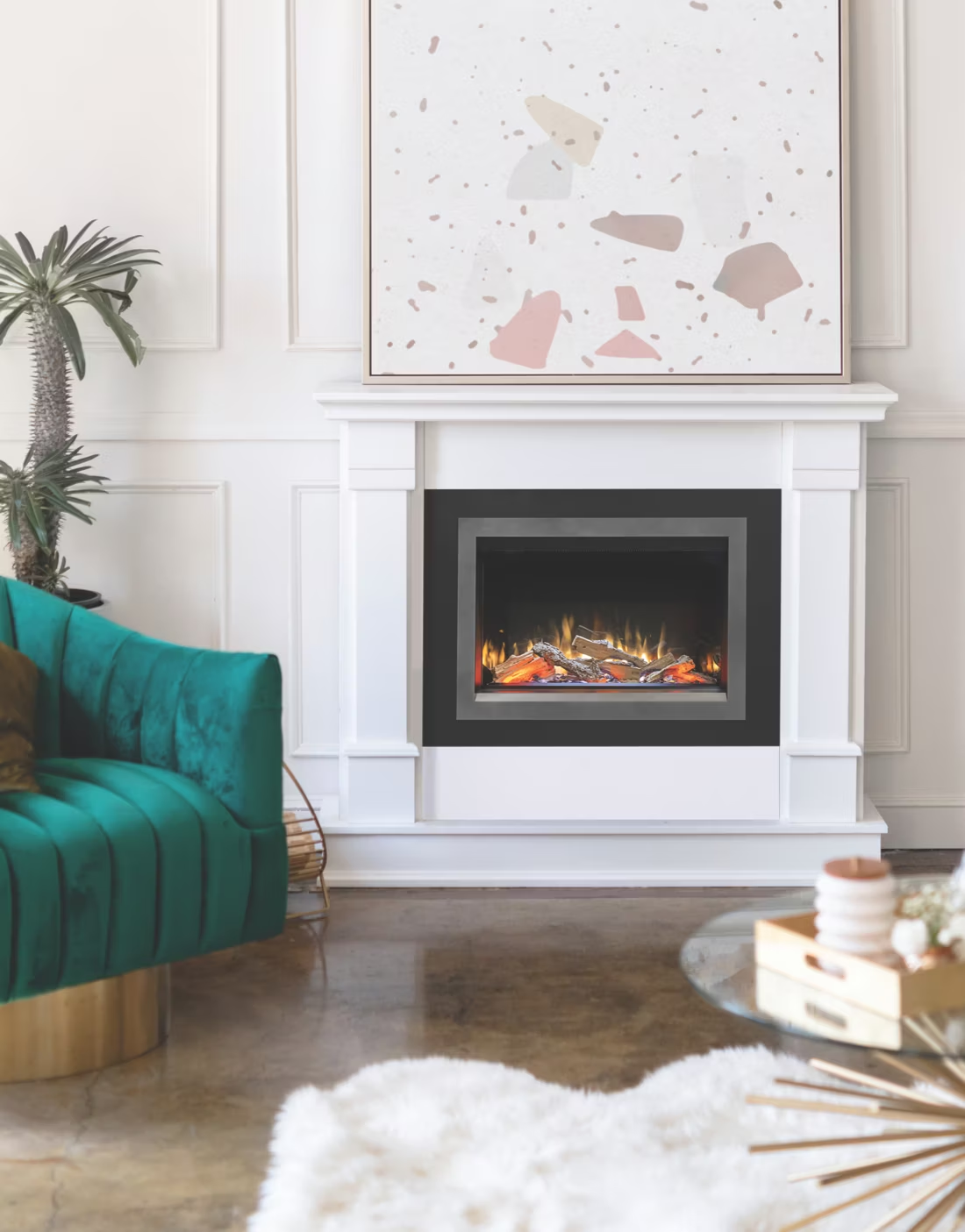
That's where electric fireplaces earn their keep. A unit can drop into an existing masonry opening as an insert, mount flush in a wall as a linear model, or sit freestanding on a mantel—no gas line, no flue, and in most cases no structural work. Electric service throughout the county runs through Tallahatchie Valley Electric Power Association (TVEPA), and running an electric fireplace on the coldest nights costs pennies on the hour compared to heating a whole room with central air. For a county this size, with no major air quality restrictions on burning, the choice usually comes down to convenience and where you want the visual warmth—not regulation.
Three steps. No salesperson until you're ready.
Tell us about your project
Your zip code, your situation, and the fuel you're leaning toward—or let the answers point you to one.
See what's actually available
The brands dealers within 100 miles genuinely carry—real options, never a catalog mirage.
Get your dealer & Project Guide
A trusted local dealer, plus the free Project Guide & Parts List that names every component of the job.
Frequently Asked Questions
How much does an electric fireplace installation cost in Yalobusha County?
A plug-in freestanding electric fireplace or a mantel package typically runs $300 to $1,200 installed, since there's no venting or gas line to run—often it's just setting the unit and confirming the outlet. A built-in wall or linear electric fireplace that requires a dedicated 120V or 240V circuit, framing, and trim work runs closer to $800 to $3,000 depending on size and finish. Retrofitting an existing masonry fireplace opening with an electric insert usually lands in the middle of that range. A local dealer will give you a firm number after seeing the room and the existing wiring.
Will an electric fireplace actually heat a room in Yalobusha County's winters?
For most rooms, yes. With winter lows averaging around 30°F and roughly 3,126 heating degree days a year, Yalobusha County doesn't see the extended sub-zero stretches that demand a wood stove or high-output insert as primary heat. A 1,500-watt electric fireplace can comfortably supplement a single room—a den, bedroom, or sunroom—on the coldest nights, while your central heat pump handles the rest of the house. Electric units aren't designed to replace whole-home heating, but as zone heat for the room you actually live in, they're well matched to this climate.
Do I need a permit to install an electric fireplace in Yalobusha County?
Most plug-in and freestanding electric fireplaces don't require any permit at all—there's no gas line and no venting for an inspector to sign off on. Where a permit does come into play is when a built-in or wall-mounted unit needs a new dedicated circuit; that electrical work typically requires a permit through the county building department and should be pulled by a licensed electrician. A reputable local dealer will tell you upfront whether your specific installation needs a permit before work starts.
What's the difference between an electric fireplace, insert, and mantel package?
An electric insert is built to slide into an existing masonry fireplace opening—a common upgrade for older Water Valley and Coffeeville homes with a fireplace that hasn't burned oak or pine in years. A built-in or linear electric fireplace mounts flush in a wall, often used in new construction or a remodel where there's no existing hearth. A mantel package pairs a freestanding electric unit with a surround, giving you a fireplace look in a room that never had a chimney to begin with. For most retrofits in this county, the insert is the simplest path since it reuses an opening you already have.
Will my electric fireplace work if the power goes out?
No—electric fireplaces need power to run, so during an outage they go dark along with everything else in the house. This is the main tradeoff compared to a wood stove, which will keep burning regardless of grid status. In Yalobusha County, outages tend to be short and tied to storms rather than sustained winter cold, so most homeowners accept the tradeoff for the convenience day to day. If backup heat during outages matters to you, it's worth discussing a wood or propane option for at least one room alongside your electric fireplace.
Electric vs. pellet stove—which makes more sense here?
A pellet stove burns bagged fuel—regional brands like Lignetics, Hamer Pellet Fuel, and Greenway Renewable Energy are available in this part of Mississippi—and puts out real, sustained heat, but it needs venting, a hopper you refill, and periodic ash cleanout. An electric fireplace needs none of that; it plugs in or wires into a circuit and runs on a switch. Given Yalobusha County's relatively mild heating season, most homeowners here choose electric for convenience and reserve pellet or wood for households that want a genuine backup heat source or enjoy the hands-on routine of tending a stove.
What size electric fireplace do I need for my room?
Sizing is mostly about width and wattage rather than whole-home BTU calculations. A 30 to 40-inch unit suits a bedroom or den, a 50 to 60-inch linear model works for a larger living room, and most units in the 1,400 to 1,500-watt range will noticeably warm a single room in this climate without straining a standard circuit. Ceiling height and how open the room is to the rest of the house matter too—an open floor plan will dilute the heat more than a closed-off den. A local dealer can walk your space and recommend the right width and heater output.
Can an electric fireplace go into an old fireplace opening in a Water Valley or Coffeeville farmhouse?
In most cases, yes. Many older homes in and around Water Valley and Coffeeville have a masonry fireplace that once burned local oak, pine, or pecan but has sat unused for years. An electric insert is usually sized to slide into that existing opening, giving you flame effect and supplemental heat without reopening the chimney or dealing with old masonry repairs. If the opening is an unusual size or the chimney has settled or cracked, a dealer will check the fit before recommending a specific model.
How much does it cost to run an electric fireplace day to day?
A typical 1,500-watt electric fireplace run on high costs a modest amount per hour at standard residential electric rates through TVEPA—generally well under the cost of heating an equivalent space with central HVAC alone, since you're only heating the one room you're in. Most units also let you run the flame visual with the heater off, which uses only a fraction of the electricity, so you can keep the ambiance going in warmer months without any real cost. It's one of the more budget-friendly ways to add supplemental warmth in a Zone 3A climate like this one.
Can I put a TV above my fireplace?
Yes—with an asterisk. Fireplaces are hot and TVs don't like heat. Either put a mantel between them to deflect rising warmth, or choose a fireplace with heat-management technology that creates a cool zone on the wall above—the wall stays around 125 degrees, barely warm, while the room still gets full heat. If you like clean lines and don't want a mantel, heat management is the answer.
Does an electric fireplace need a vent or chimney?
No—that's its superpower. An electric fireplace needs a wall and an outlet, period. No vent pipe, no gas line, no clearances to design around, which is why it works in bedrooms, offices, apartments, and walls where venting a gas or wood unit would be impractical or impossible. Installation is typically the simplest and least expensive of any fireplace type.
Can a fireplace actually lower my heating bill?
Yes—by creating a comfort zone. A furnace heats every square foot of the house just to warm the one room you're in; a gas fireplace on low burns roughly a sixth of the gas a typical furnace does. Set the furnace around 55–60 degrees as a baseline, then heat the rooms your family actually uses. Families who heat this way commonly save $20–$60 a month.
Does a fireplace add value to my home?
On average, a fireplace adds back to the home about the same amount you spent installing it. Add the monthly savings from heating the rooms you actually use instead of the whole house—often hundreds of dollars a year—and the value case is strong before you even count what a fire does for how your family uses the room.
Stove and Fireplace Dealers in Yalobusha County
Find your electric fireplace in Yalobusha County.
Tell me a bit about your room and how you plan to use it, and I'll match you with a trusted local dealer and send over a free Project Guide & Parts List—the right unit, the wiring needs, and what it takes to get it installed correctly.
Find Your Fireplace →