
Instant, Clean Heat for Woodville and All of Wilkinson County.
Wilkinson County's winters are short and mild, but the cold snaps that do roll through southwest Mississippi call for heat you can flip on without splitting a log. Find the right gas fireplace or insert and get matched with a trusted local dealer.
Every Project Starts From One of These Five Situations
Reliable heat for short, sharp cold snaps.
Wilkinson County sits in the southwest corner of Mississippi along the river bluffs above the Mississippi, with Woodville as the county seat and the Homochitto National Forest brushing its northern edge. It's a small, rural county—about 3,476 residents spread across farmland and pine timberland—and its climate zone 3A winters are mild by national standards. With an average winter low near 38 degrees and only a light overall winter heating load, Wilkinson County sees a fraction of the cold-weather demand of places like Duluth, Minnesota or Burlington, Vermont. Most winters bring a handful of nights in the 20s rather than sustained deep freezes.
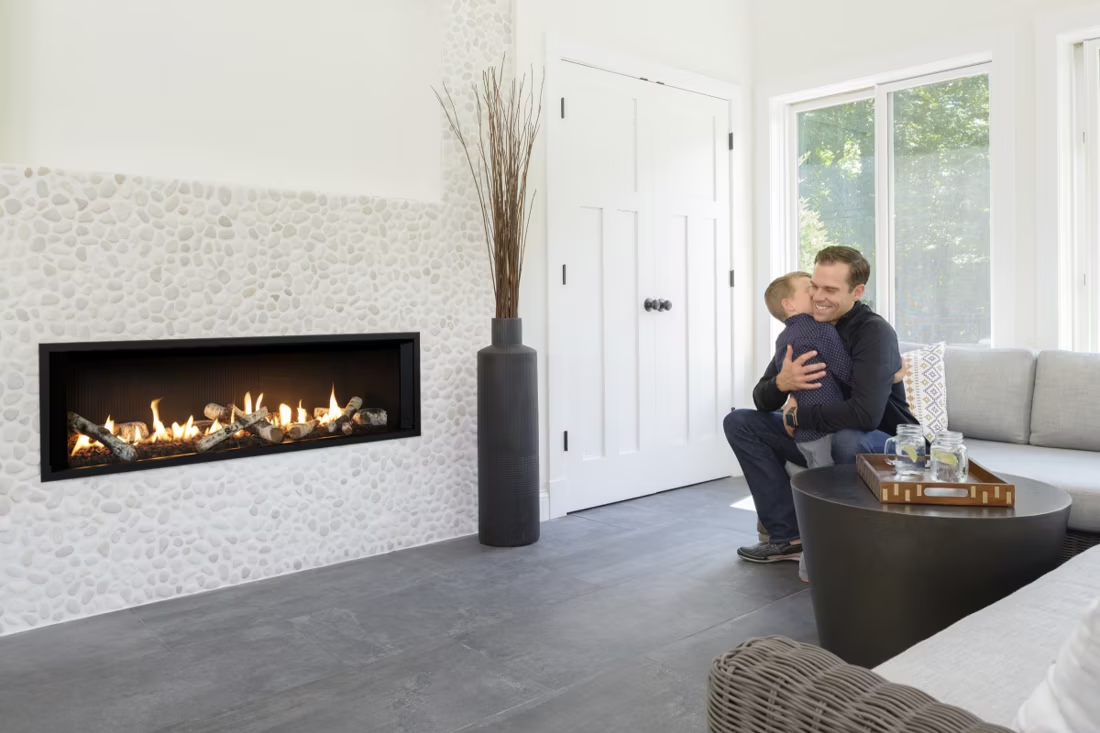
That mild profile changes what a gas fireplace is for here. Rather than running as primary heat for months on end, a gas unit in Wilkinson County typically covers the occasional hard freeze, takes the chill off a den or living room on a damp December evening, and gives you real ambiance the rest of the year without the work of tending a wood fire. Natural gas service is limited mostly to in-town Woodville, so propane is the standard fuel for most homes in the unincorporated county—and either way, a properly sized, correctly vented gas fireplace or insert gives you heat at the flip of a switch, no ash, no wood stacking, and (with the right ignition system) heat that keeps working even when the power doesn't.
Three steps. No salesperson until you're ready.
Tell us about your project
Your zip code, your situation, and the fuel you're leaning toward—or let the answers point you to one.
See what's actually available
The brands dealers within 100 miles genuinely carry—real options, never a catalog mirage.
Get your dealer & Project Guide
A trusted local dealer, plus the free Project Guide & Parts List that names every component of the job.
Frequently Asked Questions
How much does a gas fireplace installation cost in Wilkinson County?
For a direct-vent gas insert installed into an existing masonry fireplace with propane already on site, expect somewhere in the $3,500 to $7,500 range depending on the insert model and venting path. A new built-in gas fireplace for a remodel or new construction—including framing, venting, and a fresh propane line or tank set—typically runs $6,000 to $11,000. Because most of the county runs on propane rather than piped natural gas, a first-time propane tank installation can add to the cost if your home doesn't already have one. A local dealer will give you a firm number after seeing your existing fireplace or planned install location.
Can I convert my existing wood fireplace to gas?
Yes, and it's a common request in older Wilkinson County homes with masonry fireplaces built for oak or pine cordwood. A gas insert slides into the existing firebox and vents through the chimney with a stainless liner, so you keep the look of your original fireplace while gaining instant, controllable heat. Most conversions in the county run $4,000 to $8,000, with the final number driven by whether you're on propane (most rural addresses) or in-town natural gas near Woodville, and whether the chimney needs relining before the insert goes in.
Should I plan for natural gas or propane in Wilkinson County?
Piped natural gas service in Wilkinson County is concentrated in and around Woodville; outside city limits, propane is the default fuel for gas fireplaces, water heaters, and ranges. If you're already set up with a propane tank for another appliance, adding a fireplace is usually a simple tie-in. If you're starting from scratch, a local propane supplier will size and place a tank as part of the project. Most gas fireplace models sold by local dealers can be configured for either fuel—the orifice and regulator just need to match whichever you're running.
Will my gas fireplace still work if the power goes out?
Most direct-vent gas fireplaces with intermittent pilot ignition (IPI) run on a small battery backup, so they'll still light and heat the room during an outage—which matters in rural Wilkinson County, where storms can knock out power for a while before a crew gets out to fix it. Some brands, like Valor, take it further and generate their own electricity from the pilot's thermocouple, so there's no battery to remember to replace. If backup operation during storms matters to you, ask your local dealer about the ignition system on any unit you're considering before you buy.
What's the difference between a gas fireplace, insert, and stove?
A gas fireplace is a built-in unit framed into a wall, typically chosen for new construction or a full remodel. A gas insert is built to drop into an existing masonry firebox, using your current chimney as the vent path—the right call for most older Wilkinson County homes with a fireplace already in place. A gas stove is a freestanding cabinet-style unit that sits on the floor and vents out a wall or through the roof, a good option for a room without any existing fireplace. Local dealers carry all three and can walk you through which fits your specific room.
Do I need a permit for a gas fireplace in Wilkinson County?
Within Woodville's town limits, gas fireplace installations typically require a building permit and sign-off on the gas line work through the town's building official. In the unincorporated parts of the county, Wilkinson County does not enforce a countywide residential building code, so the main requirement is that the gas line itself—whether tied to natural gas or a propane tank—be run and connected by a licensed gas or propane contractor. Reputable local dealers handle this coordination as part of the install so you're not left managing separate trades.
Vented or vent-free—which makes sense for a Wilkinson County home?
Vented (direct-vent) gas fireplaces draw combustion air from outside and exhaust it back outside through sealed venting—they're the most universally recommended option and the standard choice for full-room heating. Vent-free gas fireplaces burn without external venting and are legal in Mississippi, but they come with room-size minimums and require an oxygen depletion sensor, since combustion byproducts release directly into the living space. Given how mild Wilkinson County winters run, some homeowners use vent-free units for supplemental warmth in a den or bonus room, but for a primary living space, a vented direct-vent unit remains the safer, more heat-effective choice.
How often does a gas fireplace need service in Wilkinson County?
An annual inspection before the start of cool weather—usually late fall—is the standard recommendation for any gas fireplace or insert, whether it's running on propane or in-town natural gas. A technician checks the burner, pilot assembly, gas connections, and venting, and cleans the glass and interior. Because Wilkinson County's heating season is short, some homeowners are tempted to skip a year, but propane-fed units especially benefit from a yearly check since tank moisture and line issues can affect the pilot and burner over time.
Gas or wood—which fits Wilkinson County better?
Wilkinson County has plenty of oak, pine, and pecan on hand, and wood heat still has a real following here, especially on rural properties with land to cut from. But with only a light overall winter heating load and winter lows averaging in the upper 30s, most homes don't need a wood stove running as primary heat the way a colder-climate home would. Gas fireplaces tend to fit the county's actual heating pattern better: instant warmth for the handful of genuinely cold nights, no wood stacking or ash cleanup, and reliable backup heat during storm outages with the right ignition system. Plenty of homes here keep both—a gas unit for daily convenience, wood for backup and for the occasional fire built the old way.
What's the difference between an insert and a zero-clearance fireplace?
An insert is a fireplace that slides into a pre-existing wood-burning fireplace—if you don't have one, there's nothing to insert it into. A zero-clearance fireplace is built into a framed wall, which makes it the answer for remodels and new construction. Simple test: existing masonry fireplace means insert; blank or framed wall means zero-clearance.
Are new gas fireplaces really better than old ones?
Two ways, and they're both big. Looks: modern gas fireplaces are realistic enough that it's hard to believe they aren't burning wood. Cost: old units burn a standing pilot year-round (roughly $200 a year), while new ones use pilot-on-demand ignition and modern burners. Add remote controls and thermostat operation, and the day-to-day experience isn't close.
Can a fireplace actually lower my heating bill?
Yes—by creating a comfort zone. A furnace heats every square foot of the house just to warm the one room you're in; a gas fireplace on low burns roughly a sixth of the gas a typical furnace does. Set the furnace around 55–60 degrees as a baseline, then heat the rooms your family actually uses. Families who heat this way commonly save $20–$60 a month.
Can I install a fireplace myself?
If you're putting a fire in your house on purpose, it's best to work with an expert. Unless you're genuinely experienced in framing, gas line, vent pipe, and the national code on clearances to combustibles, have a professional do it—and ideally the same company that sells you the fireplace, so warranty, service, and liability all live under one roof.
Stove and Fireplace Dealers in Wilkinson County
Find your gas fireplace in Wilkinson County.
Tell us a bit about your home and heating needs, and we'll match you with a trusted local dealer and send over a free Project Guide & Parts List—the exact parts, vent kit included, for your Wilkinson County gas project.
Find Your Fireplace →