
Find the right fireplace for your Wilkinson County home.
Wood, gas, pellet, and electric fireplace resources for Woodville, Centreville, Fort Adams, and every rural community in the county. Find the right unit and connect with a trusted local hearth retailer.
Every Project Starts From One of These Five Situations
Mild-winter heating in Mississippi's southwest corner.
Wilkinson County sits along the Mississippi River in the state's far southwest corner, in climate zone 3A where winters stay mild—average lows around 38°F and only a short, light winter heating season each year, a fraction of what a place like Duluth MN or Burlington VT racks up in a single hard month. That said, cold snaps do roll through, and plenty of Woodville and Centreville homes still lean on a hearth for warmth on the coldest nights and for the atmosphere that a fire brings to a rural farmhouse or a hunting camp. Oak, pine, and pecan are the common local wood species, and pecan in particular burns clean and hot—a byproduct of the county's orchard history that a lot of longtime residents already have access to.
What you'll find on this hub: hearth retailers, service technicians, and fuel suppliers serving every community in the county—from the county seat in Woodville to Centreville, Fort Adams, and the smaller unincorporated crossroads in between. Pick your fuel below to drill into specifics—local dealers, installation costs, recommended units, and the resources that match your project. Whether you're heating a river-bottom home near Fort Adams or a place out toward the Homochitto National Forest, this is the starting point.
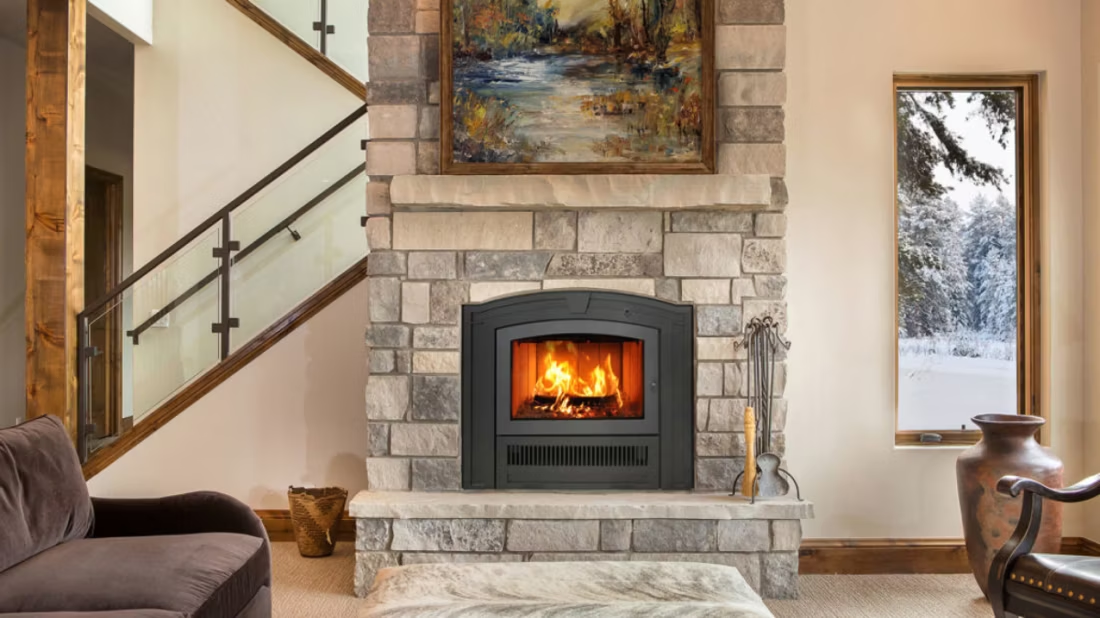
Four fuels. One honest answer for Wilkinson County.
Three steps. No salesperson until you're ready.
Tell us about your project
Your zip code, your situation, and the fuel you're leaning toward—or let the answers point you to one.
See what's actually available
The brands dealers within 100 miles genuinely carry—real options, never a catalog mirage.
Get your dealer & Project Guide
A trusted local dealer, plus the free Project Guide & Parts List that names every component of the job.
Frequently Asked Questions
Which fuel makes the most sense in a mild climate like Wilkinson County?
With only a short, light winter heating season each year, Wilkinson County doesn't need the kind of round-the-clock heat output a place like Bismarck ND or Fargo ND depends on—so the choice here comes down more to preference, aesthetics, and how you use the room. Wood stays popular for the ambiance and because oak, pine, and pecan are locally abundant and cheap or free for a lot of rural landowners. Gas is the low-hassle option for homes that want instant flame with no wood-splitting or ash cleanup, and it works well as a supplemental heat source on the county's occasional cold nights. Pellet is a solid middle ground, especially with regional supply from Lignetics and Hamer Pellet Fuel keeping fuel costs reasonable. Electric fireplaces are common in smaller homes and rentals where a full masonry or vented install doesn't make sense—plug-in ambiance heat rather than a primary heating system. Most Wilkinson County homes treat the fireplace as a supplement to central heat, not the main source.
Do I need a permit to install a fireplace in Wilkinson County?
In most cases, yes, though enforcement and requirements are lighter here than in larger jurisdictions. New wood stoves, wood inserts, gas fireplaces, gas inserts, gas stoves, and pellet stoves typically require a building permit, and any gas connection work should go through a licensed gas-fitter. Because Wilkinson County is largely rural and unincorporated, permitting for county properties runs through the county building office, while installs inside Woodville or Centreville city limits may go through the municipality. Electric fireplaces generally skip the permit process unless you're doing a built-in install with new wiring. Most local hearth retailers and installers handle this paperwork as part of the job, so it's worth asking upfront rather than pulling permits yourself.
Do I need to worry about wood smoke or air quality restrictions?
No—Wilkinson County has no listed air quality concerns, unlike wood-burning-heavy basins out West that deal with winter inversions or non-attainment status. That means there's no curtailment program or advisory system limiting when you can burn. It's still good practice to burn seasoned, dry oak or pine rather than green wood—it burns cleaner, produces less creosote buildup in the chimney, and gets more heat out of each log—but you won't run into county-level burn bans tied to smoke or particulate levels the way homeowners in some other regions do.
Is wood heat still practical here given how mild the winters are?
Yes, and it's arguably more about lifestyle than necessity. With average winter lows around 38°F, a Wilkinson County wood stove isn't fighting the kind of sustained cold that forces a Helena MT or Madison WI household to run a catalytic stove around the clock. Instead, wood heat here tends to get used on cold fronts, in the evenings, and for the ambiance of a working fireplace—especially in older farmhouses and camps where an oak or pecan fire is part of the routine. Because heating demand is lower, a smaller stove or a straightforward fireplace insert is usually enough; oversizing for a Mississippi winter is a common and avoidable mistake.
How does service and installation work in a rural county like this?
Because Wilkinson County's population is spread across a small number of towns and a lot of rural acreage, most hearth retailers and service techs are based in Woodville or Centreville, or travel in from Natchez just across the county line. Expect a modest travel fee for calls out to more remote spots near Fort Adams or the Homochitto National Forest area. Scheduling annual chimney sweeps or gas inspections in late summer or early fall—before the first cold front—tends to be easier than trying to book emergency service once winter arrives.
What's the typical cost range for fireplace installation across fuel types in Wilkinson County?
Costs run somewhat lower here than in higher-demand cold-climate markets, since venting and chimney work tend to be simpler for the mild-climate installs common in this county. Wood stove or insert installation typically runs $3,500–$7,500, less if an existing chimney is reusable. Gas fireplace, insert, or stove installs run $4,000–$9,000 depending on whether new gas line work is needed. Pellet stove or insert installs typically run $3,500–$6,500. Electric fireplaces run $200–$2,500 for the unit, with $300–$1,000 in labor for anything beyond a simple plug-in setup. For fuel-specific detail, see the county + fuel pages above.
Can a fireplace actually lower my heating bill?
Yes—by creating a comfort zone. A furnace heats every square foot of the house just to warm the one room you're in; a gas fireplace on low burns roughly a sixth of the gas a typical furnace does. Set the furnace around 55–60 degrees as a baseline, then heat the rooms your family actually uses. Families who heat this way commonly save $20–$60 a month.
What is an in-home preview and do I need one?
It's a visit where a hearth professional measures your space, confirms the model you picked actually works in your home, and walks the specs—framing, gas line, venting, finish work—before anything is ordered. Some details you just can't know until you see the house. Never make a down payment without one; it's the single most-skipped step that burns buyers.
What are the biggest mistakes people make buying a fireplace?
Five come up constantly: budgeting for the unit but not the full job (vent, gas line, electrical, finish work); drowning in options instead of starting from style and fuel; buying without an in-home preview; handing installation to a handyman instead of a pro; and giving up out of sheer indecision. Every one is avoidable with a clear plan—step one, step two, step three.
I know I want a fireplace—where do I actually start?
Do two things today: snap a photo of the wall or fireplace you want to transform, and take a tape measure to the space—width, height, depth. Those two artifacts answer most of a hearth professional's first questions. Then settle fuel (wood, gas, pellet, or electric) and set a realistic budget: $3,900–$5,500 covers fireplace, vent, and basic install for most homes.
Stove and Fireplace Dealers in Wilkinson County
Listings include WhyFire partner dealers, dealers we have verified as authorized for the brands we recommend, and established local businesses that carry hearth products. Every listing shows which one it is. The ones marked Preferred run on WhyFire's software, so they can show you real pricing and book your appointment right here. No manufacturer pays for placement. How we verify dealers →
Herring Gas Company, Inc.
Harrell Gas Inc
Herring Gas Company, Inc- Natchez
Herring Gas Co, Inc
Blossman Lp Gas Services Inc
Find your fireplace in Wilkinson County.
Pick your fuel below, and we'll match you with a trusted local dealer and put together a free Project Guide & Parts List—the exact parts, including the vent kit, for your project.
Find Your Fireplace →