
Ambient warmth for Delta winters that rarely freeze.
With a heating season that's mostly done by February and an average winter low around 32°F, Tunica County doesn't need a full wood-burning setup to stay comfortable—it needs a clean, plug-in way to add warmth and ambiance to a room. I'll match you with a trusted local dealer who can size and install the right unit for your home.
Every Project Starts From One of These Five Situations
Warmth without a chimney, a wood pile, or a gas line.
Tunica County sits in the flat Mississippi Delta along the river, a small county of roughly 4,700 people built on cotton and soybean farmland and, since the 1990s, the casino resort corridor around Robinsonville. Climate zone 3A here means a short, mild heating season—winters that are mostly done by February, with lows averaging around 32°F—well under half the load a home in the upper Midwest carries through a real winter. Oak, pine, and pecan grow throughout the county's bottomland, but with heating needs this light, a full wood-burning setup is more than most households need. That's a big part of why wood stoves and pellet stoves see little demand here: the fuel-handling and venting hassle just doesn't pencil out against a Delta winter that's mostly done by February.
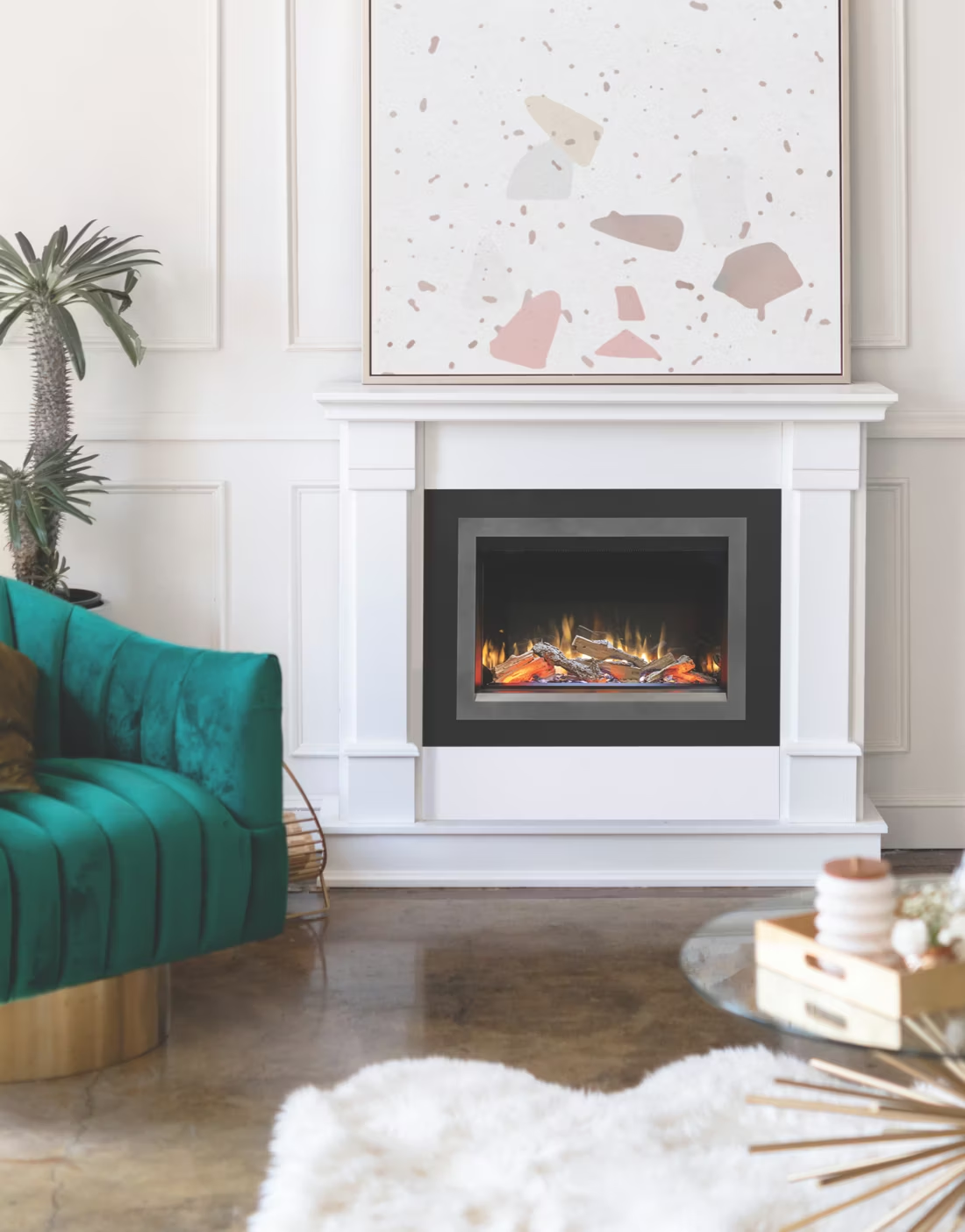
What does make sense is electric. Most Tunica County homes heat primarily with central electric or gas systems, and an electric fireplace or insert layers on zone heat and visual warmth in a den, bedroom, or casino-corridor condo without any venting, gas line, or chimney work. That matters in a county with a large share of manufactured and site-built single-story homes, where cutting a roof or wall penetration for a flue isn't practical or wanted. Gas remains the standard choice for a full built-in fireplace where a line is already run, but electric is the fastest and least invasive way to add supplemental heat and ambiance to almost any room in the county.
Three steps. No salesperson until you're ready.
Tell us about your project
Your zip code, your situation, and the fuel you're leaning toward—or let the answers point you to one.
See what's actually available
The brands dealers within 100 miles genuinely carry—real options, never a catalog mirage.
Get your dealer & Project Guide
A trusted local dealer, plus the free Project Guide & Parts List that names every component of the job.
Frequently Asked Questions
How much does an electric fireplace installation cost in Tunica County?
A basic plug-in electric insert or wall-mount unit runs $300 to $1,500 for the appliance itself, and since there's no venting or gas line involved, installation labor is modest—typically $200 to $800 for a licensed electrician to add a dedicated circuit if your existing outlet isn't rated for the draw. A built-in electric fireplace set into a custom mantel or media wall, common in newer construction around Robinsonville and the casino corridor, can push the total project to $2,000-$3,500 once carpentry is included. A local dealer can tell you within a few minutes whether your home's existing wiring will handle the unit or needs an upgrade first.
What size electric fireplace do I need for my home?
Because Tunica County's heating season is short and mild—mostly done by February, with winter lows averaging around freezing—most electric fireplaces here are sized for zone heat and ambiance rather than as a home's primary heat source. A unit rated for 400-1,000 square feet comfortably supplements a den, living room, or bedroom in a typical Delta ranch home or manufactured house. If you're trying to heat a larger open-concept space, look at models with a higher wattage heater core rather than assuming a bigger firebox alone will do the job; a local dealer can walk the room and match the BTU output to your actual layout.
Do I need a permit to install an electric fireplace in Tunica County?
A simple plug-in unit generally doesn't require a permit, but any project that adds a new dedicated circuit or breaker—which most local electricians recommend for a fireplace insert pulling 1,500 watts—falls under an electrical permit through the county building office. A licensed electrician handling the wiring will typically pull that permit as part of the job. If you're building a custom surround or media wall into a wall cavity, check with the county building department first, since framing changes can trigger a separate inspection even though there's no flue or gas line involved.
Electric vs. gas—which fireplace makes more sense in Tunica County?
Gas is the standard choice here when a home already has a line run or a builder is putting in a full fireplace during new construction—it gives more visible flame and higher heat output for a primary living space. Electric wins on flexibility and cost: no gas line, no venting, and an installation that can go in almost any room in an afternoon. Given how mild Tunica County winters run, plenty of homeowners find an electric insert covers their actual heating need for a den or bedroom without the expense of extending gas service to a room that doesn't have it. Many homes in the county end up with gas in the main living area and electric elsewhere for exactly that reason.
Why don't more homes in Tunica County use wood or pellet stoves?
With a heating season that's mostly done by February and winter lows averaging around 32°F, Tunica County's winters are short enough that a wood or pellet stove rarely pays for itself in convenience or fuel savings. Oak, pine, and pecan are all available locally, and a small number of hunting camps and river-adjacent properties do run wood stoves for camp use, but as a primary or supplemental heat source for a year-round residence, the fuel storage and upkeep aren't worth it for most households here. Pellet brands like Lignetics, Hamer Pellet Fuel, and Greenway Renewable Energy are sold in the wider region, but local demand is thin compared to counties farther north or at higher elevation.
Will my electric fireplace still work if the power goes out?
No—unlike a wood stove, an electric fireplace has no function without power, so it won't help during an outage. That's worth factoring in for rural parts of the county served by cooperative and utility lines that can see storm-related outages during spring severe weather season, which is more common in the Delta than deep winter cold. If backup heat during an outage is a real concern for your household, a local dealer can talk through whether a propane or gas option makes more sense as a secondary system alongside your electric fireplace.
Is an electric fireplace a good fit for a manufactured or mobile home?
Yes, and it's one of the more common installs in rural parts of Tunica County where manufactured and single-story homes are widespread. Electric units avoid the roof or wall penetration a vented appliance would need, which matters on a manufactured home where cutting into the structure for a flue is either not allowed or not practical. A wall-mount or small built-in unit on a dedicated circuit is usually the simplest, lowest-cost way to add real supplemental heat and a fireplace look to that kind of home.
Are electric fireplaces popular for second homes and rentals near the casino corridor?
Yes. Condos, short-term rentals, and second homes near the Robinsonville casino resort corridor often add an electric fireplace purely for the visual and ambiance value, since guests want the look of a fireplace without the property owner managing wood delivery or a gas line. Plug-in and built-in electric units are also easy for a property manager to service or swap, which matters for a rental unit that needs to stay guest-ready year-round.
How much maintenance does an electric fireplace need?
Very little compared to a wood or gas system—there's no chimney to sweep and no burner or pilot assembly to service annually. Most upkeep is dusting the heater vents and cleaning the front glass or screen a few times a season, plus checking that the LED flame effect bulbs (on models that use them) are still working. Because Tunica County's mild climate means these units often run more for supplemental heat and ambiance than as a workhorse daily heater, most homeowners find a unit lasts many seasons with essentially no service calls.
Do electric fireplaces actually produce heat?
Yes—most put out around 4,800–5,000 BTUs from a standard outlet, which comfortably warms a bedroom, office, or den as a comfort-zone heater. What they won't do is carry a whole house the way wood, gas, or pellet can. Think of electric as ambiance-first with honest supplemental heat: flames on with no heat in July, flames plus warmth in January.
Can I put a TV above my fireplace?
Yes—with an asterisk. Fireplaces are hot and TVs don't like heat. Either put a mantel between them to deflect rising warmth, or choose a fireplace with heat-management technology that creates a cool zone on the wall above—the wall stays around 125 degrees, barely warm, while the room still gets full heat. If you like clean lines and don't want a mantel, heat management is the answer.
Can I install a fireplace myself?
If you're putting a fire in your house on purpose, it's best to work with an expert. Unless you're genuinely experienced in framing, gas line, vent pipe, and the national code on clearances to combustibles, have a professional do it—and ideally the same company that sells you the fireplace, so warranty, service, and liability all live under one roof.
What is an in-home preview and do I need one?
It's a visit where a hearth professional measures your space, confirms the model you picked actually works in your home, and walks the specs—framing, gas line, venting, finish work—before anything is ordered. Some details you just can't know until you see the house. Never make a down payment without one; it's the single most-skipped step that burns buyers.
Get your free Project Guide & Parts List for an electric fireplace in Tunica County.
Tell me about your home and where you want the warmth, and I'll match you with a trusted local Tunica County dealer and send over a free Project Guide & Parts List—the exact unit, wiring needs, and recommended installer for your electric fireplace project.
Find Your Fireplace →