
Find your fireplace in Tunica County.
Gas, electric, wood, and pellet fireplace resources for the whole county—from the casino resorts along Highway 61 to the farmland stretching toward Dundee and Austin. Pick a fuel and get matched with a local dealer who actually installs it here.
Every Project Starts From One of These Five Situations
Mild Delta winters, 3,025 heating degree days, and a county built around gas and electric heat.
Tunica County sits in the Mississippi Delta along the river's batture, about 25 miles south of Memphis, Tennessee, in flat farmland given over to cotton and soybeans and dotted with oak, pine, and pecan trees. At a low elevation and a climate zone 3A designation, winters here stay mild by national standards—average lows sit around 32°F, and the county logs just 3,025 heating degree days a season, less than half the heating load carried by a place like Madison, Wisconsin. That's the single biggest fact shaping what gets installed here: homes need supplemental warmth on a cold January night, not a primary wood or pellet heating system built to survive a hard winter.
Tunica County's population of just under 4,700 is concentrated around the town of Tunica, the Tunica Resorts casino corridor along Highway 61, and small communities like Robinsonville, Dundee, and Austin further into the Delta. The county has no air quality non-attainment designation and no burn-ban restrictions, so a wood-burning fireplace fed with local oak, pine, or pecan is perfectly legal—it's just uncommon, chosen more for the look of a real fire than for heat. Pellet stoves are similarly rare, even though regional brands like Lignetics, Hamer Pellet Fuel, and Greenway Renewable Energy all reach this part of the Mid-South. Gas and electric fireplaces carry most of the county's hearth demand instead—gas for homeowners who want thermostat-controlled warmth, electric for the casino-corridor's newer construction where a built-in unit adds ambiance without any venting work. This hub rolls up retailers, service techs, and fuel suppliers across the whole county; pick your fuel below for local dealers, install costs, and unit recommendations specific to your town.
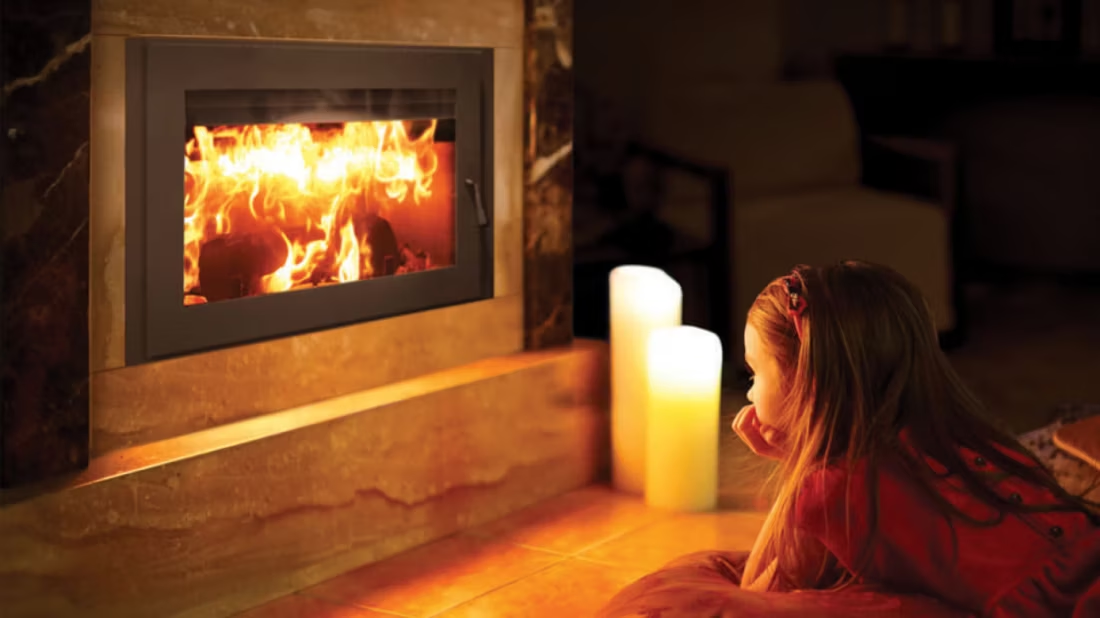
Four fuels. One honest answer for Tunica County.
Three steps. No salesperson until you're ready.
Tell us about your project
Your zip code, your situation, and the fuel you're leaning toward—or let the answers point you to one.
See what's actually available
The brands dealers within 100 miles genuinely carry—real options, never a catalog mirage.
Get your dealer & Project Guide
A trusted local dealer, plus the free Project Guide & Parts List that names every component of the job.
Frequently Asked Questions
Which fireplace fuel makes the most sense in Tunica County?
With average winter lows around 32°F and just 3,025 heating degree days a year, Tunica County doesn't carry the kind of heating load that makes a wood or pellet stove a practical primary heat source—homes here are built and heated for Delta summers, not for a hard winter. Gas fireplaces and inserts are the most common choice for homeowners who want reliable, thermostat-controlled warmth on the county's colder nights, whether they're running natural gas where it's available or bottled propane further out toward Dundee and Austin. Electric fireplaces are just as common, especially in newer construction around the Tunica Resorts casino corridor, where a built-in electric unit adds ambiance without any venting or gas-line work. A wood-burning fireplace using local oak, pine, or pecan is still installed occasionally, mostly for the look and the occasional cold snap rather than as a heating strategy.
Do I need a permit for a gas fireplace or insert installation?
Yes. Any gas fireplace, insert, or log set installation needs a permit through the county building department, and the gas-line work itself should be done by a licensed gas fitter—that's true whether you're tapping into an existing natural gas line or setting up a propane connection. Electric fireplace installs usually skip the permit process unless you're adding a new dedicated circuit for a built-in unit. Most of the retailers we match Tunica County homeowners with handle the permit paperwork as part of the installation quote, so it's not something you're chasing down on your own.
Are wood-burning fireplaces still installed in Tunica County?
They're the exception rather than the rule. Tunica County has no air quality non-attainment designation and no burn-ban restrictions, so there's nothing stopping a homeowner from installing a wood-burning fireplace or insert and burning local oak, pine, or pecan—the same species that show up in Delta smokehouses and outdoor fire pits. But with a mild 3A climate and lows that rarely stay below freezing for long stretches, very few households choose wood as their primary hearth fuel. When we do see wood installs here, it's usually a homeowner who wants the visual and the occasional real fire on a cold January night, not someone counting on it to carry the heating load.
What about pellet stoves—does anyone in Tunica County use them?
Not many, and that's mostly a function of climate rather than availability. Regional pellet brands like Lignetics, Hamer Pellet Fuel, and Greenway Renewable Energy all distribute into the Mid-South and can supply a Tunica County pellet stove without much trouble, but the mild winters here mean most homeowners get more day-to-day value out of a gas or electric unit that doesn't require hopper refills or bag storage. If you already have a pellet stove or you're drawn to the look of a real flame with a lower maintenance burden than wood, it's a workable option—just know you'll be one of a smaller group locally.
How does installation and service work across a small, rural county like Tunica?
Tunica County's population is small and spread across a handful of communities—the town of Tunica itself, Robinsonville and the casino corridor along Highway 61, and rural stretches toward Dundee and Austin—so most hearth retailers and service techs are based in that corridor or drive down from the Memphis metro, about 25 miles north. Scheduling a gas fireplace inspection or an electric-unit install is generally easier here than in more remote parts of the Delta simply because of the Memphis proximity, but it's still worth booking service in early fall before the casino corridor's peak winter tourist season fills up local contractors' calendars.
What does a fireplace installation typically cost in Tunica County?
Gas fireplaces, inserts, and stoves generally run $4,000–$9,500 installed, with the higher end reflecting new gas-line runs for homes further from existing service. Electric fireplaces are the more budget-friendly option—$200–$2,500 for the unit itself, plus $300–$900 in labor for a built-in installation with a dedicated circuit; plug-and-play units need no installation cost at all. Wood-burning installs, when a homeowner chooses one, typically land in the $4,000–$8,000 range depending on chimney work. Pellet stove installs are less common locally but generally cost $4,000–$7,000. The county + fuel pages above break these numbers down further with local retailer pricing.
Wood, gas, pellet, or electric—how do I choose?
Match the fuel to your life, not the other way around. Wood: lowest fuel cost and total power-outage independence, but you're hauling and stacking. Gas: press a button, set a thermostat, no maintenance to speak of. Pellet: wood economics with automatic feeding, in exchange for weekly cleaning and a need for electricity. Electric: plugs in anywhere with honest supplemental heat. Nobody regrets the fuel that fits how they actually live.
Does a fireplace add value to my home?
On average, a fireplace adds back to the home about the same amount you spent installing it. Add the monthly savings from heating the rooms you actually use instead of the whole house—often hundreds of dollars a year—and the value case is strong before you even count what a fire does for how your family uses the room.
What is an in-home preview and do I need one?
It's a visit where a hearth professional measures your space, confirms the model you picked actually works in your home, and walks the specs—framing, gas line, venting, finish work—before anything is ordered. Some details you just can't know until you see the house. Never make a down payment without one; it's the single most-skipped step that burns buyers.
Can a fireplace actually lower my heating bill?
Yes—by creating a comfort zone. A furnace heats every square foot of the house just to warm the one room you're in; a gas fireplace on low burns roughly a sixth of the gas a typical furnace does. Set the furnace around 55–60 degrees as a baseline, then heat the rooms your family actually uses. Families who heat this way commonly save $20–$60 a month.
Stove and Fireplace Dealers in Tunica County
Listings include WhyFire partner dealers, dealers we have verified as authorized for the brands we recommend, and established local businesses that carry hearth products. Every listing shows which one it is. The ones marked Preferred run on WhyFire's software, so they can show you real pricing and book your appointment right here. No manufacturer pays for placement. How we verify dealers →
Quality Grills
Sayle Oil Company
Installed Building Products Of Memphis
Get matched with a local Tunica County dealer.
Tell us about your home and we'll put together a free Project Guide & Parts List—the right unit for Tunica County's mild Delta winters, the parts it needs, and the local dealer we recommend for your project.
Find Your Fireplace →