
Reliable, instant gas heat for Sharkey County's Delta winters.
Sharkey County doesn't see many hard freezes, but when a Delta cold front or ice storm rolls through, a gas fireplace gives you heat at the flip of a switch. Find the right unit and connect with a trusted local dealer serving Rolling Fork, Cary, and Anguilla.
Every Project Starts From One of These Five Situations
Convenient heat for a short, mild heating season.
Sharkey County sits in the flat farmland of the Mississippi Delta, with an average winter low around 36°F and a winter heating load that's just a fraction of what a place like Fargo, ND or Duluth, MN racks up in a single hard month. Climate zone 3A means hot, humid summers and winters that are mostly mild, with occasional Arctic-air intrusions and ice events that can drop temperatures fast for a few days at a time. Most homes here rely on central heat pumps or HVAC as primary heat, which means a gas fireplace is less about surviving the winter and more about instant, no-hassle warmth on the handful of genuinely cold nights and a good-looking focal point the rest of the year.
With a population under 3,300 spread across small towns and farmland, Sharkey County has limited natural gas main infrastructure outside the incorporated area of Rolling Fork—most rural properties run on propane, and many farms already have a propane tank on site for grain dryers, generators, or a range. That existing propane infrastructure makes adding a gas fireplace or insert straightforward for a lot of Delta homeowners: no new fuel source to arrange, just a line run to the hearth. In town, where gas service reaches more consistently, direct-vent gas fireplaces and inserts are a common upgrade for older farmhouses with oak, pine, or pecan wood-burning fireplaces that see less use than they used to.
Three steps. No salesperson until you're ready.
Tell us about your project
Your zip code, your situation, and the fuel you're leaning toward—or let the answers point you to one.
See what's actually available
The brands dealers within 100 miles genuinely carry—real options, never a catalog mirage.
Get your dealer & Project Guide
A trusted local dealer, plus the free Project Guide & Parts List that names every component of the job.
Frequently Asked Questions
How much does a gas fireplace installation cost in Sharkey County?
For a rural county this size, most installs are propane-fueled and run in the neighborhood of $3,500 to $8,000, depending on the unit, whether an existing propane tank is already in place, and how much venting or framing work is needed. A gas insert dropped into an existing masonry fireplace using the existing chimney as a chase is typically on the lower end. A new direct-vent fireplace built into a wall for new construction or a remodel, with a fresh gas line run from tank to hearth, sits higher. Because there's no large hearth retailer based in Sharkey County itself, expect your installer to be based out of Vicksburg, Greenville, or Yazoo City, with a modest travel charge factored into the quote for jobs out toward Anguilla or Cary.
Can I convert my existing wood fireplace to gas?
Yes, and it's a common project in Delta farmhouses where an old masonry fireplace—often built for oak or pecan firewood cut locally—doesn't get much use anymore. A gas insert slides into the existing opening and vents through a stainless liner run up your current chimney, so you keep the fireplace's look while gaining instant on-off heat. In Sharkey County this almost always means a propane-fueled insert rather than natural gas, since most of the county sits outside any gas main service area. Expect $4,000 to $8,500 depending on the insert and whether a new propane tank or line is part of the job.
Do I need natural gas, or should I plan on propane?
Plan on propane for most of Sharkey County. Natural gas mains are limited to parts of the incorporated town of Rolling Fork; outside that, homes in Cary, Anguilla, and the surrounding farmland run on propane, either from a tank already on the property or a new tank set by a regional propane supplier. The good news is that almost any gas fireplace, insert, or stove on the market can be configured to run on propane—your installer swaps the orifice and regulator for the right fuel, so you're not limited on style or brand by which fuel source you have.
Will my gas fireplace work if the power goes out?
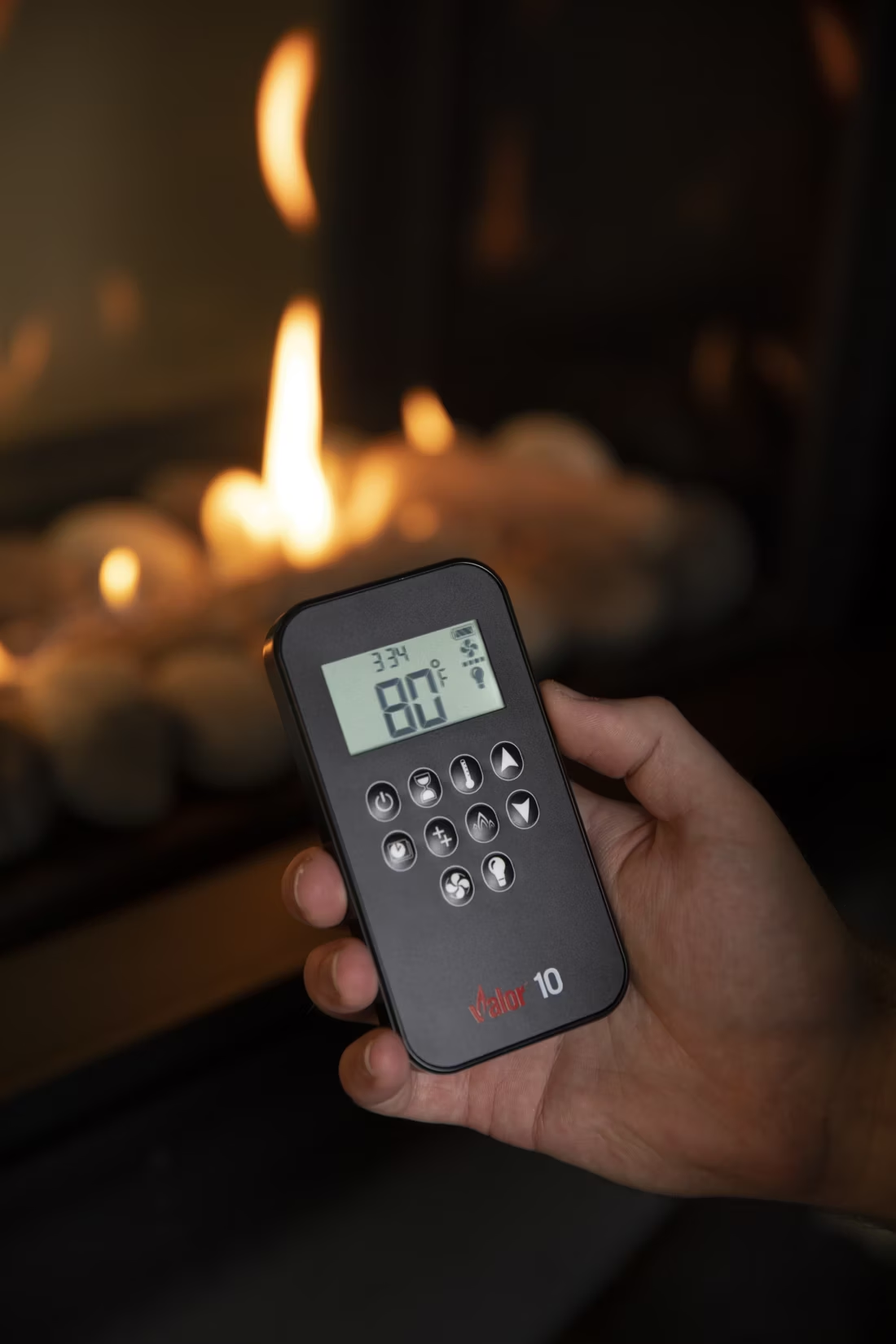
Most modern gas fireplaces will, which matters in the Delta—ice events and severe spring storms can knock out power through Delta Electric Power Association's lines for a stretch. Units with IPI (intermittent pilot ignition) run off a small battery backup that kicks in automatically when the power drops, so the fireplace still lights on demand. Valor fireplaces go a step further: their pilot generates its own electricity through the thermocouple, so there's no battery to remember at all. Ask your local dealer about the ignition system on any unit you're considering if outage backup matters to you.
What's the difference between a gas fireplace, gas insert, and gas stove?
A gas fireplace is a fully built-in unit framed into a wall—the right call for new construction or a major remodel. A gas insert is built to slide into an existing masonry fireplace opening, which is the common route for Sharkey County's older farmhouses that already have a wood-burning hearth. A gas stove is a freestanding cast-iron or steel unit that sits on the floor on its own hearth pad, useful if you don't have an existing fireplace and don't want to frame one in. For most homes in the county with an existing fireplace, an insert is the simplest and most cost-effective upgrade.
Do I need a permit to install a gas fireplace in Sharkey County?
Sharkey County, with a population under 3,300, doesn't maintain a dedicated building permit office the way larger counties do. Gas line work still needs to be done by a licensed gas-fitter or propane technician regardless of jurisdiction, and within the town limits of Rolling Fork you may need to check with the town for any local permitting requirements. A reputable installer will know exactly what's required for your specific address and handle the paperwork—it's one more reason to work with a certified dealer rather than a handyman for gas appliance installs.
What's the difference between vented and vent-free gas fireplaces?
Vented (direct-vent) gas fireplaces pull combustion air from outside and exhaust the byproducts back outside through a sealed pipe—clean, safe, and universally code-compliant. Vent-free units burn directly into the room air without any outside venting; they're legal in Mississippi but release water vapor and small amounts of combustion byproducts indoors, and require correct room-sizing and oxygen-depletion sensors to run safely. In Sharkey County's humid Delta climate, that extra moisture from a vent-free unit is worth thinking about—direct-vent units are generally the better fit and the more common choice among local installers.
How often should my gas fireplace be serviced?
Plan on an annual inspection, ideally before the first cold snap hits in late fall. A technician checks the burner, pilot assembly, gas connections, and venting, and cleans the glass and interior—quick work compared to a wood chimney sweep, but still important for safety and efficiency. Given how few gas appliance techs are based directly in Sharkey County, most homeowners schedule this alongside a technician's visit from Vicksburg or Greenville, sometimes bundling it with other Delta-area service calls to avoid a separate trip charge.
Gas vs. wood—which makes more sense for a Delta home?
Wood is genuinely cheap and abundant here—oak, pine, and pecan are all common locally, and plenty of Sharkey County properties already have a woodlot or a neighbor who does. Wood also keeps working with no propane tank or power needed. Gas wins on convenience: instant heat with no hauling, stacking, or ash cleanup, and a cleaner look for a living room that doesn't need to double as primary heat given how mild winters here usually run. Given the short, mild heating season and how little a fireplace actually needs to carry the load, most Sharkey County homeowners lean gas for everyday use and keep wood, if anything, as a backup for extended outages.
Why is a fireplace insert so efficient?
An insert does two things: it seals the chimney completely, so you stop losing air you already paid to heat, and it radiates warmth into the room through the firebox and glass. Most add a heat-exchange fan that pulls cool room air underneath, wraps it around the hot firebox, and pushes it back out warm. Your home is more efficient before you've even lit the first fire.
Why is my open fireplace making my house colder?
Open fireplaces suck—literally. As the fire burns, it consumes air your furnace already paid to heat and pulls it out through the chimney, so the house is actually colder after the fire goes out than before you lit it. An insert fixes this: it seals the chimney, puts fixed glass across the front, and turns that hole in your house into a real heat source.
Can I install a fireplace myself?
If you're putting a fire in your house on purpose, it's best to work with an expert. Unless you're genuinely experienced in framing, gas line, vent pipe, and the national code on clearances to combustibles, have a professional do it—and ideally the same company that sells you the fireplace, so warranty, service, and liability all live under one roof.
Can a fireplace actually lower my heating bill?
Yes—by creating a comfort zone. A furnace heats every square foot of the house just to warm the one room you're in; a gas fireplace on low burns roughly a sixth of the gas a typical furnace does. Set the furnace around 55–60 degrees as a baseline, then heat the rooms your family actually uses. Families who heat this way commonly save $20–$60 a month.
Find your gas fireplace in Sharkey County.
Tell us a bit about your home in Rolling Fork, Cary, Anguilla, or elsewhere in Sharkey County, and we'll match you with a trusted local dealer and send over a free Project Guide & Parts List—the exact parts, including the vent kit, for your gas fireplace project.
Find Your Fireplace →