
Electric Fireplaces Built for Rankin County's Short, Mild Winters.
With winter lows averaging 37°F and a heating season that's short and mild overall, Rankin County doesn't need a furnace-grade fire—it needs ambiance most nights and a little real warmth on the handful of genuinely cold ones. Find the right electric unit and connect with a trusted local dealer.
Every Project Starts From One of These Five Situations
Why electric makes sense in a climate that barely needs heat.
Rankin County sits on the east side of the Jackson metro—Brandon, Pearl, Flowood, Richland, and Florence—squarely in climate zone 3A, hot and humid with mild winters. With a heating season that's short and mild overall, the county's heating load is a fraction of what a place like Duluth, MN or Fargo, ND racks up in a single hard month. Most Rankin County homes run central HVAC sized for summer cooling, which means those systems are often overkill for warmth and sluggish to respond on the handful of January nights that dip into the 20s. That gap—occasional real cold, mostly mild everything else—is exactly where an electric fireplace earns its keep.
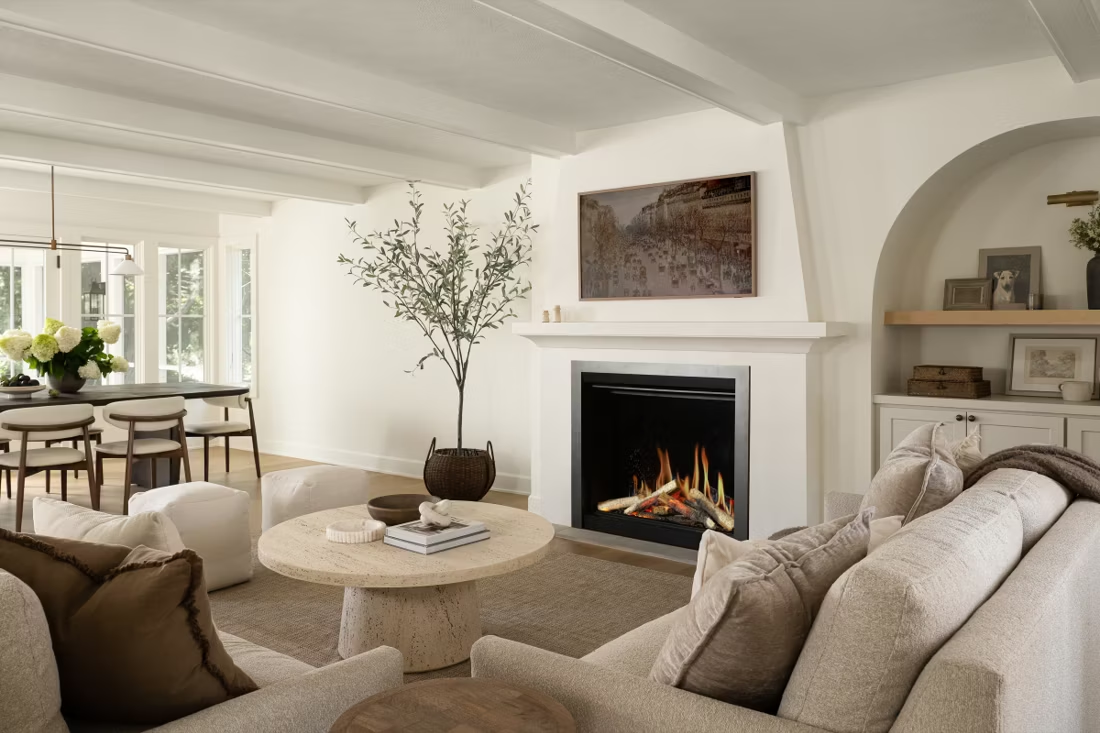
Because electric units don't need a chimney, gas line, or exterior venting, they go anywhere: a bonus room addition in Flowood, a primary suite in a newer Brandon subdivision, or a converted masonry fireplace in an older Pearl or Richland home that rarely gets used for real fires anymore. Entergy Mississippi's electric service covers the county reliably, so plug-in and hardwired units run without the propane tank or gas-line coordination a gas fireplace requires. The tradeoff is heat output—electric is zone heat and ambiance, not a whole-home solution—but for a county where the AC runs far more months than the furnace, that's usually the right fit.
Three steps. No salesperson until you're ready.
Tell us about your project
Your zip code, your situation, and the fuel you're leaning toward—or let the answers point you to one.
See what's actually available
The brands dealers within 100 miles genuinely carry—real options, never a catalog mirage.
Get your dealer & Project Guide
A trusted local dealer, plus the free Project Guide & Parts List that names every component of the job.
Frequently Asked Questions
How much does an electric fireplace installation cost in Rankin County?
Costs vary a lot by unit type. A freestanding or wall-mounted plug-in electric fireplace typically runs $150 to $600 for the unit itself, with little to no installation cost beyond an outlet. A built-in linear electric fireplace set into a custom mantel or wall surround—a popular choice in newer Brandon and Flowood homes—usually lands between $2,000 and $5,000 installed, including carpentry and a dedicated electrical circuit if the unit is hardwired. Converting an existing masonry fireplace with an electric insert generally falls in the middle of that range, since there's no chimney or gas line work involved, just fitting the insert and running power.
Do I need a permit to install an electric fireplace in Rankin County?
A simple plug-in electric fireplace that uses a standard outlet doesn't require a permit. If you're hardwiring a built-in unit or adding a dedicated 120V or 240V circuit, that electrical work typically needs a permit through your local municipality—Brandon, Pearl, Flowood, or Richland each handle their own—or the county building department if you're in an unincorporated area. Because there's no venting or gas line involved, electric fireplace permitting in Rankin County is usually far simpler than a wood or gas installation, and most local dealers or electricians handle the paperwork as part of the job.
What type of electric fireplace works best for Rankin County homes?
For newer construction in Flowood and Brandon subdivisions without an existing fireplace, a built-in linear electric unit set into a custom wall or mantel is the most popular choice—it reads as a real architectural feature rather than an accessory. For older Richland, Pearl, or Florence homes with a rarely-used masonry fireplace, an electric insert is often the better call: it slides into the existing opening, needs no chimney or venting, and turns a fireplace that's mostly decorative into something that actually gets used. Wall-mounted and freestanding units suit additions, sunrooms, or bonus rooms where you want supplemental warmth without any construction.
Will an electric fireplace actually heat my house?
Not the whole house, and that's by design. Most electric fireplace inserts put out around 4,000 to 5,000 BTU, enough to comfortably warm a single room or open living area—which lines up well with Rankin County's climate, since central HVAC already covers the bulk of the season and only the occasional cold snap night calls for extra heat. Think of it as zone heat: it takes the chill off a room fast, without running the whole system harder than it needs to on a 55-degree evening.
I have an old wood-burning fireplace I never use—can I convert it to electric?
Yes, and it's one of the more common projects for older homes in Richland, Pearl, and Florence built before central HVAC was standard. An electric insert fits into the existing masonry opening and plugs in or hardwires to a nearby circuit—no chimney sweep, no liner, no venting required. It's a straightforward way to get a working, attractive fireplace back without the upkeep of a flue that, given Rankin County's mild winters, probably wasn't seeing much use anyway.
Electric vs. gas fireplace—which is right for my home?
Gas fireplaces give you a real flame and noticeably more heat output, which matters more in colder climates than Rankin County's—but they require a gas line or propane tank and proper venting, which adds cost and coordination. Electric units skip all of that: no gas line, no venting, lower upfront cost, and a flip-of-a-switch flame effect that looks convincing on most modern models. For a county averaging 37°F winter lows and a short heating season, electric usually covers the ambiance-and-occasional-warmth need without the added infrastructure gas requires. If you already have gas service for a water heater or range, a gas fireplace is still worth considering for its stronger heat output.
What about a wood-burning stove instead of electric?
Wood stoves are uncommon in Rankin County, and for good reason—with a short, mild heating season overall and winter lows averaging 37°F, there simply isn't the sustained cold that makes wood heat practical the way it is farther north. Some rural homeowners outside Brandon and Pelahatchie still keep a wood stove or fireplace going with local oak, pine, or pecan for tradition, ambiance, or occasional cold-snap backup, but it's the exception rather than the rule. For most Rankin County households, an electric fireplace delivers the same ambiance without cutting, stacking, or storing firewood for a heating season that barely arrives.
Will my electric fireplace work during a power outage?
No—electric fireplaces run entirely on household power, so they shut off along with everything else during an outage. Rankin County doesn't see frequent outages, but ice storms and severe thunderstorms occasionally knock out Entergy Mississippi service for a day or more. If backup heat during outages is a priority, a vented gas or propane unit with battery-backed ignition is a better fit as a secondary system; electric is best thought of as your everyday ambiance and supplemental heat source, not storm-day insurance.
How do I pick the right size and style of electric fireplace?
Start with the room, not the wall. A small den or bonus room in a Pearl or Florence home does fine with a 30-to-40-inch insert or wall-mount putting out around 4,000 BTU; a larger open-concept living area in a newer Flowood build often calls for a 50-to-60-inch linear unit for the visual scale as much as the heat. Because electric fireplaces don't need venting clearances the way wood or gas units do, placement is flexible—a local dealer can walk your space and match unit size, mantel style, and mounting height to the room rather than to code-driven venting constraints.
Can I put a TV above my fireplace?
Yes—with an asterisk. Fireplaces are hot and TVs don't like heat. Either put a mantel between them to deflect rising warmth, or choose a fireplace with heat-management technology that creates a cool zone on the wall above—the wall stays around 125 degrees, barely warm, while the room still gets full heat. If you like clean lines and don't want a mantel, heat management is the answer.
Does an electric fireplace need a vent or chimney?
No—that's its superpower. An electric fireplace needs a wall and an outlet, period. No vent pipe, no gas line, no clearances to design around, which is why it works in bedrooms, offices, apartments, and walls where venting a gas or wood unit would be impractical or impossible. Installation is typically the simplest and least expensive of any fireplace type.
How much should I budget for a fireplace?
For an average home—covering the fireplace, the vent pipe, and basic installation—a budget between $3,900 and $5,500 gives you a lot of options across wood, gas, and pellet. By the time you add finish work, gas line, and electrical, the average complete installation lands between $5,000 and $12,000 all-in. In a remodel or new build, a good rule is to put about 2.5% of the total project cost toward the fireplace.
Can a fireplace actually lower my heating bill?
Yes—by creating a comfort zone. A furnace heats every square foot of the house just to warm the one room you're in; a gas fireplace on low burns roughly a sixth of the gas a typical furnace does. Set the furnace around 55–60 degrees as a baseline, then heat the rooms your family actually uses. Families who heat this way commonly save $20–$60 a month.
Stove and Fireplace Dealers in Rankin County
Listings include WhyFire partner dealers, dealers we have verified as authorized for the brands we recommend, and established local businesses that carry hearth products. Every listing shows which one it is. The ones marked Preferred run on WhyFire's software, so they can show you real pricing and book your appointment right here. No manufacturer pays for placement. How we verify dealers →
Van's Sporting Goods
Blossman Gas - Jackson
Lampton-Love Gas Co., Inc.
Neill Gas, Inc.
Lakeland Fireplaces LLC
Ferrell Gas- Florence
Builder’s Specialties Inc.
Callaways Yard And Garden
Madison Fireplace
Lampton-Love Of Pelahatchie, Inc.
Santa's Friend Chimney Service
Blossman Gas - Crystal Springs
Neill Gas
Find your electric fireplace in Rankin County.
Tell us about your room and what you're hoping to add—ambiance, supplemental heat, or both—and we'll match you with a trusted local Rankin County dealer and send over a free Project Guide & Parts List for your project.
Find Your Fireplace →