
Find your fireplace in Rankin County, Mississippi.
Gas and electric hearths are the backbone of this county's fireplace market, with wood and pellet options for the rare homeowner who wants them. Pick a fuel and get matched with a local dealer who actually installs it here.
Every Project Starts From One of These Five Situations
Mild winters, 2,222 heating degree days, and a hearth market built on gas and electric.
Rankin County sits just east of Jackson across the Pearl River and the Ross Barnett Reservoir, wrapping suburban and small-town communities like Brandon, Pearl, Flowood, Richland, Florence, and Pelahatchie. This is climate zone 3A—hot, humid summers and short, mild winters—with an average winter low of 37°F and just 2,222 heating degree days a year, roughly a third of what a homeowner in Minneapolis, Minnesota works through each winter. The heating season here is brief enough that few homes are built around a hearth sized to carry them through sustained hard cold.
That climate reality shows up directly in what actually gets installed. Wood stoves and inserts are not part of the standard hearth market in Rankin County—oak, pine, and pecan are common in backyard fire pits and the occasional rural fireplace, but almost nobody here plans a winter around wood heat the way a homeowner in a colder climate zone would. Pellet stoves are similarly uncommon; regional producers like Greenway Renewable Energy (a Mississippi-based pellet mill), Lignetics, and Hamer Pellet Fuel supply the broader Southeast, but local demand for pellet appliances in this county is minimal. Gas and electric are the two fuels that carry Rankin County's hearth market in practice—gas fireplaces and inserts for ambiance and genuine supplemental heat on the occasional 20-degree night, and electric units for lake houses around the Reservoir, primary bedrooms, and anywhere a homeowner wants fire without venting. There's no air-quality non-attainment designation and no seasonal burn-ban here, which simplifies permitting compared with counties further north or west.
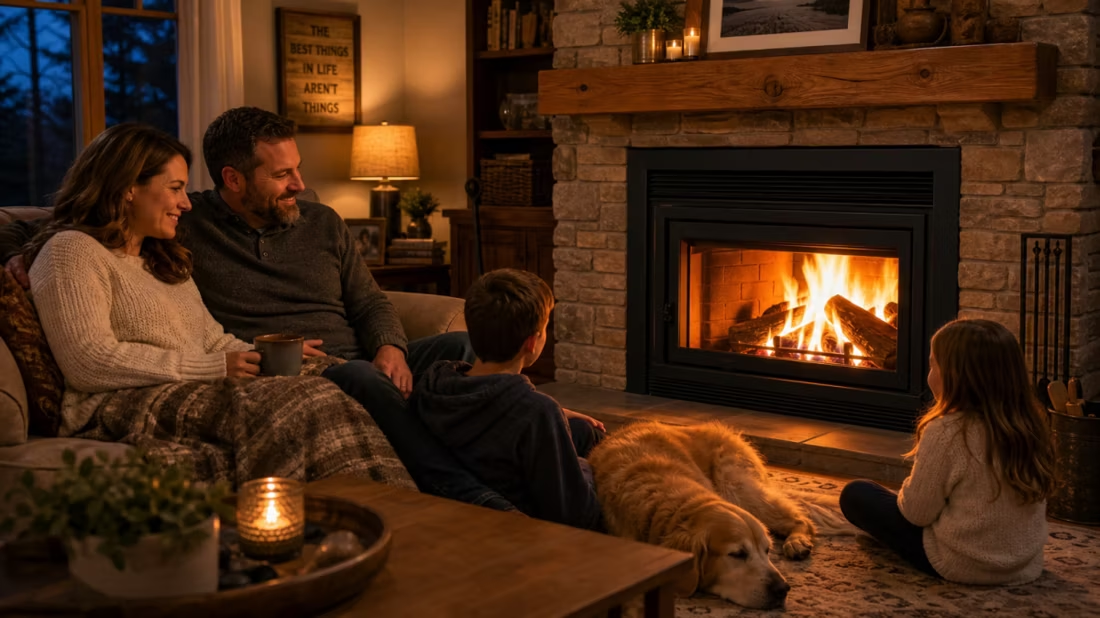
Four fuels. One honest answer for Rankin County.
Three steps. No salesperson until you're ready.
Tell us about your project
Your zip code, your situation, and the fuel you're leaning toward—or let the answers point you to one.
See what's actually available
The brands dealers within 100 miles genuinely carry—real options, never a catalog mirage.
Get your dealer & Project Guide
A trusted local dealer, plus the free Project Guide & Parts List that names every component of the job.
Frequently Asked Questions
Which fireplace fuel actually makes sense in Rankin County?
For most homeowners here it comes down to gas or electric. Gas fireplaces and inserts give you real flame with the push of a button, size well for the occasional cold front that pushes lows into the 20s, and don't require any wood storage or ash cleanup. Electric fireplaces work well as a secondary heat source in a bedroom, sunroom, or lake house around the Ross Barnett Reservoir, and they install without venting, which matters in a lot of Rankin County's newer construction. Wood and pellet appliances exist in the county but are genuinely niche—worth discussing with a dealer if you specifically want the look and feel of a wood fire, but not the default recommendation for a Rankin County climate zone 3A winter.
Do wood-burning fireplaces make sense in a climate this mild?
They're uncommon, and it's worth being upfront about that. With an average winter low of 37°F and only 2,222 heating degree days, a wood stove sized for serious overnight heat output is more capacity than almost any Rankin County home needs. That said, a decorative wood-burning fireplace or a small stove burning local oak or pine still shows up in some rural properties and older homes for the ambiance, and pecan wood—common from local orchards—is a favorite among the few homeowners who do burn wood here. If that's the look you want, a local dealer can size a unit appropriately, but plan on it as a supplemental or aesthetic feature rather than your home's primary heat source.
Can I still get a pellet stove installed in Rankin County?
You can, though it's a special-order situation rather than something most local retailers stock on the floor. Regional pellet producers—Greenway Renewable Energy right here in Mississippi, along with Lignetics and Hamer Pellet Fuel—keep bagged pellets available across the Southeast, so fuel supply isn't the obstacle. The obstacle is simply demand: with such a mild heating season, few Rankin County homeowners choose a pellet stove over a gas fireplace or electric unit. If you have a specific reason to want one—a family cabin further north, a taste for that particular heat, or an all-electric home where you want a non-electric backup—a hearth retailer can special-order and install one, just expect a longer lead time than a gas or electric project.
Do I need a permit for a gas or electric fireplace installation in Rankin County?
Yes for gas, usually not for electric. A gas fireplace or insert requires a permit through your local building department—whether that's unincorporated Rankin County or a municipal office in Brandon, Pearl, or Flowood—along with a licensed gas fitter to make the line connection safely. Electric fireplaces typically skip the permit process entirely if you're plugging into an existing outlet; a built-in electric unit that needs a new dedicated circuit will need an electrical permit instead. There's no air-quality curtailment program in Rankin County to plan installation timing around, which is one less thing to coordinate compared with counties that have seasonal burn restrictions.
Does it matter which town in Rankin County I'm in for installation and service?
Most hearth retailers and service techs are based in or near the Brandon-Pearl-Flowood corridor, which is the densest part of the county, but they routinely run service calls out to Richland, Florence, and Pelahatchie. Expect a modest trip fee the further you are from that central corridor, and expect scheduling to be more flexible here than in colder climates—there's no hard curtailment season forcing everyone to book at once, so you generally have more room to plan a gas fireplace install or an annual inspection around your own timeline rather than the weather's.
What does a gas or electric fireplace installation typically cost in Rankin County?
Gas fireplaces, inserts, and stoves generally run $4,500–$11,000 depending on whether you're running a new gas line or converting an existing masonry fireplace to gas. Electric fireplaces are the more affordable route—$200–$3,000 for the unit itself, plus $400–$1,200 in labor if you're adding a built-in unit that needs a dedicated circuit rather than a plug-and-play model. If you do go the niche route with a wood or special-order pellet unit, budget similarly to a gas install once venting and any masonry work are factored in—your local dealer can walk through exact numbers for your specific property.
What is an in-home preview and do I need one?
It's a visit where a hearth professional measures your space, confirms the model you picked actually works in your home, and walks the specs—framing, gas line, venting, finish work—before anything is ordered. Some details you just can't know until you see the house. Never make a down payment without one; it's the single most-skipped step that burns buyers.
Can a fireplace actually lower my heating bill?
Yes—by creating a comfort zone. A furnace heats every square foot of the house just to warm the one room you're in; a gas fireplace on low burns roughly a sixth of the gas a typical furnace does. Set the furnace around 55–60 degrees as a baseline, then heat the rooms your family actually uses. Families who heat this way commonly save $20–$60 a month.
Should the dealer who sells my fireplace also install it?
Ideally, yes. A fireplace project involves vent pipe, gas line, electrical, and often tile or stone. Hire three or four separate trades and you own the liability and the game of telephone between them. One company selling and installing means one accountable party, start to finish—ask about factory training, on-time completion records, and what happens if an inspection fails.
Does a fireplace add value to my home?
On average, a fireplace adds back to the home about the same amount you spent installing it. Add the monthly savings from heating the rooms you actually use instead of the whole house—often hundreds of dollars a year—and the value case is strong before you even count what a fire does for how your family uses the room.
Stove and Fireplace Dealers in Rankin County
Listings include WhyFire partner dealers, dealers we have verified as authorized for the brands we recommend, and established local businesses that carry hearth products. Every listing shows which one it is. The ones marked Preferred run on WhyFire's software, so they can show you real pricing and book your appointment right here. No manufacturer pays for placement. How we verify dealers →
Van's Sporting Goods
Blossman Gas - Jackson
Lampton-Love Gas Co., Inc.
Neill Gas, Inc.
Lakeland Fireplaces LLC
Ferrell Gas- Florence
Builder’s Specialties Inc.
Callaways Yard And Garden
Madison Fireplace
Lampton-Love Of Pelahatchie, Inc.
Santa's Friend Chimney Service
Blossman Gas - Crystal Springs
Neill Gas
Get matched with a local Rankin County dealer.
Pick your fuel below and we'll put together a free Project Guide & Parts List—the right unit, the vent kit it needs, and the local Rankin County dealer we recommend for your project.
Find Your Fireplace →