
Steady, clean heat for Neshoba County's mild winters.
Clean, low-maintenance heat for Neshoba County's mild east-Mississippi winters—from Philadelphia to the rural stretches around the Pearl River. Find the right pellet stove or insert, and connect with a trusted local dealer.
Every Project Starts From One of These Five Situations
Pellet heat for a manageable winter season.
Neshoba County sits in the rolling hills of east-central Mississippi, home to Philadelphia, the Mississippi Band of Choctaw Indians, and the Neshoba County Fair grounds. Winters here are mild by national standards—average lows sit around 35°F and the county sees only a light overall heating load each year, a fraction of what a place like Duluth, Minnesota sees in a single hard winter. That doesn't mean heat isn't needed; it means most Neshoba County homes are looking for efficient, controllable warmth for a handful of genuinely cold weeks each winter, plus the occasional ice storm, rather than round-the-clock furnace-level output.
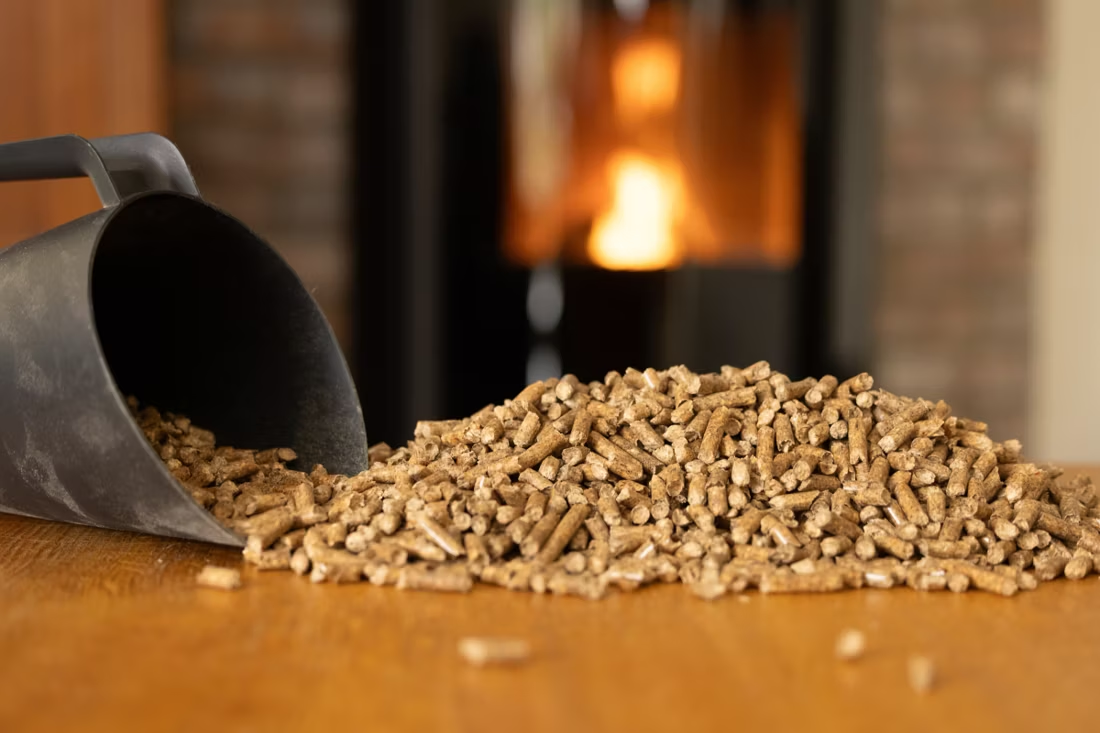
That's where pellet stoves fit well. They deliver steady, thermostat-controlled heat with none of the splitting, stacking, or ash cleanup that comes with cordwood—a real advantage in a county where oak, pine, and pecan are more commonly seen in fence rows, smokehouses, and fair-grounds cookouts than in the woodshed. Bagged pellets from brands like Lignetics, Hamer Pellet Fuel, and Greenway Renewable Energy are sold through farm and feed stores and hearth dealers across the region, so fuel is easy to keep on hand. With no local air quality restrictions on burning, Neshoba County homeowners can run a pellet stove daily through the winter without worrying about curtailment days or smoke ordinances.
Three steps. No salesperson until you're ready.
Tell us about your project
Your zip code, your situation, and the fuel you're leaning toward—or let the answers point you to one.
See what's actually available
The brands dealers within 100 miles genuinely carry—real options, never a catalog mirage.
Get your dealer & Project Guide
A trusted local dealer, plus the free Project Guide & Parts List that names every component of the job.
Frequently Asked Questions
How much does a pellet stove installation cost in Neshoba County?
Most pellet stove installations in Neshoba County run in the neighborhood of $3,000 to $6,000, with the total depending on the stove model, whether you're venting through an exterior wall or an existing chimney, and whether any hearth pad or floor protection work is needed. Because Neshoba County's mild winters mean many homeowners are installing a pellet stove as a supplemental heat source rather than a whole-home furnace replacement, a mid-size unit venting through a side wall is the most common—and most affordable—setup. Homes converting an old masonry fireplace to a pellet insert, which requires a vent liner run up the existing chimney, tend to land toward the higher end of that range. A local dealer can give you a firm number after seeing your home.
What size pellet stove do I need for my home?
Given Neshoba County's mild climate—average winter lows around 35°F and only a light overall heating load each year—most homes here don't need the largest pellet stoves on the market. A small to mid-size unit rated for 1,000 to 1,800 square feet handles the main living area of most Philadelphia and rural Neshoba County homes comfortably, since the stove is usually running to take the edge off a cold front rather than fighting single-digit nights the way it would in the upper Midwest. Larger or older farmhouses with less insulation, or homeowners who want the pellet stove to be their primary heat source, should size up and talk with a local dealer about hopper capacity and burn-time needs.
Where can I buy wood pellets in Neshoba County?
Bagged pellets are typically available through farm and feed stores, hardware stores, and hearth dealers serving the Philadelphia area, with regional brands like Lignetics, Hamer Pellet Fuel, and Greenway Renewable Energy commonly stocked across east Mississippi. Because Neshoba County's mild winters keep overall pellet demand lower than in colder states, stock can run thinner by late winter at some retailers—buying a season's supply in the fall, before the first cold fronts move through, is the safer play. Your local hearth dealer can usually point you toward the most reliable nearby pellet source and help you estimate how many tons a typical winter will use for your stove size.
Do I need a permit to install a pellet stove in Neshoba County?
Most pellet stove installations require a building permit, particularly if new venting is being run through an exterior wall or an existing chimney is being modified. Inside the city of Philadelphia, permits are handled through the city building department; in unincorporated Neshoba County, they go through the county building department. Pellet stoves vent through smaller-diameter pipe than wood stoves and don't require the same masonry chimney clearances, which usually makes the permitting process faster. Most local dealers handle the permit paperwork as part of the installation, so it's rarely something homeowners have to manage themselves.
Will my pellet stove work during a power outage?
No—not without a battery backup or generator. Pellet stoves rely on an electric auger to feed fuel and a blower to distribute heat, so a power outage stops the stove even with pellets in the hopper. This matters in Neshoba County, where ice storms occasionally knock out power across east-central Mississippi for a day or more. If backup heat during outages is a priority, a battery backup unit—sold by most pellet stove manufacturers—or a small generator can keep the stove running, or homeowners can pair a pellet stove for everyday convenience with a wood-burning option as true storm backup. Ask your local dealer about battery backup compatibility for the specific model you're considering.
What's the best pellet stove for Neshoba County's climate?
Because Neshoba County's winters are mild—average lows near 35°F rather than the sub-zero nights of the upper Midwest—homeowners generally do better with a smaller, more efficient stove with a wide turn-down range, meaning it can run on low without cycling on and off constantly, rather than a large-capacity unit built for extreme cold. Mid-size units from mainstream hearth brands, fed by pellets from suppliers like Lignetics or Hamer Pellet Fuel, handle the county's shoulder-season chill and occasional hard freeze comfortably. A local dealer can match hopper size and BTU output to your square footage so the stove isn't oversized for a Mississippi winter.
How often does a pellet stove need to be cleaned and serviced?
Pellet stoves need more frequent attention than gas but less than wood: plan on emptying the ash pan every few days during regular use, cleaning the burn pot weekly, and having the venting and exhaust fan professionally serviced once a year—ideally in late summer before the first cool fronts arrive in east Mississippi. Because Neshoba County's burning season is shorter than in colder states, most local homeowners get by on lighter annual maintenance than someone running a stove nonstop for five months. Local hearth dealers and service techs in the Philadelphia area typically handle the annual service call.
Pellet stove vs. gas fireplace—which is right for my home?
Gas fireplaces offer instant on-off heat with no fuel to load, but they require either a natural gas line or a propane tank, and installation costs can run higher, especially where gas lines have to be extended. Pellet stoves need periodic hopper loading and bag storage, but they burn a renewable, regionally available fuel and don't tie you to a propane contract or a gas utility's service area. In Neshoba County, where much of the county sits outside dense natural gas coverage, pellet stoves are often the simpler, cheaper path to added heat for homes not already plumbed for gas. Homes already set up with natural gas or an existing propane tank may find a gas insert more convenient. A local dealer can walk through the tradeoffs for your specific home.
Pellet stove vs. wood stove—which is right for Neshoba County?
Wood stoves burn free or low-cost fuel—oak and pine are abundant across Neshoba County—work without electricity, and are the better choice for true storm backup heat. Pellet stoves are more convenient day to day, with no splitting or stacking, less ash, and steadier heat output, but they depend on electricity to run and on a steady bagged-pellet supply from brands like Lignetics, Hamer Pellet Fuel, or Greenway Renewable Energy. Given the county's mild winters, either fuel comfortably covers most homes' heating needs; the choice usually comes down to whether you value the low-maintenance convenience of pellets or the self-sufficiency and lower running cost of wood, especially if you have access to your own timber or a woodlot. Some Neshoba County homeowners run both—a pellet stove for daily convenience and a wood stove or fireplace as backup.
Why is my open fireplace making my house colder?
Open fireplaces suck—literally. As the fire burns, it consumes air your furnace already paid to heat and pulls it out through the chimney, so the house is actually colder after the fire goes out than before you lit it. An insert fixes this: it seals the chimney, puts fixed glass across the front, and turns that hole in your house into a real heat source.
Why is a fireplace insert so efficient?
An insert does two things: it seals the chimney completely, so you stop losing air you already paid to heat, and it radiates warmth into the room through the firebox and glass. Most add a heat-exchange fan that pulls cool room air underneath, wraps it around the hot firebox, and pushes it back out warm. Your home is more efficient before you've even lit the first fire.
Can I install a fireplace myself?
If you're putting a fire in your house on purpose, it's best to work with an expert. Unless you're genuinely experienced in framing, gas line, vent pipe, and the national code on clearances to combustibles, have a professional do it—and ideally the same company that sells you the fireplace, so warranty, service, and liability all live under one roof.
How much should I budget for a fireplace?
For an average home—covering the fireplace, the vent pipe, and basic installation—a budget between $3,900 and $5,500 gives you a lot of options across wood, gas, and pellet. By the time you add finish work, gas line, and electrical, the average complete installation lands between $5,000 and $12,000 all-in. In a remodel or new build, a good rule is to put about 2.5% of the total project cost toward the fireplace.
Stove and Fireplace Dealers in Neshoba County
Pellet Brands Stocked Around Neshoba County
Manufacturers will point you to the nearest stocking dealer.
Find your pellet stove in Neshoba County.
Tell us a bit about your home and we'll match you with the right pellet stove or insert—and connect you with a trusted local dealer who can put together your free Project Guide & Parts List.
Find Your Fireplace →