
Warm up fast on the coldest Piney Woods nights.
Lawrence County winters are mild most of the year, but when a cold front rolls off the Gulf and temperatures drop into the 20s, a gas fireplace gives instant heat without stacking wood. Find the right unit and connect with a trusted local dealer.
Every Project Starts From One of These Five Situations
Convenient heat for a mild but unpredictable winter.
Lawrence County sits in Mississippi's Piney Woods along the Pearl River, in climate zone 3A—long, humid summers and winters that stay mild by national standards but still bring sharp cold snaps and the occasional ice event that can knock out power for days. With just under 2,000 residents in and around the county seat of Monticello, homes here range from older wood-frame farmhouses to newer construction, and heating decisions tend to be practical: something that works reliably without a lot of fuss, and that keeps working when the power lines come down.
Natural gas service is generally limited to in-town areas around Monticello, while propane is the standard fuel across most of rural Lawrence County. Either way, a gas fireplace or insert delivers heat at the flip of a switch or the press of a remote—no hauling oak, pine, or pecan firewood, no ash to clean up, and with the right ignition system, heat that keeps running even when an ice storm takes out the grid. For a lot of Lawrence County homeowners, gas ends up as the everyday heat source, with a wood stove or fireplace kept around for backup or ambiance.
Three steps. No salesperson until you're ready.
Tell us about your project
Your zip code, your situation, and the fuel you're leaning toward—or let the answers point you to one.
See what's actually available
The brands dealers within 100 miles genuinely carry—real options, never a catalog mirage.
Get your dealer & Project Guide
A trusted local dealer, plus the free Project Guide & Parts List that names every component of the job.
Frequently Asked Questions
How much does a gas fireplace installation cost in Lawrence County?
Installations in Lawrence County typically run between $3,500 and $9,500, depending on the unit, whether you're on natural gas or propane, and how much gas line or venting work is involved. A direct-vent insert going into an existing masonry fireplace with gas already run to the house sits toward the lower end. A new built-in fireplace in a remodel—with fresh gas line work and a propane tank set if you're outside the Monticello natural gas area—runs higher. A local dealer will give you a firm number after seeing the space.
Can I convert my existing wood fireplace to gas?
Yes, and it's a common project for older Lawrence County homes that still have a masonry fireplace built for wood. A gas insert typically slides into that existing opening, using a stainless liner run up the original chimney for venting. Most conversions land between $3,500 and $8,000 depending on whether you're running propane or natural gas and whether new gas line work is needed. You keep the look of the original hearth while gaining instant, consistent heat instead of managing a wood fire.
Do I need natural gas, or can I run a fireplace on propane?
Either works fine. Natural gas service is generally available only in and around Monticello; most of rural Lawrence County runs on propane, either from an existing tank or a new tank set by a local propane supplier. Nearly every gas fireplace, insert, or stove on the market can be configured for propane or natural gas—your installer sets the correct orifice and regulator for whichever fuel you have. If you're not sure what's available at your address, that's one of the first things a local dealer will check before recommending a unit.
Will my gas fireplace still work if the power goes out?
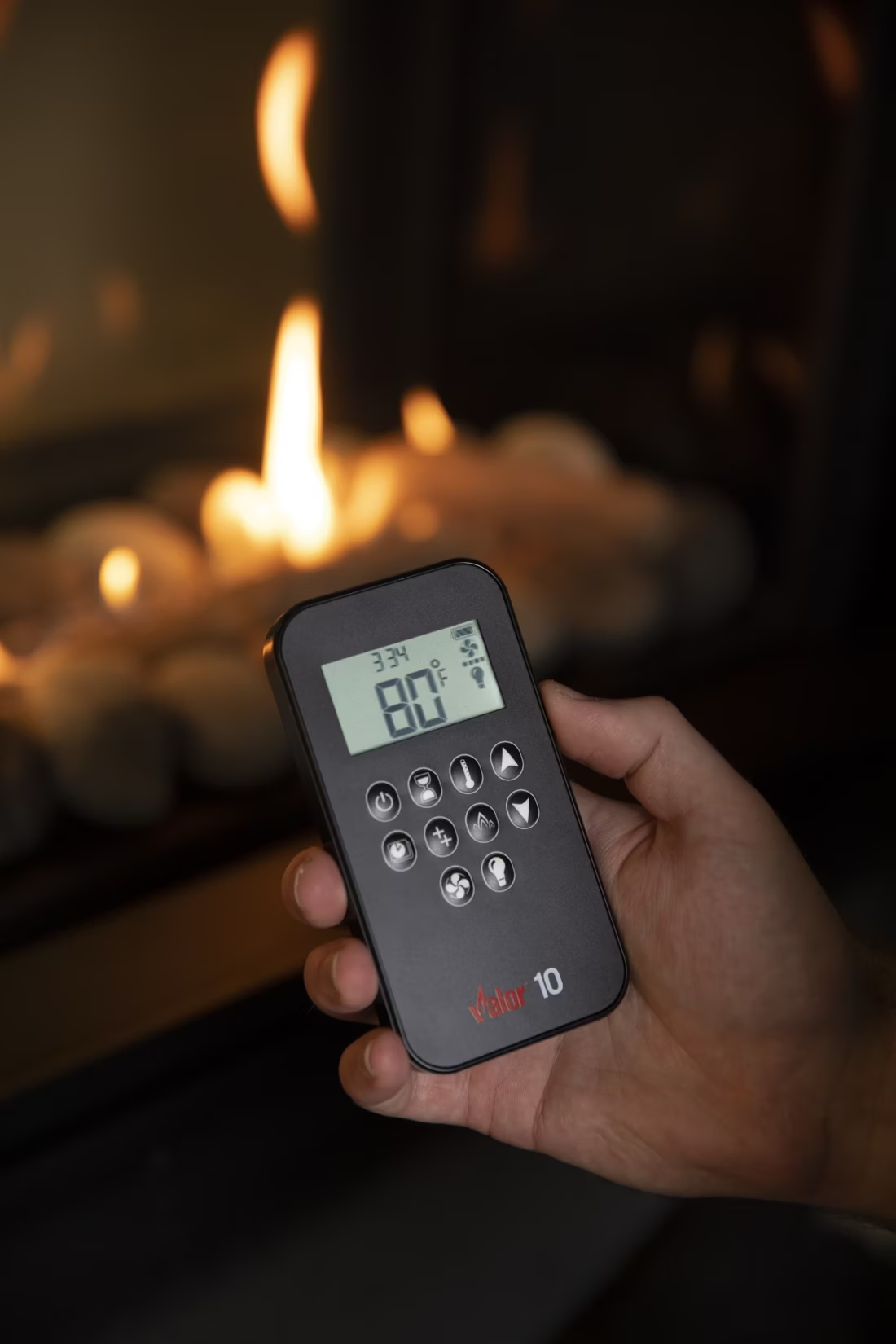
Most modern gas fireplaces will, which matters in Lawrence County when a winter ice storm or Gulf-driven storm system takes down power lines. Units with intermittent pilot ignition (IPI) run on a small battery backup that kicks in automatically and lets you light the fireplace with a remote or wall switch even with no electricity. Valor fireplaces go a step further—the pilot's thermocouple generates its own electricity, so there's no battery to remember or replace. Ask your dealer about the ignition system on any unit you're considering if backup heat during an outage matters to you.
What's the difference between a gas fireplace, gas insert, and gas stove?
A gas fireplace is a built-in unit framed into a wall, typically used in new construction or a remodel. A gas insert is built to slide into an existing masonry fireplace opening, turning a drafty wood-burning hearth into a sealed, efficient heat source that vents through the original chimney. A gas stove is a freestanding cabinet-style unit that sits out in the room like a wood stove but runs on gas. Most Lawrence County homeowners with an older fireplace already in the house go with an insert; new rooms or additions without an existing chimney usually call for a built-in fireplace or a freestanding stove instead.
Do I need a permit to install a gas fireplace in Lawrence County?
Generally yes—new gas fireplace and insert installations require a building permit through the Lawrence County Building Department, and any new gas line work has to be run by a licensed gas-fitter. Most local hearth dealers coordinate the permit and the gas line work as part of the installation, so it's not something you have to manage yourself. If you're inside Monticello city limits, confirm with the city whether a separate permit applies before work starts.
What's the difference between vented and vent-free gas fireplaces?
Vented (direct-vent) gas fireplaces pull combustion air from outside and exhaust the byproducts back outside through a sealed pipe—they're the cleanest and most universally code-compliant option. Vent-free units burn gas directly into the room with no outside venting; they're legal in Mississippi but come with strict room-size and ventilation requirements, and they release some water vapor and combustion byproducts into your living space. For most Lawrence County homes, direct-vent units are the more common recommendation—they put out real heat and don't require any compromise on indoor air quality. A local dealer can walk you through both if you want to compare.
How often should a gas fireplace be serviced?
Plan on an annual inspection, ideally before the first cold front hits in late fall. A technician checks the burner, pilot assembly, venting, and gas connections, and cleans the glass and firebox interior. It's a much smaller job than a wood chimney sweep but still worth doing every year, especially for units that see heavy use during Gulf Coast ice events when a fireplace may become the main heat source for a few days at a time. Most service providers in the area charge in the $150 to $250 range for a standard inspection.
Gas vs. wood—which makes more sense for a Lawrence County home?
Wood—oak, pine, and pecan are all common locally—offers real fire ambiance, lower fuel cost if you're cutting or sourcing your own, and heat that doesn't depend on electricity or a gas line. Gas offers instant on-off convenience, no ash or creosote to manage, and steady heat you can leave running through an ice storm without tending a fire. Given how mild most of the Lawrence County winter is, a lot of homeowners choose gas for everyday use in the main living space and either skip wood altogether or keep an old fireplace around mostly for looks. If backup heat during outages is the priority, ask about battery-free ignition options; if ambiance and self-sufficiency matter more, wood still has a strong case here.
Why is a fireplace insert so efficient?
An insert does two things: it seals the chimney completely, so you stop losing air you already paid to heat, and it radiates warmth into the room through the firebox and glass. Most add a heat-exchange fan that pulls cool room air underneath, wraps it around the hot firebox, and pushes it back out warm. Your home is more efficient before you've even lit the first fire.
What's the difference between an insert and a zero-clearance fireplace?
An insert is a fireplace that slides into a pre-existing wood-burning fireplace—if you don't have one, there's nothing to insert it into. A zero-clearance fireplace is built into a framed wall, which makes it the answer for remodels and new construction. Simple test: existing masonry fireplace means insert; blank or framed wall means zero-clearance.
Can I install a fireplace myself?
If you're putting a fire in your house on purpose, it's best to work with an expert. Unless you're genuinely experienced in framing, gas line, vent pipe, and the national code on clearances to combustibles, have a professional do it—and ideally the same company that sells you the fireplace, so warranty, service, and liability all live under one roof.
How much should I budget for a fireplace?
For an average home—covering the fireplace, the vent pipe, and basic installation—a budget between $3,900 and $5,500 gives you a lot of options across wood, gas, and pellet. By the time you add finish work, gas line, and electrical, the average complete installation lands between $5,000 and $12,000 all-in. In a remodel or new build, a good rule is to put about 2.5% of the total project cost toward the fireplace.
Find your gas fireplace in Lawrence County.
Tell us a bit about your home and we'll match you with a trusted local dealer and a free Project Guide & Parts List—the exact parts, including the vent kit, for your Lawrence County gas fireplace project.
Find Your Fireplace →