
Find the Right Hearth for Your Lawrence County Home.
Wood, gas, pellet, and electric fireplace resources for Monticello, New Hebron, Silver Creek, and the rural stretches in between. Find the right unit for your home and connect with a trusted local hearth dealer.
Every Project Starts From One of These Five Situations
Mild Piney Woods winters, a deep wood heritage in Lawrence County, Mississippi.
Lawrence County sits in Mississippi's Piney Woods, in climate zone 3A—a humid, mild-winter zone where the heating season typically runs a few months from December into February, not the seven-month grind you'd find in a place like Duluth, Minnesota. Cold snaps do drop into the 20s some nights, but sustained hard freezes are rare. That milder profile shapes what actually gets installed here: smaller stoves and inserts sized for shoulder-season and cold-snap heat rather than round-the-clock overnight burns. Oak and pine are the backbone firewood species across the county's timberland, and pecan—a byproduct of the area's pecan orchards—shows up as a prized, sweet-smelling supplemental wood for many local burners.
What you'll find on this hub: hearth retailers, service technicians, and fuel suppliers serving Lawrence County's towns and rural routes—Monticello (the county seat), New Hebron, Silver Creek, Sontag, and the unincorporated communities that make up most of this small, close-knit county. Because Lawrence County's population is modest, some of the dealers and technicians who cover it are actually based in nearby hubs like Brookhaven or Hattiesburg and drive in for consultations and service calls. Pick your fuel below to see local dealers, typical installation costs, and the resources that fit your project.
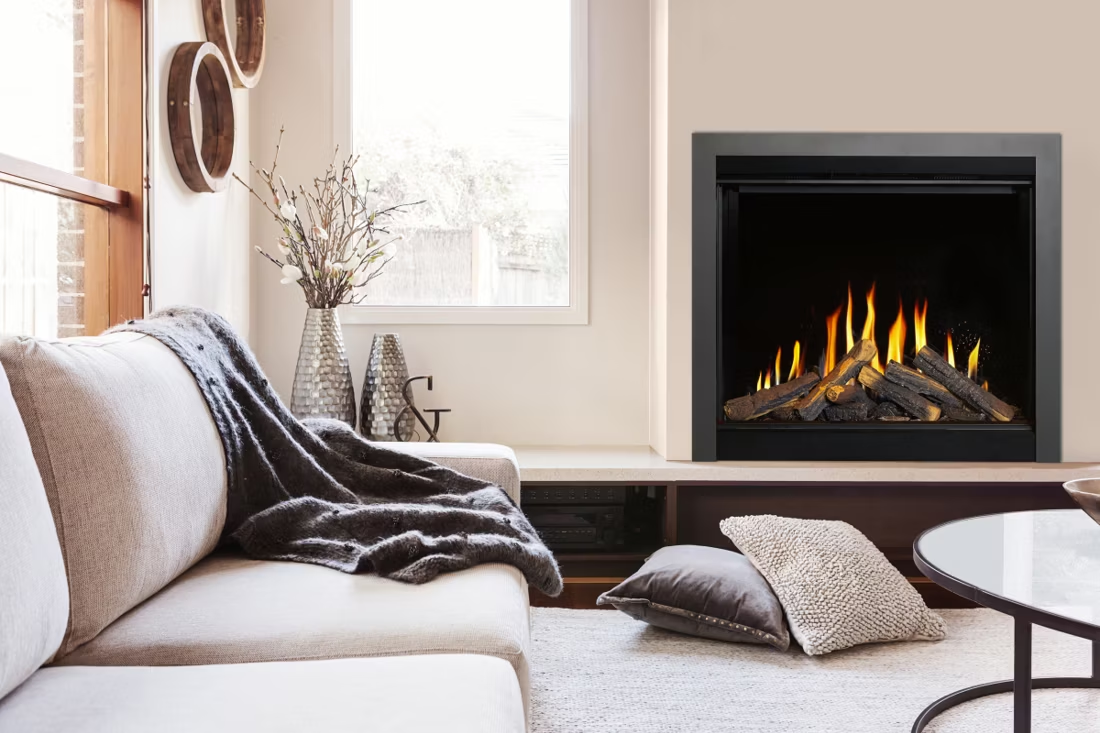
Four fuels. One honest answer for Lawrence County.
Three steps. No salesperson until you're ready.
Tell us about your project
Your zip code, your situation, and the fuel you're leaning toward—or let the answers point you to one.
See what's actually available
The brands dealers within 100 miles genuinely carry—real options, never a catalog mirage.
Get your dealer & Project Guide
A trusted local dealer, plus the free Project Guide & Parts List that names every component of the job.
Frequently Asked Questions
Which fuel works best for a home in Lawrence County?
It comes down to how much heating you actually need in a zone 3A climate. Wood remains popular here because oak and pine are abundant on the county's own timberland, and many rural homeowners already cut and split their own supply—a mid-size non-catalytic stove handles the cold-snap nights just fine without needing the 20-hour overnight burns a Bozeman, Montana homeowner would want. Gas—almost always propane in this rural stretch of Mississippi, since natural gas mains are limited outside town centers—is the low-labor, flip-a-switch choice, especially for folks who want heat without tending a fire. Pellet stoves are a solid middle ground, and regional brands like Lignetics and Hamer Pellet Fuel keep bag supply reasonably local. Electric fireplaces do well here as supplemental or ambiance units in bedrooms and living rooms, since Lawrence County's mild winters mean you're rarely asking one to be your only heat source.
Do I need a permit to install a fireplace or stove in Lawrence County?
It depends on where in the county you are. Mississippi doesn't apply a statewide residential building code the way many states do, and enforcement in unincorporated Lawrence County can be lighter than inside town limits. If you're installing within Monticello, New Hebron, or Silver Creek, check with the town hall—some require a permit for new gas lines, wood-burning inserts, or electrical work tied to a built-in electric fireplace. Outside town limits, permitting requirements are often minimal, but any propane line work still needs a licensed gas fitter regardless of whether a permit is pulled, for basic safety reasons. Most local hearth retailers can tell you exactly what your specific address requires before you commit to a project.
Are there any wood-burning or air quality restrictions in Lawrence County?
No—Lawrence County has no air quality nonattainment designations and no inversion-driven burn advisories like you'd see in a mountain basin. Wood burning here is essentially unrestricted from an air-quality standpoint. The bigger local concern is fire safety during dry stretches: standing dead pine and dried-out pecan prunings can be tinder-dry after weeks without rain, so most local fire departments simply ask that outdoor burning follow basic seasoned-wood and defensible-space practices rather than any formal curtailment schedule.
Can one local dealer handle wood, gas, pellet, and electric?
Some can, though given Lawrence County's small population, the multi-fuel dealers covering this area tend to be based in Brookhaven or Hattiesburg rather than in Monticello itself. A dealer that stocks all four fuel types can be useful if you're still deciding between, say, a propane insert and a pellet stove for a New Hebron home—you can see working displays and compare trade-offs in one visit. Smaller local suppliers closer to the county, by contrast, often specialize in one or two fuels, typically wood and propane, which is fine if you already know what you want.
How does installation and service work for such a rural, low-population county?
Most technicians and installers serving Lawrence County are based 25 to 45 minutes away in Brookhaven, Hattiesburg, or McComb and schedule route days to cover Monticello, New Hebron, Silver Creek, and the rural roads between them. Expect a modest trip charge for service calls, and plan ahead where you can—scheduling your annual chimney sweep or gas inspection in late summer or early fall, before the first cold snap, is much easier than trying to book a technician once temperatures drop and demand spikes across the wider region.
What does installation typically cost across the different fuel types in Lawrence County?
Because Lawrence County's mild zone 3A climate generally calls for smaller units than you'd size for a northern winter, costs often land toward the lower end of national ranges. Wood stove or insert installation: roughly $4,000–$8,000 depending on chimney or liner work. Propane fireplace, insert, or stove: roughly $4,000–$9,500, with cost driven mostly by whether a new gas line or tank setup is needed. Pellet stove or insert: roughly $4,000–$7,000 for a typical install. Electric fireplace: $200–$3,000 for the unit itself, plus $300–$1,000 in labor for anything beyond a simple plug-and-play placement. Exact numbers depend on your home's existing venting and electrical setup—a local dealer can walk through specifics once they've seen the space.
What is an in-home preview and do I need one?
It's a visit where a hearth professional measures your space, confirms the model you picked actually works in your home, and walks the specs—framing, gas line, venting, finish work—before anything is ordered. Some details you just can't know until you see the house. Never make a down payment without one; it's the single most-skipped step that burns buyers.
Wood, gas, pellet, or electric—how do I choose?
Match the fuel to your life, not the other way around. Wood: lowest fuel cost and total power-outage independence, but you're hauling and stacking. Gas: press a button, set a thermostat, no maintenance to speak of. Pellet: wood economics with automatic feeding, in exchange for weekly cleaning and a need for electricity. Electric: plugs in anywhere with honest supplemental heat. Nobody regrets the fuel that fits how they actually live.
Can a fireplace actually lower my heating bill?
Yes—by creating a comfort zone. A furnace heats every square foot of the house just to warm the one room you're in; a gas fireplace on low burns roughly a sixth of the gas a typical furnace does. Set the furnace around 55–60 degrees as a baseline, then heat the rooms your family actually uses. Families who heat this way commonly save $20–$60 a month.
I know I want a fireplace—where do I actually start?
Do two things today: snap a photo of the wall or fireplace you want to transform, and take a tape measure to the space—width, height, depth. Those two artifacts answer most of a hearth professional's first questions. Then settle fuel (wood, gas, pellet, or electric) and set a realistic budget: $3,900–$5,500 covers fireplace, vent, and basic install for most homes.
Stove and Fireplace Dealers in Lawrence County
Listings include WhyFire partner dealers, dealers we have verified as authorized for the brands we recommend, and established local businesses that carry hearth products. Every listing shows which one it is. The ones marked Preferred run on WhyFire's software, so they can show you real pricing and book your appointment right here. No manufacturer pays for placement. How we verify dealers →
The Chimney Man
Ferrell Gas- Brookhaven
Herring Gas Company- Hazelhurst
Herring Gas- Tylertown
Blossman Lp Gas Services Inc
Herring Gas Co, Inc
Lampton Love
Santa's Friend Chimney Service
Blossman Gas - Crystal Springs
Find your fireplace in Lawrence County.
Tell us about your home and we'll match you with a trusted local dealer and send a free Project Guide & Parts List—the exact parts, vent kit, and recommended installer for your Lawrence County project.
Find Your Fireplace →