
Electric heat that matches Jefferson County's mild winters.
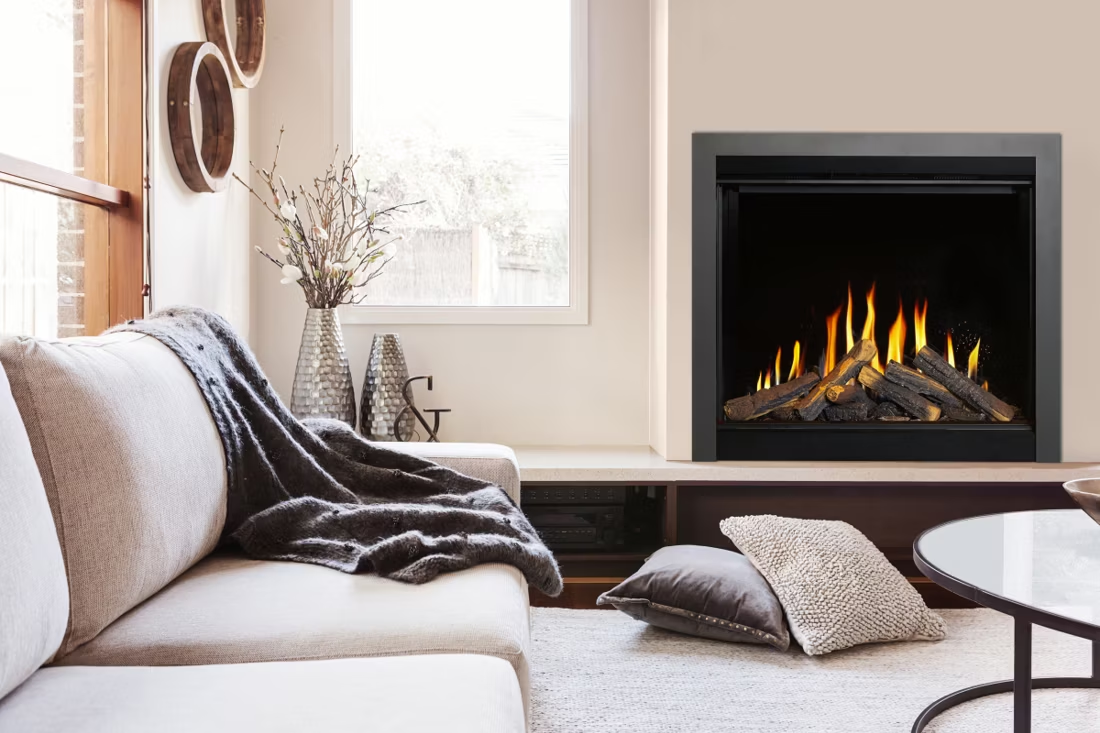
With winter lows averaging 39°F and just a short, mild winter heating season, most Jefferson County homes need a warm room, not a whole-house furnace overhaul. From Fayette to Lorman to Union Church, an electric fireplace or insert delivers instant, no-venting heat—and we'll connect you with a local dealer who can size it right.
Every Project Starts From One of These Five Situations
A mild river-county climate that rarely needs more than zone heat.
Jefferson County sits in climate zone 3A along the Mississippi River bluffs, and with a short, mild winter heating season and winter lows averaging 39°F, it's a fraction of the heating demand you'd see in a place like Duluth or Fargo. Most homes here—whether it's a historic frame house in Fayette or a manufactured home out toward Lorman or Union Church—don't need to run a whole-home heating system hard for more than a handful of weeks. That makes electric fireplaces and inserts a practical fit: no chimney, no venting, no fuel storage, just plug it in or wire it into a dedicated circuit and get heat where you actually spend time.
Electric service across rural Jefferson County runs through Magnolia Electric Power Association, and with only about 1,640 residents spread across the county, homes tend to be farther apart and older on average—which means an electric insert dropped into an existing masonry fireplace opening is often the simplest upgrade available, especially compared to running new gas line or dealing with wood smoke in a county with no natural gas infrastructure to speak of. A 120-volt plug-in unit handles most rooms; a hardwired 240-volt unit gives more heat output for larger rooms or older, leakier construction common in the county's historic housing stock.
Three steps. No salesperson until you're ready.
Tell us about your project
Your zip code, your situation, and the fuel you're leaning toward—or let the answers point you to one.
See what's actually available
The brands dealers within 100 miles genuinely carry—real options, never a catalog mirage.
Get your dealer & Project Guide
A trusted local dealer, plus the free Project Guide & Parts List that names every component of the job.
Frequently Asked Questions
How much does an electric fireplace installation cost in Jefferson County?
Most electric fireplace and insert installations in Jefferson County run somewhere between $300 and $1,500. A freestanding or wall-mounted unit that plugs into a standard 120-volt outlet sits at the low end—there's no chimney work, no gas line, and often no permit involved. Costs climb toward the higher end when a unit needs a dedicated 240-volt circuit run by a licensed electrician, or when it's being built into custom cabinetry or an existing masonry fireplace opening in one of Fayette's older homes. A local dealer can tell you within a few minutes of looking at your electrical panel and fireplace opening which end of that range you'll land on.
Will an electric fireplace actually heat a room, or is it just for looks?
Most electric fireplaces sold today include a real heating element—typically 1,500 watts, which is enough to comfortably warm a 300 to 400 square foot room on its own. Given Jefferson County's mild winter profile—average lows in the high 30s and just a short, mild winter heating season—that's plenty of capacity for zone heating a den, sunroom, or bedroom without running central heat harder than it needs to. The flame effect on most models can also be run without the heater on, which matters here more than in colder counties since you may want the ambiance on a 60-degree December evening without any extra heat at all.
Do I need a permit to install an electric fireplace in Jefferson County?
A plug-in electric fireplace that uses an existing outlet generally doesn't require a permit—it's treated like any other appliance. If your installer needs to add a new 240-volt circuit or run new wiring to support a larger built-in unit, that electrical work typically does require a permit and inspection, since it falls under standard electrical code rather than fireplace-specific rules. Because Jefferson County has a small population and limited full-time inspection staff, most licensed electricians working in the county already know the process and will pull the permit as part of the job.
What will an electric fireplace cost to run on Magnolia Electric Power Association service?
A typical 1,500-watt electric fireplace running on the heat setting costs somewhere around 15 to 25 cents per hour to operate, depending on current Magnolia Electric Power Association residential rates—noticeably cheaper than running central heat to warm a single room. Because Jefferson County's mild climate means you're realistically only running supplemental heat a few months a year, and often just in the evenings, the annual operating cost for most households stays modest compared to propane or a whole-house electric furnace running longer hours.
Is an electric fireplace a good fit for an older home in Fayette?
Yes—in many cases it's the simplest upgrade available for the county's older housing stock. Many historic homes in and around Fayette have an existing masonry fireplace that's no longer safe or practical to burn wood in, whether due to a deteriorated flue or a chimney that was never designed for modern use. An electric insert slides into that same opening, uses the existing mantel and surround, and delivers heat and flame effect without any venting work or chimney repair. It's a common request from homeowners who want to keep the historic look of the fireplace without maintaining the chimney behind it.
Can I install an electric fireplace if I rent, or in a manufactured home?
Yes—this is one of the strongest cases for electric heat in a rural county like Jefferson. A freestanding electric stove or a wall-mount unit requires no structural modification, no venting, and no permanent alteration to the home, which makes it a practical option for renters in Fayette or for the manufactured and modular homes common throughout the rural parts of the county. Most units simply need a nearby outlet, and some plug directly into a standard wall receptacle with no electrician required at all.
Electric vs. wood—which makes more sense in Jefferson County?
Wood remains a standard, viable heat source here—oak, pine, and pecan are all common locally and burn well—and for homeowners with land and access to a woodlot, cordwood heat costs very little in cash terms. But wood requires a sound chimney, regular cleaning, and daily tending. Electric heat skips all of that: no ash, no creosote, no chimney inspection, and instant on-off operation. For a mild-winter county where you're mostly heating one or two rooms for a few months, many homeowners find the convenience of electric outweighs the lower fuel cost of wood, especially in homes without a usable chimney already in place.
Electric vs. pellet stove—which is the better fit here?
Pellet stoves burning bagged fuel from regional suppliers like Lignetics, Hamer Pellet Fuel, or Greenway Renewable Energy put out more sustained heat than an electric unit and can handle a larger area, but they need venting, a hopper you refill regularly, and—critically—electricity to run the auger and blower, so they still go dark in an outage. An electric fireplace needs no venting at all and installs in an afternoon, but tops out around 1,500 watts of heat output, which is plenty for a room but not a whole home. For Jefferson County's mild climate and modest heating need, electric is usually the simpler, lower-maintenance choice unless you're specifically trying to offset a larger portion of your winter heating bill.
What's the difference between an electric fireplace, insert, and mantel package?
An electric fireplace insert is built to slide into an existing fireplace opening—the option most Fayette-area homeowners with an older masonry fireplace end up choosing. A freestanding electric stove or built-in unit stands on its own and doesn't require an existing opening, which works well for newer construction or rooms without a fireplace at all. A mantel package pairs an electric firebox with a surrounding mantel and surround, giving you a finished look in a room that never had a fireplace to begin with—common in living rooms and additions throughout the county. A local dealer can walk you through which fits your specific room and existing structure.
Can I put a TV above my fireplace?
Yes—with an asterisk. Fireplaces are hot and TVs don't like heat. Either put a mantel between them to deflect rising warmth, or choose a fireplace with heat-management technology that creates a cool zone on the wall above—the wall stays around 125 degrees, barely warm, while the room still gets full heat. If you like clean lines and don't want a mantel, heat management is the answer.
Do electric fireplaces actually produce heat?
Yes—most put out around 4,800–5,000 BTUs from a standard outlet, which comfortably warms a bedroom, office, or den as a comfort-zone heater. What they won't do is carry a whole house the way wood, gas, or pellet can. Think of electric as ambiance-first with honest supplemental heat: flames on with no heat in July, flames plus warmth in January.
Can a fireplace actually lower my heating bill?
Yes—by creating a comfort zone. A furnace heats every square foot of the house just to warm the one room you're in; a gas fireplace on low burns roughly a sixth of the gas a typical furnace does. Set the furnace around 55–60 degrees as a baseline, then heat the rooms your family actually uses. Families who heat this way commonly save $20–$60 a month.
What is an in-home preview and do I need one?
It's a visit where a hearth professional measures your space, confirms the model you picked actually works in your home, and walks the specs—framing, gas line, venting, finish work—before anything is ordered. Some details you just can't know until you see the house. Never make a down payment without one; it's the single most-skipped step that burns buyers.
Find your electric fireplace in Jefferson County.
Tell us about your room and your home, and we'll match you with a trusted local dealer and send over a free Project Guide & Parts List—a straightforward plan for your electric fireplace project in Jefferson County, right down to the parts and the recommended installer.
Find Your Fireplace →