
Find the Right Hearth for Every Jefferson County Home.
Wood, gas, pellet, and electric fireplace resources for Fayette, Lorman, Church Hill, and the farms and creek bottoms in between. Find the right unit for a mild-winter, ice-storm-prone county and connect with a trusted local hearth dealer.
Every Project Starts From One of These Five Situations
Mild winters and a deep wood-heat tradition in Jefferson County, Mississippi.
Jefferson County sits in Climate Zone 3A along the bluffs and bottomlands east of the Mississippi River, with roughly 2,011 heating degree days a year and winter lows that average 39°F—a fraction of what a place like Duluth, MN logs each winter. The heating season here is short, usually running from late November through February, but it isn't optional: ice storms along Highway 61 and Highway 552 regularly knock out power for days, and a working wood stove or propane unit is still how a lot of county households ride those outages out. Oak, pine, and pecan—much of it cut from local farms, creek bottoms, and old pecan groves—remain the everyday firewood species here. With a population of roughly 1,640, Jefferson is one of the smallest and most rural counties in Mississippi, home to the town of Fayette, the unincorporated communities of Lorman and Church Hill, and Alcorn State University, the nation's first public historically Black land-grant institution.
What you'll find on this hub: hearth retailers, service technicians, and fuel suppliers covering the whole county—from Fayette out to Lorman and Church Hill and the farm roads in between. Because the county's population is small, most dealers and technicians are based in nearby Natchez or Vicksburg and travel in for consultations and installs; we've noted service radius where it matters. Pick your fuel below to see local dealers, typical installation costs, and recommended units for a mild-winter county where backup heat during outages matters as much as everyday comfort.
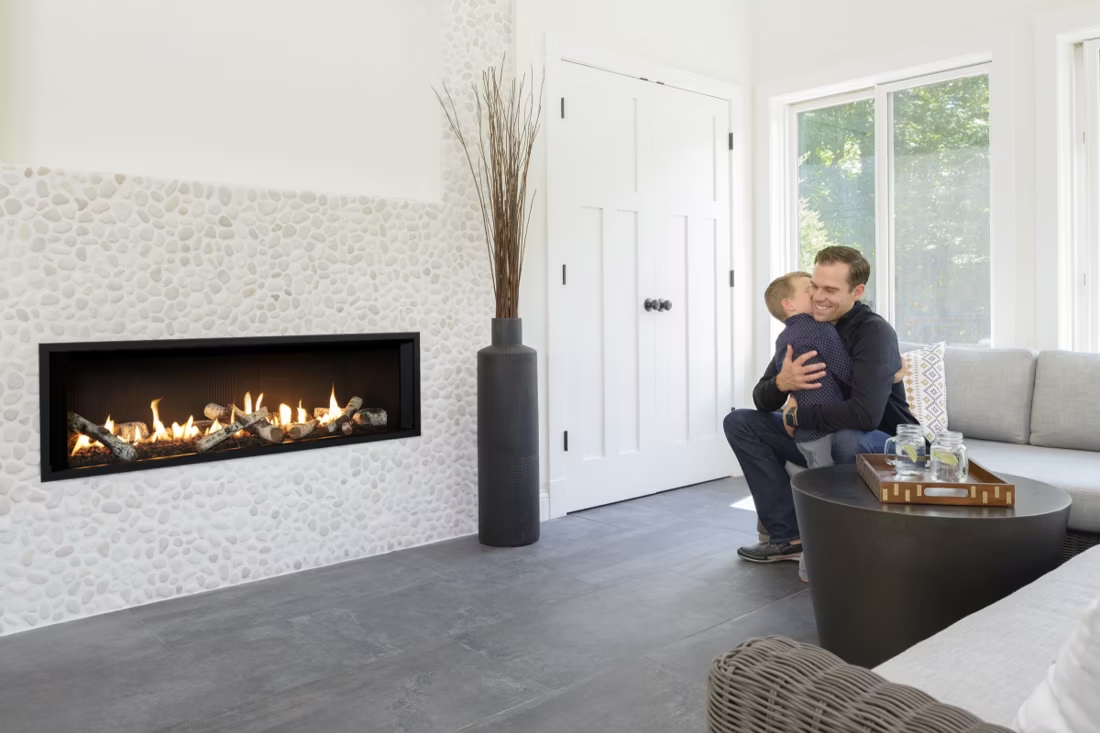
Four fuels. One honest answer for Jefferson County.
Three steps. No salesperson until you're ready.
Tell us about your project
Your zip code, your situation, and the fuel you're leaning toward—or let the answers point you to one.
See what's actually available
The brands dealers within 100 miles genuinely carry—real options, never a catalog mirage.
Get your dealer & Project Guide
A trusted local dealer, plus the free Project Guide & Parts List that names every component of the job.
Frequently Asked Questions
Which fuel works best in Jefferson County?
Jefferson County's climate is mild by national standards—Zone 3A, about 2,011 heating degree days a year, and winter lows that average 39°F, nowhere close to a place like Duluth, MN with its 10,000-plus HDD winters. Even so, propane and wood are both standard choices here, not novelties. Rural homes on the outskirts of Fayette and Lorman without natural gas service lean on propane fireplaces and inserts for convenient primary or supplemental heat, while wood—oak, pine, and pecan cut from local farms and creek bottoms—remains the fallback fuel of choice when ice storms take down power lines along Highway 61 or Highway 552 for days at a time. Pellet stoves, fed by regional brands like Lignetics, Hamer Pellet Fuel, and Greenway Renewable Energy, offer a cleaner middle ground for homeowners who want wood-style heat without splitting logs. Electric units cover bedrooms and sunrooms as supplemental warmth, but given how short the burn season runs here, they rarely serve as a home's only heat source.
Do I need a permit to install a fireplace in Jefferson County?
In most cases, yes, though the process is simpler here than in larger jurisdictions. Inside the town limits of Fayette, building permits for wood stoves, inserts, gas or propane appliances, and pellet stoves go through Fayette town hall. In unincorporated Jefferson County—which covers most of the county, including Lorman and Church Hill—permitting typically routes through the county's contracted building inspector. Propane line work requires a licensed gas fitter regardless of location. Electric fireplaces generally don't require a permit unless the installation involves new wiring or a dedicated circuit. Because Jefferson is a small, low-volume county, turnaround on permits tends to be faster than in nearby Adams or Warren counties—most retailers based in Natchez or Vicksburg handle the paperwork as part of the installation.
Are there air quality restrictions on wood burning in Jefferson County?
No. Jefferson County has no listed air quality concerns—there's no winter inversion problem here the way there is in bowl-shaped western basins, and the Mississippi Department of Environmental Quality doesn't issue burn advisories for this part of the state. The flat-to-rolling terrain and the relatively short, mild heating season mean wood smoke simply doesn't accumulate the way it can in mountain valleys. That said, EPA-certified wood stoves still burn cleaner and use less firewood per degree of heat, which matters given how much oak, pine, and pecan gets self-cut and hauled by hand in this county.
Can one local hearth retailer handle all four fuel types?
Jefferson County itself doesn't have a hearth showroom, so the retailers who serve Fayette, Lorman, and Church Hill are based about 25-40 miles away, most commonly in Natchez or Vicksburg. Several of those dealers carry wood, gas/propane, pellet, and electric lines together, which is worth knowing if you want to compare fuels side by side before committing—especially useful for county homeowners weighing propane against wood as their outage backup. If a supplier only handles firewood or pellet delivery, that's a fuel supplier rather than a full-service hearth retailer, and you'll still need a separate installer for the appliance itself.
How does service work in a small, rural county like this?
Nearly every chimney sweep, propane technician, and pellet-stove servicer covering Jefferson County is based in Natchez or Vicksburg and drives in for appointments—Fayette, Lorman, Church Hill, and the farm roads around Red Lick are all within a reasonable service radius, but expect a trip charge on top of the service call, typically in the $40-$75 range. Scheduling ahead of ice-storm season (roughly November through February) is the smart move: technicians book up fast once the first hard freeze hits, and a wood stove or propane unit that hasn't been serviced is the wrong thing to discover mid-outage. If you're relying on wood as backup heat, keep a season's worth of oak or pine split and covered before the first cold snap.
What's the typical cost range for fireplace installation across all fuel types in Jefferson County?
Costs here tend to run a bit below national averages, partly because homes are smaller and heating loads are lighter than in colder-climate counties. Wood stove or insert installation: roughly $3,500-$7,000 for a typical install. Propane fireplace, insert, or stove: roughly $3,500-$8,000, with cost driven mostly by whether a propane tank and line already exist on the property. Pellet stove or insert: roughly $3,500-$6,000. Electric fireplace: $200-$2,500 for the unit, plus $300-$900 in labor for anything beyond a plug-and-play wall unit. Because most retailers are traveling in from Natchez or Vicksburg, ask upfront whether a trip fee is built into the installation quote.
What is an in-home preview and do I need one?
It's a visit where a hearth professional measures your space, confirms the model you picked actually works in your home, and walks the specs—framing, gas line, venting, finish work—before anything is ordered. Some details you just can't know until you see the house. Never make a down payment without one; it's the single most-skipped step that burns buyers.
Wood, gas, pellet, or electric—how do I choose?
Match the fuel to your life, not the other way around. Wood: lowest fuel cost and total power-outage independence, but you're hauling and stacking. Gas: press a button, set a thermostat, no maintenance to speak of. Pellet: wood economics with automatic feeding, in exchange for weekly cleaning and a need for electricity. Electric: plugs in anywhere with honest supplemental heat. Nobody regrets the fuel that fits how they actually live.
Can a fireplace actually lower my heating bill?
Yes—by creating a comfort zone. A furnace heats every square foot of the house just to warm the one room you're in; a gas fireplace on low burns roughly a sixth of the gas a typical furnace does. Set the furnace around 55–60 degrees as a baseline, then heat the rooms your family actually uses. Families who heat this way commonly save $20–$60 a month.
Should the dealer who sells my fireplace also install it?
Ideally, yes. A fireplace project involves vent pipe, gas line, electrical, and often tile or stone. Hire three or four separate trades and you own the liability and the game of telephone between them. One company selling and installing means one accountable party, start to finish—ask about factory training, on-time completion records, and what happens if an inspection fails.
Stove and Fireplace Dealers in Jefferson County
Listings include WhyFire partner dealers, dealers we have verified as authorized for the brands we recommend, and established local businesses that carry hearth products. Every listing shows which one it is. The ones marked Preferred run on WhyFire's software, so they can show you real pricing and book your appointment right here. No manufacturer pays for placement. How we verify dealers →
Herring Gas Company, Inc- Natchez
Ferrell Gas- Brookhaven
The Chimney Man
Find your fireplace in Jefferson County.
Pick your fuel below and we'll match you with a trusted local dealer, plus a free Project Guide & Parts List built for your fuel, your home, and Jefferson County's mild, ice-storm-prone winters.
Find Your Fireplace →