
Keep Your Family Warm and Safe—No Matter What
With winter lows averaging 38°F and a short, mild winter heating season, most Glendale homes don't need wood as primary heat. For the ones that still want it—for backup, for ambiance, for a wooded lot full of oak and pine—we'll help you find the right fit and a dealer who installs it correctly.
Every Project Starts From One of These Five Situations
Mild winters mean wood heat is the exception, not the everyday need.
Glendale sits in Forrest County in southern Mississippi at just 182 feet of elevation, in climate zone 3A. Winter lows average around 38°F, and the area has a light, mild winter heating season—a fraction of the long, harsh heating season a place like Duluth, MN sees. Most Glendale homes are built and heated around that reality: central electric or heat-pump systems, sometimes gas, do the job on the handful of genuinely cold nights each winter. A wood stove sized and installed as a primary heat source, the way it would be in a colder region, is simply overbuilt for what this climate asks of it.
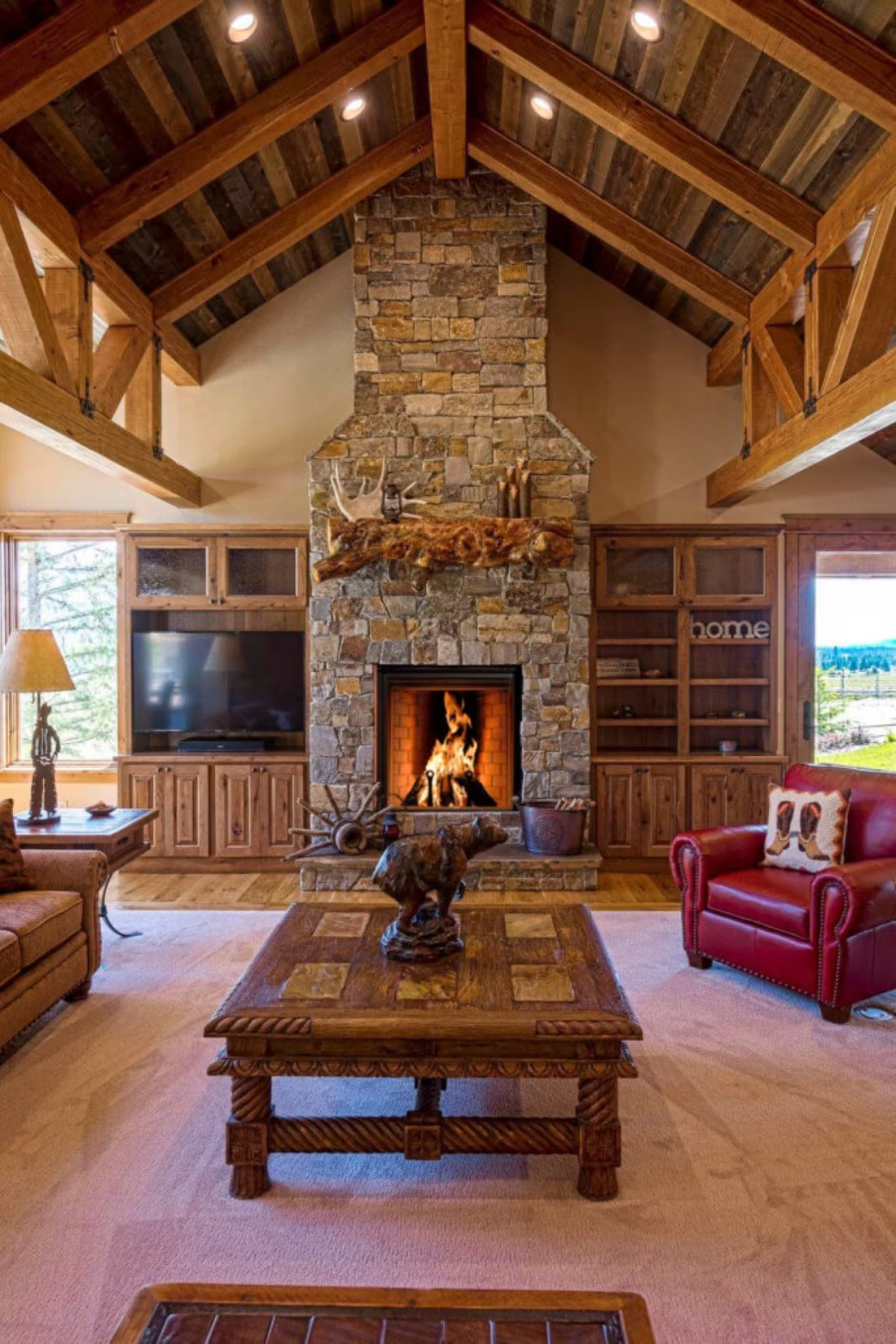
That doesn't mean wood heat has no place here. Rural properties around Glendale often sit on wooded lots with oak, pine, and pecan readily available, and some homeowners install a stove or fireplace insert specifically for the ice storms that occasionally knock out power across Forrest County, for the ambiance of a real fire on a cold January evening, or for a hunting camp or outbuilding that needs occasional heat. Because wood isn't a mainstream install here, it matters more—not less—to work with a local dealer who understands sizing a stove down appropriately rather than selling you a cold-climate unit built for a house in Vermont.
Three steps. No salesperson until you're ready.
Tell us about your project
Your zip code, your situation, and the fuel you're leaning toward—or let the answers point you to one.
See what's actually available
The brands dealers within 100 miles genuinely carry—real options, never a catalog mirage.
Get your dealer & Project Guide
A trusted local dealer, plus the free Project Guide & Parts List that names every component of the job.
Frequently Asked Questions
Does it even make sense to install a wood stove in Glendale's climate?
For most homes, no—not as a primary heat source. With winter lows averaging 38°F and only a light, mild winter heating season, Glendale's heating load is light, and a full-size wood stove sized for cold-climate use will often be oversized, leading to smoldering fires and creosote buildup rather than efficient heat. Where it does make sense is as supplemental or backup heat: a smaller stove or insert used a handful of nights a year, or as insurance against the power outages that sometimes follow ice storms and severe weather in Forrest County.
If wood heat isn't really necessary here, why do some Glendale homeowners still install it?
The most common reasons we hear are backup heat during power outages, ambiance, and rural properties where firewood is essentially free. Ice storms and severe thunderstorms occasionally knock out electric service in this part of Mississippi, and a wood stove or fireplace that doesn't depend on the grid is real peace of mind for homes on Mississippi Power Co or Pearl River Valley Electric service. Others simply want the look and feel of a real fire in a den or living room a few nights a winter—that's a legitimate reason too, it just changes what size and type of unit makes sense.
What does a wood stove or fireplace installation typically cost?
For a home with an existing masonry fireplace, a wood-burning insert installation generally runs in the $3,500 to $6,500 range once you account for a liner, hearth pad adjustments, and labor. A freestanding stove installed where no chimney exists—requiring new Class A chimney pipe and roof penetration—typically lands higher, often $6,000 to $9,000. Because wood systems are less common in Glendale than gas or electric options, it's worth getting a firm in-home quote from a dealer rather than assuming a catalog price applies to your house.
Do I need a permit to install a wood stove in Glendale?
Glendale is unincorporated within Forrest County, so new wood-burning installations typically go through the Forrest County Building Department for a building permit, and the stove itself needs to meet current EPA 2020 NSPS emissions standards. Most hearth dealers who install wood stoves in this area handle the permit application as part of the job. Because wood is a less frequent request here than gas or electric, it's worth confirming with your installer that they've pulled a wood-stove permit in the county before, so there are no surprises at inspection.
Are there any air quality restrictions on wood burning in Glendale?
No—Forrest County isn't a non-attainment area, and there are no winter burn bans or curtailment periods like you'd find in wood-heavy regions out West. That said, an EPA-certified stove will still burn cleaner and use less wood per BTU than an old uncertified unit, which matters if you're only burning occasionally and want to get a decent fire going quickly on a cool evening without a smoky start.
What wood species are common around Glendale, and how do they burn?
Oak, pine, and pecan are the three you'll run into most often on properties around Glendale. Oak is the standout—dense, long-burning, and widely available on wooded lots throughout Forrest County; it should be seasoned at least six months to a year before burning. Pine is abundant and lights easily but burns faster and leaves more resin-based creosote, so it's better mixed with hardwood than burned exclusively. Pecan, common from older orchard trees and yard trees in this part of Mississippi, burns hot and clean and is a favorite for both stoves and smokers.
What size wood stove do I actually need for occasional or backup use?
Smaller than you'd think. Given Glendale's mild winters, most homeowners installing a stove for backup or ambiance do better with a small to mid-size unit (rated for 1,000-1,500 sq ft) rather than a large cold-climate stove—an oversized stove run at low output to avoid overheating a warm-climate home will smolder and create more creosote and glass buildup than a properly matched smaller unit run at a healthy burn. A local dealer can size this against your actual square footage and how often you expect to use it.
How does wood heat compare to electric heat in Glendale?
With residential electric rates around $0.1447/kWh through Mississippi Power Co and $0.1425/kWh through Pearl River Valley Electric Power Association, and heating demand as light as it is here, most Glendale homes find that electric heat pumps handle the winter comfortably and cheaply without any wood involved. Wood's advantage isn't really cost savings in this climate—it's independence from the grid during an outage, and the ambiance of a real fire. If your goal is lowering a heating bill, electric or a heat pump upgrade is usually the more direct answer; if your goal is backup heat or atmosphere, wood still has a role.
How often does a wood stove or chimney need to be inspected if I'm only burning occasionally?
Even with light, occasional use, an annual inspection before burning season is the right cadence—creosote and animal nesting can build up in a flue that only sees a handful of fires a year just as easily as one used daily. A CSIA-certified sweep can do a Level 1 inspection and clean in under an hour for most Glendale-area chimneys. Given how infrequently wood-burning systems get serviced in a climate like this, it's an easy step to forget—worth setting a fall reminder rather than waiting until you smell smoke indoors on the first cold night.
What's the difference between an insert and a zero-clearance fireplace?
An insert is a fireplace that slides into a pre-existing wood-burning fireplace—if you don't have one, there's nothing to insert it into. A zero-clearance fireplace is built into a framed wall, which makes it the answer for remodels and new construction. Simple test: existing masonry fireplace means insert; blank or framed wall means zero-clearance.
Why is my open fireplace making my house colder?
Open fireplaces suck—literally. As the fire burns, it consumes air your furnace already paid to heat and pulls it out through the chimney, so the house is actually colder after the fire goes out than before you lit it. An insert fixes this: it seals the chimney, puts fixed glass across the front, and turns that hole in your house into a real heat source.
Can I install a fireplace myself?
If you're putting a fire in your house on purpose, it's best to work with an expert. Unless you're genuinely experienced in framing, gas line, vent pipe, and the national code on clearances to combustibles, have a professional do it—and ideally the same company that sells you the fireplace, so warranty, service, and liability all live under one roof.
Can a fireplace actually lower my heating bill?
Yes—by creating a comfort zone. A furnace heats every square foot of the house just to warm the one room you're in; a gas fireplace on low burns roughly a sixth of the gas a typical furnace does. Set the furnace around 55–60 degrees as a baseline, then heat the rooms your family actually uses. Families who heat this way commonly save $20–$60 a month.
Nearby Dealers
Hearth shops serving Glendale and the surrounding area. Every listing shows whether it is a WhyFire partner, a dealer we have verified as authorized for the brands we recommend, or a local business carrying hearth products. No manufacturer pays for placement. How we verify dealers →
Ferrell Gas- Hattiesburg
Blossman Gas - Hattiesburg
The Gas Company
Columbia Block And Brick
Herring Gas- Purvis
See if wood heat makes sense for your Glendale home.
Tell us about your home and how you'd actually use a wood stove or fireplace—backup heat, ambiance, or a wooded property—and we'll match you with a local dealer and a free Project Guide & Parts List sized to your situation, not a cold-climate catalog spec.
Find Your Fireplace →