
Pellet heat that fits George County's mild winters.
With such a mild, short winter heating season, George County doesn't need a furnace running non-stop—it needs clean, easy supplemental heat for the cold snaps between December and February. Find the right pellet stove and get matched with a trusted local dealer serving Lucedale and the rest of the county.
Every Project Starts From One of These Five Situations
Low-hassle heat for a short, mild winter.
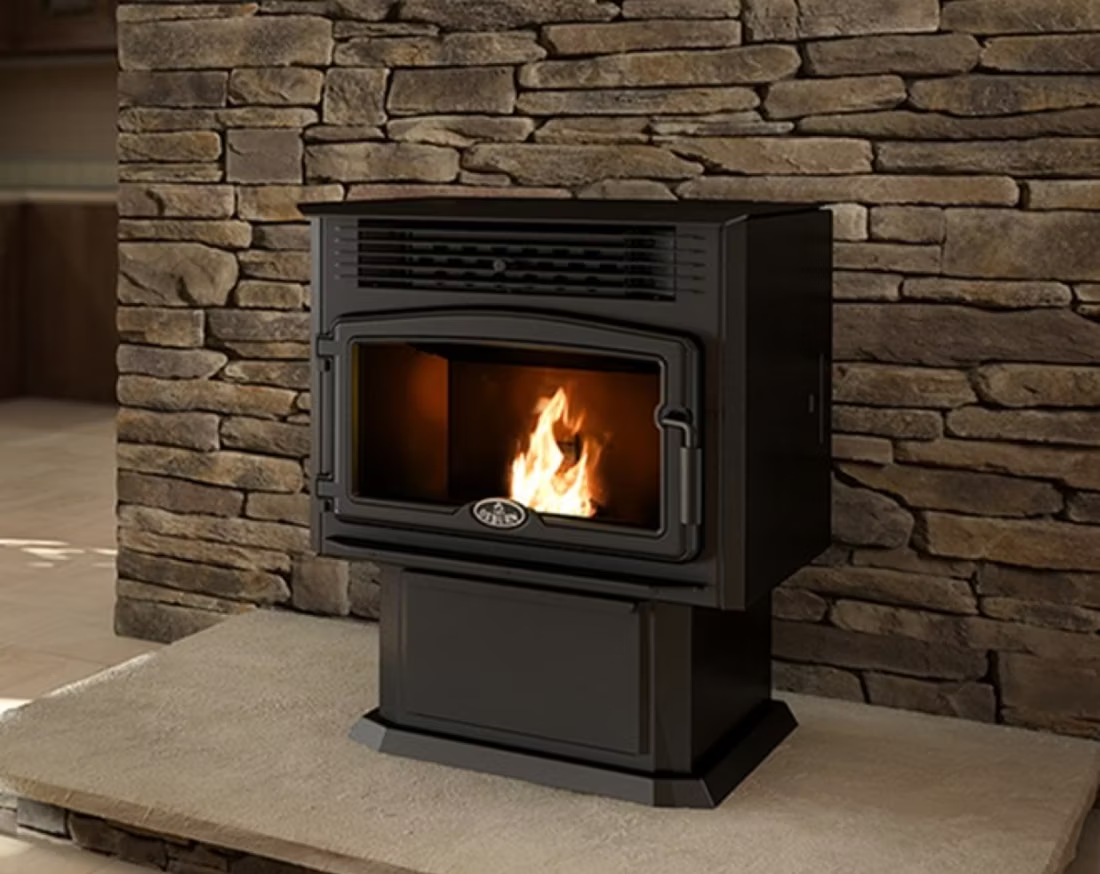
George County sits in climate zone 3A, the mixed-humid Gulf South, where winter lows average 41°F and the heating season is measured in weeks, not months. Compare that to a place like Duluth, Minnesota, which has a winter heating load roughly six times heavier than George County's—this is not a county built around keeping a fire going around the clock. Plenty of homes here still burn oak, pine, and pecan in a fireplace or wood stove for tradition and ambiance, but for homeowners who want clean, controllable heat without cutting, splitting, and hauling cordwood, a pellet stove or insert is an increasingly common answer, especially in the manufactured and single-story homes common throughout rural George County.
Pellets sold in this part of the state—Lignetics, Hamer Pellet Fuel, Greenway Renewable Energy—are largely milled from Southern pine, which ties the fuel directly to the timberland that surrounds Lucedale and the rest of the county. That regional sourcing keeps pellets reasonably available without long shipping distances. One honest tradeoff worth naming: pellet stoves run on electricity to feed the hopper and run the blower, so they're not a true backup heat source during the power outages that follow Gulf tropical systems the way a wood stove is. A local dealer can talk through battery-backup options or help you weigh a wood unit instead if storm-season resilience matters more to you than day-to-day convenience.
Three steps. No salesperson until you're ready.
Tell us about your project
Your zip code, your situation, and the fuel you're leaning toward—or let the answers point you to one.
See what's actually available
The brands dealers within 100 miles genuinely carry—real options, never a catalog mirage.
Get your dealer & Project Guide
A trusted local dealer, plus the free Project Guide & Parts List that names every component of the job.
Frequently Asked Questions
How much does a pellet stove installation cost in George County?
Pellet stove and insert installations in George County typically run in the neighborhood of $3,000 to $6,500, depending on the unit, whether it's a freestanding stove or an insert going into an existing fireplace, and how much venting work is involved. Pellet stoves vent through a small horizontal pipe out a wall or existing chimney rather than requiring the tall Class A chimney a wood stove needs, which usually keeps labor lower than a comparable wood installation. Homes without an existing hearth or chimney opening will run toward the higher end once wall penetration and hearth pad work are added in.
What size pellet stove do I need for my George County home?
Given George County's mild, short winter heating season, most homes here don't need a large, high-output stove the way a home in the upper Midwest would. A small to mid-size pellet stove (rated for roughly 1,000 to 1,800 square feet) is enough to comfortably heat a main living area or an open-plan single-story home, with the furnace or central HVAC handling the rest. Larger stoves make more sense for homes using pellet heat as the primary source, or for drafty older farmhouses outside Lucedale with less insulation. A local dealer can size the unit properly during an in-home look at your floor plan.
Where can I find a certified pellet stove installer near me?
Because George County is small in population, dealer coverage often comes from installers based in Lucedale or traveling in from the Hattiesburg or Mobile/Pascagoula areas. Look for installers familiar with NFI (National Fireplace Institute) pellet certification, and confirm they'll handle both the unit and the venting rather than just dropping off a stove for you to hook up yourself. Given the travel involved for rural addresses, it's worth asking upfront whether a trip charge applies—most reputable installers will tell you plainly rather than surprise you on the invoice.
What's the difference between a pellet stove and a pellet insert?
A pellet stove is a freestanding unit that sits on a hearth pad and vents out through a nearby wall or existing chimney—it can go almost anywhere in a room with the right clearances. A pellet insert is built to slide into an existing masonry or prefab fireplace opening, converting it into a sealed, efficient heat source while reusing the chimney you already have. For George County homes with an older wood fireplace that's rarely used, an insert is often the simpler upgrade; for homes without an existing fireplace, a freestanding stove is the more practical choice.
Do I need a permit to install a pellet stove in George County?
Most jurisdictions in Mississippi require a building permit for a new solid-fuel appliance installation, and George County is generally handled through the George County Building Department for anything outside city limits. Because a pellet install typically involves less structural work than a wood stove—no masonry chimney, just a wall penetration for the vent pipe—the permitting process tends to be simpler and faster. Most local dealers pull the permit as part of the installation, so it's worth confirming that's included in your quote.
What's the best pellet stove for George County's climate?
Since George County's winters are short and mild, look for a stove with a wide, low-end BTU range and good thermostatic control rather than the maximum-output catalytic units built for sub-zero climates—you'll spend more nights running the stove on a low setting than cranking it at full output. Mid-size units from brands commonly stocked by Southeast dealers work well here. Because pellet supply in this region—Lignetics, Hamer Pellet Fuel, Greenway Renewable Energy—comes from Southern pine mills rather than distant hardwood pellet producers, availability tends to stay steady even during peak cold snaps. Ask your local dealer which brand of stove pairs best with the pellet supply they carry.
How much maintenance does a pellet stove actually need?
Pellet stoves need the ash pan emptied every few days to weekly depending on use, the glass wiped down periodically, and the hopper and auger system checked for jams. Unlike a wood stove, there's no annual chimney sweep required in the traditional sense, but the vent pipe and exhaust fan should be inspected and cleaned at least once a year—most dealers who sell pellet units in George County also offer this service. Given the county has no air quality restrictions or non-attainment concerns, maintenance here is purely about keeping the unit running efficiently, not about meeting a local emissions rule.
Where can I buy pellets in George County?
Regional brands like Lignetics, Hamer Pellet Fuel, and Greenway Renewable Energy are commonly stocked at farm supply and hearth retailers serving this part of southeast Mississippi, and all three are milled from Southern pine grown in the region—meaning the pellets burning in a George County stove likely came from timberland not far from where they're sold. Buying a season's supply (typically 40-50 bags, or one to one-and-a-half tons for moderate use given the county's short heating season) before winter locks in pricing and availability before cold-weather demand picks up.
Pellet stove vs. wood stove—which is right for my George County home?
Wood—burned from the oak, pine, and pecan common in this part of Mississippi—keeps working with no electricity at all, which matters here given how often Gulf tropical systems knock out power in late summer and fall. Pellet stoves are cleaner, easier to load and control, and don't require splitting or stacking cordwood, but they need electricity to run the auger and blower, so they go dark in an outage unless you add a battery backup. For a George County home used mainly for cozy, convenient supplemental heat on the occasional cold night, pellet is hard to beat. For a home where storm-season self-sufficiency is the priority, wood—or a pellet stove paired with backup power—is the safer bet.
Why is a fireplace insert so efficient?
An insert does two things: it seals the chimney completely, so you stop losing air you already paid to heat, and it radiates warmth into the room through the firebox and glass. Most add a heat-exchange fan that pulls cool room air underneath, wraps it around the hot firebox, and pushes it back out warm. Your home is more efficient before you've even lit the first fire.
Why is my open fireplace making my house colder?
Open fireplaces suck—literally. As the fire burns, it consumes air your furnace already paid to heat and pulls it out through the chimney, so the house is actually colder after the fire goes out than before you lit it. An insert fixes this: it seals the chimney, puts fixed glass across the front, and turns that hole in your house into a real heat source.
Can I install a fireplace myself?
If you're putting a fire in your house on purpose, it's best to work with an expert. Unless you're genuinely experienced in framing, gas line, vent pipe, and the national code on clearances to combustibles, have a professional do it—and ideally the same company that sells you the fireplace, so warranty, service, and liability all live under one roof.
How much should I budget for a fireplace?
For an average home—covering the fireplace, the vent pipe, and basic installation—a budget between $3,900 and $5,500 gives you a lot of options across wood, gas, and pellet. By the time you add finish work, gas line, and electrical, the average complete installation lands between $5,000 and $12,000 all-in. In a remodel or new build, a good rule is to put about 2.5% of the total project cost toward the fireplace.
Stove and Fireplace Dealers in George County
Pellet Brands Stocked Around George County
Manufacturers will point you to the nearest stocking dealer.
Find your pellet stove in George County.
Tell us a bit about your home and we'll match you with a trusted local George County dealer and send you a free Project Guide & Parts List—the exact parts, vent kit, and installer recommendation for your pellet project.
Find Your Fireplace →