
Pellet heat built for Franklin County's short, humid winters.
From Meadville out to the edges of the Homochitto National Forest, Franklin County homes don't need a furnace-sized heat source—they need something clean and easy to run on the handful of cold nights each year. Find the right pellet stove and connect with a trusted local dealer.
Every Project Starts From One of These Five Situations
Consistent warmth without the hassle of cutting wood.
Franklin County is small—about 2,515 people spread across a rural stretch of southwest Mississippi anchored by Meadville and bordered by the Homochitto National Forest. Climate zone 3A means winters here are mild and humid compared to places like Duluth, MN or Burlington, VT—most cold snaps are short, and a whole-house furnace running nonstop is overkill for the handful of nights that actually dip near freezing. That's exactly the kind of climate where a pellet stove earns its keep: it heats a room fast, holds a steady temperature on a thermostat, and doesn't ask you to build and tend a fire for a 40-degree night.
Franklin County has no air quality non-attainment concerns and no winter burn curtailment periods, so pellet stoves here aren't competing with restrictions the way they might in a smoke-sensitive basin out West—they're simply a clean, low-maintenance option. Local oak, pine, and pecan are the wood species that dominate this part of Mississippi, and regional pellet suppliers like Lignetics, Hamer Pellet Fuel, and Greenway Renewable Energy keep bagged fuel reasonably close by rather than shipped in from northern mills, which helps keep the supply chain—and the price—more stable for county residents.
Three steps. No salesperson until you're ready.
Tell us about your project
Your zip code, your situation, and the fuel you're leaning toward—or let the answers point you to one.
See what's actually available
The brands dealers within 100 miles genuinely carry—real options, never a catalog mirage.
Get your dealer & Project Guide
A trusted local dealer, plus the free Project Guide & Parts List that names every component of the job.
Frequently Asked Questions
How much does a pellet stove installation cost in Franklin County?
Pellet stove installations in Franklin County typically run in the $3,000 to $6,500 range, and they're almost always cheaper than a comparable wood stove install because there's no masonry chimney to build—most pellet stoves vent through an exterior wall with a short PVC or stainless pipe run. The bigger cost drivers are whether the room already has a hearth pad, whether a dedicated electrical outlet needs to be added for the hopper motor and igniter, and how far the installer has to travel, since Franklin County's small population means dealers often cover several counties. Ask any local retailer for an in-home estimate before assuming the low end applies to your house.
What size pellet stove do I need for my home?
Most homes in Franklin County are single-family houses on the smaller-to-mid side, and because winters here are mild, you generally don't need to size up the way a colder-climate home would. A stove rated for 1,000 to 1,500 square feet handles a typical living room or open living/kitchen area as supplemental heat, while a 40-pound hopper is usually plenty since you won't be running the stove around the clock for months at a time the way homeowners farther north do. If you're trying to heat a larger, older farmhouse near Meadville with drafty rooms, a local dealer can walk through insulation and layout to avoid undersizing.
Where can I find certified pellet stove installers near me?
Because Franklin County's population is small, dedicated hearth retailers with pellet installers on staff are more likely based in nearby larger towns like Natchez or Brookhaven, with technicians who travel into the county for installs. Look for installers familiar with NFI (National Fireplace Institute) pellet appliance certification, and confirm they'll handle the wall-vent installation and any electrical work rather than leaving that to a separate contractor. A single installer coordinating the stove, venting, and outlet install keeps warranty coverage clean and avoids finger-pointing if something's off later.
What's the difference between a pellet stove and a pellet insert?
A pellet stove is a freestanding unit that sits on a hearth pad and vents through a nearby wall—it can go almost anywhere in a room with access to an exterior wall and an outlet. A pellet insert is built to slide into an existing masonry fireplace opening, using a vent kit routed up through the existing chimney rather than out the wall. If your Franklin County home already has an open wood-burning fireplace that rarely gets used, an insert is usually the better fit since it repurposes that opening instead of adding a new appliance elsewhere in the room.
Do I need a permit to install a pellet stove in Franklin County?
Yes—a building permit through the Franklin County Building Department is standard for a new pellet stove installation, mainly to confirm clearances, venting, and any electrical work meet code. Most local installers pull this permit as part of the job rather than leaving it to the homeowner. On the burning side, Franklin County has no air quality non-attainment designation and no curtailment periods, so there's nothing like a winter burn ban to plan around once the stove is installed.
What's the best pellet stove for Franklin County's climate?
Since Franklin County's winters are short and mild rather than the extended sub-zero stretches you'd see in a place like Duluth, MN, you don't need the largest hopper or the highest BTU output on the market—a mid-size unit with reliable thermostatic control matters more than raw heat output. Look for a stove with a simple auger and igniter system and easy-to-clean ash pan, since you'll likely be running it intermittently through the season rather than continuously. A local dealer can match hopper capacity and BTU rating to your specific room size rather than defaulting to the biggest model on the floor.
How often should my pellet stove be serviced?
Pellet stoves need less maintenance than a wood-burning chimney system, but they're not maintenance-free. Plan on cleaning the burn pot and ash pan every few days of regular use, a deeper cleaning of the exhaust fan and venting once a season, and an annual professional inspection to check the auger motor, igniter, and gaskets. Because pellet stoves have more moving mechanical parts than a simple wood stove, catching a worn igniter or dirty exhaust fan early prevents a no-heat night in the middle of a cold front.
Where can I buy pellet fuel in Franklin County?
Regional brands like Lignetics, Hamer Pellet Fuel, and Greenway Renewable Energy are common through farm supply and hardware retailers serving southwest Mississippi, and buying regionally milled pellets instead of fuel shipped in from northern mills tends to keep per-ton pricing more consistent. Given Franklin County's small population, it's worth stocking up early in the fall—rural retailers don't always keep large pellet inventories on hand once cold weather actually arrives and demand picks up.
Pellet stove vs. wood stove—which is right for me?
Franklin County sits right next to the Homochitto National Forest, and oak, pine, and pecan are all readily available locally, so self-cut or locally purchased firewood is genuinely cheap here—that favors wood if you don't mind the work of splitting, stacking, and tending a fire. Pellet stoves trade that hands-on element for convenience: load the hopper, set the thermostat, and let the auger do the rest, with less mess and no chimney creosote buildup to worry about. The tradeoff is that pellet stoves need electricity to run the auger and blower, so they won't provide heat during a power outage the way a wood stove will. For most Franklin County homes using supplemental heat rather than full off-grid backup, that's a reasonable tradeoff to make for the convenience.
How often does a pellet stove need cleaning?
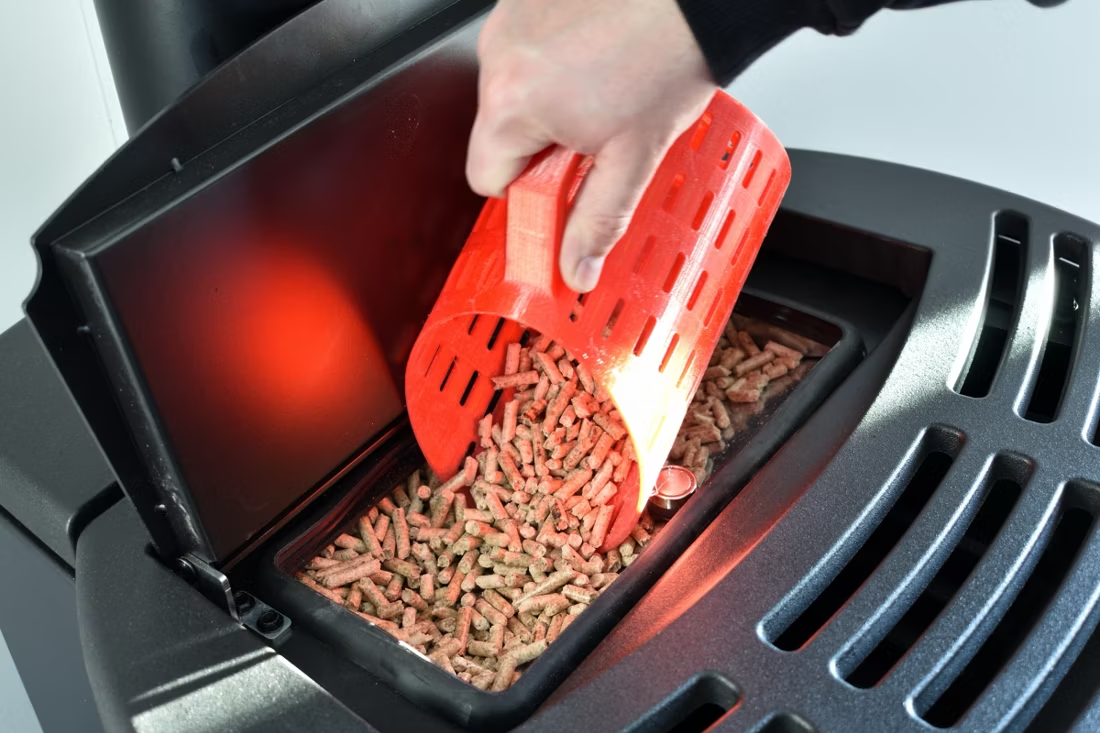
A clean pellet stove is a happy pellet stove. Plan on cleaning the burn pot about once a week when you're burning regularly—ash and clinkers gum up the air holes just like a pellet barbecue. Most pellet stove problems trace back to skipped cleaning that nobody explained up front. Some designs make it easy with a trapdoor burn pot: pull a lever and the gunk drops into the ash pan.
Why is a fireplace insert so efficient?
An insert does two things: it seals the chimney completely, so you stop losing air you already paid to heat, and it radiates warmth into the room through the firebox and glass. Most add a heat-exchange fan that pulls cool room air underneath, wraps it around the hot firebox, and pushes it back out warm. Your home is more efficient before you've even lit the first fire.
Can a fireplace actually lower my heating bill?
Yes—by creating a comfort zone. A furnace heats every square foot of the house just to warm the one room you're in; a gas fireplace on low burns roughly a sixth of the gas a typical furnace does. Set the furnace around 55–60 degrees as a baseline, then heat the rooms your family actually uses. Families who heat this way commonly save $20–$60 a month.
Does a fireplace add value to my home?
On average, a fireplace adds back to the home about the same amount you spent installing it. Add the monthly savings from heating the rooms you actually use instead of the whole house—often hundreds of dollars a year—and the value case is strong before you even count what a fire does for how your family uses the room.
Pellet Brands Stocked Around Franklin County
Manufacturers will point you to the nearest stocking dealer.
Find your pellet stove in Franklin County.
Tell us a bit about your home and we'll put together a free Project Guide & Parts List for your pellet stove project in Franklin County—the exact parts you'll need, including the vent kit, and our recommended local dealer to install it.
Find Your Fireplace →