
Real ambiance, real heat, no chimney required.
Clay County's winters are mild—average lows around 33°F and a light winter heating load overall—which makes a zone-heating electric unit a smart, low-fuss fit for West Point and the surrounding county. Find the right model and get matched with a trusted local dealer.
Every Project Starts From One of These Five Situations
Mild winters, maximum flexibility.
Clay County sits in Mississippi's Black Prairie region, with West Point as the county seat and smaller communities like Pheba, Cedar Bluff, and Montpelier spread across the surrounding farmland. The climate here is classified as Zone 3A, mixed-humid, and it shows: average winter lows hover around 33°F and the county has a light winter heating load—a fraction of what a homeowner in Duluth, MN deals with (closer to a heavy, months-long heating season). That kind of mild heating load changes the calculus on hearth appliances. Homeowners here aren't fighting sub-zero nights; they're looking for supplemental warmth in one room and the look of a fire without the wood pile or gas line.
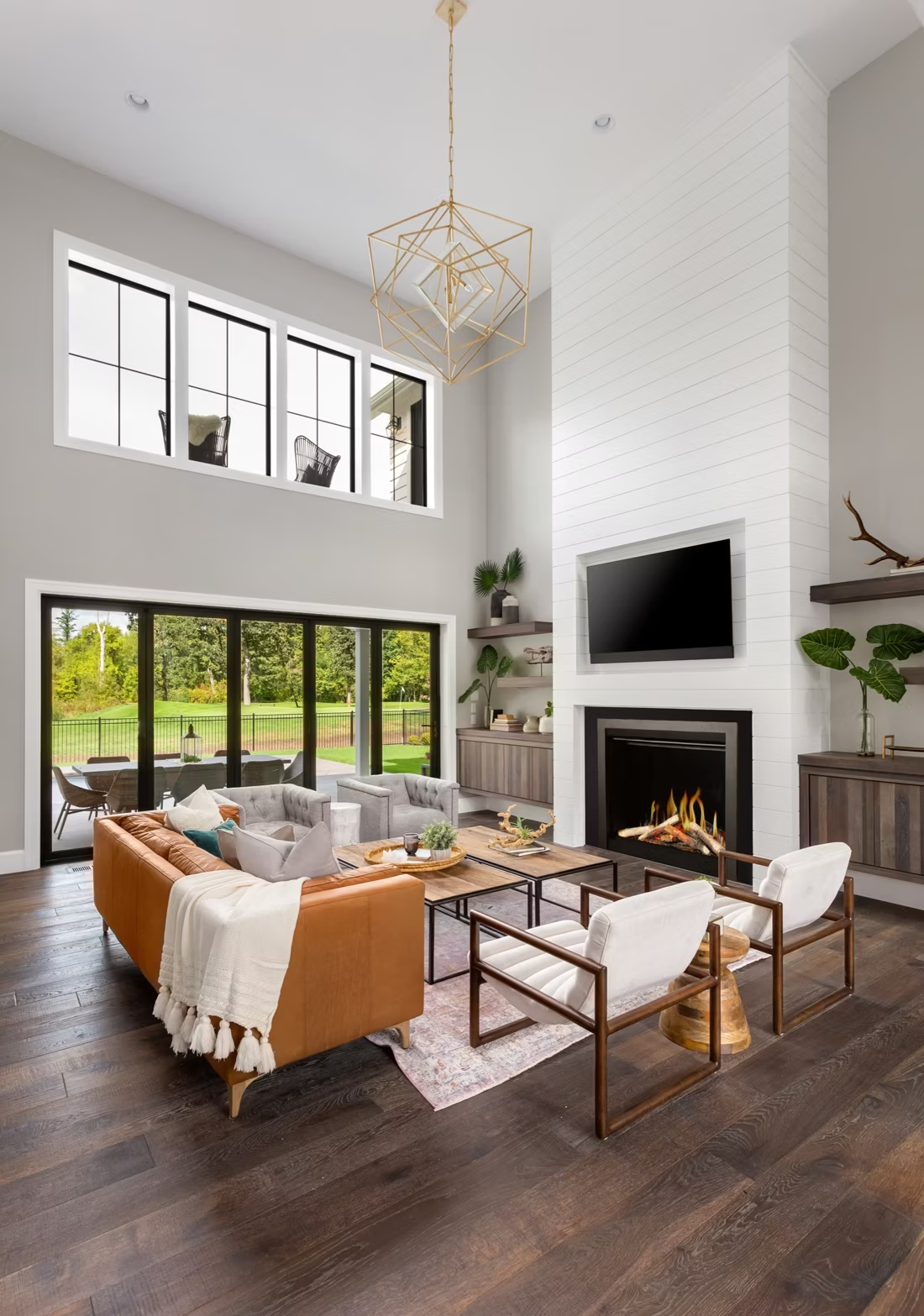
That's exactly where electric fireplaces earn their keep. There's no chimney to build, no venting to size, and no combustion byproducts to manage—which matters in West Point's historic district, where Victorian-era homes and properties near Waverley Mansion often have wiring that wasn't built for a full masonry retrofit. Electric power in the county runs through 4-County Electric Power Association, a TVA distributor headquartered in nearby Starkville, and most electric fireplace installs are simple enough to plug into an existing circuit or add a single dedicated line. For a county where central HVAC already handles the bulk of heating, an electric insert or built-in unit adds cozy, controllable zone heat to a den, bedroom, or sunroom—without touching the rest of the house.
Three steps. No salesperson until you're ready.
Tell us about your project
Your zip code, your situation, and the fuel you're leaning toward—or let the answers point you to one.
See what's actually available
The brands dealers within 100 miles genuinely carry—real options, never a catalog mirage.
Get your dealer & Project Guide
A trusted local dealer, plus the free Project Guide & Parts List that names every component of the job.
Frequently Asked Questions
How much does an electric fireplace installation cost in Clay County?
Costs vary widely by unit type. A freestanding, plug-in electric fireplace or mantel package needs no installation beyond placement—you're paying for the unit itself, typically $300 to $900. A built-in electric insert or wall-mounted linear unit that requires a licensed electrician to run a dedicated circuit generally runs $800 to $2,000 installed, and larger 240V linear units with custom surround work can reach $2,500 to $3,000. Homes in West Point's older historic district sometimes need panel or wiring upgrades first if the existing circuits are already loaded, which adds to the electrician's portion of the bill.
Do I need a permit to install an electric fireplace in Clay County?
A simple plug-in unit that draws from an existing outlet doesn't require a permit. But if your installer needs to run a new dedicated circuit—common with built-in inserts and larger linear units—that electrical work requires a permit. Inside city limits, that permit goes through the City of West Point; in unincorporated parts of the county, it's handled by the Clay County Building Department. Most hearth dealers who install electric units coordinate with a licensed electrician and pull the permit as part of the job.
What size electric fireplace do I need for my room?
Most electric fireplaces top out around 5,000 to 9,000 BTU (roughly 1,500 to 2,000 watts), which is enough to comfortably heat a single room of 400 to 1,000 square feet depending on insulation and ceiling height. Given Clay County's mild winters and low annual heating load, sizing here is less about matching a whole-home BTU target and more about picking a unit that suits the specific room—a den, bedroom, or sunroom—where you want supplemental warmth and ambiance alongside your existing central system. Local dealers can walk through room dimensions and outlet or circuit access to recommend the right model.
What's the difference between an electric fireplace, insert, and stove?
An electric fireplace is typically a wall-mounted or built-in unit, often installed into a mantel surround or media wall—popular in newer West Point construction and remodels. An electric insert is sized to slide into an existing masonry fireplace opening, giving an old, rarely-used wood fireplace a functional, low-maintenance upgrade. An electric stove is a freestanding cabinet-style unit that mimics a wood or gas stove's look and can sit anywhere near an outlet. For Clay County's older homes with existing masonry fireplaces that see little use, an insert is often the simplest upgrade; new construction or remodels tend to favor a built-in wall unit.
How much does it cost to run an electric fireplace in Clay County?
Running cost depends on your rate through 4-County Electric Power Association and how many hours a day you use the unit. A typical 1,500-watt electric fireplace run on high for several hours an evening adds a modest amount to a monthly bill—generally far less than heating an equivalent space with central electric resistance heat, since most units let you run the flame effect alone without the heater engaged. Given the county's mild winters, most homeowners use these units for a few hours on cooler evenings rather than for sustained daily heating, which keeps operating costs low.
What electric fireplace brands are available through local dealers?
Dealers serving Clay County typically carry established electric fireplace lines such as Dimplex, Napoleon, and Amantii, which cover everything from compact wall-mounted units to larger linear models with realistic flame technology. Availability varies by dealer and by what's currently in stock, so it's worth confirming with a local retailer which models and sizes they can get installed rather than assuming any specific unit is on the shelf.
How much maintenance does an electric fireplace need?
Very little. There's no chimney to sweep, no ash to clean, and no annual combustion inspection required—a real advantage over wood or gas units in terms of upkeep. Periodically dust the vents and clean the glass front, and check that the heater fan isn't clogged if the unit sees regular use. Most manufacturers recommend an occasional check of the power cord and connections, but there's no equivalent to the annual chimney or gas appliance service that wood- and gas-burning units in the county require.
Electric vs. gas—which is right for my Clay County home?
Gas fireplaces (natural gas or propane) deliver more real heat output and can serve as a genuine supplemental heat source during Clay County's occasional cold snaps, but they require a gas line or propane tank, venting considerations, and annual servicing. Electric fireplaces are simpler to install, cost less upfront in most cases, and work well where the goal is ambiance plus light supplemental warmth rather than serious heat output. Given the county's mild winter heating load, many homeowners here choose electric for a den or bedroom retrofit and reserve gas for a primary living space where more consistent heat matters.
Is there a best time of year to install an electric fireplace in Clay County?
Unlike wood stove installs, which local installers prefer to schedule before burn season, or chimney work that's easier in dry weather, electric fireplace installation isn't seasonal—there's no venting or masonry work tied to weather windows. Many Clay County homeowners install ahead of the holidays for the ambiance, or during a broader remodel when electrical work is already underway. If your installer needs to run a new circuit, coordinating with other planned electrical or renovation work can save a separate service call.
Does an electric fireplace need a vent or chimney?
No—that's its superpower. An electric fireplace needs a wall and an outlet, period. No vent pipe, no gas line, no clearances to design around, which is why it works in bedrooms, offices, apartments, and walls where venting a gas or wood unit would be impractical or impossible. Installation is typically the simplest and least expensive of any fireplace type.
Can I put a TV above my fireplace?
Yes—with an asterisk. Fireplaces are hot and TVs don't like heat. Either put a mantel between them to deflect rising warmth, or choose a fireplace with heat-management technology that creates a cool zone on the wall above—the wall stays around 125 degrees, barely warm, while the room still gets full heat. If you like clean lines and don't want a mantel, heat management is the answer.
Can I install a fireplace myself?
If you're putting a fire in your house on purpose, it's best to work with an expert. Unless you're genuinely experienced in framing, gas line, vent pipe, and the national code on clearances to combustibles, have a professional do it—and ideally the same company that sells you the fireplace, so warranty, service, and liability all live under one roof.
Can a fireplace actually lower my heating bill?
Yes—by creating a comfort zone. A furnace heats every square foot of the house just to warm the one room you're in; a gas fireplace on low burns roughly a sixth of the gas a typical furnace does. Set the furnace around 55–60 degrees as a baseline, then heat the rooms your family actually uses. Families who heat this way commonly save $20–$60 a month.
Find your electric fireplace in Clay County.
Tell us about your home and we'll put together a free Project Guide & Parts List—the exact parts for your electric fireplace project and a trusted local Clay County dealer to install it.
Find Your Fireplace →