
Find the right fireplace for your Clay County, Mississippi home.
Clay County's mild Black Prairie winters (2,699 heating degree days, average low 33°F) make gas and electric the go-to choices for most homes. Find local dealers serving West Point and the rest of the county, plus the resources to plan your installation.
Every Project Starts From One of These Five Situations
Mild Black Prairie winters, modern comfort in Clay County, Mississippi.
Clay County sits in Mississippi's Black Prairie region, a belt of dark, calcium-rich soil that made this stretch of the state prime cotton and cattle country. The county seat, West Point, sits along the Tombigbee River corridor and is best known as the birthplace of blues legend Howlin' Wolf. Winters here are short and mild—the average winter low is 33°F, and the county logs only about 2,699 heating degree days a year, a fraction of what a place like Fargo, North Dakota racks up (over 9,000). Local hardwoods—oak, pine, and pecan—are plentiful, and pecan wood in particular shows up more often in smokers and pit fires than in home heating. With HDD this low, a full-time wood-burning setup or a pellet stove rarely pencils out as a primary heat source; most homeowners here lean on gas or electric units instead, sized for supplemental warmth and ambiance rather than round-the-clock heating.
This hub covers what actually works in Clay County's mild climate: gas fireplaces, inserts, and stoves, plus electric fireplace units for bedrooms, dens, and secondary living spaces. You'll find local retailers and service technicians serving West Point and the smaller communities scattered across the county—Montpelier, Pheba, Cedar Bluff, and the rural routes in between. Pick your fuel below to see local dealers, typical installation costs, and the resources that fit a Black Prairie winter.
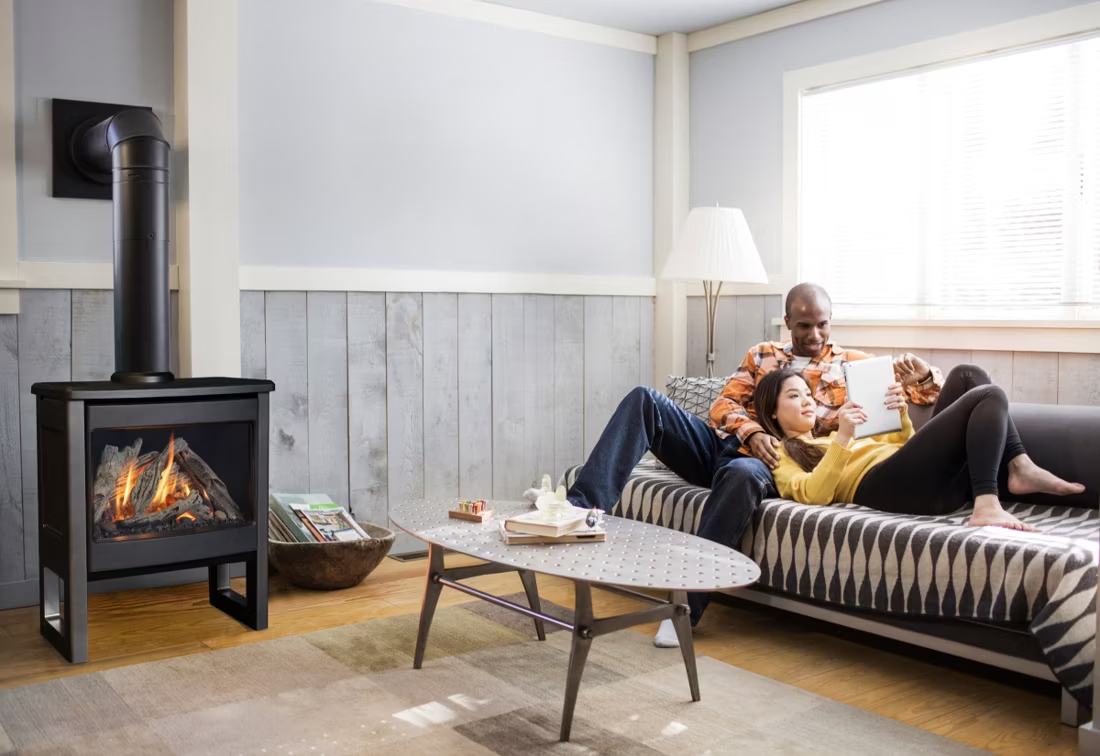
Four fuels. One honest answer for Clay County.
Three steps. No salesperson until you're ready.
Tell us about your project
Your zip code, your situation, and the fuel you're leaning toward—or let the answers point you to one.
See what's actually available
The brands dealers within 100 miles genuinely carry—real options, never a catalog mirage.
Get your dealer & Project Guide
A trusted local dealer, plus the free Project Guide & Parts List that names every component of the job.
Frequently Asked Questions
Which fuel works best in Clay County?
Gas and electric are the practical choices here. With an average winter low of 33°F and only about 2,699 heating degree days a year, Clay County's winters are short and mild compared to a place like Fargo, North Dakota, where the heating season runs nearly twice as long. Gas fireplaces and inserts (propane is common outside the Atmos Energy natural gas footprint around West Point) give you instant heat for the occasional cold snap without the upkeep of a wood-burning setup. Electric fireplace units work well for supplemental warmth and ambiance in bedrooms, dens, or add-on rooms, especially where running a gas line isn't practical. Wood-burning stoves and pellet stoves are both uncommon in Clay County—the mild climate means most households don't need a full-time solid-fuel heat source, though a small number of homeowners still install a wood-burning fireplace purely for ambiance or occasional weekend fires using local oak or pecan.
Do I need a permit to install a fireplace in Clay County?
In most cases, yes. Gas fireplace, insert, and stove installations typically require a building permit through the Clay County Building Department (or the City of West Point's permitting office if you're inside city limits), plus a separate gas line permit if new gas piping is being run. A licensed gas fitter handles the actual connection work. Electric fireplace installations usually don't need a permit for plug-in units, but built-in electric fireplaces that require new wiring or a dedicated circuit do need an electrical permit. Most local retailers handle the permitting process as part of the installation quote, so you're not typically filing paperwork yourself.
Is wood burning still an option here given the mild climate?
It's possible, but uncommon as a primary heat source. Clay County's oak, pine, and pecan hardwoods are abundant, and pecan wood in particular is prized locally for smoking meat rather than home heating. Because the county only sees about 2,699 heating degree days a year—roughly a third of what colder states log—a wood stove sized for sustained overnight burns is overkill for most homes here. A small number of homeowners still install a wood-burning fireplace or insert for occasional cool-weather evenings or aesthetic appeal, but gas and electric units cover the vast majority of new installations in the county.
Can one local retailer handle both gas and electric installations?
Yes, most Clay County hearth retailers that carry gas also carry electric fireplace lines, since both fuels serve the county's mild-climate market well. It's less common to find a Clay County retailer with a deep wood or pellet stove inventory, given how little year-round demand there is for solid-fuel heating in a 3A climate zone like this one. If you're comparing gas versus electric for a specific room, a multi-fuel retailer can usually show you working displays of both and talk through venting requirements for gas versus wiring requirements for electric.
How does service work in the rural parts of the county?
Most service technicians covering Clay County are based in or near West Point and travel out to Montpelier, Pheba, Cedar Bluff, and the farm routes in between. Expect a modest trip charge for calls outside the West Point city limits. Gas units need an annual check of the pilot or IPI system and gas line connections; electric fireplaces need far less maintenance, typically just a dust and wiring check every few years. Scheduling service in early fall, before the first cold front moves through, is easier than waiting for an emergency call once temperatures drop.
What's the typical cost range for gas and electric fireplace installation across Clay County?
Gas fireplace, insert, or stove installation in Clay County typically runs $4,000–$9,000, with the low end for a straightforward insert into an existing masonry fireplace and the higher end for new gas line work plus venting. Electric fireplace installation is considerably less—$200–$2,500 for the unit itself, plus $300–$1,000 in labor for anything beyond a plug-and-play wall unit, such as a built-in with a dedicated circuit. Propane tank setup, if you're outside the Atmos Energy natural gas service area, adds to the gas-side cost. See the county + fuel pages above for retailer-specific pricing.
Does a fireplace add value to my home?
On average, a fireplace adds back to the home about the same amount you spent installing it. Add the monthly savings from heating the rooms you actually use instead of the whole house—often hundreds of dollars a year—and the value case is strong before you even count what a fire does for how your family uses the room.
Wood, gas, pellet, or electric—how do I choose?
Match the fuel to your life, not the other way around. Wood: lowest fuel cost and total power-outage independence, but you're hauling and stacking. Gas: press a button, set a thermostat, no maintenance to speak of. Pellet: wood economics with automatic feeding, in exchange for weekly cleaning and a need for electricity. Electric: plugs in anywhere with honest supplemental heat. Nobody regrets the fuel that fits how they actually live.
Can a fireplace actually lower my heating bill?
Yes—by creating a comfort zone. A furnace heats every square foot of the house just to warm the one room you're in; a gas fireplace on low burns roughly a sixth of the gas a typical furnace does. Set the furnace around 55–60 degrees as a baseline, then heat the rooms your family actually uses. Families who heat this way commonly save $20–$60 a month.
What is an in-home preview and do I need one?
It's a visit where a hearth professional measures your space, confirms the model you picked actually works in your home, and walks the specs—framing, gas line, venting, finish work—before anything is ordered. Some details you just can't know until you see the house. Never make a down payment without one; it's the single most-skipped step that burns buyers.
Stove and Fireplace Dealers in Clay County
Listings include WhyFire partner dealers, dealers we have verified as authorized for the brands we recommend, and established local businesses that carry hearth products. Every listing shows which one it is. The ones marked Preferred run on WhyFire's software, so they can show you real pricing and book your appointment right here. No manufacturer pays for placement. How we verify dealers →
Scott Petroleum Corporation- Starkville
Starkville Lp Gas, Inc.
Scott's Tri-County Propane
Get matched with a local fireplace dealer in Clay County.
Tell us about your project and we'll match you with a trusted local dealer in West Point or the surrounding county, plus a free Project Guide & Parts List—the exact parts, vent kit included, and the dealer we recommend for your home.
Find Your Fireplace →