
Steady, low-maintenance heat for Alcorn County homes.
From Corinth to Rienzi and Kossuth, Alcorn County winters are short and mild—but a pellet stove still earns its keep on the cold snaps. Find the right unit and connect with a trusted local dealer.
Every Project Starts From One of These Five Situations
A clean, thermostat-controlled option for a place that doesn't need brute-force heat.
Alcorn County sits in Mississippi's northeast corner, anchored by Corinth—the old railroad crossroads and Civil War town that's still the county seat today. Climate zone 3A means humid, mild winters: average lows hover around 30°F, and the county has a fairly light overall heating season, a fraction of what colder states see. Most homes here run on a central heat pump or gas furnace, with hearth appliances used for supplemental warmth, backup heat, and the kind of ambiance that central air just can't provide.
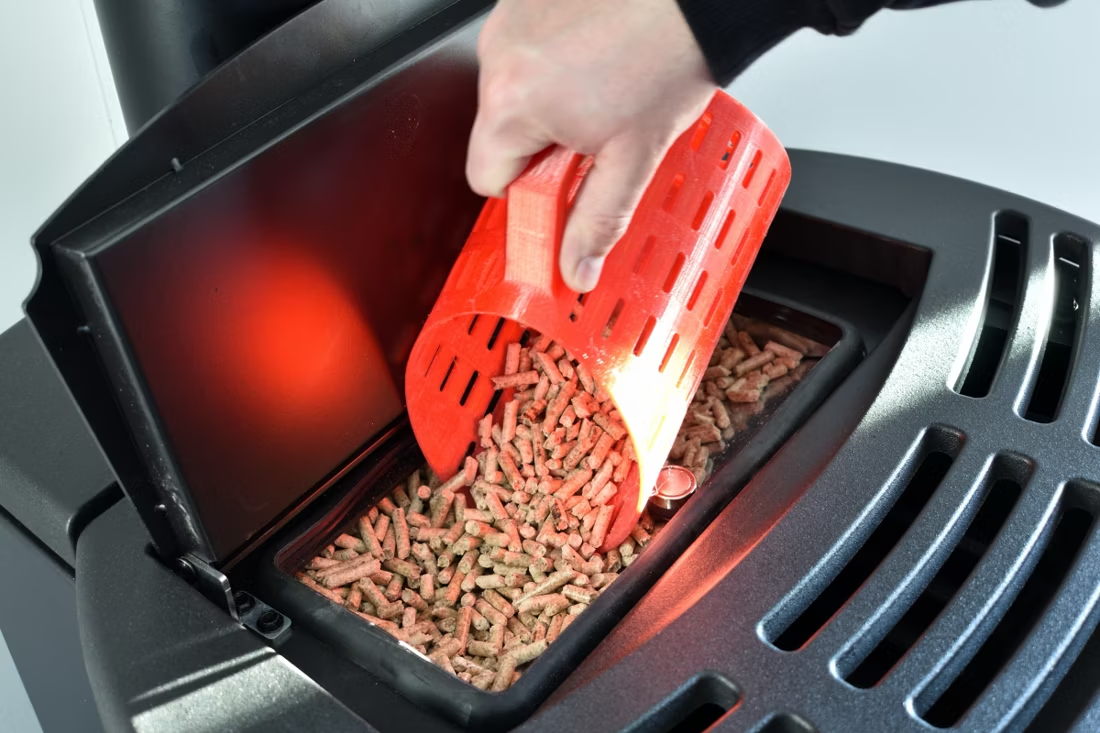
That's exactly the environment where pellet heat fits well without being oversold. Regional brands—Lignetics, Hamer Pellet Fuel, and Greenway Renewable Energy—keep pellets in steady local supply, and because Alcorn County's heating season is short, most homeowners only need a modest-BTU stove sized for a den or main living area rather than a whole-home unit built for months of continuous burning. Pellet stoves also skip the wood-stacking and splitting that comes with the oak, pine, and pecan firewood common in the county, trading that labor for a hopper you load and a thermostat you set.
Three steps. No salesperson until you're ready.
Tell us about your project
Your zip code, your situation, and the fuel you're leaning toward—or let the answers point you to one.
See what's actually available
The brands dealers within 100 miles genuinely carry—real options, never a catalog mirage.
Get your dealer & Project Guide
A trusted local dealer, plus the free Project Guide & Parts List that names every component of the job.
Frequently Asked Questions
How much does a pellet stove installation cost in Alcorn County?
A pellet stove or insert installation in Alcorn County typically runs $3,000 to $6,000, depending on whether you're venting through an exterior wall (the simpler, less expensive path) or routing vertical pipe through an existing chimney. Because the county only sees a fairly light overall heating season—mild compared to northern states—most installers size units for supplemental zone heat rather than a whole-home system, which keeps material and labor costs on the lower end of that range. You'll also need a dedicated 120V outlet near the unit, since every pellet stove depends on electricity to run the auger and blower.
What size pellet stove do I need for my Alcorn County home?
With winter lows averaging around 30°F and a short heating season, most Alcorn County homes do fine with a small to mid-size pellet stove (roughly 40,000–60,000 BTU) rated for 1,000 to 1,800 square feet, run as supplemental heat alongside a central heat pump or gas furnace. Larger units make sense for an older, poorly insulated farmhouse or if you want the stove to carry primary heat duty in a detached space or shop. A local dealer will size the unit based on your home's insulation, ceiling height, and layout—skipping this step in a mild climate like Alcorn County's usually means an oversized stove that short-cycles instead of running efficiently.
Where can I buy pellets in Alcorn County?
Regional brands including Lignetics, Hamer Pellet Fuel, and Greenway Renewable Energy are commonly stocked at hearth retailers and farm supply stores throughout northeast Mississippi, with pellets typically running $220 to $300 per ton depending on brand and hardwood content. Because Hamer Pellet Fuel produces within the state, supply tends to stay steadier here than in areas relying entirely on pellets shipped in from farther away. Buying a season's supply—often just 2 to 3 tons for a supplemental-heat home in this climate—in late summer or early fall is the easiest way to lock in price before winter demand picks up.
Will my pellet stove work during a power outage?
Not without backup power. Pellet stoves rely on electricity to run the auger that feeds fuel into the firebox and the blower that distributes heat, so a standard unit shuts down the moment power drops. Ice storms are the main outage risk in Alcorn County winters, and they tend to hit exactly when you'd want the stove running. A battery backup unit or a small inverter generator can keep a pellet stove operating through a multi-hour outage. If uninterrupted heat during outages is the priority, a wood stove or a gas unit with battery-backed ignition is worth comparing before you commit.
Do I need a permit to install a pellet stove in Alcorn County?
Most new hearth appliance installations require a building permit, coordinated through the Alcorn County building department in Corinth, to confirm the vent penetration, clearances to combustibles, and hearth protection meet code. Most local dealers handle the permitting and inspection scheduling as part of the installation, so homeowners generally don't have to navigate the process themselves. Alcorn County has no wildfire-related or air-quality burn restrictions on the books, so permitting here is mostly about safety code compliance rather than emissions rules.
What's the best pellet stove for Alcorn County's climate?
Because Alcorn County's winters are mild by national standards—with a fairly light overall heating season, well below the cold-climate norm—most homeowners are better served by a mid-BTU, non-catalytic auger stove sized for supplemental heat rather than a large-capacity unit built for round-the-clock burning. Look for a hopper in the 40 to 60 pound range so you're not reloading constantly, plus a reliable auto-ignition feature suited to the intermittent-use pattern common here: running the stove on cold nights and mornings rather than continuously through a long season. A local dealer carrying Lignetics, Hamer, or Greenway pellets can also flag which stove models burn cleanest with the pellet brands actually available in the county.
How often does a pellet stove need cleaning and maintenance?
Ash removal is a weekly task during regular use—pellet stoves produce far less ash than wood stoves, but the burn pot and ash drawer still need attention. Plan on a full professional cleaning and inspection once a year, ideally before the first cold snap in late fall, covering the exhaust vent, hopper, auger mechanism, and gasket seals. Because Alcorn County's heating season is short, stoves here typically accumulate less soot over a winter than in longer-heating-season climates, but skipping the annual service still risks auger jams and vent blockages when you need the stove most.
Pellet stove vs. wood stove—which is right for my Alcorn County home?
Wood is abundant locally—oak, pine, and pecan are all common regional species—and a wood stove keeps working during power outages with no electricity required, which matters given the ice storms that occasionally hit northeast Mississippi. Pellet stoves trade that off-grid resilience for convenience: load the hopper, set the thermostat, and walk away, with less ash and no splitting or stacking. Given Alcorn County's mild, short heating season, many homeowners here choose pellet specifically for that convenience—they're not managing a woodpile through a demanding six-month burn like colder states, so the lower daily effort of a pellet stove is an easier trade to make.
Pellet vs. gas—which fits my home better?
Gas fireplaces and inserts offer instant heat at the flip of a switch with zero fuel handling, which is hard to beat for daily convenience—but most of rural Alcorn County runs on propane rather than piped natural gas, which is limited mainly to areas around Corinth. Pellet stoves need more hands-on involvement (loading the hopper, emptying ash) but burn a renewable, regionally produced fuel that typically costs less per BTU than propane in this part of the state. If you already have gas service and want zero-maintenance heat, gas usually wins; if you're comfortable with modest upkeep in exchange for a lower fuel bill, pellet is worth serious consideration.
Why is a fireplace insert so efficient?
An insert does two things: it seals the chimney completely, so you stop losing air you already paid to heat, and it radiates warmth into the room through the firebox and glass. Most add a heat-exchange fan that pulls cool room air underneath, wraps it around the hot firebox, and pushes it back out warm. Your home is more efficient before you've even lit the first fire.
Why is my open fireplace making my house colder?
Open fireplaces suck—literally. As the fire burns, it consumes air your furnace already paid to heat and pulls it out through the chimney, so the house is actually colder after the fire goes out than before you lit it. An insert fixes this: it seals the chimney, puts fixed glass across the front, and turns that hole in your house into a real heat source.
How much should I budget for a fireplace?
For an average home—covering the fireplace, the vent pipe, and basic installation—a budget between $3,900 and $5,500 gives you a lot of options across wood, gas, and pellet. By the time you add finish work, gas line, and electrical, the average complete installation lands between $5,000 and $12,000 all-in. In a remodel or new build, a good rule is to put about 2.5% of the total project cost toward the fireplace.
What is an in-home preview and do I need one?
It's a visit where a hearth professional measures your space, confirms the model you picked actually works in your home, and walks the specs—framing, gas line, venting, finish work—before anything is ordered. Some details you just can't know until you see the house. Never make a down payment without one; it's the single most-skipped step that burns buyers.
Stove and Fireplace Dealers in Alcorn County
Pellet Brands Stocked Around Alcorn County
Manufacturers will point you to the nearest stocking dealer.
Find your pellet stove in Alcorn County.
Tell us a bit about your home and we'll match you with the right pellet stove or insert, plus a free Project Guide & Parts List—the exact parts, vent kit, and your recommended local dealer for your Alcorn County pellet project.
Find Your Fireplace →