
Real warmth for Yellow Medicine County, without the venting hassle.
From Granite Falls to Canby and Hanley Falls, electric fireplaces add heat and ambiance to a room in a weekend—no chimney, no gas line, no permit headaches. Find the right unit and connect with a trusted local dealer.
Every Project Starts From One of These Five Situations
The simplest way to add heat where you need it.
Yellow Medicine County sits in the farm country of southwestern Minnesota, with just under 4,000 residents spread across Granite Falls, Canby, Clarkson, and Hanley Falls and the townships between them. It's climate zone 6A with a long, hard winter season and average winter lows around 5 degrees—a cold-soak profile close to Fargo, ND, just a couple hours west. Wood heat has deep roots here, with local oak, maple, birch, and aspen feeding stoves and fireplaces through the long winter, and the county has no air quality restrictions on burning. Electric fireplaces play a different role in that mix.
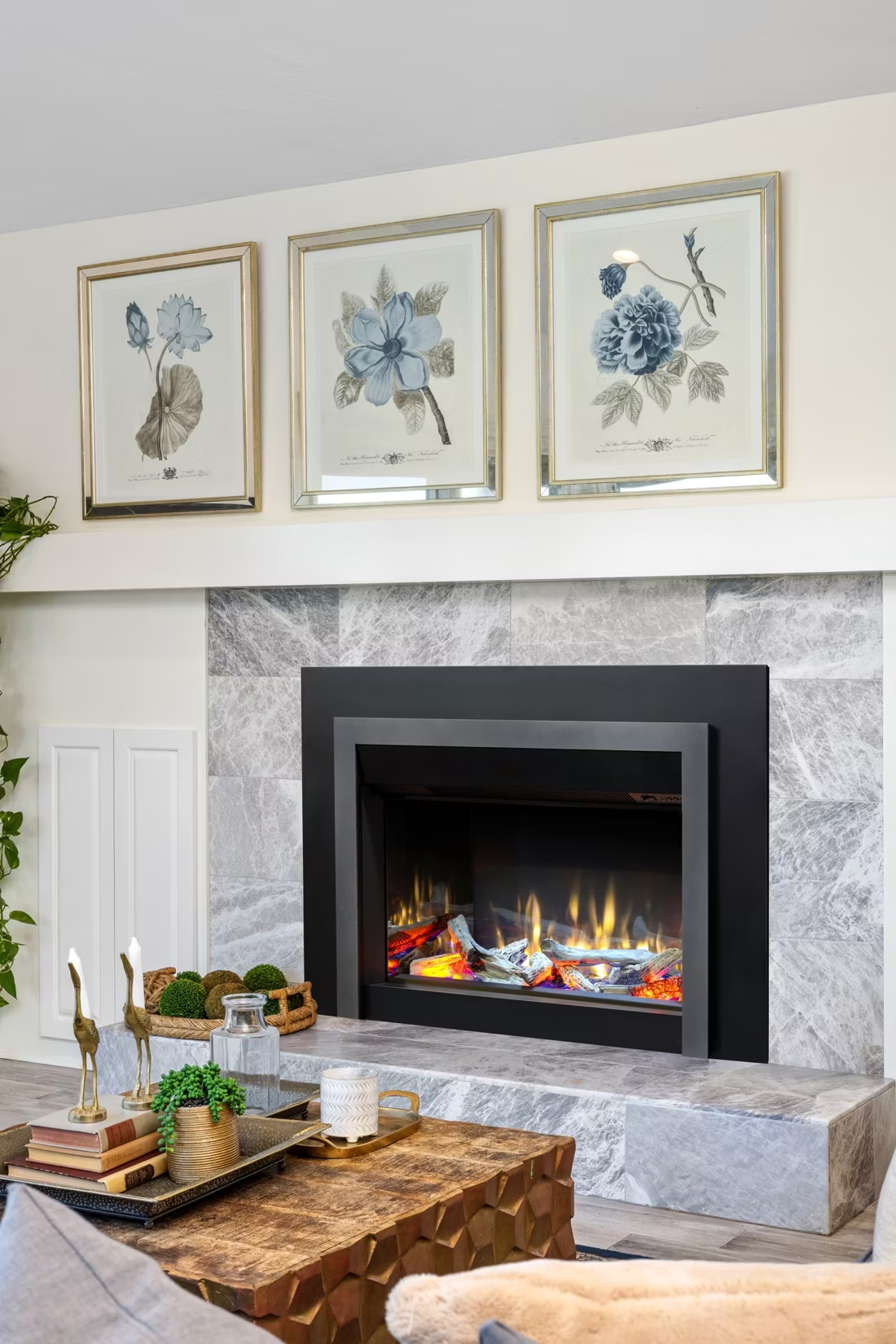
Most rural homes in Yellow Medicine County run on propane furnaces or wood as primary heat, since natural gas mains don't reach far outside town. That's exactly where electric fireplaces earn their place—as zone heat in a finished basement, a converted porch, a bedroom addition, or a Granite Falls apartment where running a flue or a new gas line isn't practical or allowed. Whether your power comes from a rural electric cooperative like Federated Rural Electric Association or from a municipal utility in town, a modern electric insert or built-in unit plugs into what's already there and starts throwing heat the moment you flip it on—no chimney sweep, no cutting permit, no combustion byproducts to vent.
Three steps. No salesperson until you're ready.
Tell us about your project
Your zip code, your situation, and the fuel you're leaning toward—or let the answers point you to one.
See what's actually available
The brands dealers within 100 miles genuinely carry—real options, never a catalog mirage.
Get your dealer & Project Guide
A trusted local dealer, plus the free Project Guide & Parts List that names every component of the job.
Frequently Asked Questions
How much does an electric fireplace installation cost in Yellow Medicine County?
A plug-in freestanding or mantel-style electric fireplace runs $200 to $1,500 for the unit itself and typically needs nothing more than an existing 120V outlet—most homeowners install these themselves in an afternoon. A built-in wall unit or a full insert replacing an old masonry firebox runs closer to $1,500 to $4,000 once you factor in framing, trim work, and any electrical upgrades. Larger units drawing more than 1,500 watts often need a dedicated 240V circuit, which is where hiring a local electrician or hearth dealer pays off—they'll confirm your panel has the capacity before you buy.
Do electric fireplaces need a permit in Yellow Medicine County?
Plug-in units that use an existing outlet generally don't require a permit. If your project involves running a new dedicated circuit, adding a 240V line, or modifying framing for a built-in unit, that electrical work typically needs a permit through your local building department—Granite Falls, Canby, and the townships handle this a bit differently, so it's worth a quick call before work starts. Most local dealers who sell and install built-in electric units already coordinate this step for you.
Can an electric fireplace actually heat a room in this climate?
Yes, for the room it's in—but treat it as zone heat, not a replacement for your furnace. At 5 degrees average winter lows and one of the coldest, longest winter seasons in the state, Yellow Medicine County's cold soak is serious, and electric resistance heat costs more per BTU than propane or wood over a full winter. Most electric fireplaces here work best supplementing a finished basement, a bedroom addition, or a room where the furnace struggles to keep up, letting you turn the thermostat down elsewhere in the house. For a fully off-grid backup heat source during a winter power outage, wood or a properly vented gas unit is a better fit than electric.
What's the difference between an electric insert, a built-in unit, and a freestanding fireplace?
An electric insert is sized to slide into an existing masonry firebox—a common upgrade for older farmhouses in the county with a fireplace that's rarely used for wood anymore. A built-in unit is framed into a wall like a real fireplace, usually in new construction or a remodel, and can include a mantel and surround. A freestanding or mantel-style unit needs no installation beyond an outlet and can be moved between rooms—a popular choice for renters in Granite Falls or Canby who can't modify a wall. All three throw the same electric heat; the difference is really about how permanent you want the installation to be.
Will an electric fireplace work in my rental or apartment?
In most cases, yes. A freestanding or mantel-style electric fireplace plugs into a standard outlet and requires no venting, no gas line, and no structural changes, which makes it one of the only fireplace options renters in Yellow Medicine County can install without landlord sign-off on major work. Just confirm your unit's wattage against the outlet's circuit—some larger models draw close to the limit of a standard 15-amp circuit, especially if other appliances share that circuit.
How does an electric fireplace compare to a pellet stove for this area?
Pellet stoves burn fuel from regional suppliers like Indeck Energy Services, Lignetics, or Somerset Pellet Fuel and put out real heat that keeps working during a power outage if the unit has a battery backup—a meaningful advantage during a Minnesota winter storm. Electric fireplaces need no fuel storage, no hopper to load, and no venting, but they're fully dependent on grid power and cost more per BTU to run continuously. For a primary heat source in a drafty older farmhouse, pellet often wins on running cost. For a clean, low-maintenance heat source in a remodeled room, addition, or rental, electric is usually the simpler choice.
How does an electric fireplace compare to a wood stove for this area?
Wood stoves burning local oak, maple, birch, or aspen deliver serious heat output and keep working when the power's out—a real consideration here given how far some homes sit from town. They also require a chimney, clearances, and annual chimney sweeping. Electric fireplaces skip all of that: no venting, no ash, no wood to split or stack, and installation that takes a day instead of a week. For a primary heat source on a rural property, wood remains the workhorse. For supplemental heat and ambiance in a living room or den, electric is far less hassle.
What size electric fireplace do I need?
Sizing an electric fireplace is more about the room than the whole house, since these units are built for zone heat rather than central heating. A 750-1,500 watt unit comfortably supplements a bedroom or den in the 150-300 square foot range; larger great rooms or open-concept spaces do better with a 240V unit rated higher, paired with your existing furnace for the coldest stretches. Ceiling height, window count, and how well the room is insulated all shift the math—a local dealer can size this correctly during a quick in-home look rather than guessing off a chart.
Are electric fireplaces energy-efficient to run in a cold climate like this?
Electric fireplaces convert essentially all their input electricity into heat at the unit—there's no flue loss like a vented gas or wood appliance. The catch in a place with such a long, demanding heating season is the electricity itself: running one for hours a day as your main heat source will show up on your bill. Most Yellow Medicine County homeowners get the best value using an electric fireplace for a few hours in the evening in one room, rather than trying to heat a whole house with it—which keeps both the upfront cost and the running cost reasonable.
Can I put a TV above my fireplace?
Yes—with an asterisk. Fireplaces are hot and TVs don't like heat. Either put a mantel between them to deflect rising warmth, or choose a fireplace with heat-management technology that creates a cool zone on the wall above—the wall stays around 125 degrees, barely warm, while the room still gets full heat. If you like clean lines and don't want a mantel, heat management is the answer.
Do electric fireplaces actually produce heat?
Yes—most put out around 4,800–5,000 BTUs from a standard outlet, which comfortably warms a bedroom, office, or den as a comfort-zone heater. What they won't do is carry a whole house the way wood, gas, or pellet can. Think of electric as ambiance-first with honest supplemental heat: flames on with no heat in July, flames plus warmth in January.
What is an in-home preview and do I need one?
It's a visit where a hearth professional measures your space, confirms the model you picked actually works in your home, and walks the specs—framing, gas line, venting, finish work—before anything is ordered. Some details you just can't know until you see the house. Never make a down payment without one; it's the single most-skipped step that burns buyers.
Can a fireplace actually lower my heating bill?
Yes—by creating a comfort zone. A furnace heats every square foot of the house just to warm the one room you're in; a gas fireplace on low burns roughly a sixth of the gas a typical furnace does. Set the furnace around 55–60 degrees as a baseline, then heat the rooms your family actually uses. Families who heat this way commonly save $20–$60 a month.
Find your electric fireplace in Yellow Medicine County.
Tell us a bit about your home and we'll put together a free Project Guide & Parts List for your electric fireplace project—the right unit, the electrical requirements, and a trusted local dealer near Granite Falls, Canby, or wherever you are in the county.
Find Your Fireplace →