
Heating a Minnesota River Valley home through a 7,995-degree-day winter.
Wood, gas, pellet, and electric fireplace resources for every city and township in Yellow Medicine County—from Granite Falls to Canby. Find the right unit and connect with a trusted local hearth retailer.
Every Project Starts From One of These Five Situations
Prairie winters demand real heat in Yellow Medicine County, Minnesota.
Yellow Medicine County sits along the Minnesota River in the state's southwest prairie region, and its climate is no joke—Climate Zone 6A, an average winter low of 5°F, and a long, demanding heating season put it in the same cold-climate tier as Fargo ND or Bismarck ND. Wind across the open farmland adds real bite to those numbers. With a population under 4,000, the county is largely rural: farmsteads, small towns like Granite Falls and Canby, and a mix of oak, maple, birch, and aspen woodlots that have supplied firewood here for generations.
What you'll find on this hub: hearth retailers, service technicians, and fuel suppliers serving every community in the county—from the county seat in Granite Falls out to Canby, Clarkfield, and Echo. Pick your fuel below to drill into specifics—local dealers, installation costs, recommended units, and resources matched to your project. Whether you're heating a farmhouse on the prairie or a smaller in-town home, this is the starting point.
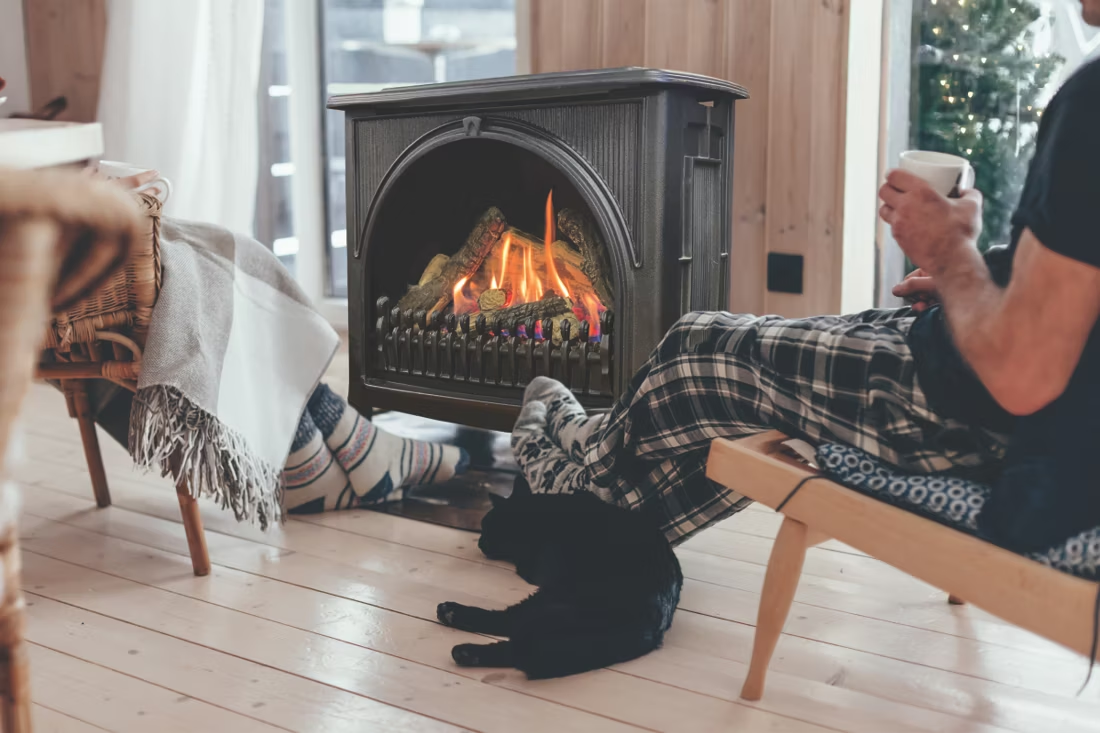
Four fuels. One honest answer for Yellow Medicine County.
Wood
69 models available near Yellow Medicine County.
Find your wood stove →Gas
111 models available near Yellow Medicine County.
Find your gas fireplace →Pellet
See what's available near Yellow Medicine County.
Find your pellet stove →Electric
See what's available near Yellow Medicine County.
Find your electric fireplace →Three steps. No salesperson until you're ready.
Tell us about your project
Your zip code, your situation, and the fuel you're leaning toward—or let the answers point you to one.
See what's actually available
The brands dealers within 100 miles genuinely carry—real options, never a catalog mirage.
Get your dealer & Project Guide
A trusted local dealer, plus the free Project Guide & Parts List that names every component of the job.
Frequently Asked Questions
Which fuel works best in Yellow Medicine County?
With winter lows averaging 5°F and a long, demanding heating season, this county needs fuel choices that can carry real load, not just ambiance. Wood is a strong option given the local oak, maple, birch, and aspen supply—a catalytic or non-catalytic EPA-certified stove can hold a fire through a long overnight cold spell and keep working during the ice-storm power outages that occasionally hit this part of the Minnesota River Valley. Gas is the low-labor choice, either natural gas in town (Granite Falls, Canby) or propane on rural farmsteads—instant heat with no wood-hauling. Pellet is the middle ground, and regional supply is solid with brands like Indeck Energy Services and Somerset Pellet Fuel produced in the upper Midwest, so you're not paying long freight costs. Electric works well as supplemental heat in a bedroom or den but shouldn't be your only heat source through a prairie winter this cold. Most homes here run wood or pellet as primary with gas or electric backup in secondary rooms.
Do I need a permit to install a fireplace in Yellow Medicine County?
In most cases, yes. New wood stoves, wood inserts, gas fireplaces, gas inserts, gas stoves, and pellet stoves generally require a building permit through your local city (Granite Falls, Canby, Clarkfield) or the county building department if you're in an unincorporated township. Gas installations also need a separate gas-line permit and a licensed gas fitter for the connection. Wood-burning appliances installed new should meet current EPA emissions standards. Electric fireplaces usually don't require a permit unless it's a built-in unit that involves new wiring or a dedicated circuit. Most local hearth retailers in the area handle the permitting paperwork as part of the installation, so you generally don't have to navigate it solo.
Are there air quality restrictions on wood burning in Yellow Medicine County?
No—Yellow Medicine County has no designated air quality non-attainment areas or winter inversion advisories like you'd see in a mountain basin community. This is open prairie country with good air movement, so there are no curtailment days or burn bans tied to wood smoke here. That said, new wood stove installations should still meet EPA 2020 NSPS certification, and it's worth keeping your firewood well-seasoned (oak and maple especially benefit from a full year of drying) since dry wood burns cleaner and more efficiently regardless of local regulation.
Can one local hearth retailer handle all four fuel types?
Given the county's population of under 4,000, most hearth retailers serving Yellow Medicine County are smaller operations based in Granite Falls or in nearby Marshall that carry a mix of two or three fuel types rather than a full four-fuel showroom. It's common to find a dealer strong in wood and pellet (matching the local firewood culture) with a smaller gas and electric selection, or vice versa for a dealer closer to natural gas service in town. If you want to compare fuel types side by side, ask which showroom units are working displays versus catalog-only—in smaller-market counties like this, not every fuel has a floor model on-site, and dealers may need to special-order for you to see certain units in person before committing.
How does service work in rural areas of Yellow Medicine County?
Most chimney sweeps and gas technicians serving this county are based out of Granite Falls, Marshall, or other regional hubs and travel out to farmsteads and smaller townships like Echo and Clarkfield. Given the distances involved on the open prairie, expect a modest travel fee for rural service calls, and plan ahead—pre-season appointments in September and October book up faster than mid-winter emergency calls, especially once the first cold snap hits and everyone realizes their chimney hasn't been swept. If you're on a rural property, it's worth scheduling your annual wood chimney sweep or gas inspection early and keeping a backup heat source in case of an outage during a hard freeze.
What's the typical cost range for fireplace installation across all fuel types in Yellow Medicine County?
Costs vary by fuel and by how much venting or gas-line work is involved. Wood stove or insert installation: roughly $4,000-$8,500 for typical installs, more if a full masonry chimney needs to be built or relined. Gas fireplace, insert, or stove: roughly $4,000-$10,000 depending on whether you're tying into existing natural gas service in town or running new propane lines on a rural property. Pellet stove or insert: roughly $4,000-$7,000 for typical installs. Electric fireplace: $200-$3,000 for the unit itself, plus $400-$1,200 in labor for anything beyond a simple plug-in installation. For details specific to each fuel, see the county + fuel pages above.
Can a fireplace actually lower my heating bill?
Yes—by creating a comfort zone. A furnace heats every square foot of the house just to warm the one room you're in; a gas fireplace on low burns roughly a sixth of the gas a typical furnace does. Set the furnace around 55–60 degrees as a baseline, then heat the rooms your family actually uses. Families who heat this way commonly save $20–$60 a month.
Does a fireplace add value to my home?
On average, a fireplace adds back to the home about the same amount you spent installing it. Add the monthly savings from heating the rooms you actually use instead of the whole house—often hundreds of dollars a year—and the value case is strong before you even count what a fire does for how your family uses the room.
What is an in-home preview and do I need one?
It's a visit where a hearth professional measures your space, confirms the model you picked actually works in your home, and walks the specs—framing, gas line, venting, finish work—before anything is ordered. Some details you just can't know until you see the house. Never make a down payment without one; it's the single most-skipped step that burns buyers.
How much should I budget for a fireplace?
For an average home—covering the fireplace, the vent pipe, and basic installation—a budget between $3,900 and $5,500 gives you a lot of options across wood, gas, and pellet. By the time you add finish work, gas line, and electrical, the average complete installation lands between $5,000 and $12,000 all-in. In a remodel or new build, a good rule is to put about 2.5% of the total project cost toward the fireplace.
Stove and Fireplace Dealers in Yellow Medicine County
Listings include WhyFire partner dealers, dealers we have verified as authorized for the brands we recommend, and established local businesses that carry hearth products. Every listing shows which one it is. The ones marked Preferred run on WhyFire's software, so they can show you real pricing and book your appointment right here. No manufacturer pays for placement. How we verify dealers →
Today's Fireplace & Spa
Larry's Lumber
Andor Inc.
Hometown Building Center
Ramsdell F&m Ltd.
Get your Yellow Medicine County Project Guide & Parts List.
Tell us your fuel and your town, and we'll match you with a trusted local dealer and send a free Project Guide & Parts List—the exact parts your project needs, including the vent kit, plus our recommended local installer.
Find Your Fireplace →