
Consistent Heat Through Swift County's Coldest Months.
With 8,378 heating degree days and winter lows averaging 1°F, Swift County homes need heat that doesn't quit. A pellet stove or insert delivers automated, thermostat-controlled warmth all winter—find the right unit and connect with a trusted local dealer.
Every Project Starts From One of These Five Situations
Automated warmth built for the prairie winter.
Swift County sits in the open farm country of west-central Minnesota, with Benson as the county seat and a population under 6,300 spread across mostly rural townships. Winters here run long and cold—8,378 heating degree days puts Swift County in the same range as Fargo, ND, just across the border, and average winter lows of 1°F mean any heating appliance has real work to do for five or six months a year. Unlike counties dealing with wintertime inversions or non-attainment status, Swift County has no listed air quality restrictions, so there's no curtailment schedule or burn-ban complexity to navigate with a pellet appliance.
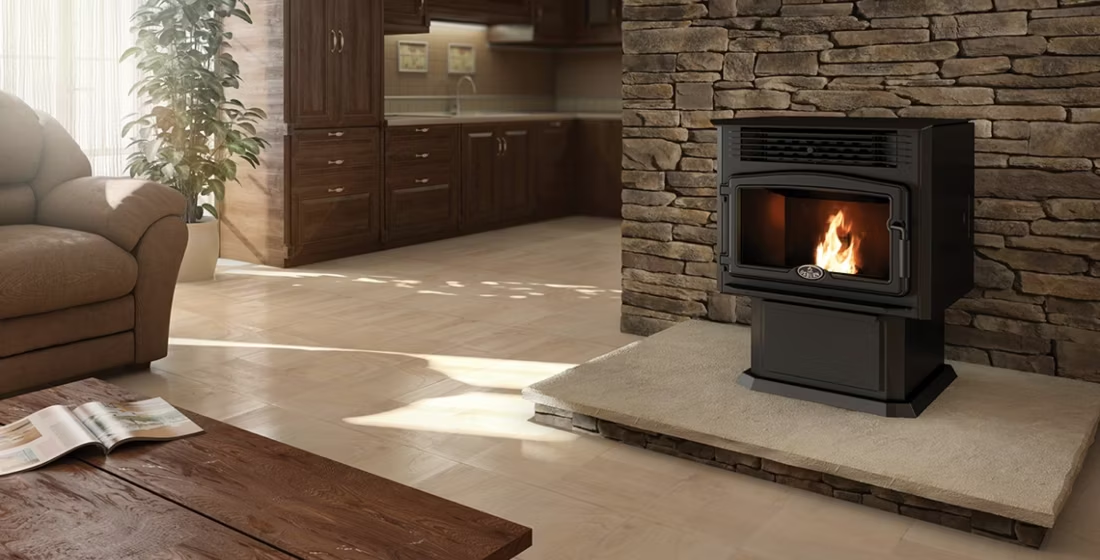
Pellet stoves fit well in a county like this because they combine steady, automated heat output with far less daily labor than splitting and hauling cordwood—a real consideration for farm families already managing plenty during the winter months. Regional suppliers including Indeck Energy Services, Lignetics, and Somerset Pellet Fuel serve the area, often milling pellets from the same oak, maple, birch, and aspen byproduct that fuels the county's traditional wood-burning. The one honest trade-off: pellet stoves run on electricity for the auger and blower, so during a hard winter storm and a power outage from Agralite Electric Cooperative's lines, a pellet stove without a battery backup won't run. Worth discussing with a local dealer if outages are a concern on your property.
Three steps. No salesperson until you're ready.
Tell us about your project
Your zip code, your situation, and the fuel you're leaning toward—or let the answers point you to one.
See what's actually available
The brands dealers within 100 miles genuinely carry—real options, never a catalog mirage.
Get your dealer & Project Guide
A trusted local dealer, plus the free Project Guide & Parts List that names every component of the job.
Frequently Asked Questions
How much does a pellet stove installation cost in Swift County?
A typical pellet stove or insert installation in Swift County runs roughly $3,500 to $6,500, depending on the unit's hopper size and BTU output, whether it's a freestanding stove or an insert into an existing masonry fireplace, and the venting path required. Direct-vent installations through an exterior wall are generally on the lower end since they avoid full chimney work. Given Swift County's rural layout, some installers based in Willmar or the greater Benson area may add a modest travel charge for outlying farmsteads, so it's worth asking for that upfront when getting quotes.
What size pellet stove do I need for a Swift County home?
With 8,378 heating degree days and winter lows averaging 1°F, Swift County sits toward the demanding end of the pellet-stove sizing chart. A stove rated for 1,200 to 1,800 square feet is a reasonable target for a moderately insulated single-story farmhouse, but older uninsulated farmhouses common throughout the county often need to size up or plan on the pellet stove as a supplement to an existing furnace rather than the sole heat source. Hopper capacity matters as much as BTU rating here—a larger hopper means fewer refills during the stretches of sub-zero weather that are routine in a county this cold.
Where can I buy pellets locally in Swift County?
Regional pellet brands including Indeck Energy Services, Lignetics, and Somerset Pellet Fuel supply the area, typically sold through farm and hardware stores and hearth dealers serving Benson and the surrounding towns. Midwest pellet pricing generally runs in the $230 to $290 per ton range, though it's worth buying early in the fall—rural supply in a county this size can tighten up once the first hard cold snap hits and everyone stocks up at once. Buying a season's worth (roughly 2 to 3 tons for an average home) at once also tends to save money over piecemeal purchases through the winter.
Do I need a permit to install a pellet stove in Swift County?
Yes—a building permit is generally required for a new pellet stove or insert installation, handled through the Swift County Planning & Zoning office in Benson for unincorporated areas, or the relevant city office if you're within Benson, Appleton, or another incorporated town. Most local hearth dealers handle the permit paperwork as part of the installation, so you typically won't need to file it yourself. Since Swift County has no listed air quality non-attainment concerns, there's no curtailment schedule to worry about once the stove is installed and running.
Will my pellet stove work during a power outage?
Not without a backup plan. Pellet stoves rely on an electric auger to feed fuel and a blower to circulate heat, so a standard unit shuts down the moment power drops—a real consideration in a county served by Agralite Electric Cooperative where winter storms can knock out lines for hours at a time. Some pellet stove models offer battery-backup kits or can run off a small generator, and that's worth asking your local dealer about directly if you're relying on the stove as anything more than supplemental heat. Homes that need guaranteed heat during outages often pair a pellet stove with a wood-burning backup that needs no electricity at all.
Pellet stove vs. wood stove—which makes more sense in Swift County?
Wood is deeply practical in a county surrounded by farmland with plenty of local oak, maple, birch, and aspen available, and it keeps running with zero electricity—a real advantage during a Swift County blizzard and outage. Pellet stoves trade that off for convenience: load the hopper, set the thermostat, and get consistent heat without splitting or stacking cordwood, plus less ash and a cleaner burn overall. For a working farm household that wants low daily maintenance and consistent output through a long, cold season, pellet often wins; for anyone prioritizing storm-proof backup heat, wood remains the safer bet. Several Swift County homes end up with both—pellet for daily convenience, wood as the fallback.
How often does a pellet stove need maintenance?
Plan on cleaning the burn pot and ash pan every few days during heavy winter use, a deeper interior cleaning monthly, and a full professional service annually—typically before the heating season starts in early fall. The venting system should also be inspected yearly, since pellet exhaust can build up creosote-like deposits over a full Swift County winter of near-constant use. Compared to a wood stove and chimney sweep, pellet maintenance is lighter, but skipping the annual service is still the most common cause of feed and ignition problems mid-winter.
Are there rebates available for pellet stoves in Swift County?
Check with Agralite Electric Cooperative directly, as rural electric cooperatives in Minnesota periodically offer efficiency incentives, and pellet stoves with high efficiency ratings sometimes qualify for federal tax credits under current energy efficiency provisions. Because incentive programs change from year to year, a local hearth dealer serving Swift County will typically know what's currently available and can help with the paperwork at the time of purchase—it's worth asking before you finalize a unit.
What's the difference between a pellet stove and a pellet insert?
A pellet stove is a freestanding unit that sits on a hearth pad and vents through a wall or existing chimney chase—it can go almost anywhere in a home with proper clearances, which makes it a common choice for Swift County farmhouses without an existing fireplace. A pellet insert is built to slide into an existing masonry fireplace opening, converting an old wood-burning fireplace into an automated, thermostat-controlled heat source while reusing the chimney you already have. For county homes with an older brick fireplace that's rarely used, an insert is usually the more cost-effective upgrade; for homes without a fireplace at all, a freestanding stove is the straightforward option.
Why is a fireplace insert so efficient?
An insert does two things: it seals the chimney completely, so you stop losing air you already paid to heat, and it radiates warmth into the room through the firebox and glass. Most add a heat-exchange fan that pulls cool room air underneath, wraps it around the hot firebox, and pushes it back out warm. Your home is more efficient before you've even lit the first fire.
Why is my open fireplace making my house colder?
Open fireplaces suck—literally. As the fire burns, it consumes air your furnace already paid to heat and pulls it out through the chimney, so the house is actually colder after the fire goes out than before you lit it. An insert fixes this: it seals the chimney, puts fixed glass across the front, and turns that hole in your house into a real heat source.
What is an in-home preview and do I need one?
It's a visit where a hearth professional measures your space, confirms the model you picked actually works in your home, and walks the specs—framing, gas line, venting, finish work—before anything is ordered. Some details you just can't know until you see the house. Never make a down payment without one; it's the single most-skipped step that burns buyers.
Can a fireplace actually lower my heating bill?
Yes—by creating a comfort zone. A furnace heats every square foot of the house just to warm the one room you're in; a gas fireplace on low burns roughly a sixth of the gas a typical furnace does. Set the furnace around 55–60 degrees as a baseline, then heat the rooms your family actually uses. Families who heat this way commonly save $20–$60 a month.
Pellet Brands Stocked Around Swift County
Manufacturers will point you to the nearest stocking dealer.
Find your pellet stove in Swift County.
Tell us a bit about your home and heating goals, and we'll match you with a trusted local dealer and send over a free Project Guide & Parts List—sized and specified for Swift County's long, cold winters.
Find Your Fireplace →